

- Etusivu

- Öljymaalausjäljennös
- Basil Alkazzi
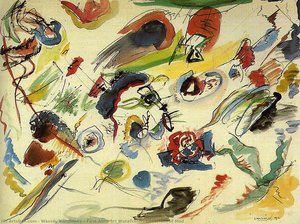
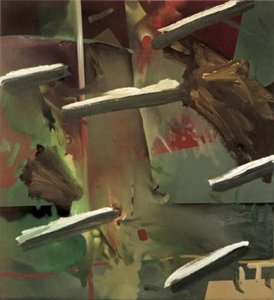
- Transmutation III

 Preview
 Tilaa painos Osta kuva
 Jaa
Jaa
 Jaa
Jaa
 Tarkemmat tiedot
 Lisää suosikkeihin

 Lataa
Lataa
 Samanlaisia
 Röntgenkuva
 Diaesitys
Transmutation III
 Contemporary Abstract
 1991
1991 76.0 x 56.0 cm
 Näytä lisää
Käsinmaalattu öljykopio
Käsinmaalattu öljyväri kankaalle haluamassasi koossa ja kehyksissä, taiteilijoidemme valmistamana tilauksesta.




































Valitse valmiista mitoistamme sellaiset, jotka vastaavat teoksen alkuperäisiä mittasuhteita.

Voit syöttää omat mitat sopimaan tiettyyn kehykseen tai tilaan. Jos valitsemasi koko ei vastaa alkuperäisen kuvan mittasuhteita, rajaamme taideteoksen tai jatkamme maalausta käsin maalatuilla elementeillä. Digitaalinen esikatselu lähetetään hyväksyttäväksi ennen tuotannon aloittamista.
Huomioithan, että näytöllä oleva esikatselu ei vastaa todellista rajausta tai jatkamista. Vain digitaalinen mallikuva näyttää lopullisen sommittelun tarkasti.
Vaikka mittatilaustyöt ovat mahdollisia, suosittelemme valitsemaan mitan ennalta määritetystä listasta alkuperäisten mittasuhteiden säilyttämiseksi.
Tilauksen jälkeen AllPaintingsStore.com -tiimi lähettää asiakkaalle ohjeet ja esikatselukuvan.
Maailmanlaajuinen toimitus () 3–4 viikossa tavallisen 5 viikon sijaan. (23 heinäkuu). Laadusta ei tingitä.

Ilmainen pikatoimitus ympäri maailman

Korkealaatuinen pellavakangas

Kattava kuljetusvakuutus

Tulliveron palautustakuu

Täydellinen värien vastaavuustakuu

60 päivän palautusoikeus (vain valmistusvirheet)

100% rahat takaisin -takuu

Määräalennus tarjous
 Lasivaihtoehto on saatavilla vain alle 110 cm kokoisina teoksina

Transmutation III
Reproduktiotekniikka
Replikaatin koko
-


Kokonaishinta
-
Teoksen kuvaus
Samankaltaisia teoksia



Taiteilijan elämäkerta
A Life Immersed in Light and Form: The Journey of Basil Alkazzi
Basil Alkazzi is a British artist whose work embodies a profound connection to the landscapes and light of the Mediterranean, particularly those of his ancestral homeland, Morocco. Born in 1930 in Tetuan, Morocco, Alkazzi’s early life was steeped in the rich visual culture of North Africa – a world of vibrant colors, intricate patterns, and the dramatic interplay of sun and shadow. This formative period would become the cornerstone of his artistic vision, influencing not only *what* he painted but also *how* he approached the canvas. His family relocated to England when he was young, yet the memories and emotional resonance of Morocco remained a powerful force throughout his development as an artist. He studied at the Regent Street Polytechnic in London, receiving formal training that provided him with technical skills, but it was his innate sensitivity to color and composition that truly set him apart. Alkazzi’s artistic path wasn't immediate; he initially pursued a career in architecture before fully dedicating himself to painting in the 1960s. This architectural background subtly informs his work, evident in the strong structural elements often present within his compositions.The Moroccan Influence and Early Development
Alkazzi’s early paintings were largely focused on capturing the essence of Morocco – bustling marketplaces, serene courtyards, and the majestic Atlas Mountains. He wasn't interested in a literal depiction of these scenes; rather, he sought to convey the *feeling* of being there, the warmth of the sun on skin, the scent of spices in the air, the energy of daily life. His style during this period can be described as expressive and semi-abstract, utilizing bold brushstrokes and a rich palette inspired by traditional Moroccan textiles and ceramics. The influence of artists like Matisse and Braque is discernible in his early work, particularly their use of flattened forms and vibrant color to create a sense of atmosphere and emotion. However, Alkazzi quickly moved beyond mere imitation, developing a unique visual language that was distinctly his own. He began experimenting with different techniques, incorporating collage elements into his paintings and exploring the possibilities of texture and layering. This experimentation led him towards a more abstract approach, where form and color became increasingly important in conveying meaning.Abstraction and the Pursuit of Pure Color
By the 1970s, Alkazzi’s work had undergone a significant transformation. While still rooted in his Moroccan heritage, he moved away from representational imagery towards a more abstract style. His paintings became increasingly focused on the interplay of color and form, exploring the emotional power of pure pigment. He sought to create works that were not about *what* they depicted but rather about *how* they made you feel. This period saw him develop his signature technique of layering thin washes of color, creating luminous surfaces that seem to glow from within. He often worked on large-scale canvases, allowing the colors to interact and blend in complex and subtle ways. Alkazzi’s abstract works are not entirely devoid of reference; hints of architectural structures, geometric patterns, and landscape elements can still be detected beneath the layers of color. However, these references are fragmented and abstracted, serving as a starting point for his exploration of form and emotion.Recognition and Legacy
Throughout his career, Basil Alkazzi has exhibited widely in both Europe and North America, gaining recognition for his unique artistic vision and technical mastery. His work is held in numerous public and private collections, including the Tate Gallery in London and the Museum of Modern Art in New York. He has been described as a “colorist” – an artist who possesses an exceptional understanding of color theory and its emotional impact.- Alkazzi’s paintings have resonated with audiences for their ability to evoke a sense of warmth, tranquility, and joy.
- His work is often seen as a celebration of cultural diversity and the beauty of the Mediterranean world.
- He has inspired generations of artists with his commitment to experimentation and his unwavering pursuit of artistic expression.

Pikatiedot
- Artistic Movement Or Style: Abstract Expressionism
- Artists Or Movements Influenced By This Artist: Contemporary Artists
- Artists Who Influenced This Artist:
- Mark Rothko
- Willem de Kooning
- Date Of Death: Living
- Full Name: Basil Alkazzi
- Notable Artworks:
- Untitled (1960s)
- Red and Black (1970s)
Liittyvät artikkelit

William Trost Richards: Luminism, Spirituality & the American Landscape Tradition
Explore the captivating landscapes of William Trost Richards, a master of Luminism associated with both the Hudson River School & American Pre-Raphaelite movements. Discover his spiritual connection to nature and lasting influence on American art.
Beatrice Parsons: A Study in Abstract Expressionism & the Poetics of Color Field Painting
Explore the captivating world of Beatrice Parsons, a pioneering British abstract expressionist. Discover her journey from garden watercolors to evocative color field paintings and learn about her place within art history.

Jacob Kainen: A Pioneer of American Color Field Painting & Abstract Expressionism
Explore the life & work of Jacob Kainen, a pivotal figure in American Abstract Expressionism and Color Field painting. Discover his journey from Social Realism to vibrant abstraction and lasting influence on 20th-century art.

Pavel Filonov's Analytical Art: A Journey into Colorism & Cosmic Vision
Explore the revolutionary Analytical Realism of Pavel Filonov. Discover his unique color theory, cosmic vision & lasting impact on modern art. Expert insights for collectors.

Edward Seago: A Life Painted in Light – Nostalgia & the British Landscape Tradition
Explore the life & art of Edward Seago, a celebrated British Impressionist painter known for evocative landscapes & seascapes. Discover his captivating works and find high-quality reproductions at AllPaintingsStore.



