


 Katso seinällä
 Lähetä
 Jaa
Jaa
 Tarkemmat tiedot
 Opas
Opas

 Lataa kuva
 Samanlaisia kohteita
 Röntgenkuvaus
 Diaesitys
 Tilastot
Self-Portrait
 Oil
Oil- WallArt
- Baroque
 1625
1625- Early Modern
 164.0 x 122.0 cm
 Rijksmuseum
 Lue lisää
Käsinmaalattu öljyvärinen jäljennös
Käsinmaalattu öljyväri kankaalle haluamassasi koossa ja kehyksissä, taiteilijoidemme valmistamana tilauksesta. ( Vaihda tulosteeseen Siirry digitaaliseen kuvaan)




P118B €10

P118H €10

P118W €10

P438Z €10

P508JH €12

P508YH €12

P805H €10

P805Z €10

P919BZ €10

P919G €10

P919XJ €10

P959ZH €10

P968JZ €12

W106C €8

W218G €10

W218JH €8

W218Y €10

W307PJ €10

W316G €10

W316PJ €8

W316Y €10

W398PJ €8

W4111J €10

W500HY €15

W500JH €15

W692G €12

W849H €8

W940BG €15

W953PJ €8




Valitse valmiista mitoistamme sellaiset, jotka vastaavat teoksen alkuperäisiä mittasuhteita.

Kirjoita tarvitsemasi leveys ja korkeus, jotta teos sopii kehyskehyksiisi tai seinällesi. Koska kyseessä on käsinmaalattu teos, taiteilija voi maalata hieman enemmän kuvan ympärille tai rajata sitä hieman, jos haluat eri muotoisen koon — valinta on sinun. Lähetämme sinulle digitaalisen mallikuvan hyväksyttäväksi ennen kuin maalaus alkaa. Tällä sivulla näkyvä kuva ei vastaa lopullista tulosta — vain mallikuva näyttää sen.
Tilauksen jälkeen AllPaintingsStore.com -tiimi lähettää asiakkaalle sähköpostitse ohjeet ja esikatselukuvan.
Maailmanlaajuinen toimitus () 3–4 viikossa tavallisen 5 viikon sijaan. (22 lokakuu). Laadusta ei tingitä.

Ilmainen pikatoimitus ympäri maailman

Korkealaatuinen pellavakangas

Kattava kuljetusvakuutus

Tulliveron palautustakuu

Takuu täydellisestä värien vastaavuudesta

100 päivän palautusoikeus valmistusvirhetapauksissa

100% rahat takaisin -takuu

Määräalennus saatavilla
 Lasivaihtoehto on saatavilla vain alle 110 cm kokoisille teoksille

Self-Portrait
Reproduktiotapa
Replikaatin koko
-


Kokonaishinta
€ 225
A Gaze Through Time: The Introspective Mastery of David Bailly
In the quiet, shadowed depths of the Dutch Golden Age, few works capture the profound weight of human existence as poignantly as David Bailly’s Self-Portrait. Painted in 1625, this masterpiece serves as more than a mere likeness; it is a window into the soul of a man navigating the complexities of his own mortality and legacy. As the viewer approaches this canvas, they are met with an arresting, direct gaze that seems to bridge the centuries, pulling us into a silent dialogue with the artist himself. The composition is masterfully balanced, centering a middle-aged Bailly against a dark, indeterminate void that pushes his features forward, demanding our undivided attention.
The technique employed by Bailly is a testament to the rigorous training of the Leiden school. Through a sophisticated use of chiaroscuro, he orchestrates a dramatic interplay between light and shadow. A soft, directional light source from the upper left illuminates the contours of his face, highlighting the weathered texture of his skin and the thoughtful furrow of his brow. Every detail—from the crisp, white folds of his period collar to the meticulously rendered strands of his beard—is executed with a breathtaking realism that speaks to the artist's profound command over oil paint. This tactile quality does not merely replicate reality; it breathes life into the canvas, making the subject feel palpably present.
Symbolism and the Vanitas Tradition
Beyond its technical brilliance, the painting is steeped in the rich symbolic language of the 17th-century vanitas tradition. During this era, Dutch artists frequently used portraiture to meditate on the fleeting nature of life, the inevitability of death, and the vanity of earthly pursuits. In Bailly’s self-portrait, the somber palette of earth tones and the stark contrast of light against darkness evoke a sense of contemplative melancholy. The artist uses his own likeness as a vessel for these larger philosophical inquiries, inviting collectors and observers to reflect on the passage of time.
For the discerning art lover or interior designer, this piece offers a profound emotional resonance that transcends simple decoration. It is an artwork of substance, providing a focal point of intellectual and aesthetic depth. Whether placed in a curated gallery setting or as a commanding centerpiece in a sophisticated study, the Self-Portrait brings with it an atmosphere of timeless wisdom and quiet dignity. To possess a reproduction of this work is to invite a piece of history into one's space—a piece that celebrates the enduring power of human introspection and the exquisite artistry of the Dutch masters.
Kysymykset ja vastaukset
Kuinka voimakkaita värit ovat teoksessa David Bailly:n "Self-Portrait"?
David Bailly:n "Self-Portrait" -teoksessa on Balanced väri-intensiteetti.
Mihin vaiheeseen David Baillyin kehityksestä "Self-Portrait" edustaa?
"Self-Portrait" edustaa taiteilijan David Bailly tuotantokautta Mature Period."
Mistä voin hankkia painoksen teoksesta David Bailly:n "Self-Portrait"?
Teoksen David Bailly:n "Self-Portrait" painos on tilattavissa suoraan sen Taidevedos -sivulta: taideteosvedos puuvillakangas- tai arkistoluokan kankaalle painettuna.
Samankaltaisia teoksia


Taiteilijan elämäkerta
David Bailly: A Life in Dutch Golden Age Art
Early Life and Training (1584-1608)
- Birth and Family: David Bailly was born in Leiden, Netherlands, in 1584. His father, Peter Bailly, was a Flemish immigrant who worked as a calligrapher and fencing master.
- Early Artistic Education: He initially received drawing instruction from his father and the copper engraver Jacques de Gheyn. This foundational training instilled in him a strong draftsmanship.
- Apprenticeships: Bailly further honed his skills through apprenticeships with Adriaan Verburg, a surgeon-painter in Leiden, and Cornelius van der Voort, a portrait painter in Amsterdam. These experiences exposed him to different artistic techniques and subject matter.
The Grand Tour and Early Career (1608-1613)
- Continental Travels: In the winter of 1608, Bailly embarked on a ‘Grand Tour,’ traveling through Frankfurt, Nuremberg, Augsburg, Hamburg, Tyrol, and Venice before reaching Rome. This journey was crucial for his artistic development.
- Italian Influence: He spent five months in Venice working as a journeyman, absorbing the influences of Italian Renaissance and Venetian art. His return voyage included commissions from German princes, including the Duke of Brunswick.
Artistic Development and Style (1613-1657)
- Diverse Subject Matter: Upon returning to the Netherlands in 1613, Bailly began painting a variety of subjects, including still lifes and portraits. He became known for his self-portraits and depictions of students and professors at the University of Leiden.
- Vanitas Paintings: A significant portion of his oeuvre consists of *vanitas* paintings – symbolic works that reflect on the transience of life, often featuring flowers, candles, and other ephemeral objects. These paintings demonstrate a philosophical depth alongside artistic skill.
- Portraiture Style: His portrait style is characterized by realism and attention to detail, capturing the likenesses and personalities of his sitters with sensitivity.
Major Achievements and Guild Membership
- Guild Leadership: In 1648, Bailly was elected headman of the Leiden Guild of St. Luke, a testament to his standing within the artistic community.
- Teaching Legacy: He served as a teacher and mentor to his nephews, Harmen and Pieter Steenwijck, passing on his knowledge and skills to the next generation.
Influences and Historical Significance
- Artistic Influences: Bailly was influenced by the Italian masters he encountered during his Grand Tour, as well as by Dutch predecessors in portraiture and still life painting.
- Impact on Dutch Art: He contributed to the flourishing of art during the Dutch Golden Age, particularly through his insightful *vanitas* paintings that reflected the era’s preoccupation with mortality and spirituality.
- Legacy: While not as widely recognized today as some of his contemporaries, David Bailly remains an important figure in the history of Dutch art, representing a blend of technical skill, intellectual depth, and artistic innovation.

David Bailly
1584 - 1657 , Netherlands
Tietoa taiteilijasta
- Name: David Bailly
- Movement: Dutch Golden Age painting
- Birth Date: 1584
- Death Date: 1657
- Influenced:
- Harmen Steenwijck
- Pieter Steenwijck
- Birth Place: Leiden, Netherlands
- Nationality: Dutch
- Date Of Birth: 1584
- Date Of Death: 1657
- Influenced By:
- Adriaan Verburg
- Cornelius van der Voort
- Jacques de Gheyn
- Notable Works:
- Self-Portrait with Vanitas Symbols
- Portrait of Anthony de Wale
- Place Of Birth: Leiden, Netherlands
Aiheeseen liittyvät artikkelit
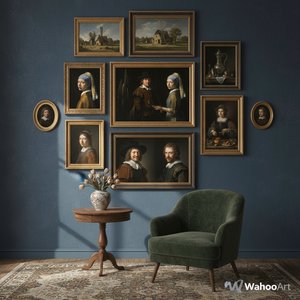
Hollantilaisen barokin mestariteokset: Taidetta ja inspiraatiota kotiin
Uppoudu hollantilaisen barokin maailmaan! Tutustu Rembrandtin, Vermeerin ja muiden mestarien ikonisiin teoksiin. Taidetta, historiaa ja inspiraatiota kotiisi – löydä upeat reproduktiot AllPaintingsStore.comista.
Golden Age Reflections: Dutch Baroque Painting & Cultural Innovation
Explore the Dutch Golden Age of painting! Discover key artists like Vermeer & ter Borch, their innovative techniques, and the rich cultural context behind these Baroque masterpieces. Learn about collecting & appreciating this iconic art period.

Chiaroscuro and Character: A Definitive Guide to Light and Shadow in the Dutch Baroque Era
Explore the dramatic mastery of the Dutch Baroque era. Discover how masters like Rembrandt used chiaroscuro to transform everyday life into timeless art. An expert guide for collectors and enthusiasts seeking to understand the profound interplay of light and shadow.
Hollantilaisen kultakauden 10 mestariteosta – Taidetta kotiisi AllPaintingsStore.com
Uppoudu hollantilaisen kultakauden taiteen maailmaan! Tutustu Rembrandtin, Vermeerin ja muiden mestareiden ikonisiin maalauksiin. Löydä inspiraatiota kotiisi AllPaintingsStore.com:ista – laadukkaat taidevedokset ja sisustustaulut jokaiseen tilaan. Explore the full collection online!

Golden Light & Dutch Skies: The Timeless Magic of Dutch Golden Age Landscapes
Discover the breathtaking beauty of Dutch Golden Age landscapes. Explore the mastery of light, chiaroscuro, and 17th-century realism through an expert art history lens, celebrating the enduring legacy of the Dutch Masters for discerning collectors and art lovers.

