


 Katso seinällä
 Lähetä
 Jaa
Jaa
 Tarkemmat tiedot
 Opas
Opas

 Lataa kuva
 Samanlaisia kohteita
 Röntgenkuvaus
 Diaesitys
 Tilastot
The Night Train
 Acrylic On Canvas
- WallArt
- Romanticism
 1849
1849 280.0 x 380.0 cm
 City Art Gallery
 Lue lisää
Giclée- ja taideprintit
Museolaatuisia giclée- tai kankaitaulun tulosteita nopealla tuotannolla ja joustavilla viimeistelyvaihtoehdoilla. ( Tilaa käsinmaalattu jäljennös Siirry digitaaliseen kuvaan)




P118B €10

P118H €10

P118W €10

P438Z €10

P508JH €12

P508YH €12

P805H €10

P805Z €10

P919BZ €10

P919G €10

P919XJ €10

P959ZH €10

P968JZ €12

W106C €8

W218G €10

W218JH €8

W218Y €10

W307PJ €10

W316G €10

W316PJ €8

W316Y €10

W398PJ €8

W4111J €10

W500HY €15

W500JH €15

W692G €12

W849H €8

W940BG €15

W953PJ €8




Valitse valmiista mitoistamme sellaiset, jotka vastaavat teoksen alkuperäisiä mittasuhteita.

Kirjoita tarvitsemasi leveys ja korkeus, jotta tuloste sopii kehyskokoon tai seinällesi. Tulostetta voidaan vain leikata, sitä ei voi koskaan tehdä suuremmaksi kuin alkuperäinen kuva, joten eri muotoinen koko aiheuttaa osan kuvasta katoamisen. Lähetämme sinulle digitaalisen mallikuvan hyväksyttäväksi ennen kuin aloitamme tulostuksen. Tällä sivulla näkyvä kuva ei näytä lopullista leikkausta — vain mallikuva näyttää sen.
Maailmanlaajuinen toimitus () 2 viikossa tavallisen 4–5 viikon sijaan. (26 lokakuu)

Ilmainen pikatoimitus ympäri maailman

Korkealaatuinen pellavakangas

Kattava kuljetusvakuutus

Tulliveron palautustakuu

Takuu täydellisestä värien vastaavuudesta

100 päivän palautusoikeus valmistusvirhetapauksissa

100% rahat takaisin -takuu

Määräalennus saatavilla
 Lasivaihtoehto on saatavilla vain alle 110 cm kokoisille teoksille

The Night Train
Giclée- ja taideprintit
Replikaatin koko
-


Kokonaishinta
€ 56
The Night Train: A Watercolor’s Evocative Journey
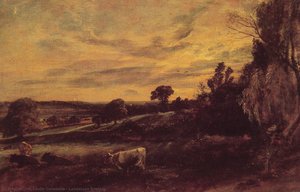
David Cox's "The Night Train," painted in 1849, isn’t merely a depiction of a locomotive traversing the countryside; it’s a profound meditation on movement, atmosphere, and the sublime power of nature. Created during a pivotal period of artistic evolution – bridging the Romantic era with nascent influences of Impressionism – this watercolor captures a fleeting moment imbued with both drama and tranquility. Cox, a key figure in the Birmingham School of painting, masterfully employed loose brushstrokes and a muted color palette to evoke not just what he saw, but how he *felt* observing the scene.
The composition immediately draws the eye into a dynamic landscape dominated by a swirling, almost turbulent sky. Dark, brooding clouds – rendered with remarkable sensitivity to light and shadow – press down upon the viewer, hinting at an impending storm while simultaneously illuminating the distant horizon. Below this dramatic expanse unfolds a rolling countryside, painted in washes of deep greens, browns, and blues. The artist’s technique is deliberately loose; individual brushstrokes are visible, contributing to the sense of movement and immediacy. This approach was revolutionary for its time, moving away from the rigid detail favored by earlier landscape painters.
A Glimpse into a Romantic Vision
“The Night Train” firmly resides within the Romantic tradition, a movement that prioritized emotion, imagination, and the awe-inspiring power of nature. Unlike the Neoclassical emphasis on reason and order, Romantic artists sought to capture subjective experiences – feelings of wonder, terror, and spiritual connection – in their work. Cox’s painting embodies this spirit perfectly. The train itself, a symbol of progress and industrialization, is presented not as a triumph but as an element within a larger, more ancient landscape. It's a reminder of humanity’s place within the vastness of nature.
The inclusion of figures on the train – two individuals observing the scene – adds another layer of interpretation. Are they travelers seeking adventure? Or perhaps simply observers contemplating the beauty and power of the natural world? Their presence invites the viewer to project their own experiences and emotions onto the scene, transforming it into a shared moment of contemplation.
Symbolism and Emotional Resonance
Beyond its immediate visual appeal, “The Night Train” is rich in symbolism. The train, as mentioned, represents progress but also carries an element of displacement – a journey away from familiar surroundings. The turbulent sky suggests both the potential for destruction and renewal, while the horses galloping across the foreground embody untamed energy and instinct. Cox’s masterful use of light and shadow creates a powerful emotional atmosphere, evoking feelings of mystery, anticipation, and perhaps even a touch of melancholy.
The painting's overall effect is one of profound beauty and quiet drama. It’s not simply a landscape; it’s an experience – a journey into the heart of nature’s power and the human spirit’s capacity for wonder. “The Night Train” remains a testament to David Cox’s artistic vision and his ability to capture the essence of a fleeting moment with remarkable skill and sensitivity.
Reproductions & Artistic Legacy
High-quality reproductions of “The Night Train” are available, offering art enthusiasts a chance to bring this evocative masterpiece into their homes. Considerations for framing should complement the painting’s atmospheric qualities – a simple, natural wood frame would best enhance its romantic feel. The watercolor's delicate washes and subtle details benefit from archival-quality paper and printing techniques to preserve its original beauty.
Cox’s influence extends beyond this single work; he is considered a precursor to Impressionism, paving the way for artists who sought to capture fleeting moments of light and color. Studying “The Night Train” provides valuable insight into the development of landscape painting and the enduring power of Romantic art.
Kysymykset ja vastaukset
Kuinka suuri alkuperäinen "The Night Train" on?
Alkuperäisen teoksen David Cox:n "The Night Train" mitat ovat 280 x 380 cm.
Mistä löydän oppaan teokseen "The Night Train"?
Teoksesta David Cox:n "The Night Train" on saatavilla Opas -sivu: tulostettava tietolomake teoksesta, joka on suunniteltu opiskelijoita ja luokkahuonekäyttöä varten.
Onko "The Night Train" tunnettu Romanticism-tyylisuunnan teos?
"The Night Train" on luokiteltu Recognized tasolle luettelon Romanticism teosten joukossa.
Samankaltaisia teoksia



Taiteilijan elämäkerta
Early Life and Artistic Foundations
David Coxin elämä oli täynnä inspiraatiota ja taiteellista intohimoa, ja kaikki alkoi hänen lapsuutensa Birminghamissa, Englannissa. Syntynyt vuonna 1783 Deritendissa, hän kasvoi perheessä, jonka isä toimi panssariseppänä ja äiti oli koulutettu nainen, joka antoi pojalle vahvan pohjan. Coxin varhaiset vuodet opiskeltiin Joseph Barberin akatemiassa, jossa hän tapasi tulevat kollegansa Charles Barlerin ja William Radcliffin. Tämä kokemus loi perustan hänen taiteelliselle kehitykselleen. Merkittävä käänne tapahtui vuonna 1804, kun Cox muutti Lontooseen ja solmi avioliiton vuokranantajansa tyttären kanssa. Hänen varhaisimmista opintojäännöksistään huolimatta Coxin ura alkoi Albert Fielderin johdolla, Birminghamin tunnetun maalari, joka oli erikoistunut pieniin maalauksiin ja koristeellisiin töihin, kuten tupakikotiloihin. Tämä varhainen harjoittelu antoi hänelle arvokkaita taitoja ja ymmärrystä taiteen tekniikoista. Coxin ensimmäiset näyttelyt Royal Academiassa vuonna 1805 osoittivat hänen kiinnostustaan klassisiin maisema-aiheisiin, jotka muistuttavat Thomas Gainsboroughin ja Richard Wilsonin työtä. Samalla hän alkoi kerätä kokemusta opettajana, mikä myöhemmin osoittautui tärkeäksi tulonlähteeksi.Matka Walesiin ja Taiteellisen Tyylin Muutos
Coxin taiteellinen polku kääntyi merkittävästi vuonna 1805, kun hän teki matkan Walesiin Charles Barlerin kanssa. Tämä seikkailu oli ratkaiseva hetki hänen uransa kannalta, sillä se avasi hänen silmänsä upealle luonnolle ja inspiroi häntä kehittämään oman, tunnistettavan tyylinsä. Walesin maisemat, niiden dramaattiset vuoristot, sumuiset laaksot ja syvät jokilaaksoja, jättivät pysyvän jäljen Coxin taiteeseen. Matkan jälkeen Cox jatkoi näyttelyjäännöksiä Royal Academiassa, mutta samalla hän alkoi keskittyä enemmän yksityiskohtien vangitsemiseen ja tarkkaan maisemointiin. Hänen tyylinsä kehittyi asteittain, poispäin täysin topografisista kuvauksista kohti ilmaisuvoimaisempia ja tunnelmallisempia tulkintoja luonnosta. Coxin taiteessa oli vaikutteita sekä hollantilaisilta maisema-maalareilta 1700-luvulta että Constable'n tarkkanäköisyydestä luonnon havainnoinnissa.Työelämä ja Taiteellinen Kehitys
Coxin ura kukoisti Lontoossa, jossa hän jatkoi opettamista ja näyttelyjäännöksiä. Hän oli erittäin suosittu taidemaailmassa, ja hänen töissään yhdistyivät tarkkuus ja tunne. Vuonna 1827 Cox palasi Birminghamiin, missä hän jatkoi tuotantonsa kasvattamista ja kehittämistä. Tämä aika oli erityisen vilkas, ja hän loi monia mestariteoksiaan, jotka ovat edelleen arvostettuja brittiläisen taiteen klassikoita. Coxin työelämä ei rajoittunut pelkästään maalaamiseen. Hän kirjoitti myös useita oppikirjoja, joissa jakoi taitojaan ja kokemuksiaan nuoremmille taiteilijoille. Hänen *A Series of Progressive Lessons* -teoksensa oli erityisen suosittu ja auttoi levittämään vesiväritekniikkaa laajasti. Coxin vaikutus britti taiteeseen on siis monipuolinen, ja hän edusti sekä maalausta että pedagogiikkaa.Tyylilliset Ominaisuudet ja Merkittävä Perintö
Coxin tyyli oli tunnettu sen ilmaisuvoimaisesta tunnelmasta, lämpimistä väreistä ja löysästä siveltimestä. Hän ei pyrkinyt täydelliseen tarkkuuteen vaan keskittyi luomaan elävän kuvan luonnon hetkellisestä kauneudesta. Hänen myöhemmät öljyvärimaalauksensa olivat erityisen innovatiivisia, ja ne osoittavat hänen kykyään vangita valon ja sään vaikutukset. Coxin tuotanto ylitti 300 teosta öljyssä, mikä on todiste hänen merkittävästä panoksestaan brittiläiseen taiteeseen. Coxin perintö jatkuu edelleen tänä päivänä. Hänen maalauksensa ovat arvostettuja kokoelmissa ympäri maailmaa ja inspiroivat taiteilijoita edelleen. Hän on tunnettu varhaisena esikuvana impressionismille, ja hänen työnsä osoittaa, kuinka luonnon tarkka havainnointi ja ilmaisuvoimainen tyyli voivat yhdistyä. David Coxin nimi tulee aina liittymään brittiläisen maisemamaalauksen historiaan.Historiallinen Merkitys
Coxin taide on merkittävä osa brittiläistä taiteen historiaa, sillä hän oli yksi ensimmäisistä taiteilijoista, jotka siirtyivät tarkkaan topografiseen kuvaamiseen kohti ilmaisuvoimaisempia ja tunteellisempiä tulkintoja luonnosta. Hänen vaikutuksensa näkyy monissa myöhemmissä taiteilijoissa, ja hänen työnsä on edelleen arvostettua ja inspiroivaa. Coxin panos on merkittävä, sillä hän loi pohjan brittiläiselle maisemamaalaukselle, joka tunnetaan nykyään.
David Cox
1783 - 1859 , Iso-Britannia
Tietoa taiteilijasta
- Artistic Movement Or Style: Landskap, Pre-impressionismi
- Artists Or Movements Influenced By This Artist: ['Impressionistit']
- Artists Who Influenced This Artist:
- Barber
- Fielder
- Date Of Birth: 29.4.1783
- Date Of Death: 7.6.1859
- Full Name: David Cox
- Nationality: Englanti
- Notable Artworks:
- Tuulen tuoksa
- Kartano
- Severn-joen ja Wye-joen risteys
- Place Of Birth: Birmingham, UK
Aiheeseen liittyvät artikkelit

Ephemeral Visions: Exploring the Artistic Legacy & Nuances of Watercolor Painting
Explore the captivating world of watercolor painting! Discover its rich history, essential techniques, influential artists & collecting tips from art experts. A comprehensive guide for enthusiasts.

10 Vesivärimaalausta, Jotka Muuttivat Taiteen – Inspiroi Sisustuksesi AllPaintingsStoreilla
Tutustu 10 legendaariseen vesivärimaalaukseen, jotka muuttivat taiteen historiaa! Inspiroiva tarina Turnerista Monetiin. Löydä upeita akvarelleja ja sisustusideoita AllPaintingsStoreilla. Tutki kokoelma verkossa!

Ephemeral Visions: Exploring the Artistic Legacy & Contemporary Practice of Watercolor Painting
Explore the captivating world of watercolor painting! Discover its rich history, essential techniques, influential artists & collecting tips. A comprehensive guide for art enthusiasts from AllPaintingsStore.

Ephemeral Visions: Exploring the History & Emotional Resonance of Watercolor Painting
Explore the captivating history of watercolor painting, from ancient techniques to modern masters like Kandinsky & Blake. Discover essential artists, collecting tips & the emotional power of this luminous medium. Expert insights for art enthusiasts.

David Cox the Elder: Landscape, Light & the Romantic Vision of Rural England
Explore the captivating landscapes of David Cox the Elder, a pivotal figure in British Romanticism. Discover his masterful watercolour techniques, enduring legacy & find timeless art for your home at AllPaintingsStore.

