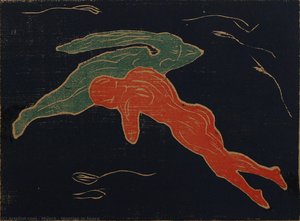
1895. Acrylic On Canvas.

§ 1Luettelotiedot


§ 2Abstrakti
Keräilykohteen kuvaus
 Lue lisää
Taiteilijan elämäkerta
Edvard Munch (1863-1944) – norjalaista taiteilijaa, jonka tunnetuimmat teokset, kuten 'Huuto', kuvaavat ihmisen sisäistä maailmaa ja tunteita. Ekspressionismin pioneeri.
§ 3Kommentointi
Introduction to Edvard Munch
Edvard Munch (1863-1944) was a Norwegian painter, printmaker, and draughtsman who is best known for his hauntingly emotional depictions of human anxiety and despair. A pioneer in the Expressionist movement, Munch's work often featured distorted figures, jarring colors, and an emphasis on mood over detail. His unique style would go on to influence generations of artists, including notable names like Ernst Ludwig Kirchner, Max Beckmann, and Francisco Goya.The Self-Portrait: A Brief Overview
Munch's Self-Portrait, painted in 1895, is a striking example of the artist's ability to convey complex emotions through his work. The painting features Munch himself, gazing out at the viewer with an intense, almost pained expression. His face is framed by long, dark hair and a high collar, drawing attention to his eyes and mouth.Interpreting the Self-Portrait
At first glance, Munch's Self-Portrait may appear to be a simple depiction of the artist himself. However, upon closer examination, it becomes clear that this painting is anything but straightforward. The distorted features and intense colors suggest an underlying turmoil, as if Munch is grappling with some inner demon or existential crisis. This interpretation is further supported by the fact that Munch was deeply influenced by the ideas of Friedrich Nietzsche, who famously wrote about the "death of God" and the resulting void in human existence. Munch's work often reflects this sense of nihilism, as well as a pervasive feeling of loneliness and isolation.Munch's Legacy
Today, Edvard Munch's Self-Portrait is considered a masterpiece of Expressionist art, and it continues to inspire artists and collectors alike. At AllPaintingsStore.com, we are proud to offer high-quality reproductions of this iconic painting, allowing art lovers everywhere to experience the power and emotion of Munch's work in their own homes.Conclusion
In conclusion, Edvard Munch's Self-Portrait is a powerful example of Expressionist art that continues to captivate audiences more than a century after it was first painted. Through his unique style and unflinching exploration of the human condition, Munch created a work that speaks to the deepest fears and desires of the human soul. To learn more about Edvard Munch and his other masterpieces, visit our website at AllPaintingsStore.com.Kysymykset ja vastaukset
Kuinka suosittu "Self-Portrait" on Expressionist Movement-suuntauksessa?
Expressionist Movement-suuntauksen sisällä teoksella "Self-Portrait" on Iconic suosio.
Mistä kansallisuudesta "Self-Portrait"-teoksen Expressionist Movement kumpuaa?
Self-Portrait on Edvard Munch tekemä teos, joka on syntynyt Expressionist Movement-suuntauksen vaikutuksesta; taiteilija on kotoisin Ruotsi. Taiteilijan alkuperä yhdistää teoksen Expressionist Movement-tyyliin, jota Ruotsi-maasta kotoisin olevat taiteilijat edustavat.
Miten teoksen Edvard Munch:n "Self-Portrait" värikompositio on rakennettu?
Edvard Munch:n "Self-Portrait" teoksen väriyhdistelmä yhdistää Statement kontrastin ja Softly Mixed Palette harmonian.


 Vaihda tulosteeseen


 Teoksille tai reproduktioille, joiden mikä tahansa sivu on suurempi kuin 105 cm (noin 41 tuumaa), kehys toimitetaan osina purettuna sarjana. Tämä menetelmä varmistaa turvallisen toimituksen ja ehkäisee vaurioita kuljetuksen aikana.