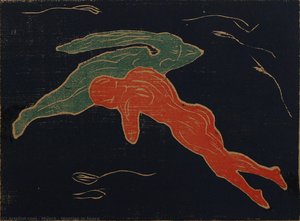
Acrylic On Canvas.

§ 1Luettelotiedot

§ 2Abstrakti
Keräilykohteen kuvaus
Experience the evocative atmosphere of Edvard Munch's 'untitled (8620)' – a captivating oil painting capturing a lively 19th-century saloon scene brimming with figures and symbolic details.
 Lue lisää
Taiteilijan elämäkerta
Edvard Munch (1863-1944) – norjalaista taiteilijaa, jonka tunnetuimmat teokset, kuten 'Huuto', kuvaavat ihmisen sisäistä maailmaa ja tunteita. Ekspressionismin pioneeri.
§ 3Kommentointi
A Window into Existential Angst: Exploring Edvard Munch’s “Untitled (8620)”
The painting "Untitled (8630)" by Edvard Munch stands as a haunting testament to the anxieties of the fin de siècle, capturing not merely a scene but an emotional state—a profound exploration of human vulnerability and psychological unease. Executed in oil on canvas, this artwork transcends mere representation; it delves into the subconscious mind, mirroring the turbulent inner world of its creator and resonating powerfully with viewers even today. Munch’s artistic journey was profoundly shaped by personal tragedy – the premature deaths of his mother and sister from tuberculosis – experiences that instilled within him a lifelong preoccupation with mortality and illness, themes which permeate throughout his oeuvre. Yet, “Untitled (8630)” distinguishes itself through its masterful depiction of a seemingly unremarkable interior space transformed into a conduit for existential dread.- Subject Matter: The composition centers around a dimly lit room populated by figures seated at a table and engaged in conversation. A solitary man dominates the frame, positioned centrally amidst the others, his gaze averted downwards – a gesture laden with unspoken sorrow and introspection.
- Style & Technique: Munch’s signature style is characterized by expressive brushstrokes and vibrant color palettes employed to convey emotion rather than objective reality. The painting utilizes thick impasto—a technique where paint is applied in textured layers—creating palpable physicality that amplifies the sense of unease. Notice particularly the swirling, turbulent strokes around the central figure, mirroring the psychological turmoil he embodies.
- Symbolism: Munch’s use of color is deliberately unsettling. The dominant hues—deep reds and yellows—evoke feelings of passion, fear, and impending doom. The muted tones of the room contribute to a claustrophobic ambiance, emphasizing the isolation experienced by the central figure. Furthermore, the clock hanging on the wall serves as a potent symbol of time’s relentless march toward decay and mortality – a constant reminder of human vulnerability.
- Emotional Impact: “Untitled (8630)” isn't merely aesthetically pleasing; it compels viewers to confront uncomfortable truths about themselves and the human condition. Munch deliberately eschewed conventional realism, prioritizing emotional resonance over factual accuracy. The painting succeeds in conveying a palpable sense of melancholy and apprehension—a feeling that lingers long after viewing, prompting contemplation on themes of loss, grief, and the inescapable awareness of death.
Kysymykset ja vastaukset
Miten teos "untitled (8620)" sijoittuu osaksi Edvard Munch'n tuotantoa?
Edvard Munch'n tuotannossa "untitled (8620)" edustaa Symbolic Expressionism-tyyliä ja kytkeytyy psychological depth, existential angst, symbolic imagery, melancholy mood, personal trauma teemoihin.
Mistä voin löytää teoksia, jotka muistuttavat teosta Edvard Munch:n "untitled (8620)"?
Teokset, jotka muistuttavat teosta "untitled (8620)", löytyvät sen Samankaltaisia teoksia -sivulta.
Kuinka kylläisiä Edvard Munch:n "untitled (8620)" -teoksen värit ovat?
Teoksen Edvard Munch:n "untitled (8620)" värikylläisyys on Balanced Soft.


 Vaihda tulosteeseen


 Teoksille tai reproduktioille, joiden mikä tahansa sivu on suurempi kuin 105 cm (noin 41 tuumaa), kehys toimitetaan osina purettuna sarjana. Tämä menetelmä varmistaa turvallisen toimituksen ja ehkäisee vaurioita kuljetuksen aikana.