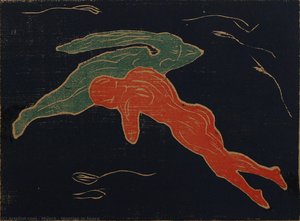
1893. Oil On Canvas.

§ 1Catalogue data


§ 2Abstract
Keräilykohteen kuvaus
Explore Edvard Munch’s ‘Voice,’ a powerful Expressionist masterpiece capturing raw emotion & psychological depth. Discover its unique style, symbolism, & impact on modern art.
 Lue lisää
Taiteilijan elämäkerta
Edvard Munch (1863-1944) – norjalaista taiteilijaa, jonka tunnetuimmat teokset, kuten 'Huuto', kuvaavat ihmisen sisäistä maailmaa ja tunteita. Ekspressionismin pioneeri.
§ 3Commentary
Introduction to the Artist and Title
Edvard Munch, a pivotal figure in modern art, was born on 12 December 1863 in Norway. He is globally renowned for his iconic 1893 masterpiece, The Scream. The painting we will discuss today, Voice, is another powerful example of Munch's Expressionist style and was created around the same time as The Scream.Style: Expressionism
Expressionism is a modernist movement that emerged in the early 20th century, characterized by its emphasis on emotional experience and subjective interpretation. Munch's work falls under this category, with his distinctive style reflecting his personal emotions and psychological state. The bold use of color and form in Voice exemplifies Expressionism's focus on the artist's interior vision rather than outward-facing realism.Date: 1893
The year 1893 was a significant one for Munch, as it marked the creation of two of his most famous works: The Scream and Voice. Both paintings reflect Munch's emotional state during this period, which was heavily influenced by personal tragedies, illness, and a fear of inheriting a mental condition.Context and Influences
Munch's travels to Paris and Berlin exposed him to various artistic styles and movements, including the works of Paul Gauguin, Vincent van Gogh, Henri de Toulouse-Lautrec, and August Strindberg. These influences can be seen in Munch's bold use of color and form, as well as his exploration of deeply-felt themes such as love, anxiety, jealousy, and betrayal.The Voice: A Deeper Look
In Voice, Munch depicts a figure with an agonized expression, similar to that seen in The Scream. This painting is part of Munch's major series called The Frieze of Life, which explores the human condition and its emotional complexities.Conclusion
Edvard Munch's Voice (1893) is a powerful example of Expressionism, showcasing the artist's unique style and his exploration of deeply-felt themes. To learn more about Edvard Munch and other Expressionist artists, visit our dedicated page on Top 5 Famous Expressionism Artists of All Time. Additionally, you can explore more of Munch's works, including The Scream, on our website: Discover the beauty and emotion of Expressionist art with our hand-made oil painting reproductions at AllPaintingsStore.com.Kysymykset ja vastaukset
Miten taidesuuntaus ja aikakausi kohtaavat teoksessa Edvard Munch:n "Voice"?
Teoksessa Edvard Munch:n "Voice" Expressionism-suuntaus ja luku-aikakausi kohtaavat.
Miksi teoksen "Voice" tekijänoikeustila on sellainen kuin se on?
Edvard Munch:n "Voice" on vapaasti käytettävissä – tekijänoikeussuoja on päättynyt. Tekijänoikeuden voimassaolo lasketaan taiteilijan kuolinvuodesta, joka oli 1944.
Mikä on teoksen Edvard Munch:n "Voice" valmistumisvuosi ja tyylisuunta?
Edvard Munch:n "Voice" on peräisin vuodelta 1893 ja edustaa tyylisuuntaa Expressionism.


 Vaihda tulosteeseen


 Teoksille tai reproduktioille, joiden mikä tahansa sivu on suurempi kuin 105 cm (noin 41 tuumaa), kehys toimitetaan osina purettuna sarjana. Tämä menetelmä varmistaa turvallisen toimituksen ja ehkäisee vaurioita kuljetuksen aikana.