Rahat takaisin -takuu · 100 päivää Ilmainen toimitus ympäri maailman
449 587teokset 30 613taiteilijat 4 660museot 32kielet
Valuutta
    Kieli
      Ateljee · Perustettu 2015 · Pariisi, Ranska
      AllPaintingsStore
      allpaintingsstore.com
      Catalogue entry

      The Risen Christ (frontal view)

      1595. Oil On Canvas. Hospital Tavera.

      Fig. 1. El Greco, The Risen Christ (frontal view), 1595. Shown as the reproduction you are specifying: , .

      § 1Catalogue data

      § 2Abstract

      Keräilykohteen kuvaus

      Taiteilijan elämäkerta

      El Grecon Laokoön on vaikuttava klassinen maalauksesi, joka tuo esiin kärsimyksen ja tragedian tunteet sekä häikäisevän värimaailman Toledoon. Tutustu täydelliseen yksityiskohtaan!

      § 3Commentary

      The Risen Christ (frontal view) – A Monumental Vision of Faith

      Doménikos Theotokópoulos, universally known as El Greco—“the Greek”—stands apart from his contemporaries not merely as a painter but as an artist who forged his identity in the crucible of faith and fire. Born in Crete in 1541, under Venetian rule, his artistic journey traversed Venice and Rome before finding its ultimate expression in the spiritual heartland of Spain: Toledo. El Greco wasn’t simply responding to prevailing trends; he synthesized influences from Byzantium and Mannerism into a style that foreshadowed Expressionism and Cubism centuries ahead of their time.

      • Subject Matter & Symbolism: The artwork depicts Jesus Christ resurrected, embodying themes of divinity, ascension, and divine revelation. His nudity symbolizes purity and vulnerability—a deliberate choice reflecting the theological significance of repentance and spiritual rebirth. The upward gesture of his arms signifies blessing or offering, conveying a profound sense of hope and transcendence.
      • Style & Technique: El Greco’s oeuvre exemplifies Mannerist style, characterized by elongated figures, dramatic lighting, dynamic lines, and distorted perspective—techniques that deliberately challenged Renaissance conventions. Employing oil paint on canvas or panel, he achieved remarkable realism through meticulous layering and blending, capturing the subtleties of skin tones and light diffusion.
      • Composition & Perspective: The painting’s central compositional structure emphasizes Christ as its focal point, filling most of the frame with a monumental presence. The stark black background isolates him, intensifying his impact and creating an illusion of infinite depth—a deliberate distortion designed to convey spiritual grandeur beyond earthly limitations.
      • Color Palette & Lighting: Earthy hues dominate the color palette, punctuated by warm undertones that illuminate Christ’s flesh with ethereal light. This directional lighting casts dramatic shadows, enhancing the figure's three-dimensionality and creating a palpable atmosphere of solemn contemplation.
      • Lines & Shapes: Dynamic, swirling lines permeate the drapery and musculature, contributing to the painting’s sense of movement and energy—a stylistic hallmark of El Greco that distinguishes him from his peers. The elongated human form is stylized yet recognizable, reflecting the artist's preoccupation with conveying spiritual essence through visual representation.

      Further research into “The Risen Christ” reveals its place within El Greco’s broader artistic output and its enduring influence on subsequent artists. Notably, a single sculpture by El Greco’s own hand resides in Toledo Cathedral—a testament to his unwavering devotion. Alongside this masterpiece, consider reproductions of other celebrated works like “Saint Peter” and “Saint Ildefonso,” showcasing El Greco's masterful manipulation of perspective and color to evoke profound spiritual emotion.

      “The Resurrection” exemplifies El Greco’s stylistic innovations—a bold departure from traditional artistic norms that anticipated the expressive fervor of Expressionism. Its meticulous execution, utilizing oil paint on canvas, underscores El Greco’s commitment to capturing both visual realism and symbolic depth.

      Kysymykset ja vastaukset

      Mistä löydän oppaan teokseen "The Risen Christ (frontal view)"?

      Teoksesta El Greco:n "The Risen Christ (frontal view)" on saatavilla Opas -sivu: tulostettava tietolomake teoksesta, joka on suunniteltu opiskelijoita ja luokkahuonekäyttöä varten.

      Onko teoksesta El Greco:n "The Risen Christ (frontal view)" saatavilla diashow-esitystä?

      Teoksen "The Risen Christ (frontal view)" diaporama on katsottavissa teoksen Diaesitys -sivulla.

      Kuinka vaalea "The Risen Christ (frontal view)" on kokonaisuudessaan?

      Koetun kirkkauden osalta teos El Greco:n "The Risen Christ (frontal view)" on deep_shadow.
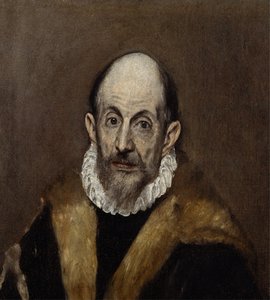
      § 4The artist

      El Greco

      El Greco

      1541 - 1614, Kreikka

      Quick facts about El Greco

      • Artistic Movement Or Style: Mannerismi ja Barroko
      • Artists Or Movements Influenced By This Artist:
        • Expressionismi
        • Cubismi
      • Artists Who Influenced This Artist:
        • Titian
        • Tintoretto
      • Date Of Birth: 1541 Kreeta
      • Date Of Death: 1614
      • Full Name: Doménikos Theotokópoulos
      • Nationality: Kreikkalainen
      • Notable Artworks:
        • Pyhä Mauricuksen marttyyrit
        • Laokoön
        • El Espolio
        • St. Sebastian
      • Place Of Birth: Kreeta, Greece

      Taiteilijan elämäkerta

      Doménikos Theotokópoulos, called El Greco

      Doménikos Theotokópoulos, known to the world as El Greco – “the Greek” – was a painter whose life and work defied easy categorization. Born in Crete, Greece (1541), his artistic journey took him through Venice and Rome before finding its ultimate expression in the spiritual heartland of Spain: Toledo. El Greco wasn’t merely a product of these places; he synthesized their influences into something wholly unique, a style that anticipated the emotional intensity of Expressionism and the fragmented forms of Cubism centuries later. His early training within the Byzantine tradition instilled in him a meticulous attention to detail and a profound understanding of religious iconography. This foundation, however, wouldn’t confine him. He signed his works in Greek, often appending “Krḗs” – Cretan – as a proud declaration of his origins, even as he ventured into new artistic territories. The seeds of his distinctive style were sown not just in technique but also in the fervent religious climate of his homeland and the rich tapestry of Venetian art.

      Early Life and Artistic Training

      Doménikos Theotokópoulos was born in Fodele (modern Candia), Crete, then under Venetian rule – a location steeped in Byzantine heritage. His father, Nikolaos Zacharias Kantakopoulos, was a wealthy merchant and administrator, providing him with a privileged upbringing that fostered his intellectual curiosity and nurtured his artistic inclinations from a young age. Unlike many artists of his time who pursued formal training in Florence or Rome, El Greco’s initial education took place primarily within the Cretan Orthodox Church tradition. He studied under Zacharias Konstantinos Kontoglou, a renowned icon painter who instilled in him a deep appreciation for Byzantine iconography and compositional principles—a legacy that would profoundly shape his artistic vision. This meticulous attention to detail and unwavering devotion to religious symbolism became hallmarks of his oeuvre throughout his career.

      Venetian Influence: Embracing Innovation

      Around 1567, El Greco embarked on a transformative journey to Venice – a city renowned for its vibrant artistic scene and the patronage of wealthy merchants and aristocrats. Immediately immersed in the milieu of Venetian masters like Titian, Tintoretto, and Veronese, he absorbed their mastery of color, composition, and dramatic lighting. He learned to loosen his brushwork, embracing the sensual qualities of oil paint and experimenting with innovative techniques that departed from traditional Byzantine conventions. This Venetian influence is vividly evident in early works such as *Saint Sebastian* (1600), where anatomical detail blends seamlessly with an almost theatrical use of light and shadow—a testament to El Greco’s willingness to push boundaries and explore new artistic horizons. The Venetian experience broadened his stylistic repertoire, preparing him for the challenges posed by the competitive Roman art world.

      Roman Years: Seeking Recognition Amidst Mannerism

      El Greco's arrival in Rome around 1570 coincided with the ascendancy of Mannerism – a style characterized by elongated figures, distorted perspectives, and sophisticated compositions that prioritized elegance and intellectual contemplation over naturalistic representation. While he demonstrated considerable talent and garnered admiration from some influential patrons—including Cardinal Giovanni Battista Castelli—El Greco struggled to gain widespread recognition in Rome’s artistic circles. The Roman art world was dominated by established artists who adhered to classical ideals of beauty and proportion, making it difficult for El Greco's unconventional style to find acceptance among the elite aesthetes of the era. Despite these setbacks, he continued to refine his technique and explore new expressive possibilities—a characteristic that would define his artistic trajectory throughout his Roman years.

      Toledo: Spiritual Synthesis and Artistic Zenith

      By 1577, El Greco relocated to Toledo – a city undergoing a fervent religious revival during the Counter-Reformation and home to numerous churches and monasteries eager to commission monumental artworks for devotional purposes. This move proved decisive in establishing El Greco’s artistic reputation and securing him access to influential patrons—most notably King Philip II, who recognized his singular talent and commissioned several ambitious projects that cemented his place among Spain's greatest artists. In Toledo, El Greco achieved his artistic zenith, producing masterpieces that epitomized his distinctive style—characterized by elongated figures imbued with spiritual fervor, dramatic lighting that evoked profound emotion, and vibrant colors that conveyed a sense of otherworldly beauty. His most celebrated works include *The Burial of the Count of Orgaz*, *View of Toledo*, *The Opening of the Fifth Seal*, and *Saint Sebastian*, each representing a culmination of his artistic explorations and embodying the spiritual ethos of his time. El Greco’s legacy extends far beyond his own lifetime, inspiring artists across centuries with his visionary style and unwavering devotion to religious expression—a testament to the enduring power of art to transcend temporal boundaries and communicate universal truths.

      § 5Comparanda

      § 6Questions

      Pikaista tietoa

      • Subject or theme: Religious iconography; Resurrection
      • Artist: El Greco
      • Artistic style: Stylized; Monumental
      • Notable elements or techniques: Dynamic lines; Dramatic lighting; Elongated figures
      • Medium: Oil on canvas

      Taidevisat

      Jokaisessa kysymyksessä on vain yksi oikea vastaus.

      Kysymys 1:
      What artistic style is El Greco primarily associated with?
      Kysymys 2:
      The painting utilizes a central compositional structure where Jesus Christ occupies most of the frame. What contributes to this sense of monumentality?
      Kysymys 3:
      What is the dominant color palette used in ‘The Risen Christ’?
      Kysymys 4:
      How does El Greco employ lines within the painting?
      Kysymys 5:
      What symbolic element is represented by the nudity of Jesus Christ?

      § 7Cite this entry

      AllPaintingsStore.com, “El Greco, The Risen Christ (frontal view) (1595)”, https://allpaintingsstore.com/fi/art/el-greco-the-risen-christ-frontal-view-8XZGKP-en/ArtistReproduction/ (accessed 1 lokakuu 2026).

      § 8The reproduction

      Käsinmaalattu öljyvärinen jäljennös

      Käsinmaalattu öljyväri kankaalle haluamassasi koossa ja kehyksissä, taiteilijoidemme valmistamana tilauksesta. ( Vaihda tulosteeseen Siirry digitaaliseen kuvaan)

      It is specified on the order sheet in the margin; the present state of that sheet reads as follows.

      The Risen Christ (frontal view)

      Reproduktiotekniikka

      Replikaatin koko

      -

      Kokenut huipputaiteilija

      Lisää yksityiskohtia, hienostuneisuutta ja enemmän aikaa tuotantoon

      -

      Reproduktion kehystysvaihtoehdot

      -

      -

      Teoksille tai reproduktioille, joiden mikä tahansa sivu on suurempi kuin 105 cm (noin 41 tuumaa), kehys toimitetaan osina purettuna sarjana. Tämä menetelmä varmistaa turvallisen toimituksen ja ehkäisee vaurioita kuljetuksen aikana.

      Vaatii ammattimaista kokoamista – kyseessä ei ole tee-se-itse-tuote.
      Sarja on koottava ja kangas kiristettävä kokeneen kehystysammattilaisen toimesta käyttäen puuliimaa (ei sisälly pakkaukseen), kangaspinnetteitä ja puristimia, jotta kehyksen kulmat pysyvät suorina liiman kuivuessa. Virheellinen kokoaminen tai epätasainen kankaan kiristys voi vaurioittaa teosta pysyvästi, eikä tällaiset vauriot ala takuun piiriin.

      • Kaikki massiivipuupalat sisältyvät, tarkasti mittojen mukaan leikattuina.

      • Kootaan mukana tulevilla ruuveilla sekä kulmaliitoksia varten tarvittavalla puuliimalla, jota ei toimiteta, joten se on hankittava kehystäjältä.

      • Vaatii ammattilaisvälineitä, jotka eivät sisälly pakkaukseen: kankaan venytyspihdit (kiristin) ja puristimet, joilla pidetään kehyksen puut suorassa liiman kuivuessa.

      Tärkeää:
      Kulmaliitoksissa tarvitaan puuliimaa, kehyksien osat on pidettävä puristimilla, kunnes liima on täysin kuivunut, ja koottuun kehykseen jännitettävän kankaan kiristämiseen tarvitaan kangaspenssipihti. Mikään näistä ei sisälly pakkaukseen. Suosittelemme varmistamaan kokeneen kehystäjän saatavuuden ennen tämän kokoisen kehyksen tilaamista.

      Nimilaatta

      -

      -

      Suojalakkaus

      Kiiltävä lakka (syventää värejä, suojaa valolta ja kosteudelta)

      -

      Mukauta taideteokseni

      Esimerkkejä muokattavista asioista: Vaihda kasvot asiakkaan omaan valokuvaan; Lisää lemmikki (esim. vaihda kissa koiraan); Lisää taustalle piilotettu viesti; Muuta taustan maisemaa tai elementtejä.

      -

      Pikatoimitus

      Maailmanlaajuinen toimitus () 3–4 viikossa tavallisen 5 viikon sijaan. (29 lokakuu). Laadusta ei tingitä.

      -

      Pikatoimitus

      Maailmanlaajuinen toimitus () 5 viikon kuluessa. (5 marraskuu).

      Sisältyy hintaan

      Kokonaishinta

      € 227

      Included with every order

      • Ilmainen pikatoimitus ympäri maailman
      • Korkealaatuinen pellavakangas
      • Kattava kuljetusvakuutus
      • Tulliveron palautustakuu
      • Takuu täydellisestä värien vastaavuudesta
      • 100 päivän palautusoikeus (vain valmistusvirheet)
      • 100% rahat takaisin -takuu
      • Määräalennus tarjolla
      Order sheet