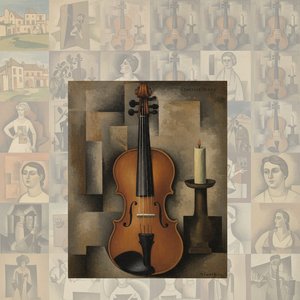
1950. Wood, 22.0 x 31.0 cm.

§ 1Catalogue data
 Wood
Wood- Sculpture
- Cubist Still Life
 1950
1950- Modern
 22.0 x 31.0 cm
Tämä teos on tekijänoikeuden suojaama
Tällä sivulla esitettyä taideteosta suojaa tekijänoikeuslaki, mikä tarkoittaa, ettemme voi laillisesti luoda tai myydä täsmälleen samanlaista jäljennöstä. Tämä suoja toteutetaan kansainvälisten sopimusten, kuten esimerkiksi Berne-konventio ja kansallisilla laeilla, mukaan lukien niillä määritellyt Yhdysvaltain tekijänoikeuslaki – Luku 17. Kaikki oikeudet pidätetään. Luvaton kopiointi tai jäljittely on kielletty.
Kunnioittavana ja laillisena vaihtoehtona tarjoamme alkuperäisestä inspiroituneita, yksilöllisiä ja käsinmaalattuja taideteoksia. Taitavat ja ammattimaiset taiteilijamme tutkivat huolellisesti alkuperäisen teoksen tyyliä, tunnelmaa ja taiteellista ydintä luodakseen uuden, ainutlaatuisen teoksen, joka herättää saman tunteen – säilyttäen samalla oman itsenäisen alkuperäisyytensä.
Tämä menetelmä noudattaa täysin tekijänoikeussäännöksiä, sillä se ei sisällä suojatun taideteoksen kopioimista tai jäljentämistä. Sen sijaan kyseessä on luova uudelleentulkinta – uusi maalaus, joka ammentaa vaikutteita alkuperäisestä, mutta ei ole sen identtinen kopio.
 Lue lisää
§ 2Abstract
Keräilykohteen kuvaus
Georges Braque’s evocative oyster still life embodies Fauvist color palettes and textural wood grain—a masterful depiction of quiet contemplation within a dimly lit interior. Explore this captivating piece by Picasso's collaborator and immerse yourself in the beauty of 1950s art.
Taiteilijan elämäkerta
Georges Braque’nin "Harbour in Normandy" maalauksessa näkyy aikaisen kubismin uraauurtava lähestymistapa muotoon ja perspektiiviin. Värikäs teos vangitsee sataman tunnelman hajotettuina muodoissa ja rohkeilla linjoilla.
§ 3Commentary
A Moment Frozen in Darkness: The Soul of Braque’s Oysters
In the quietude of 1950, Georges Braque captured a scene that transcends the simple boundaries of a still life, offering instead a profound meditation on texture and stillness. "Oysters" is not merely a depiction of shellfish upon a plate; it is an evocative exploration of materiality and perception. Executed on wood—a deliberate choice by the artist to embrace the tactile grain of his medium—the work presents two oysters nestled in a somber arrangement, accompanied by a solitary cup. The composition is anchored by a muted palette of deep blues, earthy browns, and shadowy tones, creating an atmosphere of contemplative silence that invites the viewer into a world far removed from the frenetic pace of modern life.
The painting serves as a masterful bridge between the vibrant energy of Braque’s earlier years and a more mature, introspective period. While his roots are deeply embedded in the Fauvist movement—a style characterized by bold, expressive color—"Oysters" demonstrates a refined restraint. Here, the artist employs a reductive technique, flattening the surface of the wood panel to emphasize the relationship between form and light. The brushstrokes, though visible, are controlled with a precision that lends a sense of solidity to the objects. For the collector or interior designer, this piece offers a sophisticated anchor for a room, providing a sense of groundedness and historical weight through its understated dynamism.
Symbolism and the Beauty of the Unseen
Beyond its visual composition, "Oysters" carries a heavy layer of symbolic resonance. The oyster itself has long been a symbol of fertility, abundance, and the hidden beauty that resides beneath an unassuming or even rugged exterior. By placing these elements within a dark, atmospheric setting, Braque intensifies their visual impact, forcing the eye to search through the shadows to find the light. This interplay between the visible and the obscured mirrors the broader themes of the post-World War II era—a time of profound uncertainty where artists sought to rediscover meaning amidst the ruins of tradition.
The choice of a dark background acts as a dramatic foil, pushing the muted tones of the plate and shells toward the foreground. This creates a sense of intimacy, as if the viewer has stumbled upon a private, late-night moment caught in a flash of moonlight. For those seeking to curate an environment of elegance and mystery, this artwork provides an unparalleled emotional depth. It is a piece that does not shout for attention but rather commands it through its quiet, persistent presence, making it an ideal selection for spaces designed for reflection, study, or sophisticated repose.
Kysymykset ja vastaukset
Kuinka vaalea "Oysters" on kokonaisuudessaan?
Kokonaisuudessaan teoksen "Oysters" kirkkaus on kirjattu arvoon deep_shadow. Koettu kirkkaus kuvaa sitä, kuinka vaaleana tai tummana teos vaikuttaa.
Mihin kohtaan taidehistoriaa Georges Braque:n "Oysters" sijoittuu?
Georges Braque:n "Oysters" kuuluu Cubist Still Life-suuntaukseen Modern-aikakaudella. Yhdessä ne antavat teokselle sen paikan taidehistoriassa.
Miten "Oysters" sijoittuu Georges Braque'n toistuvien aiheiden joukkoon?
Georges Braque:n toistuvia teemoja ovat fauvist style, formal composition, symbolic imagery, braque legacy, cubist innovation; "Oysters" keskittyy aiheisiin oysters, plate, cup, dark room, texture, painting, braque.


 Vaihda tulosteeseen


 Teoksille tai reproduktioille, joiden mikä tahansa sivu on suurempi kuin 105 cm (noin 41 tuumaa), kehys toimitetaan osina purettuna sarjana. Tämä menetelmä varmistaa turvallisen toimituksen ja ehkäisee vaurioita kuljetuksen aikana.