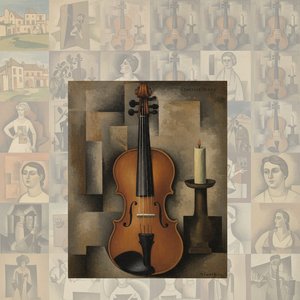
Acrylic On Canvas.

§ 1Catalogue data

Tämä teos on tekijänoikeuden suojaama
Tällä sivulla esitettyä taideteosta suojaa tekijänoikeuslaki, mikä tarkoittaa, ettemme voi laillisesti luoda tai myydä täsmälleen samanlaista jäljennöstä. Tämä suoja toteutetaan kansainvälisten sopimusten, kuten esimerkiksi Berne-konventio ja kansallisilla laeilla, mukaan lukien niillä määritellyt Yhdysvaltain tekijänoikeuslaki – Luku 17. Kaikki oikeudet pidätetään. Luvaton kopiointi tai jäljittely on kielletty.
Kunnioittavana ja laillisena vaihtoehtona tarjoamme alkuperäisestä inspiroituneita, yksilöllisiä ja käsinmaalattuja taideteoksia. Taitavat ja ammattimaiset taiteilijamme tutkivat huolellisesti alkuperäisen teoksen tyyliä, tunnelmaa ja taiteellista ydintä luodakseen uuden, ainutlaatuisen teoksen, joka herättää saman tunteen – säilyttäen samalla oman itsenäisen alkuperäisyytensä.
Tämä menetelmä noudattaa täysin tekijänoikeussäännöksiä, sillä se ei sisällä suojatun taideteoksen kopioimista tai jäljentämistä. Sen sijaan kyseessä on luova uudelleentulkinta – uusi maalaus, joka ammentaa vaikutteita alkuperäisestä, mutta ei ole sen identtinen kopio.
 Lue lisää
§ 2Abstract
Keräilykohteen kuvaus
Taiteilijan elämäkerta
Georges Braque’nin "Harbour in Normandy" maalauksessa näkyy aikaisen kubismin uraauurtava lähestymistapa muotoon ja perspektiiviin. Värikäs teos vangitsee sataman tunnelman hajotettuina muodoissa ja rohkeilla linjoilla.
§ 3Commentary
A Symphony in Monochrome – Georges Braque’s Exploration of Form
Georges Braque’s “Vase of Flowers,” painted circa 1917-1918, stands as a cornerstone of Cubist aesthetics and a testament to the artist's unwavering commitment to dissecting and reconstructing visual reality. Emerging from the crucible of artistic experimentation that defined the First World War era, this deceptively simple composition transcends mere representation; it’s an invitation into a profound meditation on perception itself.
- Subject Matter: The centerpiece is a ceramic vase adorned with a profusion of blossoms—primarily lilies and roses—creating a vibrant counterpoint to the predominantly muted palette.
- Style: Braque’s Cubist approach abandons traditional illusionistic perspective, fracturing the vase and flowers into geometric planes that overlap and intersect simultaneously. This fragmentation isn't random; it’s meticulously calculated to convey multiple viewpoints of the same object at once.
Technique – Precision and Texture Amidst Geometric Fragmentation
Braque employed a masterful technique characterized by painstaking precision and subtle textural variations. He utilized oil paints applied with thick impasto—a technique involving applying paint in textured layers—to imbue the vase’s surface with palpable physicality. Careful brushstrokes delineate the planes of color, creating a visual rhythm that guides the eye across the canvas.
- Color Palette: Dominated by shades of gray, beige, and ochre, the palette deliberately eschews bright hues, reflecting the somber mood prevalent during wartime. However, flashes of pale yellow and pink subtly illuminate certain blossoms, hinting at underlying warmth.
- Brushwork: The artist’s brushstrokes are deliberate and controlled, emphasizing the geometric forms while simultaneously conveying a sense of organic texture—a paradoxical juxtaposition that underscores Braque's core artistic philosophy.
Historical Context – Cubism as Response to Trauma
Cubism arose in Paris during World War I as a reaction against Impressionistic idealism and academic conventions. Artists like Picasso and Braque sought to capture the fragmented experience of modern life—the disorientation and uncertainty engendered by conflict—through geometric abstraction. “Vase of Flowers” embodies this spirit, mirroring the anxieties of its time while simultaneously elevating artistic expression beyond mere depiction.
- Influence: The painting draws inspiration from Cézanne’s explorations of sculptural form and anticipates developments in Futurism and Constructivism—movements that would further propel abstraction into the mainstream.
- Reaction to War: Braque's deliberate use of monochrome reflects a broader artistic preoccupation with confronting difficult emotions and challenging established aesthetic norms during a period marked by profound upheaval.
Symbolism – Beyond Representation; An Invitation to Contemplation
While ostensibly depicting flowers, “Vase of Flowers” operates on multiple symbolic levels. Lilies traditionally represent purity and resurrection—themes resonant with Christian iconography—suggesting a spiritual dimension beneath the surface. The vase itself symbolizes stability and containment, juxtaposed against the fractured planes of color to convey an ambivalent message about permanence and transformation.
- Geometric Forms: The geometric shapes—cubes, cylinders, and cones—represent not only spatial relationships but also intellectual rigor and a desire to transcend subjective experience.
- Emotional Impact: Ultimately, Braque’s masterpiece invites viewers into a contemplative state—encouraging them to consider the complexities of perception and the enduring power of artistic abstraction.
Kysymykset ja vastaukset
Mihin huoneeseen Georges Braque:n "Sheets, Color Light" suositellaan sijoitettavaksi sen värien perusteella?
Sen Earthy sävyjen huomioiden "Sheets, Color Light" sopii erinomaisesti Living Room-tilaan.
Mihin käyttöön Georges Braque:n "Sheets, Color Light" on suositeltu?
Teoksen "Sheets, Color Light" painosteelle suositeltu käyttötapa on Accent.
Onko teoksesta "Sheets, Color Light" saatavilla korkearesoluutioinen lataus?
Saadaksesi teoksen Georges Braque:n "Sheets, Color Light" digitaalisen tiedoston, tilaa korkearesoluutioinen digitaalinen kuvalataus sen Digitaalinen teos -sivulta.



 Vaihda tulosteeseen


 Teoksille tai reproduktioille, joiden mikä tahansa sivu on suurempi kuin 105 cm (noin 41 tuumaa), kehys toimitetaan osina purettuna sarjana. Tämä menetelmä varmistaa turvallisen toimituksen ja ehkäisee vaurioita kuljetuksen aikana.