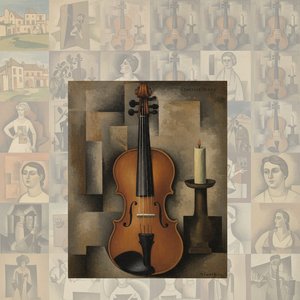
1949. Acrylic.

§ 1Catalogue data


Tämä teos on tekijänoikeuden suojaama
Tällä sivulla esitettyä taideteosta suojaa tekijänoikeuslaki, mikä tarkoittaa, ettemme voi laillisesti luoda tai myydä täsmälleen samanlaista jäljennöstä. Tämä suoja toteutetaan kansainvälisten sopimusten, kuten esimerkiksi Berne-konventio ja kansallisilla laeilla, mukaan lukien niillä määritellyt Yhdysvaltain tekijänoikeuslaki – Luku 17. Kaikki oikeudet pidätetään. Luvaton kopiointi tai jäljittely on kielletty.
Kunnioittavana ja laillisena vaihtoehtona tarjoamme alkuperäisestä inspiroituneita, yksilöllisiä ja käsinmaalattuja taideteoksia. Taitavat ja ammattimaiset taiteilijamme tutkivat huolellisesti alkuperäisen teoksen tyyliä, tunnelmaa ja taiteellista ydintä luodakseen uuden, ainutlaatuisen teoksen, joka herättää saman tunteen – säilyttäen samalla oman itsenäisen alkuperäisyytensä.
Tämä menetelmä noudattaa täysin tekijänoikeussäännöksiä, sillä se ei sisällä suojatun taideteoksen kopioimista tai jäljentämistä. Sen sijaan kyseessä on luova uudelleentulkinta – uusi maalaus, joka ammentaa vaikutteita alkuperäisestä, mutta ei ole sen identtinen kopio.
 Lue lisää
§ 2Abstract
Keräilykohteen kuvaus
Georges Braque’s Studio captures a serene monochrome composition reflecting Cubist principles—a meticulously arranged vase alongside complementary vessels evokes geometric abstraction and humanist observation within the early 1950s.”
Taiteilijan elämäkerta
Georges Braque’nin "Harbour in Normandy" maalauksessa näkyy aikaisen kubismin uraauurtava lähestymistapa muotoon ja perspektiiviin. Värikäs teos vangitsee sataman tunnelman hajotettuina muodoissa ja rohkeilla linjoilla.
§ 3Commentary
A Still Life Reverie: Georges Braque’s “The Studio”
- Georges Braque's "The Studio" (II), painted in 1949, stands as a testament to the artist’s mastery of Cubist principles and his profound engagement with the aesthetic concerns of postwar Europe. This deceptively simple composition—a monochrome depiction of a studio interior—holds within it layers of intellectual and artistic significance that continue to resonate with viewers today.
- The painting's stylistic core resides in Braque’s unwavering commitment to Cubism, specifically Analytical Cubism developed alongside Pablo Picasso during their formative years. Unlike Impressionistic explorations of fleeting light and color, Braque sought to represent objects from multiple viewpoints simultaneously, fracturing them into geometric planes that overlap and interpenetrate. This technique isn't merely a stylistic choice; it’s an epistemological one—a deliberate attempt to challenge traditional notions of perspective and representation.
Compositional Harmony and Fragmented Reality
- The central focus is undeniably a vase, positioned prominently on a table. However, Braque doesn’t present this vase as a singular entity but rather dissects it into fragmented planes—a hallmark of Cubist methodology. Surrounding the main vase are several other vases scattered throughout the scene, creating a visual dialogue that emphasizes the multiplicity of perception.
- Alongside the vases is a bowl and a cup, meticulously arranged on the table surface. These objects contribute to the overall sense of stillness despite the fractured geometry dominating the composition. Braque’s careful placement guides the viewer's eye across the canvas, fostering contemplation about how we perceive and interpret visual information.
Figures Within Stillness: Presence and Observation
- Two figures inhabit the studio space—one positioned closer to the left side of the image and another situated centrally. Their presence introduces an element of human observation into what might otherwise appear as a purely formal exercise. Braque’s inclusion of these individuals subtly underscores the idea that art is not merely about depicting objects but also about capturing the act of seeing itself.
- The figures are rendered in muted tones, mirroring the monochrome palette of the painting and reinforcing its contemplative mood. They serve as anchors within the geometric abstraction, grounding the visual experience and inviting viewers to consider their own role as observers.
Symbolism and Contextual Significance
- "The Studio" reflects the broader artistic currents of the postwar period—a time marked by a renewed interest in abstraction and a desire to grapple with the trauma of World War II. Braque’s deliberate simplification of form aligns with the movement's rejection of sentimentalism and its embrace of intellectual rigor.
- The vases themselves can be interpreted as symbols of artistic creation—representing vessels for ideas, inspirations, and creative endeavors. Their repetition reinforces this thematic concern, prompting viewers to consider the role of art in shaping our understanding of the world.
Emotional Resonance: Quiet Contemplation
- Despite its geometric abstraction, “The Studio” possesses a remarkable emotional resonance. The subdued palette and careful composition evoke a sense of quiet contemplation—a stillness that invites viewers to pause and reflect on the beauty of form and structure. It’s a painting that speaks not to the senses but to the intellect, fostering an appreciation for the power of visual art to convey profound ideas.
Kysymykset ja vastaukset
Millä tekniikalla "The Studio (II)" on tehty?
Georges Braque käytti teoksessa "The Studio (II)" Acrylic-tekniikkaa. Tekniikka määrittelee alkuperäisen teoksen materiaalisen luonteen.
Onko teoksella Georges Braque:n "The Studio (II)" pysty- vai vaakasuuntainen orientaatio?
Teoksen "The Studio (II)" formaatti on Landscape. Tämä on hyödyllinen tieto, kun suunnittelet jäljennöksen sijoituspaikkaa.
Onko teos "The Studio (II)" yleisvaikutelmaltaan enemmän vaalea vai tumma?
"The Studio (II)" on kokonaisuutena shadow, ja sen luminanssi on Soft Shadow.


 Vaihda tulosteeseen


 Teoksille tai reproduktioille, joiden mikä tahansa sivu on suurempi kuin 105 cm (noin 41 tuumaa), kehys toimitetaan osina purettuna sarjana. Tämä menetelmä varmistaa turvallisen toimituksen ja ehkäisee vaurioita kuljetuksen aikana.