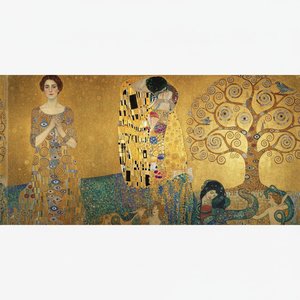
1903. Akryyli kankaalle, 44.0 x 30.0 cm. National Gallery of Canada.

§ 1Catalogue data

- 44.0 x 30.0 cm


§ 2Abstract
Keräilykohteen kuvaus
Tutustu Gustav Klimtin "Study for" -teokseen – koskettava lyijykynäluonnos istuvasta naisesta. Ihaile sen art nouveau -linjoja ja tummia sävyjä, joka on keskeinen osa mestarin tuotantoa.
 Lue lisää
Taiteilijan elämäkerta
Gustav Klimt (1862-1918) oli Wienin taiteilija, joka loi upean Art Nouveau -tyylin kultaisella vuosikymmenellä. Tunnettu 'Suudelmasta' ja sensuaalisista naiskuvista.
§ 3Commentary
A Glimpse into Klimt’s Preparatory Process: Study for a Portrait
This captivating pencil sketch offers a rare look into the working method of Gustav Klimt, one of Austria's most celebrated artists. Created in 1903 – a pivotal period in his artistic development – this *Study for* a portrait isn’t a finished work, but rather an intimate exploration of form and composition. Measuring 44 x 30 cm, the piece reveals Klimt’s masterful draftsmanship and provides valuable insight into how he approached capturing the human figure.Subject & Style: The Essence of Feminine Form
The artwork depicts a seated woman in profile, rendered with a delicate yet assured hand. While the identity of the sitter remains unknown, her pose suggests quiet contemplation or repose. Klimt’s style here leans towards realism, but is infused with an expressive quality characteristic of his broader oeuvre. This isn't merely a photographic likeness; it’s an interpretation – a distillation of the subject’s essence through line and form. The focus is entirely on the figure, filling the frame and creating a sense of immediacy.Technique & Materials: Lines that Breathe
Executed in graphite pencil on paper, the sketch relies heavily on varying line weights to define contours and suggest volume. There’s minimal shading or highlighting; instead, Klimt utilizes the tonal qualities of the paper itself alongside the pressure applied with his pencil. This technique creates a dynamic sense of movement and energy within the composition. The lines aren't rigid but flow organically, hinting at the subject’s inner life. It is evident that this was likely executed quickly – a spontaneous capturing of an idea before it fully materialized into a larger work.Historical Context: Vienna Secession & Klimt’s Golden Phase
1903 falls squarely within Klimt's most innovative period, coinciding with his active involvement in the Vienna Secession movement. This group of artists rebelled against the conservative artistic establishment, advocating for a more modern and expressive style. While this sketch doesn’t yet exhibit the opulent gold leaf that would come to define Klimt’s “Golden Phase,” it demonstrates the foundational skills and exploratory spirit that paved the way for his iconic works like *Water Serpents I* and *The Kiss*. His contemporaries, such as Josef Maria Auchentaller, were also pushing boundaries within the Secession, contributing to a vibrant artistic climate.Symbolism & Emotional Impact: Introspection & Melancholy
Though primarily a study of form, the artwork subtly conveys a sense of introspection and perhaps even melancholy. The somber tones – derived from the natural hue of the paper and graphite – contribute to this mood. The lack of vibrant color directs attention towards the subject’s inner state, inviting viewers to contemplate her thoughts and feelings. While symbolic elements are minimal, the very act of capturing a fleeting moment in time imbues the sketch with a sense of poignancy.For Collectors & Designers: A Timeless Aesthetic
This *Study for* is more than just a preparatory drawing; it’s a testament to Klimt's genius and a beautiful object in its own right. Its understated elegance makes it suitable for a variety of interior styles, from classic to contemporary. A high-quality reproduction would bring a touch of Viennese Secession sophistication to any space, offering a subtle yet powerful statement about artistic appreciation and refined taste. It’s an opportunity to own a piece of art history – or a beautiful echo of it.Kysymykset ja vastaukset
Mikä tulostusasetus on suositeltava teokselle Gustav Klimt:n "Esiselvitys"?
Koko Suuri koko, Pystyasento-suuntaus: tämä on teokselle Gustav Klimt:n "Esiselvitys" suositeltu tulostusasetus.
Mistä maasta Art Nouveau-tyylinen teos "Esiselvitys" on peräisin?
Esiselvitys on Gustav Klimt tekemä teos, joka on syntynyt Art Nouveau-suuntauksen vaikutuksesta; taiteilija on kotoisin Itävalta. Taiteilijan alkuperä yhdistää teoksen Art Nouveau-tyyliin, jota Itävalta-maasta kotoisin olevat taiteilijat edustavat.
Mitä "Esiselvitys" esittää?
Gustav Klimt:n "Esiselvitys" esittää: naismuotokuva, lyijykynäpiirros, art nouveau -tyyli, mietiskelevä hahmo, synkkä sävy, itäläinen taide, gustav klimtin luonnos.


 Vaihda tulosteeseen


 Teoksille tai reproduktioille, joiden mikä tahansa sivu on suurempi kuin 105 cm (noin 41 tuumaa), kehys toimitetaan osina purettuna sarjana. Tämä menetelmä varmistaa turvallisen toimituksen ja ehkäisee vaurioita kuljetuksen aikana.