Rahat takaisin -takuu · 100 päivää Ilmainen toimitus ympäri maailman
449 582teokset 30 618taiteilijat 4 705museot 32kielet
Valuutta
    Kieli
      Ateljee · Perustettu 2015 · Pariisi, Ranska
      AllPaintingsStore
      allpaintingsstore.com
      Katso seinällä Esikatsele AR-tilassa Vaihda tulosteeseen Siirry digitaaliseen kuvaan Lähetä
      Tarkemmat tiedot Opas Lisää suosikkeihin Lataa kuva Samanlaisia kohteita Röntgenkuvaus Diaesitys Tilastot

      Leda

      Explore Gustave Moreau's 'Leda,' a captivating Symbolist masterpiece blending mythology and melancholy. Discover the evocative symbolism & rich artistic technique of this dreamlike painting.

      Tutustu Gustave Moreaun lumoavaan symbolistiseen taiteeseen! Uppoudu myyttien, uskonnon ja ihmismielen syövereihin. Vaikutti Matisseen & Rouaultiin. Unohdettuja unelmia!

      Käsinmaalattu öljyvärinen jäljennös

      Käsinmaalattu öljyväri kankaalle haluamassasi koossa ja kehyksissä, taiteilijoidemme valmistamana tilauksesta. ( Vaihda tulosteeseen Siirry digitaaliseen kuvaan)

      Corner sample of the P118B picture frame: moulded polystyrene, 5 cm wide and 3 cm thick
      P118B 10
      Corner sample of the P118H picture frame: moulded polystyrene, 5 cm wide and 3 cm thick
      P118H 10
      Corner sample of the P118W picture frame: moulded polystyrene, 5 cm wide and 3 cm thick
      P118W 10
      Corner sample of the P438Z picture frame: moulded polystyrene, 5.5 cm wide and 3.5 cm thick
      P438Z 10
      Corner sample of the P508JH picture frame: moulded polystyrene, 7 cm wide and 3.5 cm thick
      P508JH 12
      Corner sample of the P508YH picture frame: moulded polystyrene, 7 cm wide and 3.5 cm thick
      P508YH 12
      Corner sample of the P805H picture frame: moulded polystyrene, 5 cm wide and 3.5 cm thick
      P805H 10
      Corner sample of the P805Z picture frame: moulded polystyrene, 5 cm wide and 3.5 cm thick
      P805Z 10
      Corner sample of the P919BZ picture frame: moulded polystyrene, 7 cm wide and 3.5 cm thick
      P919BZ 10
      Corner sample of the P919G picture frame: moulded polystyrene, 7 cm wide and 3.5 cm thick
      P919G 10
      Corner sample of the P919XJ picture frame: moulded polystyrene, 7 cm wide and 3.5 cm thick
      P919XJ 10
      Corner sample of the P959ZH picture frame: moulded polystyrene, 5 cm wide and 3 cm thick
      P959ZH 10
      Corner sample of the P968JZ picture frame: moulded polystyrene, 6 cm wide and 4 cm thick
      P968JZ 12
      Corner sample of the W106C picture frame: solid wood, 5 cm wide and 3 cm thick
      W106C 8
      Corner sample of the W218G picture frame: solid wood, 5 cm wide and 3 cm thick
      W218G 10
      Corner sample of the W218JH picture frame: solid wood, 5 cm wide and 3 cm thick
      W218JH 8
      Corner sample of the W218Y picture frame: solid wood, 5 cm wide and 3 cm thick
      W218Y 10
      Corner sample of the W307PJ picture frame: solid wood, 6 cm wide and 3 cm thick
      W307PJ 10
      Corner sample of the W316G picture frame: solid wood, 6 cm wide and 3 cm thick
      W316G 10
      Corner sample of the W316PJ picture frame: solid wood, 6 cm wide and 3 cm thick
      W316PJ 8
      Corner sample of the W316Y picture frame: solid wood, 6 cm wide and 3 cm thick
      W316Y 10
      Corner sample of the W398PJ picture frame: solid wood, 5 cm wide and 3 cm thick
      W398PJ 8
      Corner sample of the W4111J picture frame: solid wood, 6.5 cm wide and 3.5 cm thick
      W4111J 10
      Corner sample of the W500HY picture frame: solid wood, 7 cm wide and 5 cm thick
      W500HY 15
      Corner sample of the W500JH picture frame: solid wood, 7 cm wide and 5 cm thick
      W500JH 15
      Corner sample of the W692G picture frame: solid wood, 8 cm wide and 4 cm thick
      W692G 12
      Corner sample of the W849H picture frame: solid wood, 5 cm wide and 3 cm thick
      W849H 8
      Corner sample of the W940BG picture frame: solid wood, 7.5 cm wide and 4.5 cm thick
      W940BG 15
      Corner sample of the W953PJ picture frame: solid wood, 6 cm wide and 3.5 cm thick
      W953PJ 8

      Vakiokoko
      mittatilaustyö
      CM
      INCH

      Valitse valmiista mitoistamme sellaiset, jotka vastaavat teoksen alkuperäisiä mittasuhteita.

      leveys
      korkeus

      Voit syöttää omat mitat sopimaan tiettyyn kehykseen tai tilaan. Jos valitsemasi koko ei vastaa alkuperäisen kuvan mittasuhteita, rajaamme taideteoksen tai jatkamme maalausta käsin maalatuilla elementeillä. Digitaalinen esikatselu lähetetään hyväksyttäväksi ennen tuotannon aloittamista.
      Huomioithan, että näytöllä oleva esikatselu ei vastaa todellista rajausta tai jatkamista. Vain digitaalinen mallikuva näyttää lopullisen sommittelun tarkasti.
      Vaikka mittatilaustyöt ovat mahdollisia, suosittelemme valitsemaan mitan ennalta määritetystä listasta alkuperäisten mittasuhteiden säilyttämiseksi.

      Esimerkkejä muokattavista asioista: Vaihda kasvot asiakkaan omaan valokuvaan; Lisää lemmikki (esim. korvaa kissa koiralla); Lisää taustalle piilotettu viesti; Muuta taustan maisemaa tai elementtejä.
      Tilauksen jälkeen AllPaintingsStore.com -tiimi lähettää asiakkaalle sähköpostitse ohjeet ja esikatselukuvan.

      Maailmanlaajuinen toimitus () 3–4 viikossa tavallisen 5 viikon sijaan. (11 lokakuu). Laadusta ei tingitä.

      Ilmainen pikatoimitus ympäri maailman
      Korkealaatuinen pellavakangas
      Kattava kuljetusvakuutus
      Tulliveron palautustakuu
      Takuu täydellisestä värien vastaavuudesta
      100 päivän palautusoikeus valmistusvirhetapauksissa
      100% rahat takaisin -takuu
      Määräalennus saatavilla

      Kokonaishinta

      € 222

      Leda

      Reproduktiotapa

      Replikaatin koko

      -

      Kokonaishinta

      € 222

      Pikaista tietoa

      • Artist: Gustave Moreau
      • Movement: Symbolism
      • Influences: Delacroix
      • Title: Leda
      • Artistic style: Expressive Romanticism
      • Medium: Oil on canvas

      Taidevisakysely

      Jokaisessa kysymyksessä on vain yksi oikea vastaus.

      Kysymys 1:
      Gustave Moreau is most closely associated with which artistic movement?
      Kysymys 2:
      The painting 'Leda' draws inspiration from mythology, specifically resonating with the tale of:
      Kysymys 3:
      What painting technique is prominently used by Moreau in 'Leda' to create texture and depth?
      Kysymys 4:
      In the painting, what is a possible symbolic interpretation of the swan?
      Kysymys 5:
      The composition of 'Leda' is described as:

      A Dream Woven in Paint: Unveiling Gustave Moreau’s ‘Leda’

      Gustave Moreau's ‘Leda’ is not merely a painting; it’s an immersion into a realm where myth breathes, sorrow lingers, and the subconscious unfolds. Created between 1865 and 1875, this evocative work stands as a cornerstone of Symbolism, rejecting the literal in favor of emotional resonance and archetypal storytelling. The scene depicts a reclining female figure, bathed in an ethereal glow, amidst a lush tapestry of vegetation. While rooted in classical mythology – specifically resonating with the tale of Cyane and Callirhoe, nymphs transformed by despair – Moreau transcends simple illustration, offering instead a profound exploration of grief, fate, and the elusive nature of hope. The painting doesn’t *tell* a story; it *evokes* a feeling, a melancholic beauty that resonates deep within the viewer's soul.

      The Language of Symbols: Deciphering Moreau’s Vision

      Moreau masterfully employs symbolism to amplify the emotional weight of his composition. A majestic swan, traditionally representing purity, takes on a more ambiguous role here, hinting at mortality and transformation – a poignant foreshadowing of the nymphs’ tragic fate. Flanking the central figure are two enigmatic winged beings: one proffering a crown, perhaps symbolizing an unattainable ideal or the inescapable decree of destiny; the other radiating light, offering a fragile glimmer of divine intervention amidst overwhelming sorrow. The reclining woman herself embodies vulnerability and acceptance, her pose conveying a profound sense of loss. These symbols aren’t arbitrary decorations but integral components of Moreau's visual language, inviting contemplation on universal themes of love, loss, and the human condition. The artist doesn’t offer answers; he presents questions, prompting viewers to engage with the artwork on a deeply personal level and discover their own meaning within its evocative imagery.

      Technique as Expression: A Symphony of Brushwork and Light

      Moreau's technique is inextricably linked to his Symbolist aesthetic. He eschews precise realism in favor of *expressive Romanticism*, prioritizing emotional impact over meticulous detail. The brushwork is loose and fluid, creating a sense of movement and turbulence that mirrors the inner turmoil of the subject. This isn’t a static scene but a dynamic expression of feeling. The application of paint itself becomes expressive; Moreau utilizes *impasto* – thick layers of pigment – particularly in the background and around the figure, adding textural richness and enhancing the painting's theatrical quality. Atmospheric perspective further deepens the sense of space while maintaining an air of dreamlike ambiguity, with cooler tones and diminished detail receding into the distance. The overall effect is one of shimmering, ethereal beauty—a testament to Moreau’s masterful control of light and color.

      A Legacy of Influence: Moreau and the Symbolist Movement

      Gustave Moreau (1826-1898) was a pivotal figure in the Symbolist movement, a reaction against the prevailing Realism and Impressionism of his time. Symbolists sought to express subjective experiences, spiritual truths, and psychological states through evocative imagery rather than objective representation. Moreau’s work, steeped in mythology and biblical narratives, became emblematic of this artistic shift. Though initially overlooked by some critics, his influence grew exponentially, impacting artists such as Henri Matisse and Georges Rouault. Today, ‘Leda’ stands not only as a masterpiece of Symbolism but also as a testament to the enduring power of art to explore the depths of the human psyche. For collectors and interior designers, this painting offers a striking focal point—its rich color palette of deep greens, blues, and golds lending itself beautifully to both traditional and contemporary spaces. A high-quality reproduction captures the essence of Moreau’s technique, bringing a touch of sophisticated intrigue and lasting inspiration to any environment.

      Kysymykset ja vastaukset

      Miten Gustave Moreau:n "Leda" yhdistää Symbolist Painting-suuntauksen taiteilijan kotimaahan?

      Symbolist Painting-tyylinen teos "Leda" on Ranska:ssa syntyneen taiteilijan käsialaa.

      Voinko tilata öljyvärimaalauksen teoksesta "Leda"?

      Voit tilata käsin maalatun jäljennöksen teoksesta Gustave Moreau:n "Leda" suoraan osoitteesta tämä sivu: käsinmaalattu öljyvärireproduktio pellavakankaalle, valmistettuna tilauksesta.

      Miten voin esikatsella teoksen Gustave Moreau:n "Leda" reproduktiota?

      Voit esikatsella teoksen Gustave Moreau:n "Leda" reproduktiota avaamalla teoksen Esikatselu -sivun.

      Mitä aiheita teoksessa Gustave Moreau:n "Leda" esiintyy?

      Teoksen "Leda" aiheina ovat mythology, symbolism, grief, swans, light, femininity, dreamscape.

      Kuka on luonut "Leda"?

      Teos "Leda" on yhdistetty Gustave Moreau.

      Kuinka harmonisia ovat teoksen Gustave Moreau:n "Leda" värit?

      Teoksen "Leda" väriharmonia on merkitty muodossa Strong Color Unity.

      Mistä voin ostaa painoksen teoksesta Gustave Moreau:n "Leda"?

      "Leda" on saatavilla muodossa taideteosvedos puuvillakangas- tai arkistoluokan kankaalle painettuna. Tilaukset tehdään osoitteessa tämä sivu valitsemassasi koossa.


      Taiteilijan elämäkerta

      A Dream Weaver of Symbolism: The Life and Art of Gustave Moreau

      Gustave Moreau, nimi joka on synonyymi eteeriselle kauneudelle ja salaperäisille syvyyksille symbolistisessa maalauksessa, nousi 1800-luvun Pariisin yläpuolelle ainutlaatuisena taiteellisenä ääninä. Hän syntyi vuonna 1826 varakkaaseen perheeseen – hänen isänsä arkkitehti ja arkisturi – ja Moreau’n lapsuus oli täynnä älyllistä uteliaisuutta ja esteettistä aistimaisuutta. Jo nuorena hän osoitti huomattavan lahjan piirtämisessä, joka oli hoitoitu perinteisen akateemisen koulutuksen kautta François-Édouard Picotin kaltaisten hahmojen alaisuudessa. Kuitenkin Moreau’n taiteellinen polku poikkesi voimakkaasti hänen aikansa vallitsevista Realistisesta ja Impressionistisesta nyansseista. Hän ei ollut kiinnostunut vangitsemaan hetkellisiä hetkiä tai objektiivista todellisuutta; pikemminkin hän etsi piiloutuneiden alueiden avaamista myytteistä, uskonnosta ja ihmisen psyykeestä syvällisen henkilökohtaisen ja symbolisen visuaalisen kielen kautta. Hänen matkansa oli sisäinen tutkimusmatka, jossa subjektiiviset tunteet ja hengelliset kaipuudet muutettiin maalaukseen tarkkaan huolella yksityiskohtiin ja eläväiseen, usein ylelliseen sävymaailmaan.

      The Forge of Imagination: Influences and Artistic Development

      Moreau’n taiteellinen kehitys ei syntynyt tyhjyyteen. Vaikka hän hylkäsi aikansa hallitsevat trendit, hän sai inspiraatiota monista lähteistä. Eugen Delacroix’n dramaattisen värin ja eksoottisten aiheiden käyttö resonoi syvästi hänen kanssaan, sytyttäen intohimon tarinankerrontaan, joka oli täynnä tunteellista intensiteettiä. Hän piti myös Renaissance-mestareita kuten Michelangeloa ja Leonardo da Vincia korkeina arvoina, ihaillen heidän mestarillisuuttaan koostumuksessa, anatomiassa ja psykologisessa syvyydessä. Kuitenkin Moreau ei ollut vain kopioimassa näitä taiteilijoita; hän synteesoi heidän vaikutteensa jotain täysin uutta. Hänen Italiaan tekemänsä matkat 1850-luvulla olivat ratkaisevia, upottaen hänet antiikin ja Renaissance-taiteeseen, tarjoten runsaasti motiiveja ja tyylillisiä vihjeitä, jotka täyttivät tulevat teoksensa. Hän kopioi huolellisesti Vanhoja maalauksia, ei harjoituksena toistamisessa, vaan pyrkimyksenä sisällyttää niiden tekniikat ja avata niiden salaisuudet. Tämä omistautuminen käsityölle yhdistettynä hänen kasvavaan kiinnostukseensa myyteihin ja kirjallisuuteen loi pohjan ainutlaatuiselle taiteelliselle näkemykselleen.

      A World of Symbols: Themes and Techniques

      Moreau’n maalaukset eivät ole vain myyttien tai Raamatun tarinoiden kirjaimellisia kuvauksia; ne ovat monimutkaisia allegorioita, jotka kutsuvat pohdintaan ja tulkintaan. Hän sukelsi tarinoihin kuten Salomeen, Orfeuksen, Jupiterin ja Semelen, ei kertomaan niitä kirjaimellisesti, vaan tutkimaan niiden perimmäisiä psykologisia ja hengellisiä totuuksia. Hänen maalinsa ovat täynnä symbolista kuvausta – sammakkoja, jotka edustavat houkutusta, jalokiviä, jotka symboloivat maallisia haluja ja hahmoja, jotka edustavat abstrakteja käsitteitä kuten surua, menetystä tai pelastusta. Hän loi mestarillisesti unenomaisen tunnelman huolellisella kerroksella maalia, rikkailla tekstuureilla ja usein häiritsevällä valon ja varjon yhdistelmällä. Moreau’n tekniikka oli tunnettu tarkasta kerrostamisesta maalia, luoden pintoja, jotka hehkuvat irisoiduista väreistä ja herättävät maailmanmenoon liittyvän vaikutelman. Hänen kultalehtien käyttönsä lisäsi tätä vaikutusta, antaen teoksilleen bysanttilaisen ulkonäön, joka korosti niiden hengellistä ulottuvuutta. Hän ei ollut huolissaan realististen tekstuurien tai perspektiivien vangitsemisesta; pikemminkin hän priorisoi värin ja muodon ilmaisutehon välittämiseksi tunteiden ja merkityksen välittämiseksi.

      Notable Achievements and Historical Significance

      Moreau’n vaikutus oli merkittävä, vaikka hänen työnsä kohtasi aluksi sekoitettuja reaktioita. Vuonna 1893 hän hyväksyi professuurin École des Beaux-Artsissa, jossa hän vaikutti voimakkaasti useiden taiteilijoiden sukupolvia, mukaan lukien Henri Matisse ja Georges Rouault. Hän kannusti opiskelijoitaan omaksumaan mielikuvitusta, symboliikkaa ja henkilökohtaista ilmaisua, kehottaen heitä rikomaan perinteisten taiteellisten normien rajoja. Vaikka Symbolismi kuihtuikin suosion menettäessä Moreau’n kuoleman jälkeen vuonna 1898, hänen työnsä sai merkittävän arvostuksen myöhemmin 20-luvulla. Nykyään hän on laajalti pidetty liikkeen keskeisenä hahmona ja modernin taiteen esiasjana. Gustave Moreau -museo, joka sijaitsee hänen entisessä ateljeessaan ja kodissaan Pariisissa, toimii testamenttina hänen kestävälle perinnölleen – suojatulla alueella, jossa vieraat voivat uppoutua tämän poikkeuksellisen taiteilijan lumoavaan maailmaan. Hänen maalauksensa resonoivat edelleen yleisön kanssa tänä päivänä, tarjoten näkymiä ihmisen sielun piilotettuihin syvyyksiin ja muistuttaen meitä taiteen voimasta ylittämään todellisuuden rajat.
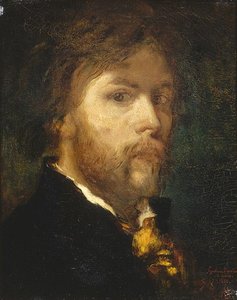
      Gustave Moreau

      Gustave Moreau

      1826 - 1898 , Ranska

      Tietoa taiteilijasta

      • Artistic Movement Or Style: Symbolismi
      • Artists Or Movements Influenced By This Artist:
        • Matisse
        • Rouault
      • Artists Who Influenced This Artist:
        • Delacroix
        • Michelangelo
        • Da Vinci
      • Date Of Birth: 6. huhtikuuta 1826
      • Date Of Death: 18. huhtikuuta 1898
      • Full Name: Gustave Moreau
      • Nationality: Ranskalainen
      • Notable Artworks:
        • Salome tanssii
        • Jupiter ja Semele
        • Orfeus
      • Place Of Birth: Pariisi, Ranska
      Tutustu teoksiin, jotka on järjestetty aiheiden, tyylien ja ominaisuuksien mukaan.