


 Katso seinällä
 Lähetä
 Jaa
Jaa
 Tarkemmat tiedot
 Opas
Opas

 Lataa kuva
 Samanlaisia kohteita
 Röntgenkuvaus
 Diaesitys
 Tilastot
Waves
 Other
Other 59.0 x 91.0 cm
 The National Trust For Scotland
 Lue lisää
Giclée- ja taideprintit
Museolaatuisia giclée- tai kankaitaulun tulosteita nopealla tuotannolla ja joustavilla viimeistelyvaihtoehdoilla. ( Tilaa käsinmaalattu jäljennös Siirry digitaaliseen kuvaan)




P118B €10

P118H €10

P118W €10

P438Z €10

P508JH €12

P508YH €12

P805H €10

P805Z €10

P919BZ €10

P919G €10

P919XJ €10

P959ZH €10

P968JZ €12

W106C €8

W218G €10

W218JH €8

W218Y €10

W307PJ €10

W316G €10

W316PJ €8

W316Y €10

W398PJ €8

W4111J €10

W500HY €15

W500JH €15

W692G €12

W849H €8

W940BG €15

W953PJ €8




Valitse valmiista mitoistamme sellaiset, jotka vastaavat teoksen alkuperäisiä mittasuhteita.

Kirjoita tarvitsemasi leveys ja korkeus, jotta tuloste sopii kehyskokoon tai seinällesi. Tulostetta voidaan vain leikata, sitä ei voi koskaan tehdä suuremmaksi kuin alkuperäinen kuva, joten eri muotoinen koko aiheuttaa osan kuvasta katoamisen. Lähetämme sinulle digitaalisen mallikuvan hyväksyttäväksi ennen kuin aloitamme tulostuksen. Tällä sivulla näkyvä kuva ei näytä lopullista leikkausta — vain mallikuva näyttää sen.
Maailmanlaajuinen toimitus () 2 viikossa tavallisen 4–5 viikon sijaan. (26 lokakuu)

Ilmainen pikatoimitus ympäri maailman

Korkealaatuinen pellavakangas

Kattava kuljetusvakuutus

Tulliveron palautustakuu

Takuu täydellisestä värien vastaavuudesta

100 päivän palautusoikeus valmistusvirhetapauksissa

100% rahat takaisin -takuu

Määräalennus saatavilla
 Lasivaihtoehto on saatavilla vain alle 110 cm kokoisille teoksille

Waves
Giclée- ja taideprintit
Replikaatin koko
-


Kokonaishinta
€ 56
Samankaltaisia teoksia


Taiteilijan elämäkerta
The Luminous Legacy of James Campbell Noble
In the grand tapestry of late nineteenth-century art, few threads weave together disparate cultural traditions as gracefully as those of James Campbell Noble. Born in 1845, a period marked by the profound shifts of the Victorian era, Noble emerged as a painter who could navigate the delicate boundary between the meticulous realism of his Dutch heritage and the expressive, atmospheric freedom of Scottish Impressionism. His life was a journey of movement—between nations, between styles, and between the quietude of inland landscapes and the restless energy of the sea. To look upon a Noble canvas is to witness a masterclass in light, where the damp, heavy air of the Netherlands meets the rugged, salt-sprung coasts of Scotland.
Noble’s artistic soul was shaped by an early exposure to the nuances of visual perception. While his roots were deeply connected to the Dutch tradition, his formative training under figures such as Traugott Richard—a pioneer in photogravure—instilled in him a profound respect for the subtle interplay of light and shadow. This photographic sensibility did not lead him toward mere imitation; rather, it provided the foundation for an observational eye that could capture the fleeting shimmer of water or the heavy, grey weight of a storm-laden sky. His education at the Royal Scottish Academy schools under masters like William McTaggart and George Paul Chalmers further refined his hand, allowing him to absorb the burgeoning Impressionist movement while maintaining a structural integrity rooted in classical training.
A Voyage Through Light and Water
The evolution of Noble’s subject matter mirrors the trajectory of his own life, moving from the intimate to the expansive. In his early years, his work often focused on rustic genre scenes—quiet, dark cottages and the humble rhythms of outdoor life. However, as he gained recognition and became a Fellow of the Royal Scottish Academy, his gaze drifted toward the horizon. He abandoned the sheltered interiors for the vast, unpredictable theaters of rivers and ports. His brush began to dance across the surfaces of the Clyde, the Seine, the Tyne, and the great Dutch waterways like the Merwester and the Rhine.
This transition marked his true arrival as a premier marine and landscape painter. Noble possessed a rare ability to imbue maritime scenes with a sense of living breath. Whether depicting the bustling harbor of Dordrecht or the lonely, rocky outcrops of Berwickshire, his work captures the atmospheric tension of the natural world. His technique often utilized a sophisticated blend of meticulous detail—seen in the rigging of a ship or the texture of a stone wharf—and much broader, more emotive brushwork used to render the churning foam of a wave or the soft diffusion of mist. This duality allowed him to create works that feel both physically present and dreamily ephemeral.
Artistic Significance and Enduring Spirit
Beyond the technical mastery of his oils, Noble’s historical significance lies in his role as a cultural bridge. He was an artist who belonged to two worlds, successfully synthesizing the Dutch preoccupation with light and maritime commerce with the Scottish passion for dramatic, rugged landscapes. His influence extended beyond his own easel; as a teacher at the Royal Scottish Academy and the Trustees Academy, he helped shape the next generation of painters, including notable figures such as Robert Gemmell Hutchison.
Today, the works of James Campbell Noble serve as vital windows into a vanished era of European maritime life. His paintings are more than mere records of geography; they are emotional evocations of a time when the relationship between man and the sea was one of profound respect and constant negotiation. To study his oeuvre is to rediscover the quiet majesty of the nineteenth-century landscape, preserved forever in the amber of his masterful, light-drenched strokes.

James Campbell Noble
1845 - 1913
Tietoa taiteilijasta
- Artistic Movement Or Style: Dutch Landscape Painting
- Artists Or Movements Influenced By This Artist: ['Romanticism']
- Artists Who Influenced This Artist:
- Johannes Maris
- Anton Mauve
- Date Of Birth: 1845
- Date Of Death: 1913
- Full Name: James Campbell Noble
- Nationality: Scottish
- Notable Artworks:
- Waves
- A Grey Day with Dutch Fishing Boats
- Place Of Birth: Glasgow, Scotland
Aiheeseen liittyvät artikkelit
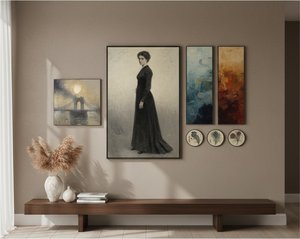
James Abbott McNeill Whistlerin 25 mestariteosta: Taidetta ja sisustusta AllPaintingsStore.comissa
Tutustu James Abbott McNeill Whistlerin 25 vaikuttavinta mestariteosta! Uppoudu amerikkalaisen impressionismin maailmaan, tunnelmallisiin nocturneihin ja upeisiin muotokuviin. Löydä inspiraatiota sisustukseen AllPaintingsStore.comista – taidekopiot museolaadulla. Explore the full collection online!

Evoking the Horizon: A Historical & Artistic Exploration of Coastal Scenes in Painting
Explore the rich history of coastal scenes in painting! Discover Impressionist masterpieces, American realism & contemporary visions. Learn about renowned artists and find your perfect seascape at AllPaintingsStore.

Masterpieces of Light: A Definitive Guide to the Landscapes of the Dutch Golden Age
Discover the luminous mastery of Dutch Golden Age landscapes. Our expert guide explores the atmospheric realism of masters like Van Goyen and Cuyp. Elevate your space with museum-quality, hand-painted oil reproductions from AllPaintingsStore.com. Art history, beautifully realized.
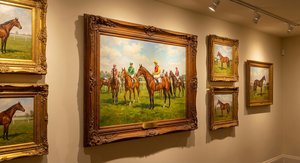
Sir Alfred James Munningsin 25 mestariteosta: Hevosmaalausten lumo ja brittiläinen maalaisidylli
Tutustu Sir Alfred James Munningsin 25 lumoavinta mestariteosta! Uppoudu brittiläisen maalaisidyllin ja hevosmaalausten maailmaan. Löydä inspiraatiota kotiisi AllPaintingsStore.com:ista – taideprintit museolaadulla.

The Allure of the Horizon: A Comprehensive Exploration of Seascape Art Through History & Emotion
Explore the captivating world of seascape art! Discover its history, key artists & movements – from Dutch Masters to Impressionism. Expert insights for collectors and enthusiasts at AllPaintingsStore.

