


 Esikatselu
 Jaa teos
 Jaa
Jaa
 Tiedot
 Opas
Opas

 Lataa kuva
 Samanlaisia kohteita
 Röntgenkuvaus
 Diaesitys
 Q&A
Q&A Tilastot
untitled (5187)


 Lue lisää
Giclée- ja taideprintit
Museolaatuisia giclée- tai kankaitaulun tulosteita nopealla tuotannolla ja joustavilla viimeistelyvaihtoehdoilla. ( Osta käsinmaalattu taideteos Siirry digitaaliseen kuvaan)




P118B €10

P118H €10

P118W €10

P438Z €10

P508JH €12

P508YH €12

P805H €10

P805Z €10

P919BZ €10

P919G €10

P919XJ €10

P959ZH €10

P968JZ €12

W106C €8

W218G €10

W218JH €8

W218Y €10

W307PJ €10

W316G €10

W316PJ €8

W316Y €10

W398PJ €8

W4111J €10

W500HY €15

W500JH €15

W692G €12

W849H €8

W940BG €15

W953PJ €8




Valitse valmiista mitoistamme sellaiset, jotka vastaavat teoksen alkuperäisiä mittasuhteita.

Syötä tarvitsemasi leveys ja korkeus, jotta tuloste sopii kehyksiisi tai seinällesi. Tulostetta voidaan vain leikata, sitä ei voida koskaan suurentaa alkuperäistä kuvaa suuremmaksi, joten eri muotoinen koko aiheuttaa osan kuvasta katoamisen. Lähetämme sinulle digitaalisen mallikuvan hyväksyttäväksi ennen kuin aloitamme tulostuksen. Tällä sivulla näkyvä kuva ei näytä lopullista rajausta — vain mallikuva näyttää sen.
Maailmanlaajuinen toimitus () 2 viikossa tavallisen 4–5 viikon sijaan. (2 marraskuu)

Ilmainen pikatoimitus ympäri maailman

Korkealaatuinen pellavakangas

Kattava kuljetusvakuutus

Tulliveron palautustakuu

Takuu täydellisestä värien vastaavuudesta

100 päivän palautusoikeus (vain valmistusvirheet)

100% rahat takaisin -takuu

Määräalennus tarjolla
 Lasivaihtoehto on saatavilla vain alle 110 cm kokoisille teoksille

untitled (5187)
Giclée- ja taideprintit
Replikaatin koko
-


Kokonaishinta
€ 57
A Window Into Faith: The Luminous World of Jan van Eyck
In the quiet corners of fifteenth-century Flanders, a revolution was unfolding, not through the clash of swords, but through the delicate application of oil on panel. Jan van Eyck, a master whose name remains synonymous with the dawn of the Northern Renaissance, captured this transformative era in his untitled masterpiece (5187). This painting is far more than a mere depiction of a religious scene; it is an invitation to step through a portal into a world where the divine and the earthly are inextricably linked. As one gazes upon the composition, there is an immediate sense of profound stillness, a meditative atmosphere that draws the viewer into a sacred dialogue between the figures and the light that bathes them.
The scene unfolds before a doorway, a threshold that serves as a powerful metaphor for spiritual transition. A woman, draped in a vibrant, commanding red—a hue traditionally evocative of both royal dignity and divine grace—stands as the focal point of this devotion. She holds aloft a book, perhaps a sacred scripture, her posture suggesting a moment of deep contemplation or the sharing of holy wisdom. Beside her, a figure in somber black provides a grounding contrast, creating a visual balance that mirrors the duality of human existence: the earthly struggle and the spiritual aspiration. The presence of birds, perched subtly within the frame, adds a layer of naturalistic grace, reminding us that even the smallest creatures are part of this divine tapestry.
The Alchemy of Light and Oil
What truly elevates this work to the status of a cornerstone of Early Netherlandish art is Van Eyck’s pioneering mastery of the oil medium. Before his innovations, artists primarily relied on tempera, which often resulted in flat, opaque surfaces. Van Eyck, however, utilized glazing techniques—the meticulous layering of thin, translucent washes of pigment over thicker undercoats. This process allowed light to penetrate the paint layers and reflect back from within, creating an unprecedented luminosity and a sense of "inner glow" that seems to emanate from the woman’s very skin and the heavy textures of the books.
This technical brilliance allows for an astonishing level of detail that captivates the eye and rewards prolonged study. One can almost feel the weight of the leather bindings on the shelves, the crispness of the paper, and the soft way light dances across the surfaces. For the collector or interior designer, this level of detail offers a profound depth; a high-quality reproduction of such a piece does not merely decorate a wall—it provides a focal point of intellectual and sensory richness, bringing a sense of historical weight and quiet sophistication to any curated space.
Symbolism and the Soul of the Northern Renaissance
Beyond the technical marvels lies a rich, coded language of symbolism that was central to the fifteenth-century mind. Every element in "Untitled (51 187)" is a deliberate choice intended to provoke thought. The books scattered throughout the scene, some resting on shelves and others held in trembling hands, serve as symbols of knowledge, piety, and the pursuit of divine truth through study. The interplay between the red and black garments further reinforces themes of passion and mourning, or life and death, creating a narrative tension that keeps the viewer emotionally engaged.
To possess or display a work inspired by Van Eyck is to embrace a legacy of meticulous observation and spiritual depth. This painting serves as a testament to a time when art was a bridge between the seen and the unseen. Whether viewed as an academic triumph of the Northern Renaissance or as a breathtaking piece of decorative fine art, the work continues to inspire awe, offering a timeless sanctuary of peace and beauty for the modern home.
Kysymykset ja vastaukset
Miten "untitled (5187)" asettuu osaksi Jan van Eyck'n teemoja ja tyyliä?
"untitled (5187)" kuuluu Jan van Eyck:n Early Netherlandish Painting-kauden tuotantoon, jonka tunnettuun teemaan kuuluvat influenced by gothic tradition, faith, spirituality, patronage significance."
Mikä on teoksen Jan van Eyck:n "untitled (5187)" luminanssi?
Teoksella Jan van Eyck:n "untitled (5187)" on Soft Shadow luminanssi. Luminanssi kuvaa sitä, kuinka paljon värit näyttävät heijastavan valoa.
Kuinka voimakas kontrasti teoksessa Jan van Eyck:n "untitled (5187)" on?
Teoksessa Jan van Eyck:n "untitled (5187)" on Balanced kontrasti vaaleiden ja tummien alueiden välillä.
Samankaltaisia teoksia


Taiteilijan elämäkerta
Varhaiset Vuodet ja Taiteellinen Herääminen
Jan van Eyckin elämä, noin 1390 Maastrichtissa alkaneena, on verhottu mysteeriin, mutta hänen vaikutuksensa taidehistoriaan on kiistaton. Hän kasvoi taiteellisessa perheessä – hänen veljensä Hubert oli myös maalari, vaikka tämän tuotannosta tiedetään vähän. Vaikka tarkkoja tietoja van Eyckin nuoruudesta ei ole säilynyt, on selvää, että hänellä oli jo varhain poikkeuksellinen lahjakkuus ja kyky nousta nopeasti taidemaailman huipulle. Vuonna 1422 hän perusti työpajan Haagissa, jossa hän alkoi ottaa vastaan tilauksia ja kouluttaa oppilaita. Tämä menestys ei perustunut pelkästään tekniseen taitoon; van Eyck oli älykäs ja luotettava mies, ominaisuuksia jotka avasivat hänelle ovia vaikutusvaltaisten suojelijoiden pariin.Burgundin Hovin Palveluksessa: Diplomatiasta Taiteelliseen Kukoistukseen
Van Eyckin uran ratkaiseva käännekohta oli nimitys Burgundin hoviin, ensin John III Rohkean ja myöhemmin Filip Hyvän palvelukseen. Tämä ei ollut pelkästään taiteellinen suojelusjärjestely; van Eyck sai luottamuksellisia diplomaattitehtäviä, mikä osoitti herttuan uskon hänen harkintakykyynsä ja älykkyyteensä. Matkat ympäri Eurooppaa – mukaan lukien vierailut Portugaliin ja Espanjaan – altistivat hänet erilaisille kulttuureille ja taiteellisille vaikutteille, jotka hienovaraisesti muokkasivat hänen kehittyvää tyyliään. Hovi tarjosi paitsi taloudellista turvaa myös resursseja kunnianhimoisten projektien toteuttamiseen, mikä mahdollisti taiteellisen rajojen rikkomisen. Van Eyck ei ollut pelkästään maalaaja Burgundin eliitille; hänestä tuli olennainen osa heidän maailmaansa, heijastaen ja vahvistaen heidän arvovaltaansa taiteensa kautta. Tämä ainutlaatuinen asema antoi hänelle harvinaisen luovuuden vapauden aikakaudellaan, mikä johti kokeiluihin ja innovaatioihin, jotka muuttivat maalauksen kulkua pysyvästi.Öljyvärimaalauksen Alkemia: Tekniikan Vallankumous
Vaikka van Eyck ei ollut öljyvärimaalauksen keksiä – sen käyttö oli tunnettua jo ennen häntä – hän on kiistatta sen mestari ja täydellistäjä. Ennen hänen innovaatioitaan tempera oli hallitseva maalausmenetelmä, joka tarjosi rajalliset sekoitusmahdollisuudet ja suhteellisen matan pinnan. Van Eyck vapautti öljyvärimaalauksen täydellisen potentiaalin huolellisella läpinäkyvien lasyyrien kerrostamisella, saavuttaen ennennäkemättömän yksityiskohtien tason, valoisuuden ja realismin. Tämä tekniikka mahdollisti hienovaraiset sävyvaihtelut, rikkaammat värit ja pintojen luomisen, jotka jäljittelivät elämää itseään. Lopputulos oli mullistava; pinnat näyttivät hehkuvan sisältäpäin, kankailla oli käsin kosketeltava laatu ja muotokuvat vangitsivat paitsi ulkonäön myös psykologista syvyyttä. Hänen mestaruutensa ei ollut pelkästään teknistä – se oli alkemiallinen prosessi, joka muutti pigmentit lähes eläväksi todellisuudeksi. Tämä innovaatio ei jäänyt huomaamatta; siitä tuli pohja tulevien sukupolvien maalareille, mikä perusteellisesti muutti länsimaisen taiteen maisemaa.Mestarityöt ja Kestävä Perintö
Van Eyckin taiteellinen perintö on vahvistettu suhteellisen pienellä mutta syvällisesti vaikuttavalla tuotannolla. Ghentin alttaritaulu (1432), monumentaalinen polyptyyppi, on hänen kunnianhimoisin yrityksensä – monimutkainen kudelma uskonnollista symboliikkaa ja teknistä nerokkuutta. Samoin tunnettu on Giovanni Arnolfinin ja hänen vaimonsa muotokuva (1434), uraauurtava teos muotokuvataiteessa, jota ylistetään sen realismin, monimutkaisten yksityiskohtien ja arvoituksellisen symboliikan vuoksi. Muihin merkittäviin töihin kuuluvat Dresdenin alttaritaulu, joka esittelee hänen taitoaan kuvata uskonnollisia kohtauksia poikkeuksellisella selkeydellä, sekä vaikuttava Sinipukuinen mies, todiste hänen kyvystään vangita yksilöllistä luonnetta. Nämä maalaukset eivät ole pelkästään visuaalisia esityksiä; ne ovat ikkunoita toiseen maailmaan – maailmaan, joka on huolellisesti renderöity lähes pakkomielteisellä tarkkuudella. Van Eyckin vaikutus ulottuu näiden ikonisten teosten lisäksi muokkaamalla varhaisen alankomaalaisen maalauksen kehitystä ja inspiroimalla lukemattomia taiteilijoita vuosisatojen ajan. Hän kuoli Bryggessä vuonna 1441 jättäen jälkeensä perinnön, joka resonoi edelleen tänään muistuttaen meitä taiteen voimasta valaista ihmiskokemusta.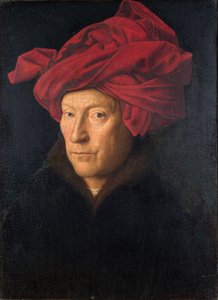
Jan van Eyck
1390 - 1441 , Alankomaat
Pähkinänkuoressa
- Artistic Movement Or Style: Varhaisrenessanssi
- Artists Or Movements Influenced By This Artist: ['Varhaisrenessanssin maalarit']
- Date Of Birth: noin 1390
- Date Of Death: 1441
- Full Name: Jan van Eyck
- Nationality: flaamilainen
- Notable Artworks (List Of Titles):
- Ghentin alttari
- Arnolfinin muotokuva
- Place Of Birth (City And Country): Maastricht, Alankomaat
Aiheeseen liittyvät artikkelit

Early Netherlandish Renaissance: A Professional Guide to Mastering Detail and Realism for Luxury Interior Design
Expert guide for hotel designers on sourcing Early Netherlandish Renaissance reproductions. Discover how the hyper-realism of Jan van Eyck can elevate hospitality interiors through high-quality, large-scale oil paintings and custom multi-panel installations.


