Rahat takaisin -takuu · 100 päivää Ilmainen toimitus ympäri maailman
449 587teokset 30 613taiteilijat 4 660museot 32kielet
Valuutta
    Kieli
      Ateljee · Perustettu 2015 · Pariisi, Ranska
      AllPaintingsStore
      allpaintingsstore.com
      Catalogue entry

      Apolinère Enameled

      Assemblage.

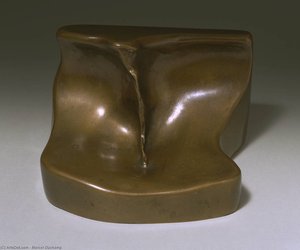
      Fig. 1. Marcel Duchamp, Apolinère Enameled. Shown as the reproduction you are specifying: , .

      § 1Catalogue data

      § 2Abstract

      Keräilykohteen kuvaus

      Marcel Duchamp’s ‘Apolinère Enameled’ is a Dadaist assemblage featuring a girl on a bed adorned with vibrant enamel paint, challenging artistic conventions and sparking dialogue through its provocative use of industrial advertising.

      Taiteilijan elämäkerta

      Marcel Duchamp: Filosofinen vallankumouksen tuoja, jonka Dadaismi ja kubismi muuttivat taidehistoriaa. Tutustu ikonisiin teoksiin kuten Kestävyyden Kuutio ja Siirtymä neitoon morsiameksi.

      § 3Commentary

      A Provocative Dialogue with Tradition

      In the annals of modern art, few works possess the disruptive power of Marcel Duchamp’s "Apolinère Enameled." Created between 1916 and 1917, this masterpiece serves as a cornerstone of the Dadaist movement, acting less as a mere painting and more as a profound interrogation of what it means to create. At first glance, the viewer is met with a deceptively serene tableau: a young girl seated upon a bed, surrounded by the vibrant, almost playful hues of an industrial advertisement. Yet, beneath this tranquil surface lies a calculated rebellion against the very foundations of aesthetic beauty. Duchamp does not merely depict a scene; he deconstructs the act of seeing itself, inviting collectors and enthusiasts to look past the pigment and into the conceptual heart of the twentieth century's most radical era.

      The artwork’s soul resides in its origin as an "assisted readymade." Duchamp took a mundane, commercial tin sign promoting Sapolin enamel—a product intended for industrial beautification—and intervened with pencil sketches and cardboard to subtly fracture the original's intent. This technique represents a seismic shift in art history, where the artist’s hand moves from the role of a craftsman to that of a philosopher. For the discerning interior designer or art lover, this piece offers a sophisticated tension; it brings the raw, intellectual energy of the Dadaist revolt into a space, challenging the viewer to find meaning within the intersection of mass production and individual expression.

      The Architecture of Illusion and Language

      Beyond its physical assemblage, "Apolinère Enameled" is a linguistic puzzle, a play on words that mirrors the fractured reality of a world at war. The title itself is a brilliant pun, referencing Duchamp’s close friend, the poet Guillaume Apollinaire. By manipulating language through this phonetic nod, Duchamp mirrors his manipulation of the physical object, suggesting that neither word nor image can be taken at face value. This layer of intellectual depth makes the piece an extraordinary conversational centerpiece, perfect for those who appreciate art that rewards deep contemplation and rewards the inquisitive mind.

      Visually, the work is a masterclass in subtle expression and geometric intrigue. The color palette, though derived from commercial enamel, possesses a luminous quality that draws the eye toward the central figure. There is a haunting, almost surrealist quality to the composition, particularly in the way the bed frame presents conflicting perspective lines. This creates what many scholars call an "impossible object," a precursor to the optical illusions that would later define Surrealism. The interplay of the bright, primary-adjacent colors against the more muted, sketched elements creates a rhythmic visual experience that is both stimulating and intellectually grounding.

      A Timeless Addition to the Modern Collection

      For those seeking to curate a collection defined by innovation, "Apolinère Enameled" offers an unparalleled opportunity. As a high-quality reproduction, it brings the historical weight of the Philadelphia Museum of Art into the private home or gallery. It is a piece that transcends simple decoration; it is an invitation to participate in a century-old debate about the nature of creativity. Whether placed in a minimalist contemporary setting where its bold lines can stand alone, or within a more eclectic, curated space where its historical narrative can breathe, this artwork provides a sense of intellectual prestige and avant-garde elegance.

      Owning a piece that embodies the spirit of Duchamp is to possess a fragment of the revolution that redefined modernity. It serves as a reminder that art need not be purely "retinal"—merely pleasing to the eye—but can instead be a profound, transformative experience that challenges our perceptions of reality, commerce, and the very essence of the human imagination.

      Kysymykset ja vastaukset

      Voiko teoksen "Apolinère Enameled" nähdä lisätyn todellisuuden (AR) esikatseluna?

      Teoksella "Apolinère Enameled" on lisätyn todellisuuden esikatselu: teoksen Tarkastele teosta AR-tilassa -sivu näyttää sen omassa tilassasi yhteensopivalla laitteella.

      Onko Marcel Duchamp:n "Apolinère Enameled" pysty-, vaaka- vai neliökompositio?

      Teoksella Marcel Duchamp:n "Apolinère Enameled" on Landscape -muoto. Muoto kuvaa sommittelun mittasuhteita.

      Mikä väri erottuu eniten teoksessa "Apolinère Enameled"?

      Teoksen Marcel Duchamp:n "Apolinère Enameled" hallitseva väri on Quinacridone Magenta (#795944).
      § 4The artist

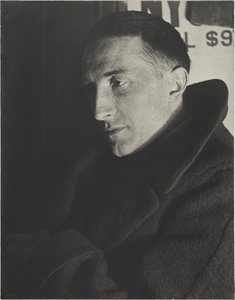
      Marcel Duchamp

      Marcel Duchamp

      1887 - 1968, Ranska

      Quick facts about Marcel Duchamp

      • Artistic Movement Or Style:
        • Kubismi
        • Dadaismi
      • Artists Or Movements Influenced By This Artist: ['Kubismi']
      • Date Of Birth: 28 heinäkuuta 1887
      • Date Of Death: 2 oktoberia 1968
      • Full Name: Marcel Duchamp
      • Nationality: Ranskalainen-Amerikkalainen
      • Notable Artworks:
        • Fontana
        • L.H.O.O.Q.
        • Suuri lasi
      • Place Of Birth: Blainville, Ranska

      Taiteilijan elämäkerta

      Marcel Duchamp: A Revolutionary Spirit

      Marcel Duchamp, born Henri-Robert-Marcel Duchamp in 1887 in Blainville-Crevon, Normandy, was more than an artist; he was a philosophical provocateur who fundamentally altered the course of modern art. His early life, though seemingly conventional – nurtured within a family that appreciated artistic expression with both brothers pursuing successful careers as artists – hinted at the iconoclasm to come. Duchamp initially pursued formal training, mastering traditional techniques and experimenting with post-impressionist styles. However, this academic foundation served not as an end in itself, but as a springboard for questioning the very nature of art, its purpose, and its definition. He wasn’t content merely to depict the world; he sought to challenge how we perceive it, and what constitutes artistic value. This restless intellectual curiosity would become the defining characteristic of his prolific career.

      Early Artistic Explorations: Cubism and Impressionism

      Duchamp's initial foray into art began with a fascination for Impressionism, absorbing influences from artists like Monet and Sisley. He diligently honed his painting skills, capturing fleeting moments of light and color with meticulous detail – a technique that would later inform his approach to more conceptual endeavors. Yet, he quickly recognized the limitations of representational art, perceiving it as an attempt to impose order onto a chaotic reality. This realization propelled him toward Cubism, spearheaded by Picasso and Braque, where he embraced fragmented forms and multiple perspectives. *Portrait of Chess Players* (1911) exemplifies this stylistic shift, demonstrating Duchamp’s willingness to experiment with innovative visual strategies. The influence of Cézanne's geometric simplification further solidified his commitment to exploring new artistic possibilities.

      The Dadaist Rebellion: Challenging Artistic Conventions

      The horrors of World War I profoundly impacted Duchamp’s worldview, fueling a deep disillusionment with societal values and artistic traditions. He abandoned academic pursuits altogether, joining the ranks of Dadaists – artists who vehemently rejected logic, reason, and bourgeois morality. This movement sought to dismantle established norms and expose the absurdity of cultural pretensions. Within Dadaism, Duchamp unleashed his subversive genius, rejecting beauty as an aesthetic criterion and prioritizing conceptual provocation. His aim wasn’t to create aesthetically pleasing objects; it was to disrupt viewers' perceptions and incite critical reflection. The infamous *Fountain* (1917), a porcelain urinal signed “R. Mutt,” epitomized this radical stance—a deliberate affront to artistic conventions that sparked considerable controversy and cemented Duchamp’s place in art history.

      The Birth of Conceptual Art: Beyond Representation

      Duchamp's groundbreaking contribution to the art world was arguably his pioneering role in establishing Conceptual Art. He dismantled the traditional distinction between artwork and object, arguing that the artist’s idea—the concept behind the work—was paramount. This perspective fundamentally shifted artistic priorities away from visual appearance toward intellectual inquiry and philosophical exploration. Works like *The Large Glass* (1915–1923), a monumental assemblage incorporating glass panels, mirrors, and enamel paint, exemplify this preoccupation with complex symbolism and intricate craftsmanship. The meticulous construction of the Glass underscored Duchamp’s belief in the transformative power of artistic process—a deliberate rejection of spontaneous creativity in favor of carefully considered conceptual frameworks.

      Legacy and Enduring Influence

      Marcel Duchamp's impact on subsequent generations of artists is undeniable. He irrevocably altered our understanding of art, advocating for a shift from visual representation to intellectual contemplation. His unwavering conviction that art should reside in the mind—not merely in the eye—continues to inspire artists today.
      • Cubism: Early exploration of fractured forms and spatial representation.
      • Dadaism: Rejection of logic, reason, and traditional artistic values in response to World War I.
      • Conceptual Art: Emphasis on the idea behind the artwork rather than its aesthetic qualities.
      He remains a central figure in discussions about art’s role in society, his legacy resonating powerfully within contemporary artistic discourse. Duchamp's unwavering commitment to questioning established norms solidified his position as one of the most influential artists of the 20th century—a true visionary who reshaped the landscape of modern art forever.

      § 5Comparanda

      § 6Questions

      Pikaista tietoa

      • Year: 1916-1917
      • Dimensions: 9 5/8 x 13 3/8 inches (24.4 x 34 cm)
      • Artistic style: Conceptual art
      • Medium: Gouache and graphite on painted tin
      • Title: Apolinère Enameled
      • Subject or theme: Advertising; Critique of painting

      Taidevisat

      Jokaisessa kysymyksessä on vain yksi oikea vastaus.

      Kysymys 1:
      What artistic movement is Marcel Duchamp primarily associated with?
      Kysymys 2:
      The artwork incorporates a repurposed industrial advertisement. What does this element symbolize in relation to Duchamp’s artistic philosophy?
      Kysymys 3:
      What is the primary technique employed by Duchamp in creating this piece?
      Kysymys 4:
      The title 'Apolinère Enameled' references Guillaume Apollinaire, a prominent French writer and critic. What is the significance of this reference?
      Kysymys 5:
      Where is Apolinère Enameled currently housed?

      § 7Cite this entry

      AllPaintingsStore.com, “Marcel Duchamp, Apolinère Enameled”, https://allpaintingsstore.com/fi/art/marcel-duchamp-apolinere-enameled-8EWLEF-en/ArtistReproduction/ (accessed 3 lokakuu 2026).

      § 8The reproduction

      Käsinmaalattu öljyvärinen jäljennös

      Käsinmaalattu öljyväri kankaalle haluamassasi koossa ja kehyksissä, taiteilijoidemme valmistamana tilauksesta. ( Vaihda tulosteeseen Siirry digitaaliseen kuvaan)

      It is specified on the order sheet in the margin; the present state of that sheet reads as follows.

      Apolinère Enameled

      Reproduktiotekniikka

      Replikaatin koko

      -

      Kokenut huipputaiteilija

      Lisää yksityiskohtia, hienostuneisuutta ja enemmän aikaa tuotantoon

      -

      Reproduktion kehystysvaihtoehdot

      -

      -

      Teoksille tai reproduktioille, joiden mikä tahansa sivu on suurempi kuin 105 cm (noin 41 tuumaa), kehys toimitetaan osina purettuna sarjana. Tämä menetelmä varmistaa turvallisen toimituksen ja ehkäisee vaurioita kuljetuksen aikana.

      Vaatii ammattimaista kokoamista – kyseessä ei ole tee-se-itse-tuote.
      Sarja on koottava ja kangas kiristettävä kokeneen kehystysammattilaisen toimesta käyttäen puuliimaa (ei sisälly pakkaukseen), kangaspinnetteitä ja puristimia, jotta kehyksen kulmat pysyvät suorina liiman kuivuessa. Virheellinen kokoaminen tai epätasainen kankaan kiristys voi vaurioittaa teosta pysyvästi, eikä tällaiset vauriot ala takuun piiriin.

      • Kaikki massiivipuupalat sisältyvät, tarkasti mittojen mukaan leikattuina.

      • Kootaan mukana tulevilla ruuveilla sekä kulmaliitoksia varten tarvittavalla puuliimalla, jota ei toimiteta, joten se on hankittava kehystäjältä.

      • Vaatii ammattilaisvälineitä, jotka eivät sisälly pakkaukseen: kankaan venytyspihdit (kiristin) ja puristimet, joilla pidetään kehyksen puut suorassa liiman kuivuessa.

      Tärkeää:
      Kulmaliitoksissa tarvitaan puuliimaa, kehyksien osat on pidettävä puristimilla, kunnes liima on täysin kuivunut, ja koottuun kehykseen jännitettävän kankaan kiristämiseen tarvitaan kangaspenssipihti. Mikään näistä ei sisälly pakkaukseen. Suosittelemme varmistamaan kokeneen kehystäjän saatavuuden ennen tämän kokoisen kehyksen tilaamista.

      Nimilaatta

      -

      -

      Suojalakkaus

      Kiiltävä lakka (syventää värejä, suojaa valolta ja kosteudelta)

      -

      Mukauta taideteokseni

      Esimerkkejä muokattavista asioista: Vaihda kasvot asiakkaan omaan valokuvaan; Lisää lemmikki (esim. vaihda kissa koiraan); Lisää taustalle piilotettu viesti; Muuta taustan maisemaa tai elementtejä.

      -

      Pikatoimitus

      Maailmanlaajuinen toimitus () 3–4 viikossa tavallisen 5 viikon sijaan. (31 lokakuu). Laadusta ei tingitä.

      -

      Pikatoimitus

      Maailmanlaajuinen toimitus () 5 viikon kuluessa. (7 marraskuu).

      Sisältyy hintaan

      Kokonaishinta

      € 229

      Included with every order

      • Ilmainen pikatoimitus ympäri maailman
      • Korkealaatuinen pellavakangas
      • Kattava kuljetusvakuutus
      • Tulliveron palautustakuu
      • Takuu täydellisestä värien vastaavuudesta
      • 100 päivän palautusoikeus (vain valmistusvirheet)
      • 100% rahat takaisin -takuu
      • Määräalennus tarjolla
      Order sheet