

Black and White Photography.

§ 1Luettelotiedot


Tämä teos on tekijänoikeuden suojaama
Tällä sivulla esitettyä taideteosta suojaa tekijänoikeuslaki, mikä tarkoittaa, ettemme voi laillisesti luoda tai myydä täsmälleen samanlaista jäljennöstä. Tämä suoja toteutetaan kansainvälisten sopimusten, kuten esimerkiksi Berne-konventio ja kansallisilla laeilla, mukaan lukien niillä määritellyt Yhdysvaltain tekijänoikeuslaki – Luku 17. Kaikki oikeudet pidätetään. Luvaton kopiointi tai jäljittely on kielletty.
Kunnioittavana ja laillisena vaihtoehtona tarjoamme alkuperäisestä inspiroituneita, yksilöllisiä ja käsinmaalattuja taideteoksia. Taitavat ja ammattimaiset taiteilijamme tutkivat huolellisesti alkuperäisen teoksen tyyliä, tunnelmaa ja taiteellista ydintä luodakseen uuden, ainutlaatuisen teoksen, joka herättää saman tunteen – säilyttäen samalla oman itsenäisen alkuperäisyytensä.
Tämä menetelmä noudattaa täysin tekijänoikeussäännöksiä, sillä se ei sisällä suojatun taideteoksen kopioimista tai jäljentämistä. Sen sijaan kyseessä on luova uudelleentulkinta – uusi maalaus, joka ammentaa vaikutteita alkuperäisestä, mutta ei ole sen identtinen kopio.
 Lue lisää
§ 2Abstrakti
Keräilykohteen kuvaus
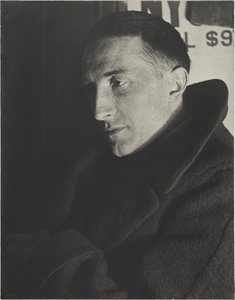
This provocative monochromatic portrait of Marcel Duchamp as his female alter-ego Rrose Sélavy captures the playful ambiguity of Dadaism and invites you to discover this legendary piece of conceptual art.
Taiteilijan elämäkerta
Marcel Duchamp: Filosofinen vallankumouksen tuoja, jonka Dadaismi ja kubismi muuttivat taidehistoriaa. Tutustu ikonisiin teoksiin kuten Kestävyyden Kuutio ja Siirtymä neitoon morsiameksi.
§ 3Kommentointi
Introduction to Marcel Duchamp
Marcel Duchamp (July 28, 1887 – October 2, 1968) was a French-American painter, sculptor, chess player, and writer whose work is associated with Cubism, Dada, and conceptual art. He is commonly regarded as one of the three artists who helped to define the revolutionary developments in the plastic arts in the opening decades of the 20th century, responsible for significant developments in painting and sculpture.The Painting: 'Rrose Sélavy'
Marcel Duchamp's "Rrose Sélavy" is an oil painting created in 1921. The painting depicts a female figure, which is one of the pseudonyms of the artist himself. The name, a pun, sounds like the French phrase 'Eros, c'est la vie', which translates to English as 'eros, that's life'. It has also been read as 'arroser la vie' ('to make a toast to life').Style and Influence
Duchamp's work is known for its conceptual nature, often challenging traditional notions of art. His use of puns and wordplay in his art reflects his interest in language and meaning. The painting "Rrose Sélavy" is a prime example of this, as it explores the relationship between identity, gender, and art.Relevance Today
Duchamp's work continues to be relevant today, as his exploration of language, meaning, and identity resonates with contemporary concerns. His use of puns and wordplay in his art has influenced many contemporary artists, who continue to explore these themes in their own work.Conclusion
In conclusion, Marcel Duchamp's painting "Rrose Sélavy" is a significant work that reflects the artist's interest in language, meaning, and identity. The painting continues to be relevant today, as its exploration of these themes resonates with contemporary concerns.Further Reading
To learn more about Marcel Duchamp and his work, please visit the following links: Rrose Sélavy, or Rose Sélavy, was one of the pseudonyms of artist Marcel Duchamp. The name, a pun, sounds like the French phrase 'Eros, c'est la vie', which translates to English as 'eros, that's life'. It has also been read as 'arroser la vie' ('to make a toast to life'). Sélavy emerged in 1921 in a series of photographs by Man Ray of Duchamp dressed as a woman. Through the 1920s Man Ray and Duchamp collaborated on more photos of Sélavy. Duchamp later used the name as the byline on written mate... Painting by 'Marcel Duchamp' | Marcel Duchamp:Rrose Sélavy (Dadaism,Oil,)Kysymykset ja vastaukset
Mistä voin löytää tilastoja teoksesta Marcel Duchamp:n "Rrose Sélavy"?
Marcel Duchamp:n "Rrose Sélavy"-teoksen Tilastot esittää julkiset käyntitilastot: teoksen kuukausittaiset vierailut, vertailun taiteilijan katsotuimpiin teoksiin sekä tiedot siitä, mistä vierailijat ovat kotoisin.
Voiko teoksen "Rrose Sélavy" nähdä lisätyn todellisuuden (AR) esikatseluna?
Teoksella "Rrose Sélavy" on lisätyn todellisuuden esikatselu: teoksen Tarkastele teosta AR-tilassa -sivu näyttää sen omassa tilassasi yhteensopivalla laitteella.
Mihin tyylisuuntaan "Rrose Sélavy" kuuluu?
Teoksen Marcel Duchamp:n "Rrose Sélavy" tyylisuunta on Conceptual Dadaism. Tämä luokittelu sijoittaa teoksen muiden samankaltaisten taiteilijoiden ja teosten joukkoon.


 Vaihda tulosteeseen


 Teoksille tai reproduktioille, joiden mikä tahansa sivu on suurempi kuin 105 cm (noin 41 tuumaa), kehys toimitetaan osina purettuna sarjana. Tämä menetelmä varmistaa turvallisen toimituksen ja ehkäisee vaurioita kuljetuksen aikana.


