


 Esikatselu
 Jaa teos
 Jaa
Jaa
 Tiedot
 Opas
Opas

 Lataa kuva
 Samanlaisia kohteita
 Röntgenkuvaus
 Diaesitys
 Kysymykset ja vastaukset
 Tilastot
Suspension (Bec Auer)


 Lue lisää
Saat tulostusvalmiin tiedoston, jonka laatu ylittää verkkonäkymän huomattavasti. Jokainen myymämme digitaalinen kuva on peräisin arkistomme korkearesoluutioisesta mestariteoksesta — yleensä 5 000–15 000 pikselin levyisenä — joten voit tulostaa suuria kokoja, rajata tiukasti tai toistaa hienovaraiset yksityiskohdat luottavaisin mielin.
Mikään tiedosto ei lähde studiostamme muuttamatta. Digitaalinen asiantuntija vertaa värejä alkuperäiseen maalaukseen ja korjaa niitä tarvittaessa, minkä jälkeen hän parantaa kuvan selkeyttä ja yksityiskohtia ammattimaisilla retusointityökaluilla — säilyttäen aina uskollisena taiteilijan siveltimenjäljen ja tyylin. Lopputuloksena on kuva, joka näyttää maalaukselta, eikä suodatetulta skannaukselta.
Hyväksyt työn ennen valmistumistaan: asiantuntijamme lähettää kuvan tarkistettavaksi sähköpostitse 72 tunnin kuluessa. Etkö ole tyytyväinen? Pyydä parannuksia tai korjauksia, tai pyydä hyvitystä, mikäli laatu ei vastaa odotuksia.
Tämä on laatua, johon kustantamot, design-studiot, galleriat ja painotalot luottavat.
Digitaalinen kuva
Lataa korkearesoluutioinen tiedosto henkilökohtaiseen näyttelyyn, tulostamiseen ja luoviin projekteihin. ( Vaihda tulosteeseen Osta käsinmaalattu taideteos)
Sisältyy jokaiseen digitaalisen kuvan tilaukseen
Asiantunteva digitaalinen toimitus, laatu taattu
Kun valitset AllPaintingsStore.com-palvelun, et saa vain kuvaa – saat ammattimaisesti viimeistellyn digitaalisen taideteoksen, joka on luotu tarkkuudella ja jonka takaa tulee tyytyväisyystakuu. Tässä on kaikki, mitä tilauksesi sisältää, automaattisesti:

Nopea sähköpostitoimitus
Saat korkearesoluutioisen digitaalisen kuvatiedostosi sähköpostiisi 72 tunnin kuluessa tilauksesta – valmiina käytettäväksi välittömästi.

Tekoälyllä parannettu digitaalinen tiedosto
Teoksesi on optimoitu ammattimaisesti edistyneiden tekoälytyökalujen ja manuaalisen jälkikäsittelyn avulla, mikä takaa maksimaalisen yksityiskohtaisuuden, selkeyden ja väritarkkuuden.

Ilmainen uudelleenlähetys elinikäisesti
Oletko vahingossa poistanut tai kadottanut tiedostosi? Ei hätää – lähetämme sen sinulle uudelleen milloin tahansa täysin maksutta.

Ei tuontimaksuja – koskaan
Nauti taiteestasi välittömästi ilman tullimaksuja, veroja tai toimituskuluja – digitaaliset lataukset ovat aina verovapaita.

Värintoiston tarkkuustakuu
Varmistamme, että digitaalinen kuvasi vastaa alkuperäisiä värejä mahdollisimman tarkasti käyttämällä ammattilaistason työkaluja ja värinhallintaa.

100 päivän tyytyväisyystakuu
Jos et ole tyytyväinen digitaaliseen kuvaasi, muokkaamme sitä tai palautamme 100% hinnan 100 päivän kuluessa – kysymystä ei esitetä.

100% Rahat takaisin -takuu
Et ole tyytyväinen? Saat täyden hyvityksen 100 päivän kuluessa digitaalisen tiedostosi vastaanottamisesta – kysymystä ei esitetä.

Määräalennukset
Osta 3 kuvaa, säästä 10% - Osta 5, säästä 15% - Osta 10+, säästä 20%. Erinomainen valinta luoviin projekteihin, gallerioille ja toimistoille.
A Flickering Echo of Uncertainty
In the quiet, contemplative space of modern art history, few images possess the haunting simplicity of Marcel Duchamp’s “The Bec Auer.” Completed in 1967, this work serves as a profound, late-career testament to an artist who spent his life dismantling the boundaries of what we consider "art." At first glance, the viewer is met with a solitary light bulb suspended from a wire, appearing almost like a fleeting sketch captured mid-motion. There is an undeniable vulnerability in its presentation; it does not demand attention through grand scale or vibrant color, but rather through a delicate, unfinished quality that suggests a moment of creative thought caught in the act of becoming. For the collector or the interior designer, this piece offers a sophisticated focal point—a conversation starter that brings a sense of intellectual depth and minimalist elegance to any curated space.
< p>The technique employed here is deeply rooted in Expressionism, moving away from the rigid precision of academic realism to embrace the visceral power of the gesture. Duchamp utilizes loose, rhythmic brushstrokes that prioritize tonal variation and movement over meticulous detail. This deliberate lack of polish creates a palpable sense of immediacy, as if the artist’s hand were still fresh upon the canvas. The way the light bulb is rendered—partially sketched, partially realized—mirrors the artist's own fascination with the process of creation itself. It is not merely a representation of an object, but a representation of the idea of an object, inviting the observer to fill in the shadows and the light with their own perception.The Philosophy of the Found Object
To understand "The Bec Auer" is to understand the revolutionary concept of the "readymade." Duchamp was a master of provocation, famously arguing that the essence of art resided not in the manual skill of the execution, but in the conceptual choice of the artist. By elevating a commonplace, industrial item like a light bulb to the status of a fine art subject, he challenged the very foundations of artistic dogma. This piece carries the DNA of Dadaism, a movement born from the chaos and disillusionment of the early 20th century, which sought to reject logic and embrace the absurd. In this painting, the light bulb becomes a symbol of illumination amidst uncertainty, a small spark of clarity held precariously by a single wire.
The historical context of the late 1960s adds another layer of emotional resonance to the work. Created during a period of significant global upheaval and cultural shifts, the painting reflects a broader sense of post-war anxiety and the questioning of established truths. For those looking to adorn a contemporary home or gallery, "The Bec Auer" provides more than just aesthetic beauty; it offers an emotional anchor. It is a piece that embodies the tension between the seen and the unseen, the finished and the unfinished, making it an ideal acquisition for those who appreciate art that functions as both a visual masterpiece and a philosophical inquiry.
Kysymykset ja vastaukset
Kuinka monta ihmistä katsoo teosta "Suspension (Bec Auer)"?
Teoksen Marcel Duchamp:n "Suspension (Bec Auer)" tilastot löytyvät sen Tilastot -sivulta: teoksen kuukausittaiset käynnit, taiteilijan muiden teosten käynnit sekä viimeisimpien kävijöiden maa- ja kielijakauma.
Millainen tunnelma teoksella "Suspension (Bec Auer)" on?
Teoksen Marcel Duchamp:n "Suspension (Bec Auer)" yleinen tunnelma on Dramatic. Tunnelma kuvaa teoksen yleistä ilmapiiriä.
Ovatko "Suspension (Bec Auer)" värit voimakkaita vai pehmeitä?
Teoksen Marcel Duchamp:n "Suspension (Bec Auer)" värit ovat Vivid voimakkuudeltaan.
Taiteilijan esittely
Marcel Duchampin elämä ja taide
Marcel Duchamp syntyi 28. heinäkuuta 1887 Blainvillessa, Normandiassa, Ranskassa, maailmaan, jossa luomisen impulssi oli syvällä hänen veressään. Hän oli Eugene ja Lucie Duchampin seitsemän lapsen neljäs. Hänen kotinsa oli tekijöiden ja ajattelijoiden tyyssija; myös hänen sisaruksensa jakoivat tämän luovan levottomuuden, sillä hänen veljensä Jacques Villon ja Raymond Duchamp-Villon sekä hänen sisarensa Suzanne Duchamp-Crotti kaikki valitsivat taiteen polkunsa. Vaikka hänestä tulikin myöhemmin valtavan moniulotteinen ranskalais-amerikkalainen hahmo, hänen juurensa pysyivät kiinni Normandian rauhassa.
Hänen elämänsä ei ollut koskaan pelkkää siveltimen tai taltan yksipuolista tavoittelua. Hän oli monien naamioiden ja monien kiinnostuksen kohteiden mies, joka liikkui maailmassa taiteilijana, keksijänä ja omistautuneena shakinpelaajana. Hän omaksui jopa naisellisen alter egon, Rrose Sélavy, monimutkaistaakseen entisestään identiteetin rajoja. Tämä levoton henki ajoi hänet Pariisin ja New Yorkin kulttuuristen keskusten välillä, aina pyrkimyksenä purkaa aikakautensa varmuuksia. Hän ei halunnut ainoastaan maalata maailmaa; hän halusi ajatella uudelleen koko sitä mekanismia, jonka kautta me sen havaitsemme.
Hänen panoksensa modernille aikakaudelle oli yhtä monipuolinen kuin odottamaton. Hän katsoi konetta ja arkipäiväistä esinettä löytääkseen uuden kielen älylle. Hänen työnsä ilmestyi usein näissä muodoissa:
- Fountain
- Nude Descending a Staircase, No. 2
- The Large Glass
- Bicycle Wheel
Nuoruus, perhe ja koulutus
Ranskan Normandian Blainville-Crevonin rauhallisessa syleilyssä nuori poika nimeltä Henri-Robert-Marcel Duchamp aloitti elämän, joka lopulta horjuttaisi luovuuden perusteita. Hän syntyi perheeseen, jossa taide oli tuttua kieltä; hänen veljensä, Jacques Villon ja Raymond Duchamp-Villon, löysivät molemmat omat polkunsa taiteilijoina, maalareina ja kuvanveistajina. Tämä ilmaisun täyttämä kodin ilmapiiri ruokki hänen varhaisia taipumuksiaan ja johti hänet taiteen muodollisen opiskelun pariin. Hän hakeutui Pariisin Académie Julianin oppilaaksi, jossa hän vietti aikaansa vuosien 1904 ja 1905 välillä, vaikka hänen sydämensä vaelsi usein enemmän biljardipöydän ääreen kuin ateljeessa. Hän opiskeli myös vuotta Ecole des Beaux Artesissa, mutta tämä opiskelujakso ei johtanut pitkäaikaiseen sitoutumiseen akateemiseen perinteeseen.
Nuoruuden värit ja muodot muovautuivat aikakauden vaihtuvien virtojen mukaan, kun hän huomasi itsensä kiinnostuneena fauvismin intensiivisistä väripaleteista ja postimpressionismin rakenteellisista pohdinnoista. Hänen polkunsa ei kuitenkaan ollut suora viiva akateemista edistystä pitkin. Vuonna 1905 valtion velvollisuudet kutsuivat hänet suorittamaan asevelvollisuutta 39. jalkaväkiryhmässä. Tänä aikana hän päätyi Roueniin työskentelemään painotaloon. Juuri täällä, musteen tuoksussa ja painokoneen rytmissä, hän hallitsi typografian tekniset yksityiskohdat ja erilaiset painoprosessit. Nämä käytännön taidot, jotka hän oppi kaukana Pariisin loistokkaista salongeista, muovasivat myöhemmin hänen ymmärrystään siitä, miten esineitä ja kuvia tuotetaan ja miten niitä havainnoidaan.
Taiteellinen kehitys Pariisissa
Nuoren taiteilijan kulkiessa Pariisin kaduilla, hänen läsnäolonsa taidemaailmassa alkoi hahmottua aikakauden merkittävimpien näyttelyiden myötä. Vuoteen 1909 mennessä hän oli jo esitellyt teoksiaan Salon des Indépendantsissa ja Salon d’Automne -näyttelyssä, etsien paikkaansa aikakautensa luojien joukosta. Häntä vetivät puoleensa Paul Cézanne, jonka lähestymistapa muotoon ja rakenteeseen jätti pysyvän jäljen hänen kehittyvään visioonsa. Tämä ajanjakso ei koskenut pelkästään maalaamisen oppimista, vaan se oli pyrkimystä löytää keino ilmaista muuttuvan maailman monimutkaisia kerroksia.
Vuosi 1911 toi mukanaan merkittävän käännekohdan, kun hänestä tuli osa kubistista ryhmää. Tämä sitoutuminen fragmentoituneisiin muotoihin ja useisiin perspektiiveihin ajoi hänet pois perinteisestä esittävästä taiteesta. Juuri tällaisena aikana hän loi teoksen Kahvinkeitin, joka toimi merkkinä kasvavasta kiinnostuksestaan mekaanista ja käsitteellistä. Häntä alkoi kiehtoa neljäs ulottuvuus; hän etsi keinoja kuvata liikettä ja aikaa kankaan staattisten rajojen sisällä. Tämä älyllinen nälkä ajoi hänet katsomaan pintaa syvemmälle, kyseenalaistamaan, kuinka suuri osa taiteesta oli todella tarkoitettu vain silmälle.
Radikaalit vuodet New Yorkissa
Saavuttuaan Yhdysvaltoihin Marcel Duchamp huomasi olevansa maisemassa, joka oli kypsynyt juuri sille mullistukselle, jota hän kantoi mielessään. Hän oli asunut maassa alle kaksi vuotta, kun hän suoritti kuuluisimman kapinallisen tekoaan. New Yorkin vilkkaissa älyllisissä piireissä hänet otettiin vastaan uteliaisuudella, ja hän löysi paikkansa ajattelijoiden ja luojien joukosta, jotka olivat valmiita murtamaan perinteiden rajoja. Selviytyäkseen näinä muovaavina vuosina hän opetti ranskaa – käytännöllinen välttämättömyys, joka antoi hänelle vapauden syventyä älyllisempiin ja teoreettisempiin kiinnostuksen kohteisiinsa.
Tässä ympäristössä hänestä tuli keskeinen hahmo New Yorkin proto-dadaistisessa liikkeessä. Hän liikkui kaupungin kaduilla yhdessä Francis Picabia, Man Ray ja Beatrice Wood kanssa, ruokkien kapinallista henkeä, joka pyrki purkamaan vakiintuneita järjestyksiä. Hänen läsnäolonsa auttoi muovaamaan New Yorkin dada-liikkeen perusteita ja muutti kaupungin laboratorioksi ideoille, jotka haastoivat itse taiteilijan määritelmän. Hän ei ollut pelkkä tämän mullistuksen osallistuja; hän oli sen katalyytti.
Hänen suhteensa amerikkalaiseen kulttuuriin syveni vuosikymmenten saatossa. Vaikka hän oli saapunut maahan vieraana etsimässä uusia tapoja ilmaista älyä, hänestä tuli lopulta Yhdysvaltain kansalainen vuonna 1955. Hänen elämänsä tätä vaihetta leimasi kieltäytyminen asettumasta ammattimaalari-taiteilijan mukavuuksiin; sen sijaan hän valitsi kaupungin syvällisenä, usein levottomana ja käsitteellisenä tutkimuskenttänä.
Tekniikka, tyyli ja valmisobjekti
Hän väsyi sitä, mitä hän kutsui "retinaaliseksi taiteeksi" – teoksia, joiden ainoa tarkoitus oli miellyttää silmää pintakiillon kauneudella. Paetäkseen tätä ansaa hän käänsi ajatuksensa kohteen takana olevaan käsitteeseen, siirtäen painopisteen visuaalisesta nautinnosta älylliseen pohdiskeluun. Tämä murros johti hänet luomaan valmisobjekteja eli readymadeja noin vuonna 1914. Näitä esineitä ei valittu niiden kauneuden tai rumauden perusteella, vaan visuaalisen välinpitämättömyyden kautta. Valitsemalla tavallisia, teollisia tuotteita ja esittämällä ne taiteena, hän riisui taiteen perinteisen käsityötaidon välttämättömyyden. Hän pyrki ohittamaan taiteilijan käden jäljen kokonaan, suosien harkitun valinnan voimaa pensselin taidokkuuden sijaan.
Hänen taiteellinen harjoituksensa oli levoton ja jatkuvasti muuttuva kokonaisuus, joka kieltäytyi asettumasta yhteen tiettyyn muottiin. Vaikka hän työskenteli kubismin murtuneiden perspektiivien parissa, hän liikkui myös dadaismin kaaoksen ja konseptuaalisen taiteen älyllisten syvyyksien välillä. Hän käytti valtavaa määrää eri mediumeja, veistoksellisesta kollaasista lyhytelokuvien katoavaisiin ominaisuuksiin ja jopa oman kehonsa läsnäoloon. Hän leikki usein identiteetin rajoilla käyttäen naisellista alter egoa, Rrose Sélavyä, tutkiakseen sukupuolen sujuvuutta. Sanaleikkien ja sattuman elementtien avulla hän muutti luomisen teon logiikan ja kapinan peliksi.
- Fountain (1917)
- Bicycle Wheel (1913)
- Bottle Rack (1914)
- Comb (1916)
Keskeiset teokset ja suuret innovaatiot
Siirtymä maalaamisesta kohti konseptuaalisuutta alkoi hahmottua hänen liikkeen ja muodon fragmentaation herättämän kiehtovuuden kautta. Vuonna 1912 hän loi teoksen Nude Descending a Staircase, No. 2, joka vangitsi hahmon mekaanisen liikkeen sarjan päällekkäisiä, toisiinsa sulautuvia tahkoja hyödyntäen. Tämä lähestymistapa pyrki kuvaamaan liikettä staattisen asennon sijaan. Vuoteen 1913 mennessä hänen kiinnostuksensa siirtyi valmiiden esineiden kokoamiseen, mikä näkyi teoksessa Bicycle Wheel, jossa polkupyörän vanne ja haarukka oli asennettu puiselle jakkaralle. Tämä valinnan teko merkitsi poikkeamaa perinteisestä käsityötaidosta, asettaen idean esineen manuaalisen toteutuksen edelle.
Siirtyessään New Yorkin radikaaliin ilmapiiriin hänen provokaationsa muuttuivat suoraviivaisemmiksi. Hän otti tavallisen posliinisen pissanvaihdon, allekirjoitti sen nimellä "R. Mutt" ja esitteli sen vuonna 1917 nimellä Fountain. Tämä readymade-veistos haastoi itse taiteilijan tekemisen määritelmän, vihjaten, että esineen valitseminen voi itsessään muodostaa taidetta. Hän jatkoi tätä purkamista Bottle Rack -teoksella vuonna 1914, ja myöhemmin, vuonna 1919, hän otti postikortin Mona Lisa -teoksesta ja tahri sen viiksillä ja leukaparralla, kutsuen teosta nimellä L.H.O.O.Q.. Nämä teokset oli tarkoitettu horjuttamaan katsojan odotuksia ja pakottamaan uuteen pohdintaan esteettisestä arvostelusta.
Hänen monimutkaisin ja arvoituksellisin rakennelmansa, The Large Glass, hallitsi hänen ajatuksiaan vuosia, kun hän työskenteli sen parissa vuosien 1915 ja 1923 välillä. Tämä teos, joka tunnetaan myös nimellä The Bride Stripped Bare by her Bachelors, Even, käytti lyijyfoliota ja lankaa tutkiakseen monimutkaista, symbolista kuvastoa. Näiden vaihtelevien kokeilujen kautta hän siirsi taiteen painopisteen pois silmästä kohti mieltä.
Myöhemmät vuodet ja kuolema
Amerikan levottomien vuosien jälkeen Duchamp palasi Pariisiin vuonna 1923. Hän pysyi kaupungissa vuoteen 1942 asti, jolloin hän vetäytyi pitkälti perinteisen taidemaailman keskiöstä. Se älyllinen ankaruus, joka aiemmin ruokki hänen radikaaleja provokaatioitaan, löysi uuden kanavan shakin hiljaisista ja strategisista monimutkaisuuksista. Hän vietti suuren osan tästä ajasta keskittyen shakkipeliin – harrastukseen, joka vaati samaa henkistä intensiteettiä kuin hänen aiemmat konseptuaaliset pohdiskelunsa.
Vuonna 1954 hän löysi seuraa Alexina Sattlerista, jonka kanssa hän avioitui New Yorkissa järjestetyssä seremoniassa. Heidän yhteinen elämänsä oli omistautunutta ja kesti vuosia, kun hän etsi paikkaansa muuttuvassa kulttuurisessa maisemassa. Hänestä tuli lopulta Yhdysvaltain kansalainen vuonna 1955, vaikka hänen juurensa pysyivätkin syvästi kytkettyinä ranskalaiseen maaperään. Hän kuoli 2. lokakuuta 1968 Neuilly-sur-Seine, Ranskassa.
Perintö ja kestävä vaikutus
Hänen provokaatioidensa aallot levisivät kauas avantgarden pienistä piireistä, muovaten lopulta koko sen perustan, jonka kautta havaitsemme luovuuden. Häntä pidetään usein konseptuaalisen taiteen isänä – murros, joka siirsi painopisteen fyysisestä esineestä kohti älyllistä prosessia. Priorisointi ajatuksen ja visuaalisen lopputuloksen välillä muutti perustavanlaatuisesti kuvataiteen suunnan 1900-luvun alkukymmenien aikana. Tämä muutos ei ollut äkillinen katkos, vaan hidas ja syvä muodonmuutos, joka raivasi tien surrealismille, minimalismille ja pop-taiteelle. Hän oli mukana määrittelemässä uutta aikakautta, jossa taiteilijan aikomus muodostui merkityksen ensisijaiseksi moottoriksi.
Hänen vaikutuksensa tuntui voimakkaimmin siinä tavassa, jolla hän purki perinteisen taidokkuuden välttämättömyyden. Hän esitteli käsitteen, jota kutsutaan taiteelliseksi kertoimeksi – ajatuksen, joka tutki suhdetta taiteilijan tarkoituksen ja todellisen ilmaisun välillä. Tämä ajatus loi pohjan myöhemmän sukupolven taiteilijoille, jotka jatkoivat omistamisen ja katsojan roolin rajojen tutkimista. Hän ei ainoastaan luonut esineitä; hän loi uusia tapoja ajatella itse luomisen tekoa. Hänen läsnäolonsa taidehistoriassa on pysyvä voima, joka haastaa jatkuvasti rajoja sille, mitä voidaan pitää taideteoksena.
- Fountain (1917)
- Nude Descending a Staircase, No. 2 (1912)
- The Large Glass (1915–1923)
- Bicycle Wheel (1913)
Missä teoksia voi nähdä tänään
Seuratakseen hänen levottoman älynsä jälkiä, voisi matkustaa Philadelphia Museum of Art -museoon. Tämä instituutio kantaa sisällään hänen laajimman kokoelmansa, säilyttäen muistona uran, joka kieltäytyi pysymästä paikallaan. Juuri täällä hänen vaikutuksensa paino tuntuu kaikkein konkreettisimmalta, sillä museo on koonnut yhteen valtavan määrän hänen ideoitaan ja esineitään hänen koko elämänsä varrelta.
Lontoossa Tate Modern säilyttää posliinisen urinaalin, joka tunnetaan nimellä Fountain. Tämä esine, joka aiheutti valtavan kohun, kun se esitettiin näyttelyssä, on edelleen keskeinen osa kaupungin kokoelmia. Samaan aikaan Pariisin Centre Pompidou kantaa hänen kokeilevampia, kineettisiä tutkimuksiaan, kuten teoksia Rotorelief n°11 ja Rotorelief n°12. Nämä työt heijastavat hänen kiehtovuuttaan liikkeen ja sen suhteen äärellä, miten esine voi huijata silmää.
Muut teokset ovat löytäneet kodin erikoistuneista instituutioista, jotka heijastavat hänen monipuolisia kiinnostuksen kohteitaan. Monnaie de Paris säilyttää teoksen Trébuchet (Trap), joka kertoo hänen jatkuvasta sitoutumisestaan muotoon ja käsitteeseen jo varhaisten vuosien jälkeenkin. Näiden teosten kohtaaminen on kohtaaminen sen miehen fyysisten jäänteiden kanssa, joka pyrki siirtämään taiteen silmästä mielen syvyyksiin.
- Nude Descending a Staircase, No. 2 (1912)
- The Large Glass (1915–1923)
- Bicycle Wheel (1913)
- Bottle Rack (1914)
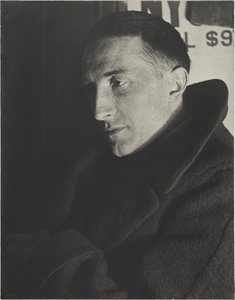
Marcel Duchamp
1887 - 1968 , Ranska
Pähkinänkuoressa
- Artistic Movement Or Style:
- Kubismi
- Dadaismi
- Konseptuaalinen taide
- Artists Or Movements Influenced By This Artist:
- Konseptuaalinen taide
- Minimalismi
- Pop-taide
- Surrealismi
- Artists Who Influenced This Artist: ['Cézanne']
- Date Of Birth: 1887
- Date Of Death: 1968
- Full Name: Henri-Robert-Marcel Duchamp
- Nationality: Ranskalais-amerikkalainen
- Notable Artworks:
- Fountain
- L.H.O.O.Q
- The Large Glass
- Nude Descending a Staircase, No.2
- Place Of Birth: Blainville-sur-Mer, Ranska