Rahat takaisin -takuu · 100 päivää Ilmainen toimitus ympäri maailman
449 587teokset 30 613taiteilijat 4 660museot 32kielet
Valuutta
    Kieli
      Ateljee · Perustettu 2015 · Pariisi, Ranska
      AllPaintingsStore
      allpaintingsstore.com
      Catalogue entry

      No. 24

      Oil On Canvas.

      Fig. 1. Mark Rothko, No. 24. Shown as the reproduction you are specifying: , .

      § 1Catalogue data

      § 2Abstract

      Keräilykohteen kuvaus

      Experience the haunting beauty of Mark Rothko’s abstract expressionist masterpiece, ‘No. 24,’ capturing a contemplative face against a blurred monochrome backdrop—a poignant exploration of emotion and form from the mid-century period. Discover this evocative artwork and bring its timeless vision home.

      Taiteilijan elämäkerta

      Tutustu Mark Rothkonin ikoniseen Color Field -maalaukseen ja abstrakti ekspressionismiin. Löydä tämän keskeisen modernin taiteilijan tunteellinen syvyys ja pysyvä vaikutus.

      § 3Commentary

      The Weight of Absence: A Journey into Rothko’s No. 24

      To stand before Mark Rothko’s No. 24 is not merely to view a painting, but to enter into a profound, silent dialogue with the human soul. In this evocative work, the boundaries between the viewer and the canvas begin to dissolve, leaving behind only a sense of weight, light, and an almost overwhelming emotional resonance. The painting presents a solitary human face—a deliberate simplification that prioritizes emotional resonance over realistic representation. Rothko eschews detailed anatomical rendering, opting instead for amorphous shapes that convey an overwhelming sense of vulnerability and introspection. The blurred background serves to heighten the focus on this central figure, creating a visual dialogue between presence and obscurity that pulls the observer into a meditative state.

      The technical mastery behind this piece embodies the core tenets of Abstract Expressionism, specifically Rothko’s signature Color Field painting style. Through the thick application of rectangular blocks of color—primarily shades of black and white—the artist creates expansive planes that dominate the canvas. This technique is characterized by a deliberate lack of visible brushstrokes, resulting in a surface texture that appears almost velvety to the eye. The mesmerizing effect is achieved through careful pigment layering and optical blending, where colors seem to vibrate against one another. For the collector or interior designer, this creates a piece that possesses a unique atmospheric gravity, acting as a focal point that commands attention through its quiet, rhythmic breathing of color.

      Symbolism and the Echoes of History

      Emerging from the turbulent postwar artistic landscape, No. 24 reflects the deep-seated anxieties of an era marked by the disillusionment following World War II. Influenced by Surrealism and Gestalt psychology, Rothko sought to bypass conscious thought to tap into primal emotions. His chosen palette is laden with profound symbolic significance: the black represents darkness, grief, and mortality, while the white embodies purity, spirituality, and transcendence. The juxtaposition of these opposing hues creates a tension that mirrors the complexities of human existence itself. It is a visual manifestation of the search for meaning amidst chaos.

      Beyond its aesthetic beauty, the painting invites deep contemplation on themes of isolation, loss, and the eternal yearning for connection. For those seeking to adorn a space with art that inspires reflection, this work offers a sanctuary of pure emotion. Whether placed in a quiet study or a grand gallery, a high-quality reproduction of No. 24 brings with it a sense of historical depth and existential inquiry, making it an incomparable choice for anyone looking to infuse their environment with intellectual and emotional sophistication.

      Kysymykset ja vastaukset

      Miten teoksen Mark Rothko:n "No. 24" tunnelma on kuvattu?

      Teoksen Mark Rothko:n "No. 24" yleinen tunnelma on Calm. Tunnelma kuvaa teoksen yleistä ilmapiiriä.

      Miten teoksen "No. 24" värit sointuvat yhteen?

      Teoksen "No. 24" väriharmonia on merkitty muodossa Unified Palette.

      Mikä väri erottuu eniten teoksessa "No. 24"?

      Teoksen "No. 24" silmiinpistävin väri on Rosy Brown (#b79d7f). Hallitseva väri on hyödyllinen, kun teosta sovitetaan sisustukseen.
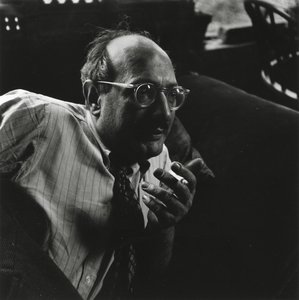
      § 4The artist

      Mark Rothko

      Mark Rothko

      1903 - 1970, Latvia

      Quick facts about Mark Rothko

      • Artistic Movement Or Style: Abstrakti ekspressionismi
      • Artists Or Movements Influenced By This Artist: ['Minimalismi']
      • Date Of Birth: 25. syyskuuta 1903
      • Date Of Death: 25. helmikuuta 1970
      • Full Name: Mark Rothko
      • Nationality: Venäläinen imperiumi-Amerikan kansalainen
      • Notable Artworks:
        • Ei. 10 (1950)
        • Seagram Murals
        • Rothko Chapel
      • Place Of Birth: Dvinsk, Latvia

      Taiteilijan elämäkerta

      Early Life and the Seeds of Artistic Vision

      Mark Rothko, born Markus Yakovlevich Rothkowitz in Dvinsk, Latvia, in 1903, carried within him from the outset a sense of displacement that would profoundly shape his artistic journey. His early years were marked by the anxieties of a Jewish family living within the Pale of Settlement, shadowed by pogroms and political unrest. This atmosphere instilled a deep sensitivity to human suffering, a theme that would resonate throughout his oeuvre. The 1913 immigration to Portland, Oregon, represented not just a geographical shift but a cultural upheaval for the young Rothko. While his father, a pharmacist and intellectual with socialist leanings, fostered a home filled with debate and learning, the loss of Jacob Rothkowitz shortly after their arrival cast a long shadow. This early experience of loss, coupled with the challenges of assimilation, fueled a lifelong exploration of existential themes – mortality, trauma, and the search for meaning in a chaotic world. Though he excelled academically at Yale University, Rothko found himself drawn more to the vibrant energy of New York City, abandoning formal studies to pursue his passion for art at the Art Students League. These formative years laid the groundwork for an artistic vision that would ultimately challenge conventional notions of painting and redefine the emotional power of color.

      From Figurative Beginnings to Abstract Expressionism

      Rothko’s initial artistic explorations were firmly rooted in realism, depicting urban scenes and portraits with a keen eye for detail. However, these early works already hinted at the psychological depth that would become his hallmark. As the 1940s unfolded, and the world grappled with the horrors of World War II, Rothko’s art underwent a dramatic transformation. Influenced by Surrealism and mythology, he began to move away from representational imagery, seeking instead to express universal human emotions through symbolic forms. This period saw the emergence of multi-form paintings – canvases populated by ambiguous, biomorphic shapes that seemed to hover between figuration and abstraction. These works were not merely experiments in form; they were deeply felt responses to the anxieties and uncertainties of a world at war. By the late 1940s, Rothko had arrived at his signature style: large-scale canvases featuring rectangular blocks of color that appeared to float and resonate with one another. He stripped away all vestiges of recognizable imagery, focusing instead on the pure emotional impact of color and form. This marked a pivotal moment in the development of Abstract Expressionism, and established Rothko as a leading figure in this groundbreaking movement.

      The Color Field and the Pursuit of Transcendence

      Rothko’s mature work is defined by what came to be known as “Color Field” painting – vast expanses of luminous color that envelop the viewer in an immersive experience. These paintings are not about *what* they depict, but rather *how* they make you feel. Rothko believed that art should engage the viewer viscerally, bypassing intellectual analysis and speaking directly to the emotions. He meticulously layered thin washes of paint, creating subtle variations in tone and texture that seemed to emanate from within the canvas. The edges of his rectangular forms are often blurred, allowing them to blend and interact with one another, creating a sense of depth and movement. Rothko deliberately avoided titles beyond numbers – “No. 1,” “No. 6” – encouraging viewers to confront the paintings without preconceived notions and allow their own emotional responses to guide their experience. He sought to create a space for contemplation, a sanctuary where viewers could connect with something larger than themselves. His ambition was nothing less than to evoke profound spiritual experiences through the language of color.

      Major Achievements and Lasting Legacy

      Among Rothko’s most significant achievements are “No. 10 (1950),” a pivotal work that exemplifies his evolving style, and the Seagram Murals (1958). Commissioned for the Four Seasons restaurant in New York City, these murals were ultimately rejected by Rothko, who felt they would be compromised by their intended environment. He instead donated them to the Tate Gallery in London, where they continue to inspire awe and contemplation. Perhaps his most ambitious project was the Rothko Chapel (1971) in Houston, Texas – a non-denominational sanctuary housing fourteen of his paintings. Designed as a space for quiet reflection, the chapel is considered a sacred place by many, embodying Rothko’s belief in the spiritual power of art. Rothko's influence on subsequent generations of artists has been immense. He paved the way for Minimalist art and continues to inspire contemporary painters who explore the emotional possibilities of abstraction. Despite struggling with depression throughout his life, culminating in his tragic suicide in 1970, Mark Rothko remains one of the most important and influential artists of the 20th century – a master of color whose work continues to resonate with audiences around the world. ## The Enduring Power of Emotional Resonance
      • Rothko’s paintings are celebrated for their ability to convey universal human emotions—tragedy, ecstasy, despair, and hope.
      • His exploration of color as a vehicle for emotional expression revolutionized abstract painting.
      • The Rothko Chapel stands as a testament to his belief in the spiritual power of art.
      • He remains a pivotal figure in Abstract Expressionism and a major influence on contemporary artists.

      § 5Comparanda

      § 6Questions

      Pikaista tietoa

      • Artistic style: Chromatic abstraction
      • Medium: Oil on Canvas
      • Notable elements or techniques: Color Field Painting
      • Location: Private Collection

      § 7Cite this entry

      AllPaintingsStore.com, “Mark Rothko, No. 24”, https://allpaintingsstore.com/fi/art/mark-rothko-no-24-8BWU99-en/ArtistReproduction/ (accessed 1 lokakuu 2026).

      § 8The reproduction

      Käsinmaalattu öljyvärinen jäljennös

      Käsinmaalattu öljyväri kankaalle haluamassasi koossa ja kehyksissä, taiteilijoidemme valmistamana tilauksesta. ( Vaihda tulosteeseen Siirry digitaaliseen kuvaan)

      It is specified on the order sheet in the margin; the present state of that sheet reads as follows.

      No. 24

      Reproduktiotekniikka

      Replikaatin koko

      -

      Kokenut huipputaiteilija

      Lisää yksityiskohtia, hienostuneisuutta ja enemmän aikaa tuotantoon

      -

      Reproduktion kehystysvaihtoehdot

      -

      -

      Teoksille tai reproduktioille, joiden mikä tahansa sivu on suurempi kuin 105 cm (noin 41 tuumaa), kehys toimitetaan osina purettuna sarjana. Tämä menetelmä varmistaa turvallisen toimituksen ja ehkäisee vaurioita kuljetuksen aikana.

      Vaatii ammattimaista kokoamista – kyseessä ei ole tee-se-itse-tuote.
      Sarja on koottava ja kangas kiristettävä kokeneen kehystysammattilaisen toimesta käyttäen puuliimaa (ei sisälly pakkaukseen), kangaspinnetteitä ja puristimia, jotta kehyksen kulmat pysyvät suorina liiman kuivuessa. Virheellinen kokoaminen tai epätasainen kankaan kiristys voi vaurioittaa teosta pysyvästi, eikä tällaiset vauriot ala takuun piiriin.

      • Kaikki massiivipuupalat sisältyvät, tarkasti mittojen mukaan leikattuina.

      • Kootaan mukana tulevilla ruuveilla sekä kulmaliitoksia varten tarvittavalla puuliimalla, jota ei toimiteta, joten se on hankittava kehystäjältä.

      • Vaatii ammattilaisvälineitä, jotka eivät sisälly pakkaukseen: kankaan venytyspihdit (kiristin) ja puristimet, joilla pidetään kehyksen puut suorassa liiman kuivuessa.

      Tärkeää:
      Kulmaliitoksissa tarvitaan puuliimaa, kehyksien osat on pidettävä puristimilla, kunnes liima on täysin kuivunut, ja koottuun kehykseen jännitettävän kankaan kiristämiseen tarvitaan kangaspenssipihti. Mikään näistä ei sisälly pakkaukseen. Suosittelemme varmistamaan kokeneen kehystäjän saatavuuden ennen tämän kokoisen kehyksen tilaamista.

      Nimilaatta

      -

      -

      Suojalakkaus

      Kiiltävä lakka (syventää värejä, suojaa valolta ja kosteudelta)

      -

      Mukauta taideteokseni

      Esimerkkejä muokattavista asioista: Vaihda kasvot asiakkaan omaan valokuvaan; Lisää lemmikki (esim. vaihda kissa koiraan); Lisää taustalle piilotettu viesti; Muuta taustan maisemaa tai elementtejä.

      -

      Pikatoimitus

      Maailmanlaajuinen toimitus () 3–4 viikossa tavallisen 5 viikon sijaan. (29 lokakuu). Laadusta ei tingitä.

      -

      Pikatoimitus

      Maailmanlaajuinen toimitus () 5 viikon kuluessa. (5 marraskuu).

      Sisältyy hintaan

      Kokonaishinta

      € 227

      Included with every order

      • Ilmainen pikatoimitus ympäri maailman
      • Korkealaatuinen pellavakangas
      • Kattava kuljetusvakuutus
      • Tulliveron palautustakuu
      • Takuu täydellisestä värien vastaavuudesta
      • 100 päivän palautusoikeus (vain valmistusvirheet)
      • 100% rahat takaisin -takuu
      • Määräalennus tarjolla
      Order sheet