

Acrylic On Canvas.

§ 1Luettelotiedot

Tämä teos on tekijänoikeuden suojaama
Tällä sivulla esitettyä taideteosta suojaa tekijänoikeuslaki, mikä tarkoittaa, ettemme voi laillisesti luoda tai myydä täsmälleen samanlaista jäljennöstä. Tämä suoja toteutetaan kansainvälisten sopimusten, kuten esimerkiksi Berne-konventio ja kansallisilla laeilla, mukaan lukien niillä määritellyt Yhdysvaltain tekijänoikeuslaki – Luku 17. Kaikki oikeudet pidätetään. Luvaton kopiointi tai jäljittely on kielletty.
Kunnioittavana ja laillisena vaihtoehtona tarjoamme alkuperäisestä inspiroituneita, yksilöllisiä ja käsinmaalattuja taideteoksia. Taitavat ja ammattimaiset taiteilijamme tutkivat huolellisesti alkuperäisen teoksen tyyliä, tunnelmaa ja taiteellista ydintä luodakseen uuden, ainutlaatuisen teoksen, joka herättää saman tunteen – säilyttäen samalla oman itsenäisen alkuperäisyytensä.
Tämä menetelmä noudattaa täysin tekijänoikeussäännöksiä, sillä se ei sisällä suojatun taideteoksen kopioimista tai jäljentämistä. Sen sijaan kyseessä on luova uudelleentulkinta – uusi maalaus, joka ammentaa vaikutteita alkuperäisestä, mutta ei ole sen identtinen kopio.
 Lue lisää
§ 2Abstrakti
Keräilykohteen kuvaus
Taiteilijan elämäkerta
Pablo Picasso (1881–1973) oli vallankumouksellinen espanjalainen taidemaalari ja kuvanveistäjä, kubismin perustaja ja eri tyylien mestari. Hänen perintönsä jatkaa inspiroimista teoksilla kuten Guernica.
§ 3Kommentointi
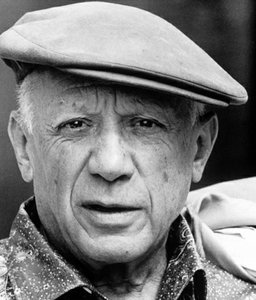
A Window into Picasso’s Soul: Examining ‘Self Portrait’
Pablo Picasso's “Self Portrait,” executed in charcoal or pencil on paper around 1907, stands as a cornerstone of his artistic journey and a testament to the burgeoning Cubist movement. More than just a depiction of an individual face—though undeniably striking—the portrait delves into themes of introspection and artistic ambition, offering viewers a profound glimpse into Picasso’s evolving worldview. Created during a period marked by experimentation and stylistic shifts, this piece embodies the spirit of its time while simultaneously foreshadowing Picasso's groundbreaking innovations.Composition & Style: Fragmented Reality
The artwork’s composition is deliberately asymmetrical, reflecting Picasso’s characteristic disregard for traditional perspective—a deliberate rejection of Renaissance conventions. The face dominates the frame, positioned slightly off-center, creating an intimate connection between artist and observer. However, it's not merely a straightforward likeness; Picasso employs geometric shapes and fractured planes to represent the subject’s form, anticipating the principles of Cubism that would soon dominate his oeuvre. Loose sketching techniques—evident in the visible charcoal marks—emphasize gesture and movement rather than meticulous detail, prioritizing expressive quality over photographic accuracy. This stylistic choice underscores Picasso's desire to capture not just what he sees but how he perceives it – a fragmented representation of reality mirroring the artist’s own mental landscape.Technique & Material: Charcoal’s Expressive Power
The execution utilizes charcoal or pencil on paper, capitalizing on the medium’s ability to convey tonal variations and textural nuances. Hatching and cross-hatching patterns are skillfully employed to build up shading, creating depth and simulating the surface irregularities of skin. The artist's hand moves with confidence and fluidity across the paper, capturing a sense of immediacy and spontaneity. This technique isn’t merely about reproducing an image; it’s about channeling emotion onto the canvas—a deliberate decision that aligns perfectly with Picasso’s artistic philosophy. The roughness of the surface contributes to the overall impression of seriousness and contemplation.Historical Context & Symbolism: Proto-Cubist Vision
“Self Portrait” emerged during a pivotal moment in Picasso's artistic development, coinciding with his exploration of Cubist principles alongside Georges Braque. Influenced by Cézanne’s geometric simplification of form—particularly evident in Cézanne’s landscapes—Picasso sought to dismantle traditional illusionistic representation and portray subjects from multiple viewpoints simultaneously. The portrait speaks to the anxieties and uncertainties inherent in artistic innovation, mirroring Picasso's own struggle to reconcile observation with abstraction. Furthermore, the gaze directed towards the viewer carries a palpable intensity, conveying not only self-awareness but also a desire for engagement—a challenge to conventional notions of portraiture and an assertion of artistic subjectivity.Emotional Resonance: Introspection & Artistic Ambition
Ultimately, “Self Portrait” transcends mere visual representation; it embodies a profound emotional resonance. The subdued grayscale palette – dominated by shades of gray – reinforces the mood of melancholy and seriousness, reflecting Picasso’s personal experiences during this formative period. The artist's unwavering gaze invites contemplation, prompting viewers to consider questions of identity and artistic purpose. This artwork remains an enduring symbol of creative exploration and a poignant reminder of Picasso’s commitment to capturing the complexities of human experience—a legacy that continues to inspire artists and captivate audiences worldwide.Kysymykset ja vastaukset
Onko Pablo Picasso:n "Self-portrait" valoisa vai tumma teos?
Koetun kirkkauden osalta teos Pablo Picasso:n "Self-portrait" on balanced.
Miten voin esikatsella teoksen Pablo Picasso:n "Self-portrait" reproduktiota?
"Self-portrait"-teoksen Esikatselu tilassa -sivulla voit esikatsella teosta ennen tilaamista.
Kuinka voimakas kontrasti teoksessa Pablo Picasso:n "Self-portrait" on?
Teoksessa Pablo Picasso:n "Self-portrait" on Statement kontrasti vaaleiden ja tummien alueiden välillä.


 Vaihda tulosteeseen


 Teoksille tai reproduktioille, joiden mikä tahansa sivu on suurempi kuin 105 cm (noin 41 tuumaa), kehys toimitetaan osina purettuna sarjana. Tämä menetelmä varmistaa turvallisen toimituksen ja ehkäisee vaurioita kuljetuksen aikana.


