Rahat takaisin -takuu · 100 päivää Ilmainen toimitus ympäri maailman
449 587teokset 30 613taiteilijat 4 660museot 32kielet
Catalogue entry

Number 1

1948. Acrylic On Canvas. Museum of Modern Art.

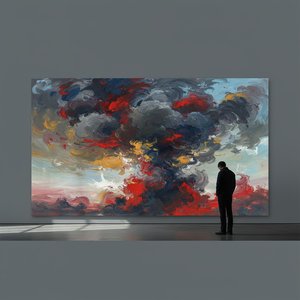
Fig. 1. Paul Jackson Pollock, Number 1, 1948. Shown as the reproduction you are specifying: , .

§ 1Catalogue data

§ 2Abstract

Keräilykohteen kuvaus

Experience Jackson Pollock's iconic "Number 1", 1948! A vibrant drip painting embodying Abstract Expressionism’s raw energy & dynamic composition. A must-see masterpiece!

Taiteilijan elämäkerta

"meta_description": "Jackson Pollock (1912-1956) oli abstraktin ekspressionismin pioneeri ja tunnettu roiskemaalauksistaan. Hänen tyylinsä mullisti taiteen, ja hänen teoksensa ovat edelleen inspiraation lähde."

§ 3Commentary

A Universe in Chaos and Control: Deconstructing Jackson Pollock’s “Number 1”

Jackson Pollock's "Number 1, 1948," housed within the hallowed halls of the Museum of Modern Art in New York, isn’t merely a painting; it’s an immersion. It’s a visceral experience that pulls you into the heart of Abstract Expressionism, demanding not just observation but engagement – a willingness to surrender to its dynamic energy and embrace the inherent ambiguity at its core. Created during a pivotal moment in Pollock's career, this monumental canvas represents a radical departure from traditional artistic conventions, embodying a new language of gesture, color, and emotion.

The painting’s genesis lies within Pollock’s revolutionary “drip” technique – a method he meticulously developed over years. Forget brushes and palettes; here, the artist became a conduit, channeling paint directly from cans onto an unstretched canvas laid flat on the floor of his studio. This unorthodox approach liberated him from the constraints of conventional composition, allowing for a breathtaking freedom of movement and a profound connection between the artist’s body and the artwork. The result is a surface teeming with layered pigments – yellows, blues, blacks, reds, and whites – all suspended in a chaotic yet strangely balanced arrangement. It's as if Pollock has captured a fleeting moment of pure, unadulterated energy, frozen in time.

Decoding the Composition: Order Within the Storm

At first glance, “Number 1” appears to be an explosion of color and form – a swirling vortex of seemingly random marks. However, beneath this surface chaos lies a carefully constructed composition. The painting is anchored by four distinct black masses that frame the central field, creating a sense of contained dynamism. These dark shapes act as boundaries, defining the space within which the vibrant colors dance and collide. A vertical element, resembling a column of black paint and canvas, powerfully directs the viewer’s eye across the expanse of the painting, mimicking the movement of a flowing river or a towering structure.

Furthermore, a diagonal line slicing through the composition from lower left to upper right generates a subtle tension, adding a layer of complexity to the overall visual experience. Scattered throughout the canvas are tiny, intensely colored drips – reds, yellows, oranges, and blues – that function as miniature focal points, each carrying its own symbolic weight. The prominent red dot near the center is often interpreted as a representation of individuality within the vastness of existence, a small beacon of self-awareness amidst an overwhelming universe.

The Soul of Abstraction: Pollock’s Legacy

“Number 1” isn't simply about color and form; it’s deeply rooted in the context of Abstract Expressionism, a movement that emerged in mid-20th century America as a reaction against European artistic traditions. Artists like Pollock sought to express raw emotion and subjective experience through non-representational imagery. Pollock himself struggled with personal demons – alcoholism and emotional instability – and many believe these internal conflicts found expression within his art. The frenetic energy of “Number 1” can be seen as a reflection of this turbulent inner world.

Jackson Pollock’s legacy extends far beyond the canvas. He fundamentally altered our understanding of what painting could be, paving the way for future generations of artists to explore new forms of expression. “Number 1, 1948” stands as a testament to his innovative spirit and his profound impact on the art world – a captivating masterpiece that continues to challenge and inspire viewers today.

Kysymykset ja vastaukset

Kuinka voimakas kontrasti teoksessa Paul Jackson Pollock:n "Number 1" on?

Teoksessa Paul Jackson Pollock:n "Number 1" on Balanced kontrasti vaaleiden ja tummien alueiden välillä.

Ovatko teoksen "Number 1" värit voimakkaita vai hillittyjä?

Teoksessa Paul Jackson Pollock:n "Number 1" on Muted kylläisyys ja Monochromatic voimakkuus.

Kuka on teoksen "Number 1" tekijä ja mikä on sen valmistumisvuosi?

Paul Jackson Pollock on luonut teoksen "Number 1" vuonna 1948.

§ 4The artist

Paul Jackson Pollock

Paul Jackson Pollock

1912 - 1956, Yhdysvallat

Quick facts about Paul Jackson Pollock

  • Artistic Movement Or Style: Abstrakti ekspressionismi
  • Artists Or Movements Influenced By This Artist:
    • Color Field
    • Abstrakti ekspressionismi
  • Artists Who Influenced This Artist:
    • Thomas Hart Benton
    • José Clemente Orozco
  • Date Of Birth: 28 tammiku 1912
  • Date Of Death: 11 elokuuta 1956
  • Full Name: Paul Jackson Pollock
  • Nationality: Amerikkalainen
  • Notable Artworks:
    • Numero 1, 1949
    • Syksynrytmi
    • Yhdistyminen
  • Place Of Birth: Cody, Wyoming

Taiteilijan elämäkerta

Early Life and the Seeds of Innovation

Paul Jackson Pollock, born in Cody, Wyoming, in 1912, was a restless spirit from the outset. His early life was marked by frequent relocation as his father, LeRoy Pollock, pursued work as a land surveyor across the vast landscapes of the American West. This itinerant existence instilled in young Pollock a deep connection to the natural world and an exposure to diverse cultures, particularly through encounters with Native American art during those surveying trips – impressions that would subtly permeate his artistic vision later in life. Though he never explicitly imitated Indigenous styles, the raw energy and spiritual resonance of these early experiences undoubtedly left their mark. He grew up in Arizona and Chico, California, absorbing a sense of both rugged individualism and the spirit of the frontier. Pollock’s formal artistic training began at the Manual Arts High School in Los Angeles, followed by studies at the Art Students League of New York under the tutelage of Thomas Hart Benton. Benton, a prominent figure in the Regionalist movement, emphasized rhythmic composition and narrative themes rooted in American life. Pollock initially absorbed these lessons, learning to create works that reflected the landscapes and people of America. However, his inherent inclination leaned toward more abstract explorations, driven by a desire to move beyond representational art and delve into deeper emotional and psychological realms. He was also profoundly impacted by Mexican muralists like José Clemente Orozco, whose powerful depictions of social struggle resonated deeply with him, sparking an interest in conveying complex narratives through visual form. These early influences laid a foundation, but it was the burgeoning world of Surrealism that truly unlocked Pollock’s artistic potential.

The Birth of Action Painting and a Revolutionary Technique

The 1930s saw Pollock experimenting with various techniques, seeking alternatives to traditional brushwork. He began pouring paint, exploring its fluidity and unpredictable nature. However, it was around 1947 that his artistic trajectory underwent a radical transformation. Abandoning the easel altogether, Pollock laid canvases directly on the floor, initiating what would become known as his “drip technique.” He then proceeded to drip, splash, and fling paint onto the canvas from above, orchestrating a dynamic dance between artist, medium, and surface. This wasn’t merely about applying paint; it was about embodying the act of creation itself. Pollock's canvases became arenas for physical expression, capturing the immediacy of his gestures and emotions. The resulting paintings are characterized by their “all-over” composition – a lack of central focus that invites the viewer to explore the entire surface as a unified field of energy. Intricate networks of lines and colors intertwine, creating a visual complexity that is both captivating and challenging. He employed unconventional tools—sticks, knives, even syringes—to manipulate the paint in unpredictable ways, further emphasizing the spontaneous nature of his process. This innovative approach positioned Pollock as a central figure in the burgeoning Abstract Expressionist movement, which emerged in post-World War II New York City.

Influences and Artistic Development

Pollock’s artistic development was shaped by a diverse range of influences. Beyond Benton and Orozco, he drew inspiration from European modernism, particularly the work of Pablo Picasso, whose innovative use of form and color challenged traditional notions of representation. He also explored Surrealist techniques, embracing the subconscious and dreamlike imagery associated with the movement. The influence of Max Ernst, a pioneer of collage and automatism, is evident in Pollock’s early experiments with chance and improvisation. His marriage to Lee Krasner, a fellow artist and intellectual, was particularly significant; she provided unwavering emotional support and actively encouraged his artistic development, recognizing the groundbreaking nature of his work. She understood his need for freedom and experimentation, fostering an environment where he could push the boundaries of art.

Iconic Works and Lasting Legacy

Pollock’s most celebrated works—such as Number 1, 1950 (Lavender Mist), One: Number 31, 1950, Blue Poles: Number 11, 1952, and Convergence—are testaments to his revolutionary technique. These paintings are not simply images; they are records of a performance, imbued with the artist’s physical presence and emotional intensity. The dynamic energy that emanates from these canvases is palpable, drawing viewers into a world of pure abstraction. His work transcended mere aesthetics; it was an exploration of process over product – a deliberate rejection of traditional notions of composition and representation. Pollock delved into Jungian psychology, exploring archetypes and the subconscious in his art, seeking to tap into universal symbols and primal energies. Pollock’s impact on the history of art is immeasurable. He fundamentally altered the way artists approached painting, breaking free from easel-based methods and embracing a more performative approach. His work helped solidify New York City's position as a global center for modern art, shifting the focus away from European dominance. Despite initial skepticism from some critics, Pollock’s reputation grew steadily after his untimely death in 1956 at the age of 44. Today, he is universally recognized as one of the most important and influential artists of the 20th century, a visionary who dared to challenge conventions and redefine the boundaries of artistic expression. His innovative techniques and expressive style continue to inspire and provoke, ensuring his enduring legacy for generations to come.

§ 5Comparanda

§ 6Questions

Pikaista tietoa

  • Artist: Paul Jackson Pollock
  • Influences: Pollock
  • Medium: Oil & enamel paint
  • Notable elements: Drip technique, black lines
  • Title: Number 1
  • Dimensions: 68" x 8' 8"

Taidevisat

Jokaisessa kysymyksessä on vain yksi oikea vastaus.

Kysymys 1:
What is the primary artistic movement to which Jackson Pollock’s ‘Number 1’ belongs?
Kysymys 2:
The technique Pollock used to create 'Number 1' is most closely associated with which of the following terms?
Kysymys 3:
What does the black line in ‘Number 1’ primarily serve to do?
Kysymys 4:
The red dot in ‘Number 1’ is often interpreted as representing:
Kysymys 5:
In what year was Jackson Pollock’s ‘Number 1’ created?

§ 7Cite this entry

AllPaintingsStore.com, “Paul Jackson Pollock, Number 1 (1948)”, https://allpaintingsstore.com/fi/art/paul-jackson-pollock-number-1-9DPLHX-en/ (accessed 3 lokakuu 2026).

§ 8The reproduction

Käsinmaalattu öljyvärinen jäljennös

Käsinmaalattu öljyväri kankaalle haluamassasi koossa ja kehyksissä, taiteilijoidemme valmistamana tilauksesta. ( Vaihda tulosteeseen Siirry digitaaliseen kuvaan)

It is specified on the order sheet in the margin; the present state of that sheet reads as follows.

Number 1

Reproduktiotekniikka

Replikaatin koko

-

Kokenut huipputaiteilija

Lisää yksityiskohtia, hienostuneisuutta ja enemmän aikaa tuotantoon

-

Reproduktion kehystysvaihtoehdot

-

-

Teoksille tai reproduktioille, joiden mikä tahansa sivu on suurempi kuin 105 cm (noin 41 tuumaa), kehys toimitetaan osina purettuna sarjana. Tämä menetelmä varmistaa turvallisen toimituksen ja ehkäisee vaurioita kuljetuksen aikana.

Vaatii ammattimaista kokoamista – kyseessä ei ole tee-se-itse-tuote.
Sarja on koottava ja kangas kiristettävä kokeneen kehystysammattilaisen toimesta käyttäen puuliimaa (ei sisälly pakkaukseen), kangaspinnetteitä ja puristimia, jotta kehyksen kulmat pysyvät suorina liiman kuivuessa. Virheellinen kokoaminen tai epätasainen kankaan kiristys voi vaurioittaa teosta pysyvästi, eikä tällaiset vauriot ala takuun piiriin.

  • Kaikki massiivipuupalat sisältyvät, tarkasti mittojen mukaan leikattuina.

  • Kootaan mukana tulevilla ruuveilla sekä kulmaliitoksia varten tarvittavalla puuliimalla, jota ei toimiteta, joten se on hankittava kehystäjältä.

  • Vaatii ammattilaisvälineitä, jotka eivät sisälly pakkaukseen: kankaan venytyspihdit (kiristin) ja puristimet, joilla pidetään kehyksen puut suorassa liiman kuivuessa.

Tärkeää:
Kulmaliitoksissa tarvitaan puuliimaa, kehyksien osat on pidettävä puristimilla, kunnes liima on täysin kuivunut, ja koottuun kehykseen jännitettävän kankaan kiristämiseen tarvitaan kangaspenssipihti. Mikään näistä ei sisälly pakkaukseen. Suosittelemme varmistamaan kokeneen kehystäjän saatavuuden ennen tämän kokoisen kehyksen tilaamista.

Nimilaatta

-

-

Suojalakkaus

Kiiltävä lakka (syventää värejä, suojaa valolta ja kosteudelta)

-

Mukauta taideteokseni

Esimerkkejä muokattavista asioista: Vaihda kasvot asiakkaan omaan valokuvaan; Lisää lemmikki (esim. vaihda kissa koiraan); Lisää taustalle piilotettu viesti; Muuta taustan maisemaa tai elementtejä.

-

Pikatoimitus

Maailmanlaajuinen toimitus () 3–4 viikossa tavallisen 5 viikon sijaan. (31 lokakuu). Laadusta ei tingitä.

-

Pikatoimitus

Maailmanlaajuinen toimitus () 5 viikon kuluessa. (7 marraskuu).

Sisältyy hintaan

Kokonaishinta

€ 229

Included with every order

  • Ilmainen pikatoimitus ympäri maailman
  • Korkealaatuinen pellavakangas
  • Kattava kuljetusvakuutus
  • Tulliveron palautustakuu
  • Takuu täydellisestä värien vastaavuudesta
  • 100 päivän palautusoikeus (vain valmistusvirheet)
  • 100% rahat takaisin -takuu
  • Määräalennus tarjolla
Order sheet