


 Esikatselu
 Jaa teos
 Jaa
Jaa
 Tiedot
 Opas
Opas

 Lataa kuva
 Samanlaisia kohteita
 Röntgenkuvaus
 Diaesitys
 Tilastot
St Peter Reading


 Lue lisää
Giclée- ja taideprintit
Museolaatuisia giclée- tai kankaitaulun tulosteita nopealla tuotannolla ja joustavilla viimeistelyvaihtoehdoilla. ( Osta käsinmaalattu taideteos Siirry digitaaliseen kuvaan)




P118B €10

P118H €10

P118W €10

P438Z €10

P508JH €12

P508YH €12

P805H €10

P805Z €10

P919BZ €10

P919G €10

P919XJ €10

P959ZH €10

P968JZ €12

W106C €8

W218G €10

W218JH €8

W218Y €10

W307PJ €10

W316G €10

W316PJ €8

W316Y €10

W398PJ €8

W4111J €10

W500HY €15

W500JH €15

W692G €12

W849H €8

W940BG €15

W953PJ €8




Valitse valmiista mitoistamme sellaiset, jotka vastaavat teoksen alkuperäisiä mittasuhteita.

Syötä tarvitsemasi leveys ja korkeus, jotta tuloste sopii kehyksiisi tai seinällesi. Tulostetta voidaan vain leikata, sitä ei voida koskaan suurentaa alkuperäistä kuvaa suuremmaksi, joten eri muotoinen koko aiheuttaa osan kuvasta katoamisen. Lähetämme sinulle digitaalisen mallikuvan hyväksyttäväksi ennen kuin aloitamme tulostuksen. Tällä sivulla näkyvä kuva ei näytä lopullista rajausta — vain mallikuva näyttää sen.
Maailmanlaajuinen toimitus () 2 viikossa tavallisen 4–5 viikon sijaan. (28 lokakuu)

Ilmainen pikatoimitus ympäri maailman

Korkealaatuinen pellavakangas

Kattava kuljetusvakuutus

Tulliveron palautustakuu

Takuu täydellisestä värien vastaavuudesta

100 päivän palautusoikeus (vain valmistusvirheet)

100% rahat takaisin -takuu

Määräalennus tarjolla
 Lasivaihtoehto on saatavilla vain alle 110 cm kokoisille teoksille

St Peter Reading
Giclée- ja taideprintit
Replikaatin koko
-


Kokonaishinta
€ 56
The Enigmatic Figure of St. Peter
Giovanni Serodine’s “St. Peter Reading” is not merely a portrait; it's an arresting tableau of contemplation, faith, and the quiet drama of mortality. Painted in 1628 during the height of the artist’s career, this work immediately draws the viewer into a profoundly intimate scene. The subject, an elderly man with a deeply furrowed brow and a long, flowing beard, is utterly absorbed in his book – not a grand theological text, but a humble volume, suggesting a personal study rather than public discourse. His posture, slightly stooped as if weighed down by years of reflection, speaks volumes about the burdens of wisdom and the passage of time. The lighting, masterfully rendered with Serodine’s signature tenebrism, is crucial to the painting's impact. A single, dramatic light source illuminates Peter’s face and hands, casting deep shadows that envelop the surrounding space, creating a sense of mystery and drawing our attention solely to the figure at the heart of the composition.
Serodine’s choice of setting is equally significant. The room itself is sparsely furnished – a simple wooden table bearing several books and, most strikingly, a human skull. This deliberate inclusion immediately introduces an element of stark realism and serves as a potent reminder of the transience of life and the inevitability of death. It's not a morbid display, however; rather, it’s a carefully orchestrated juxtaposition that elevates the scene beyond mere portraiture. The skull, positioned near the center of the painting, acts as a visual anchor, grounding Peter’s intellectual pursuits within the larger context of human existence.
Caravaggist Influence and Artistic Technique
“St. Peter Reading” is firmly rooted in the artistic currents of the early 17th century, particularly the influence of Caravaggio and his followers – a movement known as Carravaggism. Serodine expertly employs this style’s hallmarks: dramatic contrasts of light and shadow (chiaroscuro), loose brushstrokes that convey a sense of immediacy and energy, and a focus on realistic detail, especially in the depiction of hands and faces. Notice how the artist meticulously renders the texture of Peter's robe, the wrinkles etched into his skin, and the delicate veins visible beneath his fingertips. These details are not merely decorative; they contribute to the painting’s overall sense of realism and immediacy.
Serodine’s technique is characterized by a remarkable ability to capture psychological depth. Peter's expression – a mixture of concentration, melancholy, and perhaps even a hint of resignation – is remarkably nuanced. The artist doesn’t simply depict a man reading; he conveys the *experience* of reading, the absorption and introspection that it inspires. The brushwork itself seems restless, mirroring the intensity of Peter’s thoughts. It's a testament to Serodine’s skill that he manages to imbue this seemingly simple scene with such profound emotional resonance.
Historical Context and Symbolic Weight
Painted in 1628, “St. Peter Reading” reflects the intellectual and spiritual climate of the time – a period marked by both religious fervor and burgeoning scientific inquiry. St. Peter, as one of Jesus’s closest disciples and the first Pope, held immense symbolic significance within Christian iconography. His act of reading, in this context, can be interpreted as an embodiment of faith, knowledge, and divine guidance. The inclusion of the skull serves as a constant reminder of mortality and the importance of preparing for judgment – a common theme in religious art of the era.
Further research reveals that Serodine was working within a vibrant artistic community in Rome, surrounded by other talented painters and scholars. His work is often compared to that of Giovanni Baglione, another prominent figure in the Roman Baroque scene, both sharing a fascination with Caravaggism and a commitment to capturing psychological realism. The painting’s provenance – currently held at the Rancate collection in Italy – adds to its historical significance, offering a glimpse into the tastes and preferences of wealthy patrons during the 17th century.
A Timeless Masterpiece: Reproduction and Interpretation
“St. Peter Reading” remains a powerfully evocative work of art, capable of captivating viewers centuries after its creation. Its themes – faith, knowledge, mortality, and the human condition – are as relevant today as they were in 1628. Reproductions of this painting offer an opportunity to bring this masterpiece into your home or office, allowing you to contemplate its profound beauty and symbolism on a daily basis. Consider how the dramatic lighting and the stark contrast between light and shadow can transform any space, adding depth and intrigue. This image is not just a depiction of a man reading; it’s an invitation to reflect on our own lives, our beliefs, and our place in the universe.
Kysymykset ja vastaukset
Miten voin katsella teosta Serodine Giovanni:n "St Peter Reading" diashow'na?
Katso kuvagalleria: Serodine Giovanni:n "St Peter Reading" -teoksen Diaesitys -sivu.
Missä museossa alkuperäinen "St Peter Reading" on esillä?
Teos Serodine Giovanni:n "St Peter Reading" on esillä Alte Pinakothek, München, Saksa-museossa. Museoluettelo viittaa alkuperäisteokseen, ei jäljennöksiin.
Minkä tunteen välittämä teos "St Peter Reading" on?
"St Peter Reading" välittää Melancholic tunnelman. Emotionaalinen sävy kuvaa teoksen antamaa vaikutelmaa.
Samankaltaisia teoksia


Taiteilijan elämäkerta
Giovanni Serodine: Life and Legacy
Early Life and Artistic Development
Giovanni Serodine, a Swiss-Italian painter, was born in 1600 in Ascona, Canton Ticino, Switzerland. His family were known for their skill in stucco work, an art form that inadvertently laid the groundwork for his future artistic endeavors. This early exposure to decorative arts likely fostered Serodine’s keen eye for detail and composition.
Serodine's artistic journey truly began in Rome, where he developed a unique expression of Carravaggist style. He embraced the dramatic use of light and shadow – known as tenebrism – and loose brushstrokes that characterized this influential movement.
Artistic Style and Influences
Serodine’s work was profoundly influenced by the Northern Caravaggisti, particularly artists such as Lys, Strozzi, and Fetti, who were actively working in Venice. These masters inspired his dramatic compositions and intense emotionality.
- Caravaggismo: Serodine adopted the strong contrasts of light and dark, realistic depictions of figures, and focus on everyday life characteristic of Caravaggio’s followers.
- Tenebrism: The use of dramatic illumination to create a sense of drama and highlight key elements within his paintings is central to his style.
However, despite these influences, Serodine's canvases often exhibited a provincial eccentricity, as seen in his *Coronation of the Virgin* in Ascona. This unique quality sets him apart from more strictly orthodox Caravaggisti.
Notable Works and Achievements
Although his career was tragically short, Serodine produced a number of significant works that demonstrate his talent and artistic vision:
- Jesus Among the Masters (Louvre): A compelling depiction showcasing Serodine’s mastery of composition and dramatic lighting.
- Jesu and the Tribute Money (National Gallery of Scotland): Demonstrates his skill in narrative painting and attention to detail.
- Saint Lawrence distributing alms (Convent of Valvisciolo in Sermoneta): A powerful portrayal of compassion and religious devotion.
- Decapitation of Saint John the Baptist (San Lorenzo fuori le mura): Exhibits his ability to convey intense emotion through dramatic imagery.
- Saint Michael (originally San Pietro in Montorio): A dynamic and forceful representation of the archangel.
- Portrait of his father (Lugano): Offers a glimpse into Serodine’s personal life and skill in portraiture.
Historical Significance and Legacy
Despite struggling to secure consistent patronage and recognition during his lifetime, Giovanni Serodine left behind a body of work that is increasingly appreciated for its unique blend of Caravaggist principles and regional characteristics. His art provides valuable insight into the artistic landscape of 17th-century Switzerland and Italy.
Serodine’s paintings are marked by great vivacity and emotional depth, making him a significant figure in the broader context of Baroque art. While not as widely celebrated as some of his contemporaries, his contributions continue to be studied and admired by art historians and enthusiasts alike.

Serodine Giovanni
1594 - 1630 , Switzerland
Pähkinänkuoressa
- Name: Giovanni Serodine
- Movement: Caravaggismo, Baroque
- Birth Date: 1600
- Death Date: 1630
- Birth Place: Ascona, Switzerland
- Nationality: Swiss-Italian
- Date Of Birth: 1594
- Date Of Death: 1630
- Influenced By:
- Lys
- Strozzi
- Fetti
- Notable Works:
- Jesus Among the Masters
- Jesu and the tribute money
- Saint Lawrence distributing alms
- Decapitation of Saint John the Baptist
- Transfiguration of Christ
- Portrait of his father
- Place Of Birth: Ascona, Switzerland
Aiheeseen liittyvät artikkelit

Divine Legacy: Exploring the Most Powerful Masterpieces of Saint Peter through Art History
Embark on a sophisticated journey through art history with our exploration of Saint Peter's most powerful masterpieces. Discover the profound emotional depth and technical brilliance of Renaissance and Baroque icons, curated for the discerning classic art enthusiast.
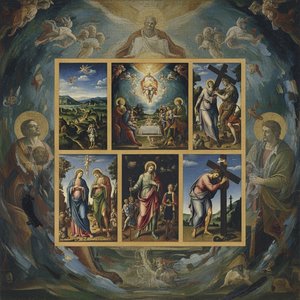
El Grecon 25 mestariteosta: Taidetta, historiaa ja inspiraatiota kotiisi
Tutustu El Grecon 25 vaikuttavimpaan mestariteokseen! Uppoudu espanjalaisen renessanssin ja manierismin maailmaan. Taidehistoriaa, uskonnollisia maalauksia ja inspiraatiota kotiisi – löydä upeat taidevedokset AllPaintingsStore.comista.

Barokin mestariteokset: Taidetta ja loistoa kotiisi – AllPaintingsStore.com
Uppoudu barokin loistokkuuteen! Tutustu Caravaggion, Rembrandtin ja Vermeerin kaltaisten mestareiden tunnetuimpiin teoksiin. Taidehistoriaa kotiisi – löydä upeat taidetulosteet ja canvas-taulut AllPaintingsStore.comista.

Barokin loisto: Kuinka tuoda ylellisyyttä ja tunnetta nykyaikaiseen sisustukseen
Tutustu barokki sisustuksen loistoon! Opi luomaan ylellistä ja tunnelmallista kotia historiallisen tyylin inspiroimana. Vinkkejä, esimerkkejä ja in apua.

The Dramatic Flourish: Exploring the Baroque Movement's Enduring Legacy in Art History
Explore the dramatic world of Baroque art! Discover iconic artists like Caravaggio & Rubens, defining techniques, and its lasting impact on art history. Expert insights for collectors & enthusiasts at AllPaintingsStore.

