


 Katso seinällä
 Lähetä
 Jaa
Jaa
 Tarkemmat tiedot
 Guide
Guide

 Lataa kuva
 Samanlaisia kohteita
 Röntgenkuvaus
 Diaesitys
 Tilastot
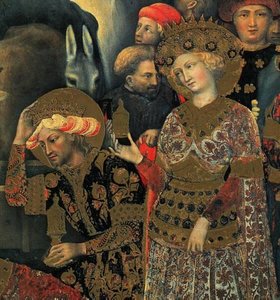
Scenes from the Life of St Bertin (detail)


 Lue lisää
Giclée- ja taideprintit
Museolaatuisia giclée- tai kankaitaulun tulosteita nopealla tuotannolla ja joustavilla viimeistelyvaihtoehdoilla. ( Tilaa käsinmaalattu jäljennös Siirry digitaaliseen kuvaan)




P118B $10

P118H $10

P118W $10

P438Z $10

P508JH $12

P508YH $12

P805H $10

P805Z $10

P919BZ $10

P919G $10

P919XJ $10

P959ZH $10

P968JZ $12

W106C $8

W218G $10

W218JH $8

W218Y $10

W307PJ $10

W316G $10

W316PJ $8

W316Y $10

W398PJ $8

W4111J $10

W500HY $15

W500JH $15

W692G $12

W849H $8

W940BG $15

W953PJ $8




Valitse valmiista mitoistamme sellaiset, jotka vastaavat teoksen alkuperäisiä mittasuhteita.

Voit syöttää omat mitat sopiaksesi tiettyyn kehykseen tai tilaan. Jos valittu koko ei vastaa alkuperäisen kuvan mittasuhteita, rajaamme teosta tai laajennamme kuvaa peilatulla tai yhtenäisellä reunalla. Digitaalinen mallikuva lähetetään hyväksyttäväksi ennen tuotannon aloittamista.
Huomaathan, että näytöllä näkyvä esikatselu ei vastaa lopullista rajausta tai laajennusta. Vain mallikuva näyttää lopullisen sommittelun tarkasti.
Vaikka räätälöityjä kokoja on saatavilla, suosittelemme valitsemaan mitat valmiista listasta alkuperäisten mittasuhteiden säilyttämiseksi.
Maailmanlaajuinen toimitus () 2 viikossa tavallisen 4–5 viikon sijaan. (21 syyskuu)

Ilmainen pikatoimitus ympäri maailman

Korkealaatuinen pellavakangas

Kattava kuljetusvakuutus

Tulliveron palautustakuu

Takuu täydellisestä värien vastaavuudesta

100 päivän palautusoikeus valmistusvirhetapauksissa

100% rahat takaisin -takuu

Määräalennus saatavilla
 Lasivaihtoehto on saatavilla vain alle 110 cm kokoisille teoksille

Scenes from the Life of St Bertin (detail)
Giclée- ja taideprintit
Replikaatin koko
-


Kokonaishinta
$ 64
A Moment Suspended in Devotion: Scenes from the Life of St Bertin
To gaze upon this detail from Scenes from the Life of St Bertin is to step directly into the hushed, sacred atmosphere of the early Renaissance. The air seems thick with incense and quiet contemplation. Simon Marmion has captured not merely a scene, but an enduring state of the soul—a profound moment of personal piety unfolding within the solid embrace of stone and brick. The composition immediately draws the eye to the central figure: a woman kneeling in deep reverence, her posture speaking volumes without uttering a single word. She is enveloped in black garments, suggesting either the solemnity of a nun's habit or the deepest commitment to faith, while the book cradled in her hands acts as both focus and anchor for her devotion.
Mastery of Early Renaissance Detail
Technically, this panel painting showcases the meticulous attention to detail characteristic of the period. Marmion’s handling of texture is remarkable; one can almost feel the rough grit of the exposed brick wall forming the backdrop, contrasting beautifully with the soft folds of the drapery and the polished surface of the holy object before her. To the left, a secondary figure—vibrant in green and crowned with a striking red hat—adds a narrative counterpoint. Her staff and book suggest she is an attendant or perhaps a guide through this spiritual journey. The background architecture, hinting at an arched doorway and a glimpse of verdant life above, grounds the sacred drama within a believable, tangible space, elevating the devotional act from mere allegory to lived experience.
Historical Echoes and Spiritual Symbolism
Painted around 1459, this work emerges from a time when religious narrative was central to artistic patronage. Simon Marmion, working in the tradition of illuminated manuscripts and panel painting, imbued his subjects with deep symbolic weight. The contrast between the earthly setting—the visible brickwork and doorway—and the intensely spiritual action at its heart is key. The act of kneeling before a relic speaks to the medieval understanding of divine mediation; the tangible object serving as a conduit to the transcendent. It invites us, the modern viewer, to consider our own points of focus, those objects or beliefs that anchor our deepest sense of purpose.
Bringing Sacred Art Home
For the collector or designer seeking an infusion of historical gravitas and quiet beauty into a contemporary space, this reproduction offers unparalleled depth. It is more than just decoration; it is a meditation piece. The rich narrative quality, combined with Marmion’s exquisite draftsmanship, allows the artwork to converse with its surroundings—whether placed in a library corner, a formal drawing-room, or a sanctuary dedicated to contemplation. Owning this piece means curating not just an object of beauty, but a tangible echo of Renaissance devotion and masterful craftsmanship.
Samankaltaisia teoksia
![Legend Of St Francis - [23] - St Francis Mourned By St Clare — Giotto Di Bondone, Proto Renaissance](/media/artworks/images-thumb/17/1c/171c284c41dc3ef8bca83e51c1e1e531.jpg)




Taiteilijan elämäkerta
The Prince of Illuminators: The Radiant Legacy of Simon Marmion
In the golden twilight of the Middle Ages, a period where the flickering candlelight of monastic scriptoriums met the burgeoning splendor of the Burgundian court, there emerged an artist of unparalleled delicacy and prestige. Simon Marmion, a master whose brush breathed life into the parchment of history, earned the reverent title of "the prince of illuminators." Born in Amiens around 1425, Marmion was a product of a rich artistic lineage, raised in an environment where the craft of painting was woven into the very fabric of family life. With his father, Jean, and his brother, Mille, also practicing the arts, Marmion’s early development was steeped in the technical rigors of the French and Netherlandish traditions.
His career was inextricably linked to the heights of political power and the opulent tastes of the Duchy of Burgundy. As the Burgundian territories expanded in influence, so too did Marmion's reputation. His presence at the legendary Feast of the Pheasant in Lille, under the patronage of Philip the Good, signaled his ascent into the inner circles of European nobility. This was an era of profound cultural synthesis, and Marmion stood at the crossroads of two worlds. While his roots lay in the French tradition, his work increasingly embraced the innovative Flemish spirit, characterized by a burgeoning interest in atmospheric landscapes and complex compositions that would define the Early Netherlandish style.
A Master of Light and Miniature
Marmion’s true genius resided in the intimate scale of the illuminated manuscript. To look upon his miniatures is to witness a world captured in jewel-like precision. He possessed an extraordinary ability to manipulate color and light, creating scenes that felt both spiritually transcendent and tangibly real. His work on the Grandes Chroniques de France remains a pinnacle of his achievement; within its pages, one finds a breathtaking array of miniatures ranging from vibrant, sweeping battle scenes to experimental works executed in a subtle, near-grisaille technique. This versatility allowed him to navigate between the grandiosity required for royal chronicles and the quiet, contemplative stillness needed for devotional texts.
Beyond the borders of manuscripts, Marmion’s hand extended to larger altarpieces and portraits, showcasing a stylistic evolution that bridged the gap between medieval symbolism and Renaissance naturalism. While some critics have noted a certain stiffness in his figures or occasional awkwardness in proportion, these elements often contribute to the unique, rhythmic grace of his compositions. His technical command of perspective was remarkably sound for his era, providing a structural depth that allowed his landscapes to breathe, even within the confines of a small panel. This mastery of space and atmosphere helped pave the way for the more robust realism seen in later Netherlandish masters.
Enduring Influence and Historical Significance
The historical footprint of Simon Marmion is visible across the great museums of the world, from the Gemäldegalerie in Berlin to the Metropolitan Museum of Art in New York. His ability to serve the most powerful patrons of his time—including Charles the Bold and Margaret of York—ensured that his aesthetic would influence the visual language of the Burgundian court for generations. Even after his death in 1489, his legacy continued through his pupils, such as Jan Provoost, who carried forward the traditions Marmion had refined.
Marmion’s significance lies not merely in the beauty of his creations, but in his role as a cultural bridge. He captured a moment of profound transition in European art:
- The Synthesis of Styles: He successfully merged the decorative elegance of French illumination with the observational realism of the Flemish school.
- Patronage and Prestige: His work served as the visual propaganda for the most influential ducal houses in Europe, elevating the status of the artist from craftsman to courtly essentialist.
- Technical Innovation: Through his use of varied media—from brilliant pigments to delicate grisaille—he expanded the expressive potential of the miniature format.

simon marmion
1425 - 1489 , France
Tietoa taiteilijasta
- Artistic Movement Or Style: Early Netherlandish
- Date Of Birth: 1425
- Date Of Death: 1489
- Full Name: Simon Marmion
- Nationality: French/Burgundian
- Notable Artworks:
- Grandes Chroniques de France
- Altarpiece of St Bertin
- Mass of Saint Gregory
- Lamentation of Christ
- Place Of Birth: Amiens, France
Aiheeseen liittyvät artikkelit

Tempera on Panel: A Procurement Guide to Durable, High-Quality Art for Large-Scale Hospitality Projects
A professional procurement guide for hotel designers on the durability and prestige of tempera on panel. Discover how these high-quality, large-scale artworks offer unmatched longevity and architectural impact for premium hospitality projects and commercial interiors.

