


 Katso seinällä
 Lähetä
 Jaa
Jaa
 Tarkemmat tiedot
 Opas
Opas

 Lataa kuva
 Samanlaisia kohteita
 Röntgenkuvaus
 Diaesitys
 Tilastot
Sleeping Venus
 Acrylic On Canvas
- WallArt
- Baroque
 1630
1630 100.0 x 84.0 cm
 Szépművészeti Múzeum
 Lue lisää
Giclée- ja taideprintit
Museolaatuisia giclée- tai kankaitaulun tulosteita nopealla tuotannolla ja joustavilla viimeistelyvaihtoehdoilla. ( Tilaa käsinmaalattu jäljennös Siirry digitaaliseen kuvaan)




P118B €10

P118H €10

P118W €10

P438Z €10

P508JH €12

P508YH €12

P805H €10

P805Z €10

P919BZ €10

P919G €10

P919XJ €10

P959ZH €10

P968JZ €12

W106C €8

W218G €10

W218JH €8

W218Y €10

W307PJ €10

W316G €10

W316PJ €8

W316Y €10

W398PJ €8

W4111J €10

W500HY €15

W500JH €15

W692G €12

W849H €8

W940BG €15

W953PJ €8




Valitse valmiista mitoistamme sellaiset, jotka vastaavat teoksen alkuperäisiä mittasuhteita.

Kirjoita tarvitsemasi leveys ja korkeus, jotta tuloste sopii kehyskokoon tai seinällesi. Tulostetta voidaan vain leikata, sitä ei voi koskaan tehdä suuremmaksi kuin alkuperäinen kuva, joten eri muotoinen koko aiheuttaa osan kuvasta katoamisen. Lähetämme sinulle digitaalisen mallikuvan hyväksyttäväksi ennen kuin aloitamme tulostuksen. Tällä sivulla näkyvä kuva ei näytä lopullista leikkausta — vain mallikuva näyttää sen.
Maailmanlaajuinen toimitus () 2 viikossa tavallisen 4–5 viikon sijaan. (23 lokakuu)

Ilmainen pikatoimitus ympäri maailman

Korkealaatuinen pellavakangas

Kattava kuljetusvakuutus

Tulliveron palautustakuu

Takuu täydellisestä värien vastaavuudesta

100 päivän palautusoikeus valmistusvirhetapauksissa

100% rahat takaisin -takuu

Määräalennus saatavilla
 Lasivaihtoehto on saatavilla vain alle 110 cm kokoisille teoksille

Sleeping Venus
Giclée- ja taideprintit
Replikaatin koko
-


Kokonaishinta
€ 56
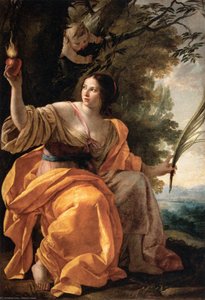
A Moment of Serene Contemplation: Simon Vouet’s “Sleeping Venus”
Simon Vouet's "Sleeping Venus," painted around 1630, is not merely a depiction of a reclining nude; it’s an exquisite distillation of Renaissance ideals and the burgeoning Baroque aesthetic. This captivating work transcends simple portraiture, offering instead a profound meditation on beauty, repose, and the delicate balance between earthly pleasure and spiritual contemplation. The painting immediately draws the viewer into a world of hushed tranquility, inviting us to share in the woman's peaceful slumber – a rare and deliberate choice for art of that era.
Vouet, a pivotal figure in transitioning French painting from Mannerism to the Baroque, masterfully employed techniques honed during his extensive travels through Italy. He absorbed the influence of artists like Raphael and Leonardo da Vinci, particularly their understanding of light and shadow – crucial elements evident in the soft, diffused illumination that bathes Venus’s form. The artist's meticulous attention to detail is remarkable; from the subtle folds of her drapery to the delicate curve of her lips, every element contributes to a sense of palpable realism, yet imbued with an ethereal quality.
The Symbolism of Slumber
The choice of Venus asleep holds significant symbolic weight. In classical mythology, Venus is the goddess of love and beauty, but here she’s presented not as a vibrant, active force, but in a state of serene repose. This isn't simply an image of physical beauty; it speaks to a deeper concept – the ideal of inner grace and spiritual harmony. The clouds beneath her suggest a realm beyond earthly concerns, hinting at a connection with the divine. The positioning of her head, slightly tilted back, evokes a sense of vulnerability and trust, as if she’s surrendering entirely to the peace of her dreams.
Furthermore, the inclusion of the tree branch extending from the upper left corner adds another layer of meaning. Trees often symbolize life, growth, and connection to nature – elements that complement Venus's association with fertility and abundance. The branches subtly frame the figure, emphasizing her centrality within the composition and reinforcing the painting’s overall theme of harmonious integration.
A Window into 17th-Century France
"Sleeping Venus" is a quintessential example of the artistic climate in 17th-century France, a period marked by a renewed interest in classical antiquity and a shift towards more dynamic and emotionally charged forms of art. Vouet’s work reflects this transition, moving away from the stylized elegance of Mannerism toward the richer colors, dramatic lighting, and heightened realism characteristic of the Baroque. It was commissioned during a time when royal patronage fueled artistic innovation, allowing artists like Vouet to experiment with new techniques and explore ambitious subjects.
The painting’s creation coincided with the rise of Louis XIII and Cardinal Richelieu, who were both avid collectors of art and sought to elevate French culture through lavish displays of wealth and power. Vouet's work served as a powerful symbol of royal authority and artistic excellence, contributing to the grandeur of Versailles and other prominent palaces.
Recreating the Masterpiece: A High-Quality Reproduction
Reproducing "Sleeping Venus" today offers an opportunity to bring this timeless masterpiece into any setting. A carefully crafted print or canvas reproduction captures not only the painting’s visual beauty but also its underlying emotional resonance. The soft, luminous quality of the original is faithfully replicated, creating a piece that will grace any room with an air of serenity and sophistication. Consider framing it in a classic style to further enhance its historical context and artistic merit.
Whether you're an art enthusiast, a collector seeking to expand your collection, or simply someone looking for a stunning addition to your home décor, Simon Vouet’s “Sleeping Venus” remains a testament to the enduring power of beauty, tranquility, and artistic genius.
Kysymykset ja vastaukset
Onko Simon Vouet:n "Sleeping Venus" yksi kysytyimmistä Baroque -tyylin teoksista?
Baroque-suuntauksen sisällä teoksella "Sleeping Venus" on Iconic suosio.
Onko Simon Vouet teos "Sleeping Venus" tekijänoikeudeltaan vapaa (public domain), ja miksi?
Simon Vouet teos "Sleeping Venus" on tekijänoikeusvapaa – sen tekijänoikeussuoja on päättynyt. Tekijänoikeusajat lasketaan taiteilijan kuolinvuodesta, ja Simon Vouet kuoli vuonna 1649.
Millä muilla nimillä tai nimimerkeillä Simon Vouet tunnetaan?
Muita Simon Vouet-nimelle, teoksen "Sleeping Venus" tekijälle, rekisteröityjä nimiä ovat Simoni Vouet.
Samankaltaisia teoksia




Taiteilijan elämäkerta
Simon Vouet: Ranskan barokin pioneeri ja italialaisen taiteen tuoja
Simon Vouet, syntyjään pariisilainen taidemaalari, oli keskeinen hahmo siinä merkittävässä muutoksessa, jonka myötä ranskalainen maalaustaide kääntyi pois maniiritaiteesta ja omaksui barokin loisteliaan tyylin. Hänen tarinansa on kiehtova yhdistelmä perheperintöä, nuoruuden kunnianhimoa, Italian taiteellisten virtauksien syvällistä vaikutusta ja lopulta merkittävää roolia ranskalaisen taiteen uudistamisessa. Laurent Vouetin poikana Simon sai varhaisen pohjan taiteelliselle matkalleen, ja hänen veljensä Aubin jatkoi perheen taiteellista perinnettä. Myöhemmin hänen lapsenlapsensa Ludovico Dorigny kantoi suvun nimeä eteenpäin, osoittaen Vouetin vaikutuksen ulottuvan sukupolvien yli.
Nuoruusvuodet ja Italian vaikutteet
Vouetin taiteellinen matka alkoi jo varhain lupaavasti. Nuorena poikana hän työskenteli muotokuvamaalarina, osoittaen nopeasti lahjakkuutensa. Jo 14-vuotiaana hänet kutsuttiin Englantiin maalaamaan tilaustyönä oleva muotokuva, mikä kertoo hänen jo tuolloisesta kasvavasta maineestaan. Vuonna 1611 hän liittyi baron de Sancy’n seuraan, ranskalaisen suurlähettilään matkaan Osmanien valtakuntaan, jälleen pääosin muotokuvamaalauksia varten. Tämä seikkailu vei hänet Konstantinopoliin ja myöhemmin Venetsiaan vuonna 1612. Mutta todellinen käännekohta hänen urallaan oli siirtyminen Italiaan, erityisesti Roomaan vuosiksi 1614–1627.
Rooman vuodet olivat Vouetille mullistavia. Hän uppoutui täysin kaupungin eloisaan taiteelliseen ilmapiiriin ja imi itseensä barokin alkuaikojen vaikutteita. Caravaggion dramaattiset valotekniikat, italialaisten maniirimaalareiden hienostuneisuus sekä Paolo Veronesen väripaletit ja di sotto in su -näkökulma (yltäisestä perspektiivistä) vaikuttivat syvästi hänen taiteelliseen kehitykseensä. Hän ei kuitenkaan rajoittunut vain yhteen tyyliin; hän ammentoi inspiraatiota myös Carraccin, Guercinon, Lanfranon ja Guido Renin teoksista, sulauttaen nämä moninaiset vaikutteet ainutlaatuiseksi taiteelliseksi visioksi.
Tyylin kehitys ja paluu Ranskaan
Vouetin menestys Roomassa huipentui hänen valintaansa arvostetun Accademia di San Lucan presidentiksi vuonna 1624, mikä todisti hänen taitonsa ja tunnustuksensa italialaisessa taidemaailmassa. Hänen tyylinsä erottui kyvystään omaksua ja jalostaa erilaisia vaikutteita, luoden samalla oman tunnistettavan ilmaisunsa. Vuonna 1627 kuningas Ludvig XIII kutsui Vouetin takaisin Pariisiin nimittäen hänet hovin päämaalariksi – merkittävä kunnianosoitus, joka avasi oven lukemattomille mahdollisuuksille.
Vouet ei ainoastaan palannut Ranskaan, vaan hän toi mukanaan uuden taiteellisen hengityksen. Hänen tyylinsä, jossa yhdistyivät italialainen barokin loisto ja ranskalainen hienostuneisuus, vastasi täydellisesti ajan makua. Hän loi lähes kaikki kaupungin tärkeimmät taideprojektit seuraavien viidentoista vuoden aikana ja hallitsi Ranskan taidemaailmaa. Hänen vaikutuksensa ulottui uskonnollisiin maalauksiin, allegorisiin teoksiin ja muotokuviin, ja hän oli mukana useissa suurissa koristeluhankkeissa.
Perintö ja merkitys
Simon Vouet ei ollut pelkästään taitava taidemaalari; hän oli myös lahjakas opettaja. Hänen laajasta työpajastaan lähti lukuisia oppilaita, kuten Charles Le Brun, Valentin de Boulogne, Hubert Le Sueur ja Pierre Mignard, jotka muovasivat ranskalaisen maalaustaidon seuraavaa sukupolvea. Vouetin perintö elää edelleen hänen oppilaidensa teoksissa ja hänen omassa tyylissään, joka loi pohjan ranskalaiselle barokille. Hänen kykyynsä yhdistää italialainen loisto ja ranskalainen eleganssi teki hänestä keskeisen hahmon 1600-luvun ranskalaisen taiteen kehityksessä.
Vouetin merkitys piilee hänen roolissaan sillanrakentajana Italian ja Ranskan taiteellisten maailmojen välillä. Hän toi onnistuneesti italialaisen barokin dynaamisuuden ja loiston Ranskaan, muuttaen sen ranskalaisen hovin ja aateliston makua vastaavaksi tyyliksi. Hänen vaikutuksensa on kiistaton ranskalaisen maalaustaidon kehityksessä 1600-luvulla, ja hänen panoksensa tunnustetaan edelleen nykyään taidehistorioitsijoiden keskuudessa.

Simon Vouet
1590 - 1649 , Ranska
Tietoa taiteilijasta
- Artistic Movement Or Style: Barokkimainen taide
- Artists Or Movements Influenced By This Artist:
- Charles Le Brun
- Valentin de Boulogne
- Ranskalainen barokki
- Artists Who Influenced This Artist:
- Caravaggio
- Paolo Veronese
- Carracci
- Guercino
- Lanfranco
- Guido Reni
- Date Of Birth: 9. tammikuuta 1590
- Date Of Death: 30. kesäkuuta 1649
- Full Name: Simon Vouet
- Nationality: Ranskalainen
- Place Of Birth: Pariisi, Ranska
Aiheeseen liittyvät artikkelit

Barokin loisto: Kuinka tuoda ylellisyyttä ja tunnetta nykyaikaiseen sisustukseen
Tutustu barokki sisustuksen loistoon! Opi luomaan ylellistä ja tunnelmallista kotia historiallisen tyylin inspiroimana. Vinkkejä, esimerkkejä ja in apua.

The Dramatic Flourish: Exploring the Baroque Movement's Enduring Legacy in Art History
Explore the dramatic world of Baroque art! Discover iconic artists like Caravaggio & Rubens, defining techniques, and its lasting impact on art history. Expert insights for collectors & enthusiasts at AllPaintingsStore.

The Enduring Allure of the Nude: A Historical & Artistic Exploration of the Human Form
Explore the captivating history of nude art! Discover iconic paintings & artists from classical to modern eras. Uncover symbolism, techniques & find museum-quality reproductions at AllPaintingsStore.

Simon Vouet: A Baroque Master's Journey from Italian Influence to French Classicism
Explore the life & art of Simon Vouet, a pivotal French Baroque painter who introduced Italian styles to France. Discover his masterpieces and lasting influence on 17th-century art.

Charles Le Brun: Master of French Baroque Classicism & His Enduring Legacy
Explore the life & art of Charles Le Brun, master of French Baroque Classicism. Discover his royal commissions, influence on Versailles, and enduring legacy through detailed analysis & stunning artworks.


