


 Esikatselu
 Jaa teos
 Jaa
Jaa
 Tiedot
 Opas
Opas

 Lataa kuva
 Samanlaisia kohteita
 Röntgenkuvaus
 Diaesitys
 Q&A
Q&A Tilastot
Profane Love (Vanity)


 Lue lisää
Giclée- ja taideprintit
Museolaatuisia giclée- tai kankaitaulun tulosteita nopealla tuotannolla ja joustavilla viimeistelyvaihtoehdoilla. ( Osta käsinmaalattu taideteos Siirry digitaaliseen kuvaan)




P118B €10

P118H €10

P118W €10

P438Z €10

P508JH €12

P508YH €12

P805H €10

P805Z €10

P919BZ €10

P919G €10

P919XJ €10

P959ZH €10

P968JZ €12

W106C €8

W218G €10

W218JH €8

W218Y €10

W307PJ €10

W316G €10

W316PJ €8

W316Y €10

W398PJ €8

W4111J €10

W500HY €15

W500JH €15

W692G €12

W849H €8

W940BG €15

W953PJ €8




Valitse valmiista mitoistamme sellaiset, jotka vastaavat teoksen alkuperäisiä mittasuhteita.

Syötä tarvitsemasi leveys ja korkeus, jotta tuloste sopii kehyksiisi tai seinällesi. Tulostetta voidaan vain leikata, sitä ei voida koskaan suurentaa alkuperäistä kuvaa suuremmaksi, joten eri muotoinen koko aiheuttaa osan kuvasta katoamisen. Lähetämme sinulle digitaalisen mallikuvan hyväksyttäväksi ennen kuin aloitamme tulostuksen. Tällä sivulla näkyvä kuva ei näytä lopullista rajausta — vain mallikuva näyttää sen.
Maailmanlaajuinen toimitus () 2 viikossa tavallisen 4–5 viikon sijaan. (30 lokakuu)

Ilmainen pikatoimitus ympäri maailman

Korkealaatuinen pellavakangas

Kattava kuljetusvakuutus

Tulliveron palautustakuu

Takuu täydellisestä värien vastaavuudesta

100 päivän palautusoikeus (vain valmistusvirheet)

100% rahat takaisin -takuu

Määräalennus tarjolla
 Lasivaihtoehto on saatavilla vain alle 110 cm kokoisille teoksille

Profane Love (Vanity)
Giclée- ja taideprintit
Replikaatin koko
-


Kokonaishinta
€ 56
The Allure of the Unresolved: Titian's Masterpiece
Titian’s Sacred and Profane Love, painted in 1514 during the artist’s formative years, isn’t merely a portrait; it’s an invitation to a profound meditation on desire, mortality, and the very nature of love itself. Commissioned for the wedding celebration of Niccolò Aurelio, a secretary within Venice's powerful Council of Ten, the painting immediately captivated viewers with its arresting composition and enigmatic figures. Yet, beyond the initial visual impact lies a complex web of symbolism that has fueled centuries of debate among art historians – a testament to Titian’s genius and his willingness to challenge conventional representations.
The scene unfolds within a meticulously rendered Roman sarcophagus, transformed into an unexpected water trough. Two women, their identities deliberately obscured, occupy this liminal space, seemingly adrift between the earthly and the divine. One, draped in luxurious fabrics and adorned with jewels, embodies the sensual pleasures of worldly love – a vibrant celebration of beauty and indulgence. Her pose is relaxed, almost languid, suggesting an enjoyment of the present moment. The other woman, starkly nude and holding a torch, represents a more austere form of devotion, perhaps hinting at spiritual purity or even mourning. The contrast between these two figures immediately establishes a tension—a dialogue between earthly desires and higher aspirations.
A Symphony of Color and Technique
Titian’s mastery of color is instantly apparent in Sacred and Profane Love. He employs a rich, velvety palette – deep reds, blues, and greens – that imbues the scene with an almost palpable sense of warmth and luxury. His brushwork is loose and expressive, characteristic of his mature style, yet remarkably controlled, particularly in the rendering of the fabrics and the subtle gradations of light and shadow. The use of *sfumato*, a technique perfected by Titian himself, creates a hazy, atmospheric effect that softens the edges of the figures and blurs the boundaries between reality and illusion.
Technically, the painting demonstrates a shift in Titian’s approach. While earlier works showcased his meticulous detail and precise rendering, here we see a move towards greater spontaneity and emotional intensity. The background landscape—a dramatic vista of mountains, shepherds, and a distant church—is painted with broad, confident strokes, creating a sense of depth and perspective that anchors the figures within their environment. The inclusion of classical motifs – the sarcophagus, the Roman ruins – further reinforces the painting’s connection to Renaissance ideals of beauty, harmony, and intellectual inquiry.
Decoding the Symbols: A Layered Narrative
The symbolism embedded within Sacred and Profane Love is notoriously complex and open to interpretation. The sarcophagus itself—a symbol of death and transition—suggests a contemplation of mortality and the fleeting nature of earthly pleasures. The water flowing from the spout, nourishing a plant, could represent fertility, renewal, or even the cyclical nature of life and death. The cherubic figure swirling the water adds to this sense of mystery, hinting at divine intervention or perhaps simply the playful spirit of youth.
- The Women: Often interpreted as representing different aspects of love – earthly passion versus spiritual devotion.
- The Torch: Symbolizes enlightenment, guidance, and potentially a warning against worldly temptations.
- The Sarcophagus: Represents the passage from life to death, prompting reflection on mortality and legacy.
- The Landscape: A complex tapestry of classical and biblical imagery, suggesting themes of virtue, sin, and redemption.
Interestingly, the painting’s title itself—*Sacred and Profane Love*—is debated. Some scholars believe it reflects the dual nature of love as both a divine gift and a source of earthly desire. Others argue that it simply represents two different types of love – one based on physical attraction and the other on spiritual connection. The painting’s enduring appeal lies in its refusal to offer easy answers, inviting viewers to engage in their own interpretations.
A Timeless Reflection on Human Experience
Sacred and Profane Love remains a profoundly moving work of art, captivating audiences with its beauty, mystery, and emotional depth. It’s more than just a portrait; it's a meditation on the complexities of human experience—a reminder that love takes many forms and that even in moments of pleasure, we are inevitably confronted with the shadow of mortality. Its enduring power lies not only in Titian’s technical brilliance but also in his ability to capture the essence of our deepest desires and anxieties.
Kysymykset ja vastaukset
Millä muilla nimillä Titaani tunnetaan?
Muita teoksen "Profane Love (Vanity)" tekijälle Titaani rekisteröityjä nimiä ovat Tiziano Vecellio, Titian.
Onko teos "Profane Love (Vanity)" säilytyksessä tekijänsä kotimaassa?
Ei - teos sijaitsee ulkomailla. Titaani syntyi maassa Italia, ja alkuperäinen teos "Profane Love (Vanity)" on osa Saksa museon kokoelmaa.
Mitä tunteita "Profane Love (Vanity)" herättää lahjana?
Titaani:n "Profane Love (Vanity)" -teoksen Mysterious tunnelma sopii erinomaisesti suositeltuun lahjatilaisuuteen: Wedding.
Samankaltaisia teoksia


Taiteilijan elämäkerta
The Venetian Titan: A Life in Color and Canvas
Tiziano Vecellio, tunnetummaltaan Titian, on italialaisen renessanssin monumentaalisin hahmo – ehkä sen loisteliaimman värimaailman luoja ja mestari, joka uudensi öljyvärimaalauksen mahdollisuuksia. Hänen elämänsä, syntynyt noin vuonna 1490 Pieve di Cadoreen, Dramatiska Alpeilla sijaitsevassa kaupungissa, on ihmeellinen tarina lahjakkuudesta ja taiteellisesta innovaatiosta. Titianin varhaisista elämän yksityiskohdista kertyy yhä vähän tietoa, mutta tiedämme, että hän oli yksi useista lapsista Gregorio Vecelliolle, sotilasmiehelle, ja Lucia Cestalle. Perhe järjesti nuoren Tiziano ja hänen veljensä Francesco opiskelemaan taiteilijan luokassa Venetsiassa – päätös, joka muutti heidän elämänsä peruuttamattomasti. Venetsia alkupuolen 1500-luvulla oli vilkas kauppa-, kulttuuri- ja taiteellinen keskus. Tiziano aloitti koulutuksensa Sebastiano Zuccaton, mosaiikkitaiteilijan, työpajassa, jatkoi opiskelua Gentile Bellinin oppilaana ja erityisesti veljensä Giovanni Vecellin työpajossa. Kuitenkin hänen yhteytensä Giorgioneen – toiseen venetsialaiseen maalariin, jonka teokset olivat eteerisiä ja runollisia – oli kaikkein muokkaavainen. Taiteilijat tekivät yhteistyötä useissa projekteissa, mukaan lukien ulkofreskot Fondaco dei Tedeschi -kauppahallille, vilkkaalle saksalaisten kauppiaiden keskuspaikalle. Jo näissä varhaisissa teoksissa Tizianoa tunnettiin poikkeuksellisena taidonnäytteenä, mikä sai hänen aikansa ihmiset arvostamaan häntä ja ennusti tulevaa loistetta.A Master's Evolving Style
Tizianin taiteellinen kehitys on merkittävän monipuolista ja jatkuvaa kokeilua maalaustekniikoissa. Hänen varhaiset teoksensa, jotka ovat vahvasti Giorgioneen vaikutuksen alaisia, esittelevät herkkyyttä ja mestarillista käyttöä väreissä luomaan tunnelmallisia efektejä. *A Man with a Quilted Sleeve* (noin 1509) on loistava esimerkki hänen kehittyvästä taitojastaan kuvaajana, joka vangitsee sekä aiempien henkilöiden fyysisen ulkonäön että heidän sisäisen luonteensa. Ajan myötä Tiziano alkoi siirtyä Giorgioneen hienovaraisten sävyjen ja dramaattisemman lähestymistavan väreihin. *The Visitation of Mary and Elizabeth* (nykyisin Accademia, Venetsia) osoittaa hänen kasvavaa varmuuttaan monimutkaisten komposiittien käsittelyssä ja eloisissa sävyissä. Myöhemmin hän kokeili erilaisia siveltimien tekniikoita – tasaisia, sekoitettuja pintoja löysempiin, ilmaisuvoittoisempiin jälkiin – ja kehitti ainutlaatuisen tavan kerrostaa värejä luomaan hehkuvia efektejä. Hänen muotokuvansa olivat tunnettuja psykologisen syvyytensä ja materiaalien realistisesta esittämisestä. Tiziano oli myös jatkuvasti taiteellisten rajojen etsimässä. Hän kokeili erilaisia siveltimien tekniikoita – tasaisia, sekoitettuja pintoja löysempiin, ilmaisuvoittoisempiin jälkiin – ja kehitti ainutlaatuisen tavan kerrostaa värejä luomaan hehkuvia efektejä. Hänen muotokuvansa olivat tunnettuja psykologisen syvyytensä ja materiaalien realistisesta esittämisestä.Patronage, Prestige, and Lasting Influence
Tiziano’n lahjakkuus kiinnitti huomion voimakkaita suojelijoita ympäri Eurooppaa. Hän toimi taiteilijana keisari Karl V:n, Espanjan kuningas Filip II:n ja paavin Paulin III:n hovissa muun muassa. Tämä suojelu ei ainoastaan tarjonnut hänelle taloudellista turvaa vaan myös mahdollisti hänen luomansa monumentaalisten teosten tekemisen, jotka osoittivat hänen taiteellista osaamistaan suurella mittakaavalla. Hänen kykynsä soveltaa tyyliään eri hovien mieltymysten mukaisesti säilyttäen samalla oman tunnistettavan äänensä on todiste hänen poikkeuksellisesta taitojensa ja diplomaattisen taitonsa yhdistelmästä. Tiziano’n vaikutus taiteeseen ulottui hänen elämänsä yli. Hänen värien, siveltimien tekniikoiden ja ihmisen olemassaolon syvällisen esittämisen innovatiivinen lähestymistapa vaikuttivat merkittävästi tulevien taiteilijasukupolvia. Hänestä tuli keskeinen hahmo renessanssin siirtymässä barokki-aikaan, luoden uusia taiteellisia tyylejä ja lähestymistapoja.Exploring Further
- Museums & Collections: Discover Titian’s works at the Scuola del Santo in Padua and San Salvador in Venice, both showcasing his breathtaking frescoes.
- Related Artists: Explore the influence of Giorgione on Titian's early style and the later impact of Titian on artists like Rubens and Delacroix.
- Historical Context: Immerse yourself in the world of the Italian Renaissance and Venetian painting to fully appreciate Titian’s artistic achievements.
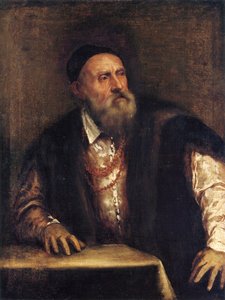
Titaani
1490 - 1576 , Italia
Pähkinänkuoressa
- Artistic Movement Or Style: Venetian painting
- Artists Or Movements Influenced By This Artist:
- Western artists
- Late Italian Renaissance
- Artists Who Influenced This Artist:
- Giovanni Bellini
- Giorgione
- Date Of Birth: c. 1490
- Date Of Death: 1576
- Full Name: Tiziano Vecellio
- Nationality: Italian
- Notable Artworks:
- A Man with a Quilted Sleeve
- The Visitation
- Bearded Young Man
- Place Of Birth: Pieve di Cadore, Italia
Aiheeseen liittyvät artikkelit

Titian: Innovation, Technique & the Venetian Renaissance Portrait Tradition
Explore the revolutionary techniques & enduring legacy of Titian, the master of Venetian Renaissance portraiture. Discover insights for collectors & appreciate his impact on art history.

The Enduring Motif of Love in Art History: A Cross-Cultural Exploration of Representation and Emotion
Explore the rich history of love in art! Discover iconic masterpieces, artistic techniques & cultural symbolism from antiquity to modern times. Expert analysis for collectors.

10 Taideteosta Syvän Romantiikan Herättämiseksi – AllPaintingsStore.com
Löydä 10 tunnetuinta taideteosta, jotka herättävät syvää romanssia! Tutustu klassisiin maalauksiin, impressionismin helmiin ja renessanssin mestariteoksiin. AllPaintingsStore.com – laadukkaat taidevedokset kotiisi. Explore the full collection online!

Lontoon National Galleryn 25 mestariteosta: Taidetta kotiisi AllPaintingsStoreilta
Tutustu Lontoon National Galleryn 25 kuuluisimpaan mestariteokseen! Uppoudu Renessanssin, impressionismin ja barokin maailmaan. Löydä Van Goghin, Rembrandtin ja Monetin tarinat sekä inspiroivia sisustusideoita AllPaintingsStoreilta. Tutustu kokoelma verkossa!

National Galleryn 25 mestariteosta: Taidetta kotiisi AllPaintingsStoreilta
Tutustu National Galleryn 25 ikonista mestariteosta! Cézannen, Picasson ja Matissen tarinat sekä inspiraatiota kodin sisustukseen. Laadukkaat taideprintit AllPaintingsStoreilta – löydä suosikkisi nyt!


