


 Esikatselu
 Jaa teos
 Jaa
Jaa
 Tiedot
 Opas
Opas

 Lataa kuva
 Samanlaisia kohteita
 Röntgenkuvaus
 Diaesitys
 Kysymykset ja vastaukset
 Tilastot
Judith

- 82.0 x 65.0 cm


 Lue lisää
Giclée- ja taideprintit
Museolaatuisia giclée- tai kankaitaulun tulosteita nopealla tuotannolla ja joustavilla viimeistelyvaihtoehdoilla. ( Osta käsinmaalattu taideteos Siirry digitaaliseen kuvaan)




P118B €10

P118H €10

P118W €10

P438Z €10

P508JH €12

P508YH €12

P805H €10

P805Z €10

P919BZ €10

P919G €10

P919XJ €10

P959ZH €10

P968JZ €12

W106C €8

W218G €10

W218JH €8

W218Y €10

W307PJ €10

W316G €10

W316PJ €8

W316Y €10

W398PJ €8

W4111J €10

W500HY €15

W500JH €15

W692G €12

W849H €8

W940BG €15

W953PJ €8




Valitse valmiista mitoistamme sellaiset, jotka vastaavat teoksen alkuperäisiä mittasuhteita.

Syötä tarvitsemasi leveys ja korkeus, jotta tuloste sopii kehyksiisi tai seinällesi. Tulostetta voidaan vain leikata, sitä ei voida koskaan suurentaa alkuperäistä kuvaa suuremmaksi, joten eri muotoinen koko aiheuttaa osan kuvasta katoamisen. Lähetämme sinulle digitaalisen mallikuvan hyväksyttäväksi ennen kuin aloitamme tulostuksen. Tällä sivulla näkyvä kuva ei näytä lopullista rajausta — vain mallikuva näyttää sen.
Maailmanlaajuinen toimitus () 2 viikossa tavallisen 4–5 viikon sijaan. (4 marraskuu)

Ilmainen pikatoimitus ympäri maailman

Korkealaatuinen pellavakangas

Kattava kuljetusvakuutus

Tulliveron palautustakuu

Takuu täydellisestä värien vastaavuudesta

100 päivän palautusoikeus (vain valmistusvirheet)

100% rahat takaisin -takuu

Määräalennus tarjolla
 Lasivaihtoehto on saatavilla vain alle 110 cm kokoisille teoksille

Judith
Giclée- ja taideprintit
Replikaatin koko
-


Kokonaishinta
€ 58
Judith: A Venetian Masterpiece Reflecting Religious Drama
Vincenzo Catena’s “Judith” (circa 1520) stands as a testament to the artistic fervor of Venice during the High Renaissance, blending influences from luminaries like Giovanni Bellini and Giorgione with a burgeoning individuality that foreshadowed Titian's groundbreaking style. This monumental painting depicts the biblical tale of Judith slaying Holofernes, King of Assyria, safeguarding Israel’s safety through cunning and courage—a narrative rich in symbolism and moral contemplation.Style and Technique: Bellini’s Serenity Meets Giorgione’s Atmospheric Depth
Initially trained under Giovanni Bellini, Catena absorbed Bellini's characteristic serene palette and meticulous attention to detail, evident in the subtle gradations of color and masterful rendering of drapery—particularly noticeable in Judith’s flowing robe. However, unlike Bellini’s idealized figures, Catena swiftly embraced Giorgione’s innovative approach to capturing light and atmosphere. The painting possesses a hazy luminescence that imbues the scene with an unsettling realism, mirroring the psychological tension at its core. This atmospheric perspective wasn't merely stylistic; it conveyed a profound understanding of how visual perception communicates emotion.Historical Context: Venetian Republican Virtue Amidst Turbulent Times
Created during Venice’s golden age—a period marked by maritime dominance and artistic innovation—“Judith” embodies the city’s republican values of piety, resilience, and strategic intelligence. The depiction aligns perfectly with the humanist ideals prevalent at the time, prioritizing moral virtue and intellectual contemplation alongside aesthetic beauty. Furthermore, it reflects anxieties surrounding external threats – Assyrian aggression – which fueled Venetian art's preoccupation with themes of defense and salvation.Symbolism: Courage, Sacrifice, and Divine Intervention
The painting overflows with symbolic significance. Judith herself represents courage and unwavering faith—a woman defying societal expectations to protect her people. Holofernes embodies pagan arrogance and cruelty, symbolizing the forces opposing divine righteousness. The sword symbolizes decisive action and righteous retribution. Crucially, the presence of God’s hand hovering above Judith underscores the belief that divine providence guides human endeavors toward virtuous outcomes. This subtle gesture elevates the scene beyond mere narrative illustration into a meditation on faith and moral fortitude.Emotional Impact: A Portrait of Resolve and Unease
“Judith” compels viewers to confront uncomfortable truths about human ambition and vulnerability. The artist skillfully portrays Judith’s unwavering gaze—a symbol of determination—against Holofernes' lifeless body, creating an arresting juxtaposition that evokes feelings of solemn contemplation and moral judgment. The painting’s unsettling luminescence contributes to its emotional resonance, mirroring the psychological drama unfolding within the frame. It remains a powerful reminder of the enduring human capacity for bravery in the face of adversity and the importance of upholding ethical principles.- Artist: Vincenzo Catena
- Date: Circa 1520
- Medium: Oil on Canvas
- Dimensions: 82 x 65 cm
Kysymykset ja vastaukset
Mihin taidesuuntaukseen ja mihin aikakauteen Vincenzo Catena:n "Judith" kuuluu?
"Judith" kuuluu Venetian Renaissance-suuntaukseen, ja sen tekijä työskenteli Renaissance-aikakaudella.
Missä voin nähdä alkuperäisen teoksen Vincenzo Catena:n "Judith"?
Alkuperäinen Vincenzo Catena:n "Judith" on osa Fondazione Querini Stampalia, Venetsia, Italia-museon kokoelmaa. Reproduktio mahdollistaa teoksen näyttämisen kotona.
Mihin huoneeseen Vincenzo Catena:n "Judith" suositellaan sijoitettavaksi sen värien perusteella?
Vincenzo Catena:n "Judith"-teoksen Maanläheinen värit soveltuvat erinomaisesti sen suositeltuun tilaan: Olohuone.
Samankaltaisia teoksia


Taiteilijan elämäkerta
Vincenzo Catena: A Venetian Renaissance Painter
Life and Background
- Born in Venice, Italy around 1470, Vincenzo Catena was a painter of the Venetian Renaissance.
- Little is known about his early life or formal training. Records are scarce regarding his upbringing and initial artistic development.
- He was also sometimes referred to as Vincenzo de Biagio.
- Catena passed away in 1531, leaving behind a modest but significant body of work.
Artistic Development and Influences
- Initially, Catena’s style closely resembled that of Giovanni Bellini, a leading Venetian painter known for his serene Madonnas and refined technique.
- The earliest documented mention of Catena is an inscription on the back of La Laura by Giorgione, where he’s described as Giorgione's *colego* (colleague).
- However, it wasn’t until after Giorgione’s death in 1510 that his innovative influence began to manifest itself in Catena’s paintings.
- He also shows some influences from Titian, another prominent figure of the Venetian School, particularly in his use of color and composition.
Major Works and Style
- Approximately a dozen paintings are confidently attributed to Catena based on signatures.
- The Martyrdom of St. Christina (1520), located in the church of Santa Maria Mater Domini in Venice, is his most securely dated work thanks to an inscription on its marble surround.
- Other notable works include The Adoration of the Shepherds, and several depictions of the Madonna and Child with Saints and Donors.
- Catena’s paintings often feature religious scenes and portraits, characterized by a blend of Bellini's precision and Giorgione’s atmospheric qualities.
- His style is marked by detailed realism, warm color palettes, and rich symbolism, typical of Venetian Renaissance art.
Historical Significance and Legacy
- While not as widely celebrated as some of his contemporaries like Titian or Giorgione, Catena played a role in the development of Venetian painting during a crucial period.
- His work demonstrates the transition between the High Renaissance and the emerging Mannerist styles.
- Wills left by Catena reveal he was a man of considerable wealth and had connections within Venetian humanist circles, suggesting his artistic success extended beyond purely aesthetic recognition.
- Today, Vincenzo Catena’s paintings are valued for their historical importance and offer insights into the artistic landscape of 16th-century Venice.

Vincenzo Catena
1470 - 1531 , Italy
Pähkinänkuoressa
- Name: Vincenzo Catena
- Movement: Renaissance, Venetian School
- Birth Date: 1470
- Death Date: 1531
- Birth Place: Venice, Italy
- Nationality: Italian
- Date Of Birth: 1470
- Date Of Death: 1531
- Influenced By:
- Giovanni Bellini
- Giorgione
- Notable Works:
- Santa Cristina Altarpiece
- The Adoration of the Shepherds
- Madonna and Child with a Holy Female Martyr, Saint Francis of Assisi and the Donor
- Place Of Birth: Venice, Italy
Aiheeseen liittyvät artikkelit

The Golden Light of Innovation: Exploring the Venetian Renaissance Art Movement (1430–1580)
Explore the Golden Age of Venetian art (1430–1580). Discover Giorgione, Titian & Tintoretto's techniques, the 'colorito' revolution, and lasting influence. Expert insights for collectors & enthusiasts.

Venetian Renaissance: The Mastery of Color, Light, and the Art of Colorito
Explore the luminous mastery of the Venetian Renaissance. Discover how masters like Titian and Giorgione revolutionized art through colorito, light, and atmosphere. An expert guide to the golden age of Italian painting for collectors and enthusiasts.
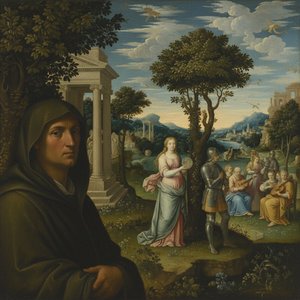
Giorgione: Enigma and Innovation in Early Venetian Renaissance Painting
Explore the enigmatic world of Giorgione, a pivotal figure in the Venetian Renaissance. Discover his innovative techniques, iconic paintings like 'The Tempest', and lasting influence on art history. Learn more at AllPaintingsStore.

Venetian Renaissance: The Golden Age of Color, Light, and Luminous Artistry
Embark on a journey through the Venetian Renaissance. Discover how masters like Giorgione and Titian revolutionized art through luminous color and light. Explore the profound legacy of the Venetian School and its enduring influence on the world of fine art.

Titian: Innovation, Technique & the Venetian Renaissance Portrait Tradition
Explore the revolutionary techniques & enduring legacy of Titian, the master of Venetian Renaissance portraiture. Discover insights for collectors & appreciate his impact on art history.
