Rahat takaisin -takuu · 100 päivää Ilmainen toimitus ympäri maailman
449 564teokset 30 613taiteilijat 4 660museot 32kielet
Catalogue entry

Sloop, Bermuda

1899. Acrylic On Canvas. Metropolitanin museo.

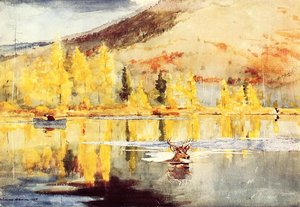
Fig. 1. Winslow Homer, Sloop, Bermuda, 1899. Shown as the reproduction you are specifying: , .

§ 1Catalogue data

§ 2Abstract

Keräilykohteen kuvaus

Taiteilijan elämäkerta

Winslow Homerin upea "Auringonlasku tulessa" -maalaus vangitsee meren ja taivaan värikkään loistavuuden. Tutustu realistiseen tyyliin ja Homerin tunnetun teoksen kauneuteen!

§ 3Commentary

Sloop, Bermuda – A Watercolor Echo of Tranquility

Winslow Homer’s “Sloop, Bermuda,” housed within the Metropolitan Museum of Art’s impressive collection, isn't merely a depiction of a sailboat on the ocean; it’s an embodiment of American Romanticism distilled into a breathtaking watercolor. Created in 1899 during Homer’s prolific period, this painting transcends simple observation, inviting viewers to contemplate the sublime beauty found within everyday maritime life.

  • Subject Matter: The scene captures two boats – one larger and more dominant – gliding across a calm expanse of turquoise water. Scattered figures populate both vessels, engaged in leisurely activities; perhaps fishing or simply enjoying the invigorating sea breeze.
  • Artistic Style & Technique: Homer’s masterful use of watercolor exemplifies his signature style—characterized by soft tonal gradations and luminous washes that prioritize atmosphere over precise detail. The artist eschewed academic conventions, favoring instead a direct engagement with nature's textures and colors.

A small dog nestled near the smaller boat adds an element of warmth and domesticity to the composition, subtly reinforcing the theme of companionship and contentment. Homer’s deliberate brushstrokes convey a sense of stillness and serenity—a deliberate contrast to the turbulent narratives often explored in Romantic art.

Historical Context & The Spirit of Observation

Painted at the cusp of the 20th century, “Sloop, Bermuda” reflects Homer's unwavering commitment to portraying American life with honesty and sensitivity. He drew inspiration from his own experiences as a fisherman and illustrator, grounding his artistic vision in tangible observation. This approach aligns perfectly with the broader Romantic movement’s fascination with untamed landscapes and the profound connection between humanity and nature—a connection that Homer powerfully communicates through his watercolor.

  • Romantic Ideals: The painting embodies Romantic ideals of individualism, emotion, and reverence for the natural world. Homer's focus on capturing fleeting moments of beauty speaks to the movement’s belief in experiencing life fully and embracing its inherent contradictions.
  • Influence of Photography: Despite emerging during a period marked by advancements in photography—a medium capable of capturing reality with unprecedented accuracy—Homer deliberately avoided photographic realism, prioritizing instead expressive color and tonal variation.

Symbolism & Emotional Resonance

"Sloop, Bermuda" operates on multiple levels of symbolic meaning. The sea itself represents vastness, freedom, and the unknown – themes central to Romantic thought. The boats symbolize human endeavor and aspiration, albeit tempered by a quiet appreciation for the present moment. Homer’s masterful rendering of light and shadow contributes significantly to the painting's emotional impact, evoking feelings of peace, tranquility, and nostalgia.

Considered alongside other notable works like “Channel Bass” and “Four Boys on a Beach,” Homer’s “Sloop, Bermuda” stands as a testament to his enduring legacy—a celebration of American artistry and a poignant reminder that beauty can be found in the simplest of scenes. For those seeking to experience this masterpiece firsthand or acquire a stunning reproduction, AllPaintingsStore.com offers exceptional handmade oil painting reproductions of Homer’s celebrated pieces.

Kysymykset ja vastaukset

Kuinka voimakas kontrasti teoksessa Winslow Homer:n "Sloop, Bermuda" on?

Teoksen "Sloop, Bermuda" valoisuus- ja varjokontrasti on Bold. Kontrasti kuvaa, kuinka voimakkaasti vaaleat ja tummat alueet eroavat toisistaan.

Mitkä värit ja mikä hallitseva sävy määrittelevät teoksen "Sloop, Bermuda"?

Winslow Homer:n "Sloop, Bermuda"-teoksen väri-identiteetti: Neutrals paletti, jota hallitsee Gray (#8b9c9e).

Milloin teos Winslow Homer:n "Sloop, Bermuda" on luotu?

Winslow Homer:n "Sloop, Bermuda" on luotu vuonna 1899.
§ 4The artist

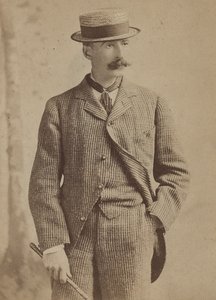
Winslow Homer

Winslow Homer

1836 - 1910, Yhdysvallat

Quick facts about Winslow Homer

  • Artistic Movement Or Style: Amerikkalainen Realismi
  • Artists Or Movements Influenced By This Artist: ['Amerikkalaiset maalarit']
  • Artists Who Influenced This Artist:
    • Barbizon koulun taideilijat
    • Courbet
    • Millet
  • Date Of Birth: 24. helmikuuta 1836
  • Date Of Death: 29. syyskuuta 1910
  • Full Name: Winslow Homer
  • Nationality: Amerikkalainen
  • Notable Artworks:
    • Breezing Up
    • The Gulf Stream
    • Innocence
  • Place Of Birth: Boston, USA

Taiteilijan elämäkerta

A Brush with the American Spirit: The Life and Art of Winslow Homer

Winslow Homer, born in Boston in 1836, wasn’t sculpted by the traditional European art academies that shaped so many of his contemporaries. Instead, he emerged from a distinctly American experience, one rooted in practicality and observation. His journey began not with grand historical canvases, but as a commercial illustrator at the tender age of twelve for Harper's Weekly. This early apprenticeship was formative, honing an exceptional ability to capture scenes with clarity and detail – skills that would become hallmarks of his mature work. He wasn’t learning perspective in Paris; he was learning to *see* America, its people, and its unfolding story. The bustling streets of Boston, the quiet dignity of rural New England life, these were his first subjects, rendered with a precision born of necessity for the demands of print media. This foundation allowed him to transition into painting, initially in watercolor, before fully embracing the expressive potential of oil paints.

From Pastoral Scenes to the Raw Power of Nature

Homer’s early paintings often depicted idyllic scenes – children playing, farmers tending their fields, quiet moments of domesticity. These works, while charming, hinted at a deeper artistic sensibility waiting to be unleashed. The catalyst for this transformation was undoubtedly the Civil War. As a war correspondent for Harper's Weekly, Homer witnessed firsthand the brutal realities of conflict. He didn’t focus on heroic battles or grand strategies; instead, he documented the everyday lives of soldiers and civilians, the quiet moments of grief and resilience amidst chaos. This experience profoundly altered his artistic vision. The pastoral scenes gave way to more challenging subjects: veterans grappling with trauma, freed slaves navigating a new world, and the stark beauty of landscapes touched by hardship. He began to explore themes of struggle, isolation, and humanity’s precar He wasn't interested in imitating European styles; he wanted to create an art that was uniquely American, reflecting its landscapes, its people, and its challenges. His style also evolved, becoming bolder and more direct, reflecting the raw emotional impact of what he had witnessed. Breezing Up (A Fair Wind), painted in 1876, exemplifies this skill – a quintessential depiction of American maritime life, brimming with energy and movement. The Gulf Stream, created decades later, is perhaps his most iconic work, a powerful and symbolic portrayal of a lone man battling the forces of nature, a metaphor for human struggle against overwhelming odds. He possessed an extraordinary ability to capture light, whether it was the dazzling glare of the sun on the ocean or the soft glow of twilight over a rural landscape. This mastery extended to his watercolors, where he achieved remarkable atmospheric effects through vibrant colors and delicate washes. Innocence, a poignant portrayal of childhood set against the backdrop of nature, and **Man of Science** are testaments to this commitment. His influence can be seen in the work of later American painters who sought to depict their own country with similar directness and emotional depth.

Mastering Light, Texture, and the American Landscape

Winslow Homer's artistic technique is immediately recognizable for its solidity and texture. He wasn’t interested in fleeting impressions; he wanted to build up a sense of tangible reality on the canvas. His oil paintings are characterized by a direct painting approach – layers of paint applied with confidence, creating depth and luminosity. He wasn’t simply painting what he saw; he was conveying a feeling, an emotional truth about the human condition. His unwavering dedication to capturing the essence of American life—from the serene beauty of coastal vistas to the harrowing realities of wartime—established him as one of the foremost painters of 19th-century America and cemented his legacy as a pioneer of American Realism.

A Lasting Impression: Homer’s Historical Significance

Winslow Homer's art offers a profound window into 19th-century America, providing invaluable insights into the social, political, and cultural landscape of his time. His paintings are not merely beautiful representations; they are powerful statements about human resilience, the beauty and power of nature, and the complexities of the American experience. He died in 1910, leaving behind a prolific body of work that continues to resonate with audiences today. His ability to capture the essence of a nation undergoing rapid change – from the aftermath of civil war to the dawn of a new century – ensures his place as one of America’s most important and enduring artists. He wasn't just painting pictures; he was documenting a moment in time, preserving it for generations to come.
  • His work continues to inspire contemporary artists.
  • Homer remains a pivotal figure in the development of American Realism.

§ 5Comparanda

§ 6Questions

Pikaista tietoa

  • Influences: Hudson River School
  • Subject or theme: Coastal seascape; leisure activities
  • Location: The Metropolitan Museum of Art
  • Year: 1899
  • Artistic style: Serene, observational

Taidevisat

Jokaisessa kysymyksessä on vain yksi oikea vastaus.

Kysymys 1:
What artistic style is Winslow Homer primarily known for?
Kysymys 2:
The watercolor technique employed by Homer in Sloop, Bermuda emphasizes:
Kysymys 3:
What is notable about Homer's depiction of a dog in Sloop, Bermuda?
Kysymys 4:
Where is Sloop, Bermuda housed?
Kysymys 5:
What role did Harper's Weekly play in Homer’s early artistic development?

§ 7Cite this entry

AllPaintingsStore.com, “Winslow Homer, Sloop, Bermuda (1899)”, https://allpaintingsstore.com/fi/art/winslow-homer-sloop-bermuda-8BX2QE-en/ArtistReproduction/ (accessed 5 lokakuu 2026).

§ 8The reproduction

Käsinmaalattu öljyvärinen jäljennös

Käsinmaalattu öljyväri kankaalle haluamassasi koossa ja kehyksissä, taiteilijoidemme valmistamana tilauksesta. ( Vaihda tulosteeseen Siirry digitaaliseen kuvaan)

It is specified on the order sheet in the margin; the present state of that sheet reads as follows.

Sloop, Bermuda

Reproduktiotekniikka

Replikaatin koko

-

Kokenut huipputaiteilija

Lisää yksityiskohtia, hienostuneisuutta ja enemmän aikaa tuotantoon

-

Reproduktion kehystysvaihtoehdot

-

-

Teoksille tai reproduktioille, joiden mikä tahansa sivu on suurempi kuin 105 cm (noin 41 tuumaa), kehys toimitetaan osina purettuna sarjana. Tämä menetelmä varmistaa turvallisen toimituksen ja ehkäisee vaurioita kuljetuksen aikana.

Vaatii ammattimaista kokoamista – kyseessä ei ole tee-se-itse-tuote.
Sarja on koottava ja kangas kiristettävä kokeneen kehystysammattilaisen toimesta käyttäen puuliimaa (ei sisälly pakkaukseen), kangaspinnetteitä ja puristimia, jotta kehyksen kulmat pysyvät suorina liiman kuivuessa. Virheellinen kokoaminen tai epätasainen kankaan kiristys voi vaurioittaa teosta pysyvästi, eikä tällaiset vauriot ala takuun piiriin.

  • Kaikki massiivipuupalat sisältyvät, tarkasti mittojen mukaan leikattuina.

  • Kootaan mukana tulevilla ruuveilla sekä kulmaliitoksia varten tarvittavalla puuliimalla, jota ei toimiteta, joten se on hankittava kehystäjältä.

  • Vaatii ammattilaisvälineitä, jotka eivät sisälly pakkaukseen: kankaan venytyspihdit (kiristin) ja puristimet, joilla pidetään kehyksen puut suorassa liiman kuivuessa.

Tärkeää:
Kulmaliitoksissa tarvitaan puuliimaa, kehyksien osat on pidettävä puristimilla, kunnes liima on täysin kuivunut, ja koottuun kehykseen jännitettävän kankaan kiristämiseen tarvitaan kangaspenssipihti. Mikään näistä ei sisälly pakkaukseen. Suosittelemme varmistamaan kokeneen kehystäjän saatavuuden ennen tämän kokoisen kehyksen tilaamista.

Nimilaatta

-

-

Suojalakkaus

Kiiltävä lakka (syventää värejä, suojaa valolta ja kosteudelta)

-

Mukauta taideteokseni

Esimerkkejä muokattavista asioista: Vaihda kasvot asiakkaan omaan valokuvaan; Lisää lemmikki (esim. vaihda kissa koiraan); Lisää taustalle piilotettu viesti; Muuta taustan maisemaa tai elementtejä.

-

Pikatoimitus

Maailmanlaajuinen toimitus () 3–4 viikossa tavallisen 5 viikon sijaan. (3 marraskuu). Laadusta ei tingitä.

-

Pikatoimitus

Maailmanlaajuinen toimitus () 5 viikon kuluessa. (10 marraskuu).

Sisältyy hintaan

Kokonaishinta

€ 229

Included with every order

  • Ilmainen pikatoimitus ympäri maailman
  • Korkealaatuinen pellavakangas
  • Kattava kuljetusvakuutus
  • Tulliveron palautustakuu
  • Takuu täydellisestä värien vastaavuudesta
  • 100 päivän palautusoikeus (vain valmistusvirheet)
  • 100% rahat takaisin -takuu
  • Määräalennus tarjolla
Order sheet