


 Aperçu en situation
 Envoyer
 Partager
 Détails de l'œuvre
 Guide
Guide

 Télécharger l'image
 Articles similaires
 Radiographie
 Diaporama
 Statistiques
Pavilion
 Oil On Canvas
- WallArt
- Bengal School of Art
 23.0 x 16.0 cm
 Victoria Memorial Hall
 Lire la suite
Reproduction à l'huile faite à la main
Huile sur toile peinte à la main, avec cadre et dimensions personnalisés, réalisée sur commande par nos artistes. ( Passer au format impression Passer au format numérique)




P118B €10

P118H €10

P118W €10

P438Z €10

P508JH €12

P508YH €12

P805H €10

P805Z €10

P919BZ €10

P919G €10

P919XJ €10

P959ZH €10

P968JZ €12

W106C €8

W218G €10

W218JH €8

W218Y €10

W307PJ €10

W316G €10

W316PJ €8

W316Y €10

W398PJ €8

W4111J €10

W500HY €15

W500JH €15

W692G €12

W849H €8

W940BG €15

W953PJ €8




Choisissez parmi nos formats prédéfinis qui respectent les proportions originales de l’œuvre.

Saisissez la largeur et la hauteur souhaitées, pour s'adapter à votre cadre ou à votre mur. Cette œuvre est peinte à la main ; ainsi, pour un format de forme différente, l'artiste peut peindre un peu plus autour du tableau ou réduire légèrement les bords — c'est vous qui choisissez. Nous vous envoyons une maquette numérique pour approbation avant que la peinture ne commence. L'image présentée sur cette page ne reflète pas le résultat réel — seule la maquette le fait.
Après la commande, l’équipe AllPaintingsStore.com contactera le client par e-mail pour recueillir ses instructions et lui fournira une maquette d’aperçu
Livraison dans le monde entier () en 3 à 4 semaines au lieu des 5 semaines habituelles. (26 octobre). Aucun compromis sur la qualité.

Livraison express gratuite dans le monde entier

Toile de lin de qualité supérieure

Assurance transport complète

Garantie de remboursement des droits de douane

Garantie de fidélité des couleurs

Politique de retour de 100 jours (uniquement en cas de défaut)

Garantie de remboursement à 100%

Offre de tarifs dégressifs
 L'option verre n'est disponible que pour les dimensions inférieures à 110 cm.

Pavilion
Technique de reproduction
Format de la reproduction
-


Prix total
€ 227
Abanindranath Tagore’s “Pavilion”: A Bridge Between East and West
The artwork presented here, Abanindranath Tagore's "Pavilion," isn’t merely a depiction of a building; it’s a carefully constructed visual poem, a pivotal moment in the history of Indian art. Painted in 1907, during a period of intense nationalistic fervor and artistic experimentation, this work represents Tagore’s audacious attempt to synthesize traditional Indian aesthetics with Western influences – a strategy that fundamentally reshaped the landscape of modern Indian painting. It's a piece brimming with symbolism, inviting viewers to contemplate themes of spirituality, identity, and the evolving relationship between tradition and modernity.
Tagore, deeply influenced by the Japanese aesthetic—particularly its emphasis on calligraphy and flattened perspective—and inspired by the Mughal and Rajput miniature traditions, sought to create an art form that resonated with Indian sensibilities. He deliberately rejected the academic realism prevalent in Western art schools, which he viewed as cold and devoid of spiritual depth. Instead, he drew upon the rich visual vocabulary of ancient India – its vibrant colors, stylized forms, and symbolic imagery—and infused it with a distinctly modern sensibility. “Pavilion” exemplifies this approach perfectly; it’s not a photographic representation but rather an evocative interpretation, prioritizing mood and feeling over strict adherence to reality.
A Symphony of Color and Symbolism
The painting immediately captivates the eye with its rich palette—a deliberate departure from the muted tones favored by Western artists. Deep blues and greens dominate the composition, evoking a sense of tranquility and spirituality, while bursts of crimson, gold, and saffron inject vibrancy and energy. These colors aren’t simply decorative; they carry profound symbolic weight. Blue represents the heavens and spiritual realms, red signifies passion and life force, and gold embodies divinity and enlightenment. The use of these hues is deeply rooted in Hindu iconography and reflects Tagore's desire to reconnect with India’s ancient spiritual heritage.
The pavilion itself—a structure reminiscent of Mughal palaces but imbued with a distinctly Indian character—is rendered with a flattened perspective, echoing the style of Japanese woodblock prints. The arched doorway, framed by intricate floral motifs and stylized clouds, serves as a focal point, drawing the viewer’s eye into the heart of the composition. Notice the deliberate simplification of forms – a hallmark of both Mughal and Japanese art—which contributes to the painting's serene and contemplative atmosphere. The figures depicted within the pavilion are not realistically rendered but rather presented as stylized silhouettes, further emphasizing the work’s symbolic nature.
Historical Context and Artistic Significance
“Pavilion” was created during a crucial period in Indian history—the early 20th century—a time marked by growing nationalist sentiment and a desire to reclaim India's cultural identity after centuries of colonial rule. Tagore’s art played a significant role in this movement, providing a visual language for expressing Indian values and traditions. He founded the Bengal School of Art, which championed a distinctly Indian style of painting that drew inspiration from both ancient and contemporary sources. This school challenged the dominance of Western artistic styles and paved the way for a new generation of Indian artists.
Tagore’s work wasn't without its critics. Some accused him of diluting traditional Indian art by incorporating Western elements, while others praised his innovative approach to blending Eastern and Western aesthetics. However, “Pavilion” remains a testament to Tagore’s artistic vision—a bold and ambitious attempt to create an art form that was both deeply rooted in India's cultural heritage and open to new influences. It stands as a pivotal work in the development of modern Indian painting, demonstrating the power of art to shape national identity and express complex ideas.
A Timeless Masterpiece for Your Space
Reproduced on high-quality canvas or paper, Abanindranath Tagore’s “Pavilion” offers a captivating glimpse into India's rich artistic heritage. Its serene composition, vibrant colors, and evocative symbolism make it an ideal addition to any home or office space. Whether you are drawn to its spiritual depth, its historical significance, or simply its aesthetic beauty, this artwork is sure to inspire contemplation and add a touch of timeless elegance to your surroundings. Consider commissioning a hand-painted reproduction from AllPaintingsStore.com for a truly authentic experience.
Questions et réponses
«Pavilion» de Abanindranath Tagore est-il une composition en portrait, en paysage ou carrée ?
«Pavilion» de Abanindranath Tagore présente un format Portrait. Le format décrit les proportions de la composition.
Quel format d'impression pour «Pavilion» de Abanindranath Tagore convient à la pièce recommandée ?
Pour une Living Room, nous suggérons un format d'impression de Medium pour « Pavilion ».
Comment « Pavilion » s'inscrit-il dans les thèmes et le style de Abanindranath Tagore ?
«Pavilion» s'inscrit dans l'œuvre Bengal School of Art de Abanindranath Tagore, dont les thèmes récurrents incluent mughal, rajput, indian traditions, swadeshi values, nationalist art, colonial calcutta, urban life, tagore’s artistic synthesis”.
Œuvres similaires


Biographie de l'artiste
Première Vie et Contexte Familial
- Né: Le 7 mai 1861, Joransanko, Calcutta, Inde britannique
- Décédé: Le 5 décembre 1951
- Famille: Membre de la distinguée famille Tagore ; neveu de Rabindranath Tagore. Son grand-père était Girindranath Tagore et son père Gunendranath Tagore.
- Éducation: A étudié au Sanskrit College, Kolkata dans les années 1880 puis a fréquenté le Calcutta School of Art.
Développement Artistique et Influences
- Première Formation: A appris le pastel auprès d'O. Ghilardi et la peinture à l'huile auprès de Charles Palmer au Calcutta School of Art.
- Styles Moghols et Rajputs: Cherchait à moderniser ces styles, rejetant les modèles artistiques occidentaux.
- Valeurs Swadeshi: A incorporé des valeurs Swadeshi dans son art, promouvant les traditions indiennes.
- Esthétisme de Whistler: Influencé par les principes esthétiques de Whistler.
- Influence Japonaise: A plus tard incorporé les traditions calligraphiques chinoises et japonaises à son style après avoir rencontré les artistes Tikan et Hesida.
Œuvres Majeures et Contributions Artistiques
- Rohini II: Une œuvre notable témoignant de ses compétences artistiques.
- Le Passage de Shajahan: Une autre peinture significative reflétant son style.
- Fleur de Saison dans un Vase: Démontre sa maîtrise de la technique et du sujet.
- Série des Mille et une Nuits (1930): Considérée comme l'une de ses plus belles réalisations, utilisant les histoires des Mille et une Nuits pour explorer le Calcutta colonial.
- Bharat Mata: Une peinture significative symbolisant la Mère Inde.
- Fondateur de la Bengal School of Art: A joué un rôle essentiel dans la formation de la peinture indienne moderne et la promotion de l'art nationaliste.
- Indian Society of Oriental Art (1907): A fondé cette société pour promouvoir les formes d'art traditionnelles indiennes.
Héritage et Importance Historique
- Pionnier de la Peinture Indienne Moderne: Reconnu comme une figure clé dans le développement de l’art indien moderne.
- Influence sur les Artistes Subséquents: A encadré des artistes notables tels que Nandalal Bose, Asit Halder, Kshitindranath Majumdar et Jamini Roy.
- Revival des Formes d'Art Traditionnelles: A plaidé pour un retour aux techniques et styles indiens traditionnels.
- Impact sur la Littérature Indienne pour Enfants: A écrit des livres pour enfants influents tels que Rajkahini, Budo Angla, Nalak et Khirer Putul.
- Trésors Nationaux de l'Art: Ses œuvres sont considérées comme des trésors nationaux de l’art.

Abanindranath Tagore
1871 - 1951 , Inde
L'essentiel de l'artiste
- Artistes Influencés:
- Nandalal Bose
- Kshitindranath Majumdar
- Jamini Roy
- Artistes Influents:
- Whistler
- Artistes moghols
- Artistes rajputs
- Date De Décès: 5 décembre 1951
- Date De Naissance: 7 mai 1871
- Lieu De Naissance: Jorasanko, Inde
- Mouvement Artistique: École du Bengale
- Nationalité: Indien
- Nom Complet: Abanindranath Tagore
- Oeuvres Notables:
- Rohini II
- Le passage de Shajahan
- Fleur de saison
Articles connexes

Raja Ravi Varma: Bridging Tradition & Modernity in 19th-Century Indian Art
Explore the life & art of Raja Ravi Varma, a pioneer who fused European techniques with Indian iconography. Discover his iconic paintings, lasting legacy, and influence on modern Indian art at AllPaintingsStore.
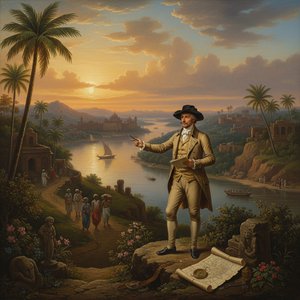
Thomas Daniell: Navigating Light, Landscape & Cultural Exchange in Early 19th-Century India
Explore the captivating landscapes of Thomas Daniell, a pioneering artist who documented India's beauty in the 19th century. Discover his 'Oriental Scenery,' aquatint technique & lasting legacy. Hand-painted reproductions available at AllPaintingsStore.

Joseph Henry Sharp: Capturing the Spirit of the Plains – Life, Art & Legacy
Explore the life & art of Joseph Henry Sharp, a founding member of the Taos Society of Artists renowned for his realistic depictions of Native American culture and Western landscapes. Discover his legacy with AllPaintingsStore.
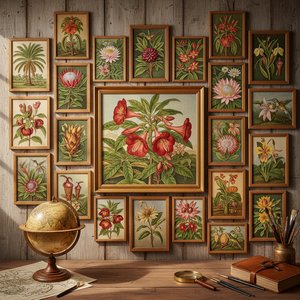
Marianne North : Les 25 Œuvres Maîtresses d'une Voyageuse en Couleurs | AllPaintingsStore
Plongez dans l'univers coloré de Marianne North ! Découvrez ses 25 œuvres les plus emblématiques, des paysages exotiques aux fleurs peintes avec une précision botanique unique. Reproductions d'art de qualité supérieure sur AllPaintingsStore.com.
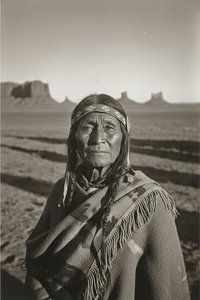
Shadow Catcher: Edward S. Curtis & the Ethnographic Portraiture of a Vanishing West
Explore the life & work of Edward S. Curtis, the 'Shadow Catcher,' and his groundbreaking photographic documentation of Native American cultures. Discover iconic images from *The North American Indian* and a critical look at his lasting legacy.

