


 Aperçu en situation
 Partager
 Partager
 Détails
 Guide
Guide

 Télécharger
 Articles similaires
 Radiographie
 Voir le diaporama
 Statistiques
Portrait Of Alof De Wignacourt - Florence


 Afficher la suite
Acquérez une image numérique haute résolution et optimisée, d'une qualité bien supérieure à l'aperçu en ligne.
Chaque fichier est méticuleusement préparé par nos spécialistes internes à l'aide d'outils avancés et d'une retouche manuelle experte. Nous garantissons que chaque image possède une clarté exceptionnelle, une précision des couleurs irréprochable et un niveau de détail fin.
Le fichier final est livré par e-mail sous 72 heures, optimisé pour une utilisation immédiate dans des contextes professionnels, éditoriaux et d'impression. Il offre la même qualité de confiance que celle utilisée par les plus grands studios de création, éditeurs et galeries.
Image numérique
Téléchargez un fichier haute résolution pour votre usage personnel, l'impression et vos projets créatifs. ( Passer au format impression Acheter la peinture faite à la main)
Inclus avec chaque commande d'image numérique
Livraison numérique experte, garantie.
En choisissant AllPaintingsStore.com, vous n'obtenez pas seulement une simple image : vous recevez une œuvre numérique sublimée avec professionnalisme, conçue avec précision et accompagnée d'une garantie de satisfaction. Voici tout ce qui accompagne automatiquement votre commande :

Livraison rapide par e-mail
Votre fichier d'image numérique haute résolution vous sera envoyé par e-mail sous 72 heures après votre commande — prêt à un usage immédiat.

Fichier numérique optimisé par l'IA
Votre œuvre d'art bénéficie d'une optimisation professionnelle grâce à des outils d'IA avancés et une retouche manuelle, garantissant un niveau maximal de détail, de clarté et de fidélité chromatique.

Réexpédition gratuite à vie
Vous avez accidentellement supprimé ou perdu votre fichier ? Pas d'inquiétude — nous vous le renverrons gratuitement, quand vous le souhaitez.

Aucuns frais de douane — À jamais
Profitez de votre œuvre d'art instantanément sans frais de douane ni de livraison — les téléchargements numériques sont toujours exonérés de taxes.

Garantie de fidélité des couleurs
Nous garantissons que votre image numérique reproduit les couleurs de l'original aussi fidèlement que possible grâce à des outils professionnels et une gestion rigoureuse des couleurs.

Garantie de satisfaction de 100 jours
Si vous n'êtes pas satisfait de votre image numérique, nous la retoucherons ou vous rembourserons 100% sous 100 jours — sans poser de questions.

Garantie de remboursement à 100%
Pas satisfait ? Obtenez un remboursement intégral dans les 100 jours suivant la réception de votre fichier numérique — sans aucune question posée.

Remises sur les commandes groupées
Achetez 3 images, économisez 10% - Achetez 5, économisez 15% - Achetez 10+, économisez 20%. Idéal pour les projets créatifs, les galeries et les agences.
Portrait of Alof de Wignacourt - Florence
This commanding portrait, painted between 1607-1608 by the masterful Michelangelo Merisi da Caravaggio, offers a compelling glimpse into both the life of a powerful historical figure and the artistic genius of one of the Baroque period's most revolutionary painters. Currently residing in the Louvre Museum, Paris, this artwork transcends mere representation; it’s a study in power, faith, and the dramatic interplay of light and shadow.Historical Context: The Grand Master and His Artist
Alof de Wignacourt served as the 54th Grand Master of the Order of Malta from 1601 to 1622, a period marked by significant political and military activity for the Knights. Caravaggio, seeking refuge in Malta after fleeing Rome following a fatal brawl, found patronage under Wignacourt’s protection. This portrait wasn't simply a commission; it was a gesture of gratitude from the artist to his protector, and a testament to Wignacourt’s leadership. The Order of Malta, a Catholic military order, held considerable power in the Mediterranean, and Wignacourt was instrumental in fortifying their defenses and expanding their influence.A Study in Baroque Realism: Style & Technique
The portrait exemplifies Caravaggio's signature style – a radical departure from the idealized forms of Renaissance art. He embraced realism, depicting Wignacourt not as an ethereal figure, but as a man of flesh and blood, clad in imposing armor. The artist’s masterful use of chiaroscuro—the dramatic contrast between light and dark—is central to the painting's impact. Wignacourt emerges from deep shadows, illuminated by a strong, unseen light source that highlights his face, hands, and the intricate details of his armor. This technique doesn’t merely create visual drama; it imbues the portrait with psychological depth and emphasizes Wignacourt’s authority. The canvas measures 195 cm x 134 cm, allowing for a life-size depiction that further enhances its imposing presence.Decoding the Symbolism: Armor, Chain & Baton
Every element within the portrait carries symbolic weight. Wignacourt’s full armor signifies his role as a military leader and protector of the Order. The Grand Master's chain, prominently displayed around his neck, is an emblem of his high office and authority. The baton of command held firmly in his right hand reinforces this sense of power and control. Even the dark background contributes to the overall message – it doesn’t distract from the subject but rather focuses attention on Wignacourt’s strength and unwavering resolve. The dark backdrop also subtly alludes to the challenges and responsibilities inherent in his position.Emotional Impact & Lasting Legacy
The portrait evokes a sense of solemnity, dignity, and unyielding power. Wignacourt’s stern expression and direct gaze command respect, conveying an impression of unwavering determination. Caravaggio doesn't shy away from portraying the weight of leadership; there is a hint of weariness in Wignacourt’s eyes, suggesting the burdens he carries as Grand Master. This psychological realism sets this portrait apart. It remains a pivotal work in art history, demonstrating Caravaggio's innovative techniques and his ability to capture the essence of his subjects. His influence on subsequent generations of artists is undeniable. For collectors and interior designers seeking a statement piece that embodies both historical significance and artistic brilliance, a high-quality reproduction of this masterpiece offers an opportunity to bring a touch of Baroque grandeur into any space.- Notable Works by Caravaggio: Bacchus, The Calling of Saint Matthew, Saint Catherine of Alexandria.
A Life Forged in Shadow and Light
Michelangelo Merisi da Caravaggio, a name synonymous with the dramatic intensity of Baroque painting, was born in Milan in 1571, a period steeped in both artistic flourishing and societal upheaval. His early life was marked by loss; plague ravaged his hometown, claiming the lives of his father and grandfather when he was just six years old. Raised amidst relative poverty, young Michelangelo’s formative years instilled within him a keen awareness of human suffering and resilience—themes that would later dominate his canvases. He began his artistic training in Milan under Simone Peterzano, a former pupil of Titian, absorbing the fundamentals of Renaissance technique but already hinting at a rebellious spirit that would soon shatter conventional norms. This apprenticeship provided a solid foundation, yet it was in Rome, arriving around 1592, that Caravaggio truly found his voice, though not without initial struggle and hardship. TheŒuvres similaires


Biographie de l'artiste
Michelangelo Merisi da Caravaggio : Vie et Héritage
Jeunesse et Formation (1571-1592)
- Michelangelo Merisi da Caravaggio, communément appelé simplement Caravaggio, est né à Milan en 1571.
- Sa famille a déménagé dans la ville de Caravaggio en raison d'une épidémie dévastatrice qui a frappé Milan.
- Après les décès de son père et de son grand-père en 1577, sa mère a élevé ses cinq enfants dans la pauvreté relative.
- En 1584, il a commencé un apprentissage de quatre ans avec Simone Peterzano, un peintre qui avait été élève de Titien. Cette formation fondamentale lui a inculqué les techniques de la peinture de la Renaissance.
Carrière Artistique et Style (1592-1610)
- La carrière artistique de Caravaggio a fleuri à Rome, où il est arrivé vers 1592. Au début, il a eu du mal à obtenir une reconnaissance, mais il s'est rapidement établi grâce à son style innovant.
- Sa caractéristique la plus déterminante était son habile utilisation de chiaroscuro, le contraste dramatique entre lumière et obscurité. Cette technique, souvent appelée ténèbres, est devenue une marque de fabrique de la peinture baroque.
- Il a rejeté les formes idéalisées au profit de représentations réalistes, utilisant souvent des personnes ordinaires comme modèles pour les figures religieuses.
- Les peintures de Caravaggio sont connues pour leur réalisme émotionnel intense et leurs récits dramatiques.
Œuvres Clés
- La Prorocesse (1594) : Une œuvre précoce montrant son style réaliste et son souci du détail.
- Le Banquet d'Emmaüs (1601-1602) : Une représentation puissante de la scène biblique, démontrant sa maîtrise du chiaroscuro et de l’intensité émotionnelle.
- Saint François d'Assise en Extase (1594) : Illustre sa capacité à transmettre une expérience spirituelle à travers des images réalistes.
- La Capture du Christ (c. 1602) : Une composition dramatique soulignant la trahison et la capture de Jésus.
- David avec la tête de Goliath (c. 1610) : Une représentation psychologiquement complexe du héros biblique.
Influences et Développement Artistique
- Caravaggio a été influencé par les œuvres des maîtres de la Renaissance tels que Titien, Léonard de Vinci et Michel-Ange, qu'il a étudiés pendant son apprentissage.
- Il s’est éloigné du style maniériste dominant, adoptant une approche plus directe et naturaliste de la peinture.
- Son utilisation de la lumière et de l'ombre a été inspirée à la fois par les traditions artistiques et par l'éclairage théâtral courant à Rome à cette époque.
Réalisations Majeures et Importance Historique
- Caravaggio a révolutionné la peinture baroque grâce à son réalisme dramatique, à son utilisation innovante du chiaroscuro et à ses compositions chargées d'émotion.
- Il a inspiré une génération d’artistes connus sous le nom de “Caravaggesques" ou "ombres", qui ont adopté son style dans toute l'Europe. Des disciples notables incluent Pierre Paul Rubens, Giuseppe de Ribera et Gerrit van Honthorst.
- Son œuvre a défié les conventions artistiques et a ouvert la voie à une approche plus moderne de la peinture.
- Malgré une vie personnelle tumultueuse marquée par la violence et des problèmes juridiques, l'héritage artistique de Caravaggio reste profond et durable.
Vie Tardive et Mort
- En 1606, Caravaggio a fui Rome après avoir tué un homme lors d’une bagarre. Il a passé les années suivantes à se déplacer entre Naples, Malte et Sicile.
- Il a recherché le pardon du pape mais a continué à faire face à des défis juridiques et à des conflits personnels.
- Caravaggio est mort à Porto Ercole, en Italie, en 1610 dans des circonstances mystérieuses. La cause de sa mort reste débattue, avec des théories allant d'une fièvre à un empoisonnement.
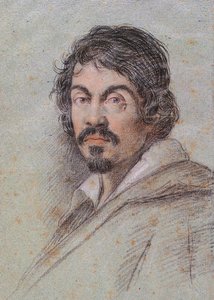
Caravage
1571 - 1610 , Espagne
En bref
- Artistes Influents:
- Titien
- Léonard de Vinci
- Michel-Ange
- Date De Décès: 1610
- Date De Naissance: 1571
- Influences Artistiques:
- Pierre Paul Rubens
- Jusepe de Ribera
- Gerrit van Honthorst
- Lieu De Naissance: Milan, Espagne
- Mouvement Artistique: Baroque
- Nationalité: Italienne
- Nom Complet: Michelangelo Merisi da Caravaggio
- Oeuvres Notables:
- La Fortune Teller
- Le Dîner à Emmaüs
- Saint François en extase
- La Prise du Christ
- David et Goliath

