Aperçu en situation
 Partager
 Partager
 Détails
 Guide
Guide

 Télécharger
 Articles similaires
 Radiographie
 Voir le diaporama
 Statistiques
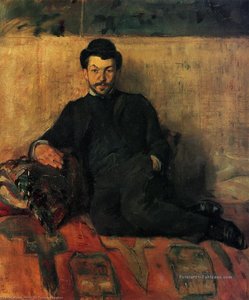
The actor Henry Samary
 Acrylic On Canvas
- WallArt
- Post-Impressionism
 1889
1889- 19th Century
 75.0 x 52.0 cm
 Afficher la suite
Reproduction à l'huile faite à la main
Huile sur toile peinte à la main, avec cadre et dimensions personnalisés, réalisée sur commande par nos artistes. ( Passer au format impression Passer au format image numérique)




P118B $10

P118H $10

P118W $10

P438Z $10

P508JH $12

P508YH $12

P805H $10

P805Z $10

P919BZ $10

P919G $10

P919XJ $10

P959ZH $10

P968JZ $12

W106C $8

W218G $10

W218JH $8

W218Y $10

W307PJ $10

W316G $10

W316PJ $8

W316Y $10

W398PJ $8

W4111J $10

W500HY $15

W500JH $15

W692G $12

W849H $8

W940BG $15

W953PJ $8




Choisissez parmi nos formats prédéfinis qui respectent les proportions originales de l’œuvre.

Vous pouvez saisir vos propres dimensions pour l'adapter à un cadre ou à un espace spécifique. Si la taille sélectionnée ne correspond pas aux proportions de l'image d'origine, nous recadrerons l'œuvre ou prolongerons la peinture avec des éléments peints à la main supplémentaires. Une maquette numérique vous sera envoyée pour approbation avant le début de la production.
Veuillez noter que l'aperçu à l'écran ne reflète pas le recadrage ou l'extension réels. Seule la maquette montrera fidèlement la composition finale.
Bien que des tailles personnalisées soient disponibles, nous vous recommandons de sélectionner une dimension dans la liste prédéfinie afin de préserver les proportions d'origine.
Après la commande, l’équipe AllPaintingsStore.com contactera le client par e-mail pour recueillir ses instructions et lui fournira une maquette d’aperçu
Livraison dans le monde entier () en 3 à 4 semaines au lieu des 5 semaines habituelles. (21 septembre). Aucun compromis sur la qualité.

Livraison express gratuite dans le monde entier

Toile de lin de haute qualité

Assurance transport complète

Garantie de remboursement des droits de douane

Garantie de fidélité des couleurs

Garantie de retour de 100 jours (uniquement en cas de défaut)

Garantie de remboursement à 100%

Tarifs dégressifs sur quantité
 L'option verre n'est disponible que pour les dimensions inférieures à 110 cm.

The actor Henry Samary
Technique de reproduction
Format de la reproduction
-


Prix total final
$ 258
The Actor Henry Samary: A Parisian Portrait of Intimacy
This captivating portrait, titled "The Actor Henry Samary," offers a rare glimpse into the vibrant and often shadowed world of late 19th-century Paris through the discerning eye of Henri de Toulouse-Lautrec. Executed in 1889, this work transcends a simple likeness; it’s a carefully constructed tableau brimming with atmosphere, social commentary, and a poignant sense of human connection. Measuring 75 x 52 cm, the scale invites intimacy, drawing the viewer into the scene as if they too are a participant in this fleeting moment.
The subject, Henry Samary, is presented with remarkable realism – a man dressed impeccably in a dark suit and tie, holding a cane and engaging in what appears to be a telephone conversation. The detail of his posture, the slight furrow of his brow, and the hand raised to his face all contribute to a feeling of immediacy and authenticity. Toulouse-Lautrec’s masterful use of light and shadow – particularly evident in the play across Samary's clothing – adds depth and volume, imbuing the figure with a tangible presence.
A Bohemian Setting: Montmartre at its Height
The backdrop to this portrait is equally significant. The wooden deck or porch suggests an outdoor gathering, likely within the bustling artistic district of Montmartre. The inclusion of a tree in the background isn’t merely decorative; it grounds the scene in nature, providing a subtle counterpoint to the urban setting and hinting at a desire for escape or reflection. Two other figures are present, though they remain secondary, adding to the impression of a lively social event – perhaps a rehearsal, a private meeting, or simply an impromptu gathering amongst artists and performers.
Toulouse-Lautrec was deeply embedded within Montmartre’s bohemian culture, documenting its characters and venues with unflinching honesty. This painting reflects his fascination with the marginalized figures of Parisian society – actors, prostitutes, musicians, and other individuals who populated the city's vibrant underbelly. The scene captures a moment of private conversation amidst this public spectacle, highlighting the duality of life in Montmartre.
The Artist’s Vision: Technique and Symbolism
Toulouse-Lautrec’s technique is characterized by bold lines, expressive brushstrokes, and a keen eye for detail. He employed a pointillist approach, building up color through small, distinct strokes – a method that allowed him to capture the shimmering effects of light and shadow with remarkable precision. The slightly blurred edges contribute to the painting's overall sense of movement and immediacy.
The telephone itself is a potent symbol in this context. It represents communication, connection, and perhaps even isolation within a crowded urban environment. Samary’s gesture – holding his hand to his face as if speaking – suggests a private conversation, adding another layer of intrigue to the scene. Furthermore, the cane symbolizes both support and age, subtly hinting at the passage of time and the transient nature of life.
A Legacy of Parisian Impressionism
Created in 1889, "The Actor Henry Samary" stands as a testament to Toulouse-Lautrec’s unique artistic vision. It exemplifies his ability to capture not just physical appearances but also the emotional and social currents of his time. As one of the last great masters of Parisian Impressionism, Toulouse-Lautrec's work continues to resonate with audiences today, offering a captivating glimpse into a bygone era and a profound meditation on the human condition. This hand-painted reproduction allows you to bring this iconic piece of art history directly into your home or office, celebrating the enduring legacy of one of France’s most celebrated artists.
Œuvres similaires


Biographie de l'artiste
A Life Etched in Parisian Nights: The World of Henri de Toulouse-Lautrec
Henri Marie Raymond de Toulouse-Lautrec-Monfa, forever known simply as Toulouse-Lautrec, remains a captivating figure of the late 19th century. Born into the waning days of French aristocracy in Albi on November 24, 1864, his life was marked by both privilege and profound physical challenge. A rare genetic condition, suspected to be pycnodysostosis – though debated even today – halted the growth of his legs at a young age, leaving him with a disproportionately small lower body and an adult torso. This physical difference profoundly shaped his perspective, leading him not toward self-pity but towards an intensely observant and empathetic engagement with the marginalized figures of Parisian society. His aristocratic background afforded him access to artistic training, yet it was the vibrant, often scandalous world of Montmartre that truly ignited his creative spirit.From Academic Training to Bohemian Rhapsody
Toulouse-Lautrec’s formal artistic journey began in Paris under the tutelage of Léon Bonnat and later Fernand Cormon. While he mastered the technical skills expected of a Salon painter, it was his immersion in the bohemian heart of Montmartre that irrevocably altered his trajectory. He rejected the prevailing academic focus on historical or mythological subjects, instead turning his keen eye towards the everyday dramas unfolding around him: the dancers at the Moulin Rouge, the prostitutes of the rue des Moulins, the circus performers and café singers who populated the Parisian nightlife. This wasn’t mere observation; it was a deep dive into a world often ignored by polite society. He didn't simply paint *about* these people, he inhabited their spaces, understanding their vulnerabilities and celebrating their resilience. His early works show a clear academic foundation, but quickly evolve to embrace a more daring and unconventional style, influenced by Japanese woodblock prints – then gaining popularity in Europe – with their bold compositions and flattened perspectives. He embraced lithography with particular enthusiasm, recognizing its potential for mass reproduction and artistic expression. This allowed his images to circulate widely, further cementing his reputation as a chronicler of modern life. His posters, advertising performers like Jane Avril and Yvette Guilbert, were not merely promotional materials; they were works of art in their own right, instantly recognizable for their dynamic compositions and striking imagery.A Master of Line and Color: Defining a Style
Toulouse-Lautrec’s artistic innovations are readily apparent in his distinctive style. He was a master of line, using it not just to define form but to convey movement, emotion, and character. His color palette, while often muted, possessed an extraordinary vibrancy, capturing the artificial glow of gaslight and the smoky atmosphere of Parisian cabarets. He utilized bold lines and expressive brushstrokes—a technique that departed significantly from the meticulous realism favored by Impressionists—to depict figures with remarkable immediacy and psychological insight. He skillfully blended influences from Symbolism and Japonisme, incorporating flattened perspectives and decorative motifs into his compositions. His work is characterized by a preoccupation with capturing fleeting moments of emotion and sensation, reflecting the anxieties and uncertainties of the era.Exploring Toulouse-Lautrec’s World Further
- Discover a comprehensive collection of his artwork at /en/artists/comte-henri-marie-raymond-de-toulouse-lautrec-monfa.
- Delve into the world of Post-Impressionism and its key artists at /en/art-movements/post-impressionism.
- Learn more about his life and artistic journey through resources like Wikipedia: https://en.wikipedia.org/wiki/Henri_de_Toulouse-Lautrec

comte henri marie raymond de toulouse-lautrec-monfa
1864 - 1901 , France
En bref
- Artistic Movement Or Style: Post-Impressionism
- Artists Or Movements Influenced By This Artist:
- Paul Cézanne
- Vincent van Gogh
- Artists Who Influenced This Artist: ['Léon Bonnat']
- Date Of Birth: November 24, 1864
- Date Of Death: September 9, 1901
- Full Name: Henri Marie Raymond de Toulouse-Lautrec-Monfa
- Nationality: French
- Notable Artworks:
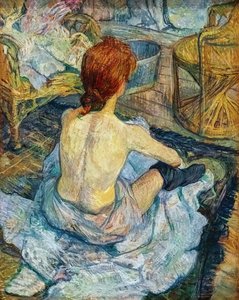
- La Blanchisseuse
- In the Wings at the Circus
- Woman in Bed — Waking
- Place Of Birth: Albi, France
Articles similaires

Les 10 Chefs-d'œuvre Fauves : Couleurs Émotionnelles et Décor d'Art Intemporel
Plongez au cœur du Fauvisme avec les 10 œuvres majeures de Matisse, Derain et Vlaminck. Découvrez l'histoire, la technique et l'impact émotionnel de ces chefs-d’œuvre colorés. Reproductions d'art exceptionnelles sur AllPaintingsStore.com.

Chiaroscuro of the Belle Époque: Unveiling the Nocturnal Soul of Toulouse-Lautrec’s Paris
Immerse yourself in the vibrant nocturnal world of Toulouse-Lautrec. Explore the artistry behind his iconic depictions of Parisian nightlife, from Montmartre to the Moulin Rouge, and discover how to bring this Post-Impressionist mastery into your private collection.

Robert Henri & the Spirit of American Realism: A Legacy of Urban Life and Artistic Independence
Explore the life & legacy of Robert Henri, a pivotal figure in American Realism. Discover his captivating portraits, influence on the Ashcan School, and enduring impact on art history. Learn more at AllPaintingsStore.

Henry Moore: Sculpting Modernity – Form, Emotion & the Human Condition
Explore the revolutionary sculptures of Henry Moore – abstract forms, reclining figures & powerful expressions of the human condition. Discover his legacy & artistic process with AllPaintingsStore.
Henri Matisse : Les 25 Œuvres Maîtresses d'un Génie de la Couleur | AllPaintingsStore
Plongez dans l'univers vibrant d'Henri Matisse ! Découvrez les 25 œuvres majeures du fauvisme et de la peinture moderne. Explorez La Danse, L'Atelier Rouge & plus encore. Reproductions de qualité musée sur AllPaintingsStore.com.