


 Aperçu en situation
 Partager
 Partager
 Détails
 Guide
Guide

 Télécharger
 Articles similaires
 Radiographie
 Voir le diaporama
 Statistiques
Madonna and Child on a throne (Front side fragment)


 Afficher la suite
Reproduction à l'huile faite à la main
Huile sur toile peinte à la main, avec cadre et dimensions personnalisés, réalisée sur commande par nos artistes. ( Passer au format impression Passer au format image numérique)




P118B $10

P118H $10

P118W $10

P438Z $10

P508JH $12

P508YH $12

P805H $10

P805Z $10

P919BZ $10

P919G $10

P919XJ $10

P959ZH $10

P968JZ $12

W106C $8

W218G $10

W218JH $8

W218Y $10

W307PJ $10

W316G $10

W316PJ $8

W316Y $10

W398PJ $8

W4111J $10

W500HY $15

W500JH $15

W692G $12

W849H $8

W940BG $15

W953PJ $8




Choisissez parmi nos formats prédéfinis qui respectent les proportions originales de l’œuvre.

Vous pouvez saisir vos propres dimensions pour l'adapter à un cadre ou à un espace spécifique. Si la taille sélectionnée ne correspond pas aux proportions de l'image d'origine, nous recadrerons l'œuvre ou prolongerons la peinture avec des éléments peints à la main supplémentaires. Une maquette numérique vous sera envoyée pour approbation avant le début de la production.
Veuillez noter que l'aperçu à l'écran ne reflète pas le recadrage ou l'extension réels. Seule la maquette montrera fidèlement la composition finale.
Bien que des tailles personnalisées soient disponibles, nous vous recommandons de sélectionner une dimension dans la liste prédéfinie afin de préserver les proportions d'origine.
Après la commande, l’équipe AllPaintingsStore.com contactera le client par e-mail pour recueillir ses instructions et lui fournira une maquette d’aperçu
Livraison dans le monde entier () en 3 à 4 semaines au lieu des 5 semaines habituelles. (21 septembre). Aucun compromis sur la qualité.

Livraison express gratuite dans le monde entier

Toile de lin de haute qualité

Assurance transport complète

Garantie de remboursement des droits de douane

Garantie de fidélité des couleurs

Garantie de retour de 100 jours (uniquement en cas de défaut)

Garantie de remboursement à 100%

Tarifs dégressifs sur quantité
 L'option verre n'est disponible que pour les dimensions inférieures à 110 cm.

Madonna and Child on a throne (Front side fragment)
Technique de reproduction
Format de la reproduction
-


Prix total final
$ 258
A Moment of Quiet Majesty: Duccio's Fragment of Divine Reflection
This exquisite fragment, tentatively titled “Madonna and Child on a Throne,” offers a poignant glimpse into the artistic genius of Duccio di Buoninsegna, a pivotal figure in the transition from Byzantine grandeur to the burgeoning naturalism that would define Sienese painting. Executed around 1311, this work transcends mere representation; it’s an embodiment of contemplative serenity and a subtle challenge to the established conventions of religious iconography. The image depicts a woman – likely Mary – presented with a profound stillness, her head resting on her hand as if lost in deep thought or perhaps even slumber. This posture immediately evokes a sense of intimacy, inviting the viewer into a private moment of grace.
- The Artist's Vision: Duccio’s work represents a crucial step in Italian art history. He was part of a generation that sought to temper the rigid formality of Byzantine art with a newfound emphasis on human emotion and naturalism, foreshadowing the Renaissance.
- Color and Texture: The rich palette – dominated by deep reds, verdant greens, and shimmering golds – speaks to the opulence characteristic of Sienese painting during this period. Duccio masterfully employed layering techniques, a hallmark of his style, creating a tactile surface that invites close inspection.
- Symbolic Detail: The crown adorning Mary’s head signifies her divine status, yet its placement alongside her gesture of repose suggests a vulnerability and humility rarely depicted in earlier works. The necklace adds to the impression of regal authority, subtly blending spiritual power with earthly beauty.
Technique and Materials – A Window into Duccio's Studio
Duccio’s mastery is immediately apparent in the meticulous execution of this fragment. He employed tempera paint on a gesso panel, a technique favored by Sienese artists for its luminosity and ability to achieve vibrant colors. Note the delicate rendering of fabric – the folds of her robe are rendered with remarkable precision – and the subtle modeling of her face, conveying a sense of three-dimensionality that was revolutionary at the time. The gold leaf used in the background, meticulously applied, would have reflected light dramatically, further enhancing the work’s visual impact. Duccio's innovative use of glazing techniques—applying thin layers of translucent paint over dried underlayers—created an ethereal quality and depth of color that is still admired today.
- Tempera on Gesso: Duccio skillfully utilized tempera, a fast-drying pigment bound with egg yolk, known for its brilliance and durability.
- Glazing Techniques: The layering of translucent glazes created depth, luminosity, and rich color transitions.
- Gold Leaf Application: The strategic use of gold leaf added to the work's splendor and reflected light, enhancing its visual impact.
Historical Context – Siena at the Dawn of a New Era
Created in 1311, this piece reflects the artistic and religious landscape of Siena during the early 14th century. Siena was a thriving center of art and commerce, renowned for its independent spirit and powerful patronage system. Duccio’s work aligns with the broader Sienese school's commitment to producing devotional images that were both aesthetically beautiful and spiritually meaningful. This fragment is part of a larger composition, likely an altarpiece, suggesting it was intended for a significant religious space – perhaps a cathedral or a wealthy private chapel. The timing coincides with a period of intense theological debate surrounding papal authority, subtly reflected in the work’s emphasis on Mary's serene dignity.
Emotional Resonance – A Portrait of Contemplation
Ultimately, “Madonna and Child on a Throne” is more than just a beautiful painting; it’s an invitation to pause and reflect. The Madonna’s pose—a moment of quiet contemplation—resonates with viewers across centuries. It speaks to the universal human experience of seeking solace, wisdom, and connection with the divine. This reproduction captures not only Duccio's artistic skill but also the profound emotional depth that lies at the heart of his masterpiece.
Œuvres similaires


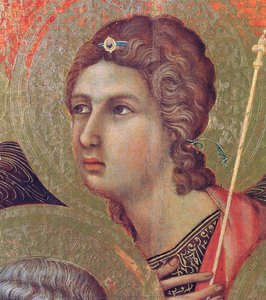


Biographie de l'artiste
jeunesse et carrière
Duccio di Buoninsegna, un peintre italien renommé de Sienne, était actif au cours du 13e et du début du 14e siècle. Né en 1255, la vie personnelle de Duccio reste enveloppée de mystère, avec peu d'informations connues sur son origine familiale ou ses premières années. Cependant, ses contributions au style de peinture du trento et de l’école siennoise sont bien documentées.style artistique et influences
Le travail de Duccio se caractérise par son utilisation innovante de l'espace et de la couleur, comme en témoigne son chef-d'œuvre la Madone de Rucellai (1285). Ce tableau, représentant la Vierge Marie tenant le Christ enfant, entourée d'anges et de saints, met en valeur son style unique, qui mêle l’art byzantin aux nouvelles techniques. Son utilisation du modelage et sa manipulation de la lumière et des couleurs sombres révèlent les figures sous une lourde draperie, créant ainsi une atmosphère accueillante et chaleureuse.Œuvres notables et héritage
Parmi ses œuvres notables figurent :- Maestó (panneaux de couronnement), séparation des apôtres (art gothique, huile) – témoignant de son approche innovante de l'espace et de la couleur.
- Polyptyque n° 28 (la Vierge sainte avec le Christ enfant et quatre saints) (art gothique, huile) – démontrant la maîtrise de Duccio dans la composition et la narration.
- Maestó (panneaux de fond), tentation sur un pilier du temple (art gothique, huile) – mettant en valeur sa capacité à équilibrer la lumière et les couleurs sombres.
Héritage et mémoire
Malgré ses difficultés financières, l'héritage artistique de Duccio dépasse largement ses défis personnels. Son œuvre est conservée dans divers musées et galeries, notamment la galerie d'art de la ville de Manchester, qui abrite de nombreuses œuvres majeures de grands artistes. Consultez les œuvres de Duccio di Buoninsegna sur AllPaintingsStore.com Wikipedia : Duccio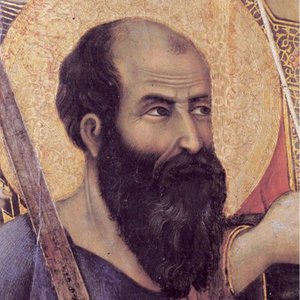
Duccio di Buoninsegna
1255 - 1319 , Italie
En bref
- Artistes Influents: ['Art byzantin']
- Date De Naissance: Vers 1255
- Influence Sur Les Artistes: ['École Siennoise']
- Lieu De Naissance: Sienne, Italie
- Mouvement Artistique: Gothique Siennois
- Nationalité: Italienne
- Nom Complet: Duccio di Buoninsegna
- Œuvres Notables:
- Madone Rucellai
- Maestà
- Polyptyque n° 28
Articles similaires

Divine Love: A Curated Guide to the Most Iconic Madonna and Child Masterpieces in Art History
Embark on a sophisticated journey through art history with our curated guide to the most iconic Madonna and Child masterpieces. Discover the profound beauty, theological depth, and enduring legacy of these sacred Renaissance treasures.

Proto-Renaissance : 10 Chefs-d'œuvre Révolutionnaires pour une Décoration d'Exception
Plongez au cœur de la Proto-Renaissance avec AllPaintingsStore.com ! Découvrez 10 chefs-d'œuvre intemporels de Giotto, Cimabue et autres maîtres italiens. Retables gothiques, fresques émouvantes… Trouvez l’inspiration déco & achetez des reproductions d'art exceptionnelles. Explorez la collection sur AllPaintingsStore
Giotto di Bondone : Les 25 Chefs-d'œuvre Incontournables pour Embellir Votre Intérieur
Plongez dans l'univers de Giotto di Bondone : découvrez les 25 fresques et chefs-d'œuvre qui ont révolutionné l'art médiéval italien. Explorez son style unique, ses couleurs vibrantes et l'histoire fascinante derrière chaque œuvre. Retrouvez des reproductions d'exception sur AllPaintingsStore.com.
Raphaël : Les 25 Chefs-d'œuvre Incontournables pour une Décoration d'Exception
Plongez dans l'univers de Raphaël avec les 25 œuvres incontournables du maître italien. Découvrez l'histoire, la technique et la beauté intemporelle de ses chefs-d'œuvre Renaissance. Reproductions de qualité muséale sur AllPaintingsStore.com.

La Biennale de Venise : Top 25 des Œuvres Incontournables pour Décorer avec Art et Histoire
Plongez au cœur de la Biennale de Venise avec notre sélection des 25 œuvres incontournables. Découvrez l'histoire, les artistes et les mouvements qui ont façonné l'art contemporain italien. Trouvez l'inspiration déco et achetez des reproductions de tableaux haute qualité sur AllPaintingsStore.com.


