


 Aperçu en situation
 Envoyer
 Partager
 Détails de l'œuvre

 Télécharger
 Articles similaires
 Radiographie
 Diaporama
Abstract composition (sheets)


 Lire la suite
Giclées et impressions d'art
Impressions giclées ou sur toile de qualité musée, avec une production rapide et des finitions au choix. ( Commander la reproduction peinte à la main Télécharger l'image haute résolution)




P118B $10

P118H $10

P118W $10

P438Z $10

P508JH $12

P508YH $12

P805H $10

P805Z $10

P919BZ $10

P919G $10

P919XJ $10

P959ZH $10

P968JZ $12

W106C $8

W218G $10

W218JH $8

W218Y $10

W307PJ $10

W316G $10

W316PJ $8

W316Y $10

W398PJ $8

W4111J $10

W500HY $15

W500JH $15

W692G $12

W849H $8

W940BG $15

W953PJ $8




Choisissez parmi nos formats prédéfinis qui respectent les proportions originales de l’œuvre.

Vous pouvez saisir vos propres dimensions pour vous adapter à un cadre ou à un espace spécifique. Si la taille sélectionnée ne correspond pas aux proportions de l'image originale, nous recadrerons l'œuvre ou étendrons l'image avec une bordure en miroir ou une couleur unie. Une maquette numérique vous sera envoyée pour approbation avant le début de la production.
Veuillez noter que l'aperçu à l'écran ne reflète pas le recadrage ou l'extension réelle. Seule la maquette montrera avec précision la composition finale.
Bien que des tailles personnalisées soient disponibles, nous vous recommandons de choisir une dimension dans la liste prédéfinie afin de préserver les proportions originales.
Livraison dans le monde entier () en 2 semaines au lieu des 4/5 semaines habituelles. (21 août)

Livraison express gratuite dans le monde entier

Toile de lin de qualité supérieure

Assurance transport complète

Garantie de remboursement des droits de douane

Garantie de fidélité des couleurs

Politique de retour de 60 jours (uniquement en cas de défaut)

Garantie de remboursement à 100%

Offre de tarifs dégressifs
 L'option verre n'est disponible que pour les dimensions inférieures à 110 cm.

Abstract composition (sheets)
Giclées et impressions d'art
Format de la reproduction
-


Prix total
$ 64
Description de la pièce
A Symphony of Geometric Form
In the heart of the early twentieth century, amidst the clatter of a world transforming through steam and steel, Fernand Léger captured something far more profound than mere machinery. His "Abstract Composition (Sheets)" stands as a breathtaking testament to the era's restless energy, acting not just as a painting, but as an embodiment of the anxieties and aspirations surrounding the burgeoning industrial revolution. Executed between 1916 and 1920, during the harrowing years of World War I, this masterpiece represents a radical departure from the fleeting sensory experiences of Impressionism. Instead, Léger sought to distill reality into its most fundamental geometric components, mirroring the mechanized world he observed with an unwavering, almost hypnotic fascination.
The canvas unfolds as a rhythmic dance of color and shape, dominated by a striking palette of ochre, crimson, and black. These are not merely decorative choices; they are colors chosen to convey the duality of progress—the strength of new construction paired with the inevitable decay of the old world. To gaze upon this work is to feel the pulse of a changing civilization, where every circle and line serves as a building block for a new visual language.
The Bold Embrace of Orphism
Within the lineage of modern art, "Abstract Composition (Sheets)" firmly establishes Léger within the vibrant movement known as Orphism. While his contemporaries in Cubism were often preoccupied with the fragmentation of objects into multiple perspectives, Léger and his peers prioritized the pure, emotive power of color and geometric abstraction. This piece is a masterclass in that philosophy, utilizing repetitive circular forms that appear to float and rotate across the surface, creating an incredible sense of depth and kinetic movement.
The technique employed here is nothing short of sculptural. Léger utilized encaustic paint—a rich mixture of pigment and beeswax—to achieve a textured, layered surface. This method allows the light to interact with the painting in a way that traditional oils cannot, imbuing the bold hues with a palpable, physical energy. Each meticulously placed circle contributes to a carefully orchestrated balance, ensuring that despite the abstraction, the composition feels grounded and intentional. For the discerning collector or interior designer, this texture offers a sophisticated tactile quality that brings a sense of history and substance to any modern space.
A Legacy of Modernity and Motion
To understand the emotional weight of this work, one must consider the shadows cast by the Great War. The devastation wrought upon Europe during Léger's creative period fueled a deep-seated need to find order within chaos. Through his "tubism" and later abstract styles, Léger integrated the dynamism of the machine age into a visual language that felt both futuristic and deeply rooted in the observable world. He did not retreat from reality into pure abstraction; rather, he found the soul of modernity within its very gears and pistons.
For those seeking to adorn a space with art that inspires contemplation and strength, this reproduction offers more than just aesthetic beauty. It provides a window into a pivotal moment in human history—a time when the world was being rebuilt from the ground up. Whether placed in a minimalist gallery setting or as a bold focal point in a contemporary living room, "Abstract Composition (Sheets)" continues to resonate with the same rhythmic, mechanical heartbeat that first captivated the avant-garde of Paris over a century ago.
Œuvres similaires


Biographie de l'artiste
jeune vie et formation
fernand léger, peintre, sculpteur et cinéaste français, est né le 4 février 1881 à Argentan, Orne, en Normandie inférieure. Son père élevait du bétail, et léger a initialement été formé à l'architecture de 1897 à 1899. Il s’est ensuite installé à Paris en 1900, se débrouillant comme dessinateur architectural.développement artistique
Le travail précoce de léger a été influencé par l'impressionnisme, comme le montrent le jardin de ma mère (mon jardin) (1905). Après avoir fréquenté l'école des beaux-arts et l’académie Julian, il a commencé à travailler sérieusement comme peintre à 25 ans. Son style s'est développé en une forme personnelle de cubisme, que les critiques ont qualifié de "tubisme" pour son accent sur les formes cylindriques.cubisme et le groupe des Puteaux
En 1910, léger a exposé au Salon d’automne aux côtés de jean metzinger et henri le fauconnier. Il a rejoint le groupe des Puteaux, également connu sous le nom de section d’or (la section dorée), avec d'autres artistes tels que francis picabia et marcel duchamp.guerre et son influence sur le travail de léger
Les expériences de léger à la Première Guerre mondiale ont eu un impact significatif sur son œuvre. Pendant son séjour au front, il a produit des croquis d'artillerie, d'avions et de soldats. Sa peinture soldier avec un tuyau (1916) reflète cette période.œuvre ultérieure et héritage
L'œuvre post-guerre de léger, caractérisée par des formes machine-like élégantes, le lia à la tradition de la peinture figurative française. Ses paysages animés de 1921 ont présenté des figures et des animaux dans des formes harmonieuses et rationalisées.- voir les œuvres de fernand léger sur AllPaintingsStore
- en savoir plus sur fernand léger sur wikipedia
- découvrez le musée national fernand léger (france) avec AllPaintingsStore
- la femme assise (100 x 81 cm, tubisme)
- élément de machine (cubisme)
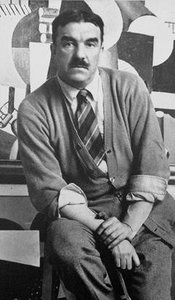
Fernand Léger
1881 - 1955 , France
L'essentiel de l'artiste
- Artistes Influents:
- Cézanne
- Impressionnisme
- Date De Décès: 1955
- Date De Naissance: 4 février 1881
- Influences Artistiques: ['Pop Art']
- Lieu De Naissance: Argentan, France
- Mouvement Artistique: Cubisme, Tubisme
- Nationalité: Française
- Nom Complet: Fernand Léger
- Oeuvres Notables:
- La Grande Parade
- Machine Élément
- Femme assise
- Paysages animés
Articles connexes

Neo-Abstract Art Trend Forecast: High-Impact Geometric Compositions for Contemporary Commercial Interiors
Elevate commercial interiors with Neo-Abstract art. Discover how high-impact geometric compositions and custom oil reproductions provide scalable, sophisticated design solutions for hotels, restaurants, and corporate spaces. Expert procurement for large-scale hospitality projects.

Modern Geometry & Machine Age Beauty: A Collector's Guide to the Cubist Vision of Fernand Léger
Explore the profound geometric mastery of Fernand Léger. Discover how his 'Tubism' and Machine Age aesthetics redefined modern art, offering timeless inspiration for discerning collectors seeking to integrate Cubist dynamism into sophisticated contemporary interiors.


