


 Aperçu en situation
 Envoyer
 Partager
 Détails de l'œuvre
 Guide
Guide

 Télécharger l'image
 Articles similaires
 Radiographie
 Diaporama
 Statistiques
Alarm clock


 Lire la suite
Reproduction à l'huile faite à la main
Huile sur toile peinte à la main, avec cadre et dimensions personnalisés, réalisée sur commande par nos artistes. ( Passer au format impression Passer au format numérique)




P118B €10

P118H €10

P118W €10

P438Z €10

P508JH €12

P508YH €12

P805H €10

P805Z €10

P919BZ €10

P919G €10

P919XJ €10

P959ZH €10

P968JZ €12

W106C €8

W218G €10

W218JH €8

W218Y €10

W307PJ €10

W316G €10

W316PJ €8

W316Y €10

W398PJ €8

W4111J €10

W500HY €15

W500JH €15

W692G €12

W849H €8

W940BG €15

W953PJ €8




Choisissez parmi nos formats prédéfinis qui respectent les proportions originales de l’œuvre.

Saisissez la largeur et la hauteur souhaitées, pour s'adapter à votre cadre ou à votre mur. Cette œuvre est peinte à la main ; ainsi, pour un format de forme différente, l'artiste peut peindre un peu plus autour du tableau ou réduire légèrement les bords — c'est vous qui choisissez. Nous vous envoyons une maquette numérique pour approbation avant que la peinture ne commence. L'image présentée sur cette page ne reflète pas le résultat réel — seule la maquette le fait.
Après la commande, l’équipe AllPaintingsStore.com contactera le client par e-mail pour recueillir ses instructions et lui fournira une maquette d’aperçu
Livraison dans le monde entier () en 3 à 4 semaines au lieu des 5 semaines habituelles. (26 octobre). Aucun compromis sur la qualité.

Livraison express gratuite dans le monde entier

Toile de lin de qualité supérieure

Assurance transport complète

Garantie de remboursement des droits de douane

Garantie de fidélité des couleurs

Politique de retour de 100 jours (uniquement en cas de défaut)

Garantie de remboursement à 100%

Offre de tarifs dégressifs
 L'option verre n'est disponible que pour les dimensions inférieures à 110 cm.

Alarm clock
Technique de reproduction
Format de la reproduction
-


Prix total
€ 227
A Moment Frozen in Time: The Mechanical Pulse of Léger
In the vast tapestry of early twentieth-century modernism, few artists captured the rhythmic, industrial heartbeat of a changing world as vibrantly as Fernand Léger. His 1914 work, Alarm Clock, serves as a profound window into a period where the boundaries between human life and the burgeoning machine age began to blur. At first glance, the painting presents a scene of unexpected narrative tension; a man, clad in a striking red and white striped shirt, sits atop a horse whose head is bowed in a moment of quietude or perhaps exhaustion. Yet, as the eye wanders through the composition, the presence of a clock on the periphery introduces a temporal weight, suggesting that even within this pastoral or communal gathering, the relentless march of time—and the mechanical precision it demands—is ever-present.
Léger’s unique approach to style and technique is on full display here, showcasing his transition from traditional influences toward what would become his signature Tubism. The painting avoids the soft, ethereal edges of Impressionism, opting instead for a more structured, almost sculptural application of form. The figures and the horse are rendered with a certain solidity, as if they were components of a larger, intricate mechanism. This technique does not merely depict a scene; it constructs one, using bold outlines and a deliberate sense of volume to celebrate the physicality of the subjects. For the discerning collector or interior designer, this piece offers a sophisticated interplay of geometry and life, making it a commanding focal point that brings a sense of structured energy to any curated space.
The historical context of 1914 adds a layer of poignant symbolism to the work. As Europe stood on the precipice of profound global upheaval, Léger was already experimenting with the integration of modern motifs into the human experience. The inclusion of the clock is not merely a decorative detail but a symbolic anchor, representing the encroaching industrial era that would soon redefine the very nature of labor and existence. There is an emotional duality at play: the warmth of the gathered crowd and the organic presence of the horse are juxtaposed against the cold, unyielding measurement of time. This tension creates a captivating psychological depth, inviting viewers to contemplate their own relationship with the modern world.
For those looking to adorn a home or gallery with a high-quality reproduction, Alarm Clock offers more than just visual beauty; it offers an intellectual journey. The painting’s ability to harmonize vibrant color—such as the energetic stripes of the rider's attire—with a grounded, rhythmic composition ensures that it complements both contemporary minimalist settings and more eclectic, classical interiors. It is a piece that speaks of movement, of the intersection between the organic and the mechanical, and of the enduring power of art to capture the fleeting essence of an era.
Questions et réponses
Quel est le niveau de contraste dans «Alarm clock» de Fernand Léger ?
Le niveau de contraste de «Alarm clock» de Fernand Léger est Balanced.
Comment la composition chromatique de «Alarm clock» de Fernand Léger est-elle construite ?
La composition chromatique de «Alarm clock» de Fernand Léger allie un contraste Balanced à une harmonie Strong Color Unity.
Quand "Alarm clock" a-t-il été créé, et à quel mouvement appartient-il ?
«Alarm clock» de Fernand Léger date de 1914 et appartient au mouvement Cubism.
Œuvres similaires


Biographie de l'artiste
jeune vie et formation
fernand léger, peintre, sculpteur et cinéaste français, est né le 4 février 1881 à Argentan, Orne, en Normandie inférieure. Son père élevait du bétail, et léger a initialement été formé à l'architecture de 1897 à 1899. Il s’est ensuite installé à Paris en 1900, se débrouillant comme dessinateur architectural.développement artistique
Le travail précoce de léger a été influencé par l'impressionnisme, comme le montrent le jardin de ma mère (mon jardin) (1905). Après avoir fréquenté l'école des beaux-arts et l’académie Julian, il a commencé à travailler sérieusement comme peintre à 25 ans. Son style s'est développé en une forme personnelle de cubisme, que les critiques ont qualifié de "tubisme" pour son accent sur les formes cylindriques.cubisme et le groupe des Puteaux
En 1910, léger a exposé au Salon d’automne aux côtés de jean metzinger et henri le fauconnier. Il a rejoint le groupe des Puteaux, également connu sous le nom de section d’or (la section dorée), avec d'autres artistes tels que francis picabia et marcel duchamp.guerre et son influence sur le travail de léger
Les expériences de léger à la Première Guerre mondiale ont eu un impact significatif sur son œuvre. Pendant son séjour au front, il a produit des croquis d'artillerie, d'avions et de soldats. Sa peinture soldier avec un tuyau (1916) reflète cette période.œuvre ultérieure et héritage
L'œuvre post-guerre de léger, caractérisée par des formes machine-like élégantes, le lia à la tradition de la peinture figurative française. Ses paysages animés de 1921 ont présenté des figures et des animaux dans des formes harmonieuses et rationalisées.- voir les œuvres de fernand léger sur AllPaintingsStore
- en savoir plus sur fernand léger sur wikipedia
- découvrez le musée national fernand léger (france) avec AllPaintingsStore
- la femme assise (100 x 81 cm, tubisme)
- élément de machine (cubisme)
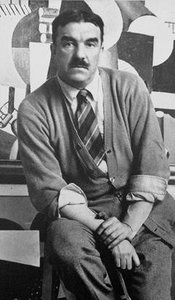
Fernand Léger
1881 - 1955 , France
L'essentiel de l'artiste
- Artistes Influents:
- Cézanne
- Impressionnisme
- Date De Décès: 1955
- Date De Naissance: 4 février 1881
- Influences Artistiques: ['Pop Art']
- Lieu De Naissance: Argentan, France
- Mouvement Artistique: Cubisme, Tubisme
- Nationalité: Française
- Nom Complet: Fernand Léger
- Oeuvres Notables:
- La Grande Parade
- Machine Élément
- Femme assise
- Paysages animés
Articles connexes

Modern Geometry & Machine Age Beauty: A Collector's Guide to the Cubist Vision of Fernand Léger
Explore the profound geometric mastery of Fernand Léger. Discover how his 'Tubism' and Machine Age aesthetics redefined modern art, offering timeless inspiration for discerning collectors seeking to integrate Cubist dynamism into sophisticated contemporary interiors.


