


 Partager
 Partager
 Détails
 Guide imprimable

 Télécharger
 Articles similaires
 Voir le diaporama
 Statistiques
Derrure


 Afficher la suite
Reproduction à l'huile faite à la main
Huile sur toile peinte à la main, avec cadre et dimensions personnalisés, réalisée sur commande par nos artistes. ( Passer au format impression Passer au format image numérique)




































Choisissez parmi nos formats prédéfinis qui respectent les proportions originales de l’œuvre.

Saisissez la largeur et la hauteur souhaitées, pour s'adapter à votre cadre ou à votre mur. Cette œuvre est peinte à la main ; ainsi, pour un format de forme différente, l'artiste peut peindre un peu plus autour du tableau ou réduire légèrement les bords — c'est vous qui choisissez. Nous vous envoyons une maquette numérique pour approbation avant que la peinture ne commence. L'image présentée sur cette page ne reflète pas le résultat réel — seule la maquette le fait.
Après la commande, l’équipe AllPaintingsStore.com contactera le client par e-mail pour recueillir ses instructions et lui fournira une maquette d’aperçu
Livraison dans le monde entier () en 3 à 4 semaines au lieu des 5 semaines habituelles. (24 octobre). Aucun compromis sur la qualité.

Livraison express gratuite dans le monde entier

Toile de lin de haute qualité

Assurance transport complète

Garantie de remboursement des droits de douane

Garantie de fidélité des couleurs

Garantie de retour de 100 jours (uniquement en cas de défaut)

Garantie de remboursement à 100%

Tarifs dégressifs sur quantité
 L'option verre n'est disponible que pour les dimensions inférieures à 110 cm.

Derrure
Technique de reproduction
Format de la reproduction
-


Prix total final
€ 227
A Mechanical Reverie: Exploring Fernand Léger’s *Derrure*
Fernand Léger's 1933 drawing, *Derrure*, is more than just an intricate depiction of gears and machinery; it’s a profound meditation on the burgeoning relationship between humanity and technology. Executed in stark black and white, the artwork captures a dizzying close-up view of a complex mechanical device – a machine rendered with Léger's signature style that sought to reconcile the dynamism of modern life with a distinctly representational approach. The image immediately draws the viewer into a world of interlocking cogs, rotating shafts, and precisely crafted components, suggesting a relentless, almost hypnotic rhythm.
- Subject Matter: The core subject is undeniably mechanical – a machine’s internal workings presented with meticulous detail.
- Style: Léger's “Tubism,” born from his fascination with the forms of industrial machinery and urban life, is powerfully evident here. He doesn’t simply depict the machine; he analyzes it, breaking down its components into geometric shapes and reassembling them in a dynamic composition.
- Technique: The drawing demonstrates Léger's mastery of line and form. Precise, confident strokes define each gear and component, creating a sense of solidity and weight while simultaneously conveying movement and energy.
The Rise of Tubism and the Machine Age
*Derrure* was created during the height of Léger’s career as a leading figure in the Parisian avant-garde. His work emerged from a period of intense social and technological change – the rise of industrialization, urbanization, and the increasing dominance of machines in daily life. Léger wasn't merely documenting this shift; he was actively engaging with it, seeking to translate its essence into his art. Tubism, initially developed alongside Pablo Picasso, aimed to capture the fragmented, multi-faceted forms of modern objects, particularly those found in factories and urban environments. This approach reflected a broader artistic movement that sought to break away from traditional representational styles and embrace new ways of seeing the world.
The drawing’s composition echoes Léger's interest in capturing the *movement* inherent within these mechanical systems. The overlapping gears, the suggestion of rotation, and the overall sense of organized chaos convey a powerful feeling of energy and dynamism – a visual representation of the machine’s relentless operation.
Symbolism and Emotional Impact
Beyond its technical brilliance, *Derrure* carries significant symbolic weight. The machine itself represents progress, industry, and the transformative power of technology. However, Léger doesn't present this as a purely celebratory image. There’s an underlying sense of unease, a feeling that the relentless drive of machinery is both exhilarating and potentially overwhelming. The intricate detail invites contemplation about humanity’s role within this increasingly mechanized world.
The inclusion of a clock within the drawing adds another layer of meaning, referencing time – a fundamental element in the operation of any machine, but also a symbol of human mortality and the passage of time. The stark black and white palette amplifies the emotional impact, creating a dramatic contrast that emphasizes the mechanical forms and evokes a sense of both fascination and apprehension.
A Legacy of Modern Art
Fernand Léger’s *Derrure* stands as a testament to his innovative approach to modern art. It exemplifies his ability to translate the complexities of the machine age into a visually compelling and intellectually stimulating work. This drawing, produced in 1933, offers a unique window into the artistic concerns of its time – a period marked by rapid technological advancement and profound social change. Its enduring appeal lies not only in its technical mastery but also in its poignant exploration of humanity’s relationship with the forces shaping our world.
Questions et réponses
Quelle est l'intensité des couleurs de «Derrure» de Fernand Léger ?
«Derrure» de Fernand Léger présente une intensité de couleur Monochromatic.
Quelle est l'identité chromatique de «Derrure» de Fernand Léger ?
L'identité chromatique de «Derrure» de Fernand Léger : une palette Neutrals, dominée par le Putty (#ddd8d9).
Quel est le format de « Derrure » ?
«Derrure» de Fernand Léger est une composition en Landscape. Il convient de vérifier les proportions avant de choisir un format d'impression.
Œuvres similaires


Biographie de l'artiste
jeune vie et formation
fernand léger, peintre, sculpteur et cinéaste français, est né le 4 février 1881 à Argentan, Orne, en Normandie inférieure. Son père élevait du bétail, et léger a initialement été formé à l'architecture de 1897 à 1899. Il s’est ensuite installé à Paris en 1900, se débrouillant comme dessinateur architectural.développement artistique
Le travail précoce de léger a été influencé par l'impressionnisme, comme le montrent le jardin de ma mère (mon jardin) (1905). Après avoir fréquenté l'école des beaux-arts et l’académie Julian, il a commencé à travailler sérieusement comme peintre à 25 ans. Son style s'est développé en une forme personnelle de cubisme, que les critiques ont qualifié de "tubisme" pour son accent sur les formes cylindriques.cubisme et le groupe des Puteaux
En 1910, léger a exposé au Salon d’automne aux côtés de jean metzinger et henri le fauconnier. Il a rejoint le groupe des Puteaux, également connu sous le nom de section d’or (la section dorée), avec d'autres artistes tels que francis picabia et marcel duchamp.guerre et son influence sur le travail de léger
Les expériences de léger à la Première Guerre mondiale ont eu un impact significatif sur son œuvre. Pendant son séjour au front, il a produit des croquis d'artillerie, d'avions et de soldats. Sa peinture soldier avec un tuyau (1916) reflète cette période.œuvre ultérieure et héritage
L'œuvre post-guerre de léger, caractérisée par des formes machine-like élégantes, le lia à la tradition de la peinture figurative française. Ses paysages animés de 1921 ont présenté des figures et des animaux dans des formes harmonieuses et rationalisées.- voir les œuvres de fernand léger sur AllPaintingsStore
- en savoir plus sur fernand léger sur wikipedia
- découvrez le musée national fernand léger (france) avec AllPaintingsStore
- la femme assise (100 x 81 cm, tubisme)
- élément de machine (cubisme)
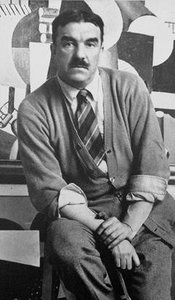
Fernand Léger
1881 - 1955 , France
En bref
- Artistes Influents:
- Cézanne
- Impressionnisme
- Date De Décès: 1955
- Date De Naissance: 4 février 1881
- Influences Artistiques: ['Pop Art']
- Lieu De Naissance: Argentan, France
- Mouvement Artistique: Cubisme, Tubisme
- Nationalité: Française
- Nom Complet: Fernand Léger
- Oeuvres Notables:
- La Grande Parade
- Machine Élément
- Femme assise
- Paysages animés
Articles connexes

Timeless Contrast: A Professional Guide to Black and White Photography for Large-Scale Hotel Decor
A professional guide for hotel designers on utilizing black and white photography for large-scale decor. Learn to master scale, texture, and monochrome contrast to create impactful, high-end hospitality environments through efficient, bulk art procurement solutions.

Modern Geometry & Machine Age Beauty: A Collector's Guide to the Cubist Vision of Fernand Léger
Explore the profound geometric mastery of Fernand Léger. Discover how his 'Tubism' and Machine Age aesthetics redefined modern art, offering timeless inspiration for discerning collectors seeking to integrate Cubist dynamism into sophisticated contemporary interiors.


