


 Aperçu en situation
 Envoyer
 Partager
 Détails de l'œuvre

 Télécharger
 Articles similaires
 Radiographie
 Diaporama
juil-14
 Acrylic On Canvas
- WallArt
- Tubism
 1914
1914- Modern
 65.0 x 58.0 cm
 Lire la suite
Reproduction à l'huile faite à la main
Huile sur toile peinte à la main, avec cadre et dimensions personnalisés, réalisée sur commande par nos artistes. ( Commander l'impression Télécharger l'image haute résolution)




P118B $10

P118H $10

P118W $10

P438Z $10

P508JH $12

P508YH $12

P805H $10

P805Z $10

P919BZ $10

P919G $10

P919XJ $10

P959ZH $10

P968JZ $12

W106C $8

W218G $10

W218JH $8

W218Y $10

W307PJ $10

W316G $10

W316PJ $8

W316Y $10

W398PJ $8

W4111J $10

W500HY $15

W500JH $15

W692G $12

W849H $8

W940BG $15

W953PJ $8




Choisissez parmi nos formats prédéfinis qui respectent les proportions originales de l’œuvre.

Vous pouvez saisir vos propres dimensions pour l'adapter à un cadre ou à un espace spécifique. Si la taille sélectionnée ne correspond pas aux proportions de l'image d'origine, nous recadrerons l'œuvre ou prolongerons la peinture avec des éléments peints à la main supplémentaires. Une maquette numérique vous sera envoyée pour approbation avant le début de la production.
Veuillez noter que l'aperçu à l'écran ne reflète pas le recadrage ou l'extension réels. Seule la maquette montrera fidèlement la composition finale.
Bien que des tailles personnalisées soient disponibles, nous vous recommandons de sélectionner une dimension dans la liste prédéfinie afin de préserver les proportions d'origine.
Après la commande, l’équipe AllPaintingsStore.com contactera le client par e-mail pour recueillir ses instructions et lui fournira une maquette d’aperçu
Livraison dans le monde entier () en 3 à 4 semaines au lieu des 5 semaines habituelles. (22 août). Aucun compromis sur la qualité.

Livraison express gratuite dans le monde entier

Toile de lin de qualité supérieure

Assurance transport complète

Garantie de remboursement des droits de douane

Garantie de fidélité des couleurs

Politique de retour de 60 jours (uniquement en cas de défaut)

Garantie de remboursement à 100%

Offre de tarifs dégressifs
 L'option verre n'est disponible que pour les dimensions inférieures à 110 cm.

juil-14
Technique de reproduction
Format de la reproduction
-


Prix total
$ 258
Description de l'œuvre
Fernand Léger’s ‘juil-14’: A Vibrant Echo of Modernity
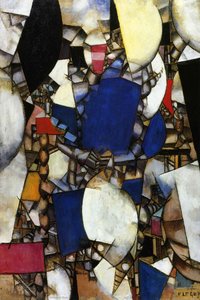
“juil-14,” painted in 1914 by Fernand Léger, is more than just a colorful abstraction; it's a potent distillation of the anxieties and aspirations swirling through Europe at the dawn of the 20th century. Executed during Leger’s pivotal period within the Tubism movement, this artwork embodies his radical attempt to reconcile the burgeoning industrial world with artistic expression. The canvas explodes with a dynamic interplay of red, blue, green, yellow, white, and black – colors that resonate with both the vibrancy of urban life and the starkness of mechanized forms. The presence of trees in the background offers a grounding element, a subtle nod to the rural origins that shaped Leger’s artistic sensibility, while scattered flags introduce an immediate sense of national identity, subtly hinting at the impending storm.
Tubism: Integrating the Machine Age
Created in Tubism style – a movement Léger himself pioneered – “juil-14” reflects his core philosophy. Tubism sought to break down objects into their geometric components, then reconstruct them in abstract forms, often emphasizing angularity and repetition. This is vividly apparent here; the shapes aren’t simply decorative; they are echoes of industrial machinery, a deliberate engagement with the dominant aesthetic of the age. Léger wasn't rejecting representation entirely, but rather transforming it to capture the essence of modernity – its speed, its power, and its inherent geometric logic. The painting’s bold, fragmented forms evoke the feeling of shattered perspectives, mirroring the disruption caused by rapid technological advancement.
Symbolism and Historical Context
The title itself, “juil-14,” immediately anchors the artwork to a specific historical moment: Bastille Day, July 14th, 1789 – the anniversary of the French Revolution. While seemingly anachronistic within the abstract composition, this inclusion subtly layers meaning. The flags, prominent throughout the piece, represent not just national pride but also the volatile political climate of 1914, a year that would soon erupt in global conflict. Léger’s choice to depict this iconic event through such a radically modern lens suggests a questioning of tradition and an embrace of a new, uncertain future. The artwork was created just months before the outbreak of World War I, adding another layer of poignant significance.
Technique and Emotional Impact
Léger’s technique in “juil-14” is characterized by broad, confident brushstrokes and a deliberate lack of blending. This creates a sense of raw energy and immediacy, further amplifying the painting's dynamism. The composition isn’t static; it feels as though the forms are constantly shifting and interacting. The overall effect is one of controlled chaos – an emotional response to the anxieties and possibilities of a world undergoing profound transformation. This reproduction captures that same vibrant intensity, offering a powerful visual statement for any collection or interior space.
Œuvres similaires




Biographie de l'artiste
jeune vie et formation
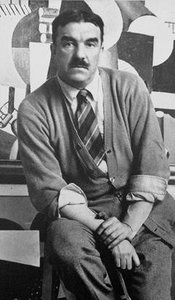
fernand léger, peintre, sculpteur et cinéaste français, est né le 4 février 1881 à Argentan, Orne, en Normandie inférieure. Son père élevait du bétail, et léger a initialement été formé à l'architecture de 1897 à 1899. Il s’est ensuite installé à Paris en 1900, se débrouillant comme dessinateur architectural.développement artistique
Le travail précoce de léger a été influencé par l'impressionnisme, comme le montrent le jardin de ma mère (mon jardin) (1905). Après avoir fréquenté l'école des beaux-arts et l’académie Julian, il a commencé à travailler sérieusement comme peintre à 25 ans. Son style s'est développé en une forme personnelle de cubisme, que les critiques ont qualifié de "tubisme" pour son accent sur les formes cylindriques.cubisme et le groupe des Puteaux
En 1910, léger a exposé au Salon d’automne aux côtés de jean metzinger et henri le fauconnier. Il a rejoint le groupe des Puteaux, également connu sous le nom de section d’or (la section dorée), avec d'autres artistes tels que francis picabia et marcel duchamp.guerre et son influence sur le travail de léger
Les expériences de léger à la Première Guerre mondiale ont eu un impact significatif sur son œuvre. Pendant son séjour au front, il a produit des croquis d'artillerie, d'avions et de soldats. Sa peinture soldier avec un tuyau (1916) reflète cette période.œuvre ultérieure et héritage
L'œuvre post-guerre de léger, caractérisée par des formes machine-like élégantes, le lia à la tradition de la peinture figurative française. Ses paysages animés de 1921 ont présenté des figures et des animaux dans des formes harmonieuses et rationalisées.- voir les œuvres de fernand léger sur AllPaintingsStore
- en savoir plus sur fernand léger sur wikipedia
- découvrez le musée national fernand léger (france) avec AllPaintingsStore
- la femme assise (100 x 81 cm, tubisme)
- élément de machine (cubisme)
Fernand Léger
1881 - 1955 , France
L'essentiel de l'artiste
- Artistes Influents:
- Cézanne
- Impressionnisme
- Date De Décès: 1955
- Date De Naissance: 4 février 1881
- Influences Artistiques: ['Pop Art']
- Lieu De Naissance: Argentan, France
- Mouvement Artistique: Cubisme, Tubisme
- Nationalité: Française
- Nom Complet: Fernand Léger
- Oeuvres Notables:
- La Grande Parade
- Machine Élément
- Femme assise
- Paysages animés
Articles connexes

Modern Geometry & Machine Age Beauty: A Collector's Guide to the Cubist Vision of Fernand Léger
Explore the profound geometric mastery of Fernand Léger. Discover how his 'Tubism' and Machine Age aesthetics redefined modern art, offering timeless inspiration for discerning collectors seeking to integrate Cubist dynamism into sophisticated contemporary interiors.


