Aperçu en situation
 Envoyer
 Partager
 Détails de l'œuvre

 Télécharger
 Articles similaires
 Radiographie
 Diaporama
Learning to read


 Lire la suite
Giclées et impressions d'art
Impressions giclées ou sur toile de qualité musée, avec une production rapide et des finitions au choix. ( Acheter la peinture faite à la main Acheter l'image)




P118B $10

P118H $10

P118W $10

P438Z $10

P508JH $12

P508YH $12

P805H $10

P805Z $10

P919BZ $10

P919G $10

P919XJ $10

P959ZH $10

P968JZ $12

W106C $8

W218G $10

W218JH $8

W218Y $10

W307PJ $10

W316G $10

W316PJ $8

W316Y $10

W398PJ $8

W4111J $10

W500HY $15

W500JH $15

W692G $12

W849H $8

W940BG $15

W953PJ $8




Choisissez parmi nos formats prédéfinis qui respectent les proportions originales de l’œuvre.

Vous pouvez saisir vos propres dimensions pour vous adapter à un cadre ou à un espace spécifique. Si la taille sélectionnée ne correspond pas aux proportions de l'image originale, nous recadrerons l'œuvre ou étendrons l'image avec une bordure en miroir ou une couleur unie. Une maquette numérique vous sera envoyée pour approbation avant le début de la production.
Veuillez noter que l'aperçu à l'écran ne reflète pas le recadrage ou l'extension réelle. Seule la maquette montrera avec précision la composition finale.
Bien que des tailles personnalisées soient disponibles, nous vous recommandons de choisir une dimension dans la liste prédéfinie afin de préserver les proportions originales.
Livraison dans le monde entier () en 2 semaines au lieu des 4/5 semaines habituelles. (12 août)

Livraison express gratuite dans le monde entier

Toile de lin de qualité supérieure

Assurance transport complète

Garantie de remboursement des droits de douane

Garantie de fidélité des couleurs

Politique de retour de 60 jours (uniquement en cas de défaut)

Garantie de remboursement à 100%

Offre de tarifs dégressifs
 L'option verre n'est disponible que pour les dimensions inférieures à 110 cm.

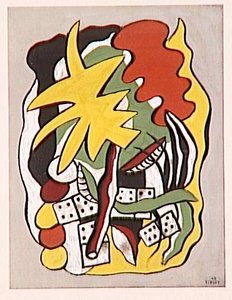
Learning to read
Giclées et impressions d'art
Format de la reproduction
-


Prix total
$ 64
Description de la pièce
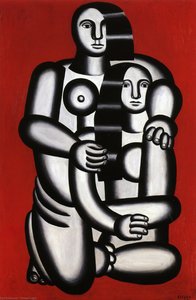
The Geometry of Grace: Exploring Léger's Vision
To stand before a work by Fernand Léger is to encounter a dialogue between the organic and the mechanical, a conversation that defines much of early 20th-century modernism. This piece, dating from 1923, captures the artist at a fascinating crossroads in his career—a moment where the raw energy of industrialization met the enduring poetry of human form. Léger was never content to simply depict; he sought to analyze and reconstruct reality through the lens of pure form. Here, that intellectual rigor is softened by an almost pastoral tenderness, inviting the viewer into a space that feels both meticulously constructed and wonderfully spontaneous.
Subject Matter and Compositional Harmony
The central focus remains undeniably the woman, rendered with Léger’s characteristic fascination for the body as a series of interlocking, cylindrical, and geometric volumes. She is portrayed holding a delicate bouquet of flowers, an act that speaks to tradition and natural beauty. Yet, even these soft elements are framed by his signature graphic sensibility. Scattered throughout the composition are three distinct mushrooms—small, almost whimsical accents placed with deliberate care. These fungi, alongside the woman’s necklace, serve as visual anchors, breaking the flow of the main figure and adding an intriguing layer of symbolic depth. The interplay between the graceful curve of the woman's neck and the rigid placement of these natural objects creates a compelling tension that is utterly characteristic of Léger’s genius.
Technique and Historical Resonance
Executed in a stark, evocative black and white drawing style, the technique emphasizes line and silhouette over mere tonal gradation. This choice strips away the distraction of color, forcing the viewer to confront the underlying structure—the pure geometry beneath the surface appearance. In 1923, Léger was deeply immersed in the spirit of the machine age, yet this work suggests a counter-rhythm. It speaks to an era grappling with rapid societal change; the dynamism of the modern city juxtaposed against the timeless cycle represented by flowers and natural growth. The drawing itself feels like a blueprint for a new kind of vision, one that honors both the engine and the ephemeral bloom.
Symbolism and Emotional Echoes
What resonates most deeply with the collector or decorator is the piece's emotional ambiguity. Are these mushrooms symbols of hidden knowledge, as in folklore? Is the woman’s composure a reflection of inner strength amidst external chaos? Léger invites us to participate in the interpretation. The contrast between the soft femininity and the hard-edged composition suggests that true beauty—whether found in art, nature, or life itself—is always a synthesis: a perfect balance struck between the fluid and the fixed. Owning this reproduction is not merely acquiring an image; it is curating a conversation piece that speaks to the enduring tension between structure and spirit.
Œuvres similaires



Biographie de l'artiste
jeune vie et formation
fernand léger, peintre, sculpteur et cinéaste français, est né le 4 février 1881 à Argentan, Orne, en Normandie inférieure. Son père élevait du bétail, et léger a initialement été formé à l'architecture de 1897 à 1899. Il s’est ensuite installé à Paris en 1900, se débrouillant comme dessinateur architectural.développement artistique
Le travail précoce de léger a été influencé par l'impressionnisme, comme le montrent le jardin de ma mère (mon jardin) (1905). Après avoir fréquenté l'école des beaux-arts et l’académie Julian, il a commencé à travailler sérieusement comme peintre à 25 ans. Son style s'est développé en une forme personnelle de cubisme, que les critiques ont qualifié de "tubisme" pour son accent sur les formes cylindriques.cubisme et le groupe des Puteaux
En 1910, léger a exposé au Salon d’automne aux côtés de jean metzinger et henri le fauconnier. Il a rejoint le groupe des Puteaux, également connu sous le nom de section d’or (la section dorée), avec d'autres artistes tels que francis picabia et marcel duchamp.guerre et son influence sur le travail de léger
Les expériences de léger à la Première Guerre mondiale ont eu un impact significatif sur son œuvre. Pendant son séjour au front, il a produit des croquis d'artillerie, d'avions et de soldats. Sa peinture soldier avec un tuyau (1916) reflète cette période.œuvre ultérieure et héritage
L'œuvre post-guerre de léger, caractérisée par des formes machine-like élégantes, le lia à la tradition de la peinture figurative française. Ses paysages animés de 1921 ont présenté des figures et des animaux dans des formes harmonieuses et rationalisées.- voir les œuvres de fernand léger sur AllPaintingsStore
- en savoir plus sur fernand léger sur wikipedia
- découvrez le musée national fernand léger (france) avec AllPaintingsStore
- la femme assise (100 x 81 cm, tubisme)
- élément de machine (cubisme)
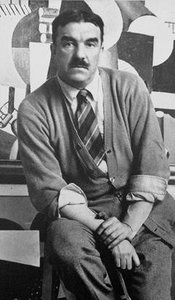
Fernand Léger
1881 - 1955 , France
L'essentiel de l'artiste
- Artistes Influents:
- Cézanne
- Impressionnisme
- Date De Décès: 1955
- Date De Naissance: 4 février 1881
- Influences Artistiques: ['Pop Art']
- Lieu De Naissance: Argentan, France
- Mouvement Artistique: Cubisme, Tubisme
- Nationalité: Française
- Nom Complet: Fernand Léger
- Oeuvres Notables:
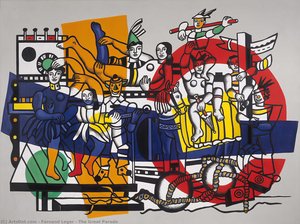
- La Grande Parade
- Machine Élément
- Femme assise
- Paysages animés
Articles connexes

Modern Geometry & Machine Age Beauty: A Collector's Guide to the Cubist Vision of Fernand Léger
Explore the profound geometric mastery of Fernand Léger. Discover how his 'Tubism' and Machine Age aesthetics redefined modern art, offering timeless inspiration for discerning collectors seeking to integrate Cubist dynamism into sophisticated contemporary interiors.

Theatrical Elegance: The Art Deco Genius of Erté and the Era of Fashion Illustration
Explore the theatrical elegance of Erté and the Art Deco era. Discover how his mastery of geometric line and fashion illustration can elevate luxury hospitality design through premium, hand-painted reproductions and bespoke architectural art solutions.