


 Aperçu en situation
 Partager
 Partager
 Détails
 Guide imprimable

 Télécharger
 Articles similaires
 Radiographie
 Voir le diaporama
 Statistiques
Mechanical Elements


 Afficher la suite
Reproduction à l'huile faite à la main
Huile sur toile peinte à la main, avec cadre et dimensions personnalisés, réalisée sur commande par nos artistes. ( Passer au format impression Passer au format image numérique)




P118B €10

P118H €10

P118W €10

P438Z €10

P508JH €12

P508YH €12

P805H €10

P805Z €10

P919BZ €10

P919G €10

P919XJ €10

P959ZH €10

P968JZ €12

W106C €8

W218G €10

W218JH €8

W218Y €10

W307PJ €10

W316G €10

W316PJ €8

W316Y €10

W398PJ €8

W4111J €10

W500HY €15

W500JH €15

W692G €12

W849H €8

W940BG €15

W953PJ €8




Choisissez parmi nos formats prédéfinis qui respectent les proportions originales de l’œuvre.

Saisissez la largeur et la hauteur souhaitées, pour s'adapter à votre cadre ou à votre mur. Cette œuvre est peinte à la main ; ainsi, pour un format de forme différente, l'artiste peut peindre un peu plus autour du tableau ou réduire légèrement les bords — c'est vous qui choisissez. Nous vous envoyons une maquette numérique pour approbation avant que la peinture ne commence. L'image présentée sur cette page ne reflète pas le résultat réel — seule la maquette le fait.
Après la commande, l’équipe AllPaintingsStore.com contactera le client par e-mail pour recueillir ses instructions et lui fournira une maquette d’aperçu
Livraison dans le monde entier () en 3 à 4 semaines au lieu des 5 semaines habituelles. (22 octobre). Aucun compromis sur la qualité.

Livraison express gratuite dans le monde entier

Toile de lin de haute qualité

Assurance transport complète

Garantie de remboursement des droits de douane

Garantie de fidélité des couleurs

Garantie de retour de 100 jours (uniquement en cas de défaut)

Garantie de remboursement à 100%

Tarifs dégressifs sur quantité
 L'option verre n'est disponible que pour les dimensions inférieures à 110 cm.

Mechanical Elements
Technique de reproduction
Format de la reproduction
-


Prix total final
€ 225
A Symphony of Steel and Form: Decoding Fernand Léger’s “Mechanical Elements”
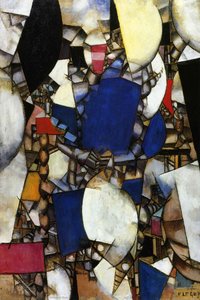
Fernand Léger's "Machine Elements," painted in 1920, isn’t merely a depiction of machinery; it’s an audacious declaration of artistic ambition—a bold experiment to reconcile the burgeoning fascination with industrial progress with the core tenets of Cubism. This monumental canvas embodies Léger’s conviction that abstraction could serve as a conduit for conveying not just visual information but also profound emotional resonance, mirroring the transformative anxieties and exhilarations of the era.- Subject Matter: The painting presents a striking juxtaposition between human anatomy—represented in simplified geometric forms—and colossal mechanical components. A solitary figure dominates the composition, encased within a stylized suit adorned with angular protrusions reminiscent of gears and pistons. This deliberate pairing underscores Léger’s preoccupation with the merging of organic and inorganic realms – a visual metaphor for humanity's evolving relationship with technology.
- Style: Léger firmly established himself as a pioneer of Cubism, albeit one who diverged from Picasso and Braque’s more fragmented explorations. He retained a grounding in observation, meticulously analyzing the contours of objects and translating them into interlocking planes that simultaneously reveal multiple perspectives. Unlike purely abstract compositions, “Machine Elements” maintains a palpable sense of spatial depth achieved through careful layering and tonal modulation.
Technique & Color Palette: Embracing Geometric Precision
Executed in oil on canvas, Léger’s technique is characterized by meticulous brushwork—precise strokes that contribute to the overall textural richness of the artwork. The dominant color scheme – blacks, grays, and reds – isn't chosen arbitrarily; it reflects the aesthetic sensibilities of the time, mirroring the industrial landscape and conveying a feeling of austere grandeur. Léger’s masterful use of tonal gradation creates dramatic contrasts, emphasizing the sculptural qualities of the mechanical forms while simultaneously hinting at an underlying emotional urgency.- Color Symbolism: The crimson hues punctuate the grayscale expanse, symbolizing both the heat and energy associated with machinery – a visual representation of technological advancement. Simultaneously, they evoke associations with primal forces, subtly reminding viewers of humanity’s origins amidst the natural world.
Historical Context & Artistic Significance
“Machine Elements” emerged during the height of the Industrial Revolution and its immediate aftermath—a period marked by unprecedented urbanization, technological innovation, and societal upheaval. Léger's artwork captures this zeitgeist perfectly, articulating the anxieties surrounding rapid industrialization alongside an optimistic belief in progress. It stands as a cornerstone of Cubist art history, demonstrating how abstraction could be harnessed to express complex ideas about human experience within a rapidly changing world.- Influence: Léger’s bold stylistic choices profoundly impacted subsequent generations of artists, paving the way for developments in Surrealism and Constructivism. His unwavering commitment to translating observation into geometric abstraction solidified Cubism's legacy as one of the most influential movements of the 20th century.
Emotional Impact & Artistic Legacy
Ultimately, “Machine Elements” transcends mere visual representation; it communicates a powerful emotional statement about humanity’s place in the cosmos. Léger's masterful manipulation of form and color compels viewers to confront questions regarding identity, transformation, and the relationship between human consciousness and technological advancement. It remains an enduring testament to Léger’s artistic vision—a captivating exploration of abstraction that continues to inspire awe and provoke contemplation.Questions et réponses
Quelle intensité lumineuse les couleurs de "Mechanical Elements" semblent-elles refléter ?
«Mechanical Elements» de Fernand Léger présente une luminance de Gentle Luminance. La luminance décrit la quantité de lumière que les couleurs semblent réfléchir.
Où puis-je télécharger «Mechanical Elements» de Fernand Léger ?
Un téléchargement est disponible pour « Mechanical Elements » : la page Télécharger de l'œuvre propose un téléchargement d'image numérique haute résolution.
Comment les couleurs de "Mechanical Elements" s'harmonisent-elles entre elles ?
Les couleurs de «Mechanical Elements» de Fernand Léger présentent une harmonie Discordant Palette. L'harmonie décrit la relation entre les couleurs.
Œuvres similaires




Biographie de l'artiste
jeune vie et formation
fernand léger, peintre, sculpteur et cinéaste français, est né le 4 février 1881 à Argentan, Orne, en Normandie inférieure. Son père élevait du bétail, et léger a initialement été formé à l'architecture de 1897 à 1899. Il s’est ensuite installé à Paris en 1900, se débrouillant comme dessinateur architectural.développement artistique
Le travail précoce de léger a été influencé par l'impressionnisme, comme le montrent le jardin de ma mère (mon jardin) (1905). Après avoir fréquenté l'école des beaux-arts et l’académie Julian, il a commencé à travailler sérieusement comme peintre à 25 ans. Son style s'est développé en une forme personnelle de cubisme, que les critiques ont qualifié de "tubisme" pour son accent sur les formes cylindriques.cubisme et le groupe des Puteaux
En 1910, léger a exposé au Salon d’automne aux côtés de jean metzinger et henri le fauconnier. Il a rejoint le groupe des Puteaux, également connu sous le nom de section d’or (la section dorée), avec d'autres artistes tels que francis picabia et marcel duchamp.guerre et son influence sur le travail de léger
Les expériences de léger à la Première Guerre mondiale ont eu un impact significatif sur son œuvre. Pendant son séjour au front, il a produit des croquis d'artillerie, d'avions et de soldats. Sa peinture soldier avec un tuyau (1916) reflète cette période.œuvre ultérieure et héritage
L'œuvre post-guerre de léger, caractérisée par des formes machine-like élégantes, le lia à la tradition de la peinture figurative française. Ses paysages animés de 1921 ont présenté des figures et des animaux dans des formes harmonieuses et rationalisées.- voir les œuvres de fernand léger sur AllPaintingsStore
- en savoir plus sur fernand léger sur wikipedia
- découvrez le musée national fernand léger (france) avec AllPaintingsStore
- la femme assise (100 x 81 cm, tubisme)
- élément de machine (cubisme)
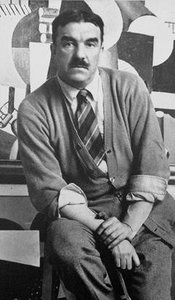
Fernand Léger
1881 - 1955 , France
En bref
- Artistes Influents:
- Cézanne
- Impressionnisme
- Date De Décès: 1955
- Date De Naissance: 4 février 1881
- Influences Artistiques: ['Pop Art']
- Lieu De Naissance: Argentan, France
- Mouvement Artistique: Cubisme, Tubisme
- Nationalité: Française
- Nom Complet: Fernand Léger
- Oeuvres Notables:
- La Grande Parade
- Machine Élément
- Femme assise
- Paysages animés
Articles connexes

Neo-Abstract Art Trend Forecast: High-Impact Geometric Compositions for Contemporary Commercial Interiors
Elevate commercial interiors with Neo-Abstract art. Discover how high-impact geometric compositions and custom oil reproductions provide scalable, sophisticated design solutions for hotels, restaurants, and corporate spaces. Expert procurement for large-scale hospitality projects.

Cubism Explained: A Professional Guide to Geometric Abstraction for Modern Interior Design
Master the impact of Cubism in modern design. Our expert guide explores geometric abstraction, Picasso's legacy, and professional solutions for sourcing high-quality Cubist reproductions for hotels, corporate spaces, and luxury interiors.

Modern Geometry & Machine Age Beauty: A Collector's Guide to the Cubist Vision of Fernand Léger
Explore the profound geometric mastery of Fernand Léger. Discover how his 'Tubism' and Machine Age aesthetics redefined modern art, offering timeless inspiration for discerning collectors seeking to integrate Cubist dynamism into sophisticated contemporary interiors.


