


 Partager
 Partager
 Détails
 Guide imprimable

 Télécharger
 Articles similaires
 Voir le diaporama
 Statistiques
The flower polychrome


 Afficher la suite
Giclées et impressions d'art
Impressions giclées ou sur toile de qualité musée, avec une production rapide et des finitions au choix. ( Acheter la peinture faite à la main Passer au format image numérique)




































Choisissez parmi nos formats prédéfinis qui respectent les proportions originales de l’œuvre.

Saisissez la largeur et la hauteur souhaitées pour qu'elles s'adaptent à votre cadre ou à votre mur. Une impression ne peut être que découpée, elle ne peut jamais être agrandie au-delà de l'image originale ; ainsi, un format de forme différente entraînera la perte d'une partie de l'image. Nous vous envoyons une maquette numérique pour approbation avant toute impression. L'image présentée sur cette page ne montre pas le recadrage réel — seule la maquette le permet.
Livraison dans le monde entier () en 2 semaines au lieu des 4/5 semaines habituelles. (24 octobre)

Livraison express gratuite dans le monde entier

Toile de lin de haute qualité

Assurance transport complète

Garantie de remboursement des droits de douane

Garantie de fidélité des couleurs

Garantie de retour de 100 jours (uniquement en cas de défaut)

Garantie de remboursement à 100%

Tarifs dégressifs sur quantité
 L'option verre n'est disponible que pour les dimensions inférieures à 110 cm.

The flower polychrome
Giclées et impressions d'art
Format de la reproduction
-


Prix total final
€ 56
A Symphony in Chrome: Exploring Fernand Léger’s “The Flower Polychrome”
Fernand Léger's "The Flower Polychrome," created in 1952, is more than just a sculpture; it’s a crystallized moment of artistic revolution. This captivating piece, rendered in a striking black and gold palette with subtle silver accents, embodies the core tenets of Léger’s groundbreaking approach to modern art – a fearless embrace of industrial forms and their inherent beauty. Born in Argentan, Normandy, in 1881, Léger's formative years spent observing the rhythms of rural life profoundly shaped his artistic sensibility. He rejected the prevailing trend toward pure abstraction, instead seeking to translate the dynamism of the machine age – the factories, the trains, the burgeoning urban landscape – into a visual language that was both powerfully abstract and deeply connected to the tangible world around him. This sculpture represents a culmination of this lifelong exploration, a testament to his ability to find harmony between the organic and the mechanical.
Form and Function: Léger’s Cubist Influence
“The Flower Polychrome” is firmly rooted in the principles of Cubism, particularly its emphasis on geometric forms and multiple perspectives. However, unlike Picasso or Braque, Léger didn't simply dissect objects; he actively sought to *reconstruct* them, presenting fragmented elements arranged in a dynamic, almost chaotic composition. The central star-like structure, radiating outwards with smaller, repeating shapes, mimics the visual impact of a complex gear mechanism – a deliberate homage to the industrial world that captivated Léger. The use of bold, contrasting colors further amplifies this effect, creating a sense of movement and energy. Notice how the gold tones shimmer and reflect light, mimicking the polished surfaces of machinery, while the black provides a grounding counterpoint, emphasizing the geometric precision.
Symbolism of Industry and Renewal
Beyond its purely formal qualities, “The Flower Polychrome” carries significant symbolic weight. Léger’s work frequently explored themes of industrial progress and renewal – ideas deeply relevant to post-World War II France. The flower motif, despite the sculpture's metallic construction, subtly references nature, suggesting a harmonious integration between humanity and technology. The repetition of forms can be interpreted as representing the mass production inherent in modern industry, yet the overall composition retains an element of elegance and beauty, hinting at the potential for progress to be both efficient and aesthetically pleasing. The piece speaks to a desire to rebuild and reimagine society after the devastation of war, embracing innovation while retaining a connection to fundamental values.
Technique and Materiality
The sculpture’s creation involved meticulous craftsmanship, likely utilizing techniques associated with metalworking. Léger's preference for polished surfaces – evident in “The Flower Polychrome” – was crucial to his aesthetic vision. The reflective qualities of the metal not only enhanced the visual impact but also contributed to the sense of dynamism and movement within the piece. The careful arrangement of the smaller stars and shapes demonstrates a sophisticated understanding of spatial relationships, creating a complex and visually engaging composition. This level of detail speaks to Léger’s commitment to translating his artistic ideas into tangible form with precision and skill.
- Artist: Fernand Léger
- Date: 1952
- Medium: Metal Sculpture (Black, Gold, Silver)
- Style: Cubism, Modern Art
- Dimensions: Unknown
A hand-painted reproduction of “The Flower Polychrome” offers a remarkable opportunity to bring this iconic work into your home or office. Its bold colors and dynamic composition will undoubtedly serve as a focal point, sparking conversation and reflecting the enduring power of Léger’s artistic vision.
Questions et réponses
L'œuvre « The flower polychrome » est-elle disponible en tirage d'art ?
« The flower polychrome » est disponible en tant que une impression d'art sur toile de coton ou sur papier canvas d'archive. Les commandes s'effectuent sur sa page Impression d'art fine, dans le format de votre choix.
Qu'est-ce qui explique le statut du droit d'auteur de «The flower polychrome» de Fernand Léger ?
«The flower polychrome» de Fernand Léger est dans le dans le domaine public - ses droits d'auteur ont expiré. La durée du droit d'auteur court à partir du décès de l'artiste, survenu en 1955.
«The flower polychrome» est-il une œuvre célèbre du Cubism ?
«The flower polychrome» de Fernand Léger est classé comme Recognized et appartient au mouvement Cubism.
Œuvres similaires


Biographie de l'artiste
jeune vie et formation
fernand léger, peintre, sculpteur et cinéaste français, est né le 4 février 1881 à Argentan, Orne, en Normandie inférieure. Son père élevait du bétail, et léger a initialement été formé à l'architecture de 1897 à 1899. Il s’est ensuite installé à Paris en 1900, se débrouillant comme dessinateur architectural.développement artistique
Le travail précoce de léger a été influencé par l'impressionnisme, comme le montrent le jardin de ma mère (mon jardin) (1905). Après avoir fréquenté l'école des beaux-arts et l’académie Julian, il a commencé à travailler sérieusement comme peintre à 25 ans. Son style s'est développé en une forme personnelle de cubisme, que les critiques ont qualifié de "tubisme" pour son accent sur les formes cylindriques.cubisme et le groupe des Puteaux
En 1910, léger a exposé au Salon d’automne aux côtés de jean metzinger et henri le fauconnier. Il a rejoint le groupe des Puteaux, également connu sous le nom de section d’or (la section dorée), avec d'autres artistes tels que francis picabia et marcel duchamp.guerre et son influence sur le travail de léger
Les expériences de léger à la Première Guerre mondiale ont eu un impact significatif sur son œuvre. Pendant son séjour au front, il a produit des croquis d'artillerie, d'avions et de soldats. Sa peinture soldier avec un tuyau (1916) reflète cette période.œuvre ultérieure et héritage
L'œuvre post-guerre de léger, caractérisée par des formes machine-like élégantes, le lia à la tradition de la peinture figurative française. Ses paysages animés de 1921 ont présenté des figures et des animaux dans des formes harmonieuses et rationalisées.- voir les œuvres de fernand léger sur AllPaintingsStore
- en savoir plus sur fernand léger sur wikipedia
- découvrez le musée national fernand léger (france) avec AllPaintingsStore
- la femme assise (100 x 81 cm, tubisme)
- élément de machine (cubisme)
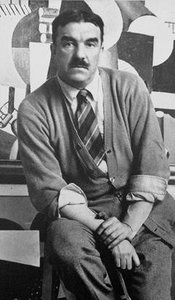
Fernand Léger
1881 - 1955 , France
En bref
- Artistes Influents:
- Cézanne
- Impressionnisme
- Date De Décès: 1955
- Date De Naissance: 4 février 1881
- Influences Artistiques: ['Pop Art']
- Lieu De Naissance: Argentan, France
- Mouvement Artistique: Cubisme, Tubisme
- Nationalité: Française
- Nom Complet: Fernand Léger
- Oeuvres Notables:
- La Grande Parade
- Machine Élément
- Femme assise
- Paysages animés
Articles connexes

Metal Art for Commercial Spaces: A Procurement Guide to Durable & Modern Large-Scale Decor Solutions
Expert procurement guide for hotel designers and managers. Discover durable, large-scale metal art solutions for commercial spaces. Learn about material selection, maintenance, and efficient bulk ordering for high-traffic hospitality and corporate interiors.


