


 Aperçu en situation
 Partager
 Partager
 Détails
 Guide
Guide

 Télécharger
 Articles similaires
 Radiographie
 Voir le diaporama
 Statistiques
The polychrome Fleur


 Afficher la suite
Giclées et impressions d'art
Impressions giclées ou sur toile de qualité musée, avec une production rapide et des finitions au choix. ( Acheter la peinture faite à la main Passer au format image numérique)




P118B $10

P118H $10

P118W $10

P438Z $10

P508JH $12

P508YH $12

P805H $10

P805Z $10

P919BZ $10

P919G $10

P919XJ $10

P959ZH $10

P968JZ $12

W106C $8

W218G $10

W218JH $8

W218Y $10

W307PJ $10

W316G $10

W316PJ $8

W316Y $10

W398PJ $8

W4111J $10

W500HY $15

W500JH $15

W692G $12

W849H $8

W940BG $15

W953PJ $8




Choisissez parmi nos formats prédéfinis qui respectent les proportions originales de l’œuvre.

Vous pouvez saisir vos propres dimensions pour vous adapter à un cadre ou à un espace spécifique. Si la taille sélectionnée ne correspond pas aux proportions de l'image originale, nous recadrerons l'œuvre ou étendrons l'image avec une bordure en miroir ou une couleur unie. Une maquette numérique vous sera envoyée pour approbation avant le début de la production.
Veuillez noter que l'aperçu à l'écran ne reflète pas le recadrage ou l'extension réelle. Seule la maquette montrera avec précision la composition finale.
Bien que des tailles personnalisées soient disponibles, nous vous recommandons de choisir une dimension dans la liste prédéfinie afin de préserver les proportions originales.
Livraison dans le monde entier () en 2 semaines au lieu des 4/5 semaines habituelles. (24 septembre)

Livraison express gratuite dans le monde entier

Toile de lin de haute qualité

Assurance transport complète

Garantie de remboursement des droits de douane

Garantie de fidélité des couleurs

Garantie de retour de 100 jours (uniquement en cas de défaut)

Garantie de remboursement à 100%

Tarifs dégressifs sur quantité
 L'option verre n'est disponible que pour les dimensions inférieures à 110 cm.

The polychrome Fleur
Giclées et impressions d'art
Format de la reproduction
-


Prix total final
$ 64
A Symphony of Color and Form: The Vibrancy of Léger’s Vision
In the realm of modern abstraction, few works capture the rhythmic pulse of the twentieth century as evocatively as Fernand Léger's "The Polychrome Fleur." Painted in 1936, this masterpiece serves as a breathtaking cornerstone of the Orphism movement, a period where art sought to transcend mere representation through the pure, emotive power of color. To gaze upon this canvas is to enter a world where the boundaries between organic life and industrial dynamism dissolve into a singular, harmonious dance. The composition does not merely sit static upon the surface; rather, it unfolds with an energetic grace, inviting the viewer into a sensory experience that feels both deeply primal and strikingly modern.
The artwork is a masterful orchestration of bold, intersecting curvilinear shapes. Dominating the visual field are primary strikes of yellow, blue, and red—colors that vibrate against one another to create a sense of perpetual motion. Within this kaleidoscopic arrangement, Léger weaves unexpected motifs: a bright yellow bird, a sleek blue fish, and a striking red flower emerge from the geometric complexity. This interplay suggests an organic unfolding, as if the very essence of nature were being reassembled through a mechanical, yet poetic, lens. The inclusion of a mysterious, eye-like motif on the left side adds a layer of profound psychological depth, prompting us to contemplate not just what we see, but the very nature of perception and consciousness itself.
Technique and the Spirit of the Machine Age
Léger’s approach to "The Polychrome Fleur" is as innovative as the era it represents. Eschewing traditional brushwork for a more structural method, he employed a sophisticated collage-like technique, assembling fragments of painted canvas to construct an illusion of depth and tactile movement. This method was a brilliant reflection of the burgeoning industrial landscape of the 1930s; just as factories assembled complex machines from individual parts, Léger assembled his visual universe from distinct, rhythmic components. This "tubism" and structural approach allowed him to celebrate the beauty of the machine age—its precision, its strength, and its relentless energy—without losing the soulful connection to the natural world.
For the discerning collector or interior designer, this piece offers an unparalleled opportunity to introduce a sense of structured vitality into a space. The painting’s ability to balance heavy, geometric forms with light, airy colors makes it a versatile centerpiece. It possesses the rare capability to anchor a room with its bold presence while simultaneously uplifting the atmosphere with its bright, optimistic palette. Whether placed in a contemporary gallery setting or as a focal point in a sophisticated residential lounge, "The Polychrome Fleur" acts as a window into a period of immense cultural transformation.
A Legacy of Modernity and Emotion
To understand this work is to understand the journey of Fernand Léger himself. Born amidst the pastoral landscapes of Normandy, his early life was rooted in the rhythms of agriculture, yet his heart was captured by the metallic pulse of Paris. This tension between the rural past and the industrial future is precisely what gives "The Polychrome Fleur" its enduring emotional resonance. It is a work that reconciles the two: it uses the language of abstraction to honor the beauty of life's most fundamental forms.
Owning a high-quality reproduction of this masterpiece is more than an aesthetic choice; it is an embrace of art history’s most transformative era. The painting remains a testament to Léger’s belief that art should be as dynamic and multifaceted as modern life itself. It continues to inspire awe, challenging us to find the beauty in the intersection of the organic and the engineered, and reminding us that even in a world of complex machinery, there is always room for the blooming splendor of a polychrome flower.
Œuvres similaires


Biographie de l'artiste
jeune vie et formation
fernand léger, peintre, sculpteur et cinéaste français, est né le 4 février 1881 à Argentan, Orne, en Normandie inférieure. Son père élevait du bétail, et léger a initialement été formé à l'architecture de 1897 à 1899. Il s’est ensuite installé à Paris en 1900, se débrouillant comme dessinateur architectural.développement artistique
Le travail précoce de léger a été influencé par l'impressionnisme, comme le montrent le jardin de ma mère (mon jardin) (1905). Après avoir fréquenté l'école des beaux-arts et l’académie Julian, il a commencé à travailler sérieusement comme peintre à 25 ans. Son style s'est développé en une forme personnelle de cubisme, que les critiques ont qualifié de "tubisme" pour son accent sur les formes cylindriques.cubisme et le groupe des Puteaux
En 1910, léger a exposé au Salon d’automne aux côtés de jean metzinger et henri le fauconnier. Il a rejoint le groupe des Puteaux, également connu sous le nom de section d’or (la section dorée), avec d'autres artistes tels que francis picabia et marcel duchamp.guerre et son influence sur le travail de léger
Les expériences de léger à la Première Guerre mondiale ont eu un impact significatif sur son œuvre. Pendant son séjour au front, il a produit des croquis d'artillerie, d'avions et de soldats. Sa peinture soldier avec un tuyau (1916) reflète cette période.œuvre ultérieure et héritage
L'œuvre post-guerre de léger, caractérisée par des formes machine-like élégantes, le lia à la tradition de la peinture figurative française. Ses paysages animés de 1921 ont présenté des figures et des animaux dans des formes harmonieuses et rationalisées.- voir les œuvres de fernand léger sur AllPaintingsStore
- en savoir plus sur fernand léger sur wikipedia
- découvrez le musée national fernand léger (france) avec AllPaintingsStore
- la femme assise (100 x 81 cm, tubisme)
- élément de machine (cubisme)
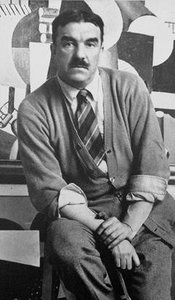
Fernand Léger
1881 - 1955 , France
En bref
- Artistes Influents:
- Cézanne
- Impressionnisme
- Date De Décès: 1955
- Date De Naissance: 4 février 1881
- Influences Artistiques: ['Pop Art']
- Lieu De Naissance: Argentan, France
- Mouvement Artistique: Cubisme, Tubisme
- Nationalité: Française
- Nom Complet: Fernand Léger
- Oeuvres Notables:
- La Grande Parade
- Machine Élément
- Femme assise
- Paysages animés
Articles similaires

AllPaintingsStore.com F.A.Q.: Elevate Your Decor with Premium Textured Giclée Prints
Discover the distinction of AllPaintingsStore.com premium textured Giclée prints. Expertly crafted with archival 12-color pigments and museum-grade substrates, our prints offer unparalleled vividness for the discerning collector seeking luxury, durability, and timeless elegance.


