


 Aperçu en situation
 Partager
 Partager
 Détails
 Guide imprimable

 Télécharger
 Articles similaires
 Radiographie
 Voir le diaporama
 Statistiques
untitled (1843)

 Afficher la suite
Giclées et impressions d'art
Impressions giclées ou sur toile de qualité musée, avec une production rapide et des finitions au choix. ( Acheter la peinture faite à la main Passer au format image numérique)




P118B $10

P118H $10

P118W $10

P438Z $10

P508JH $12

P508YH $12

P805H $10

P805Z $10

P919BZ $10

P919G $10

P919XJ $10

P959ZH $10

P968JZ $12

W106C $8

W218G $10

W218JH $8

W218Y $10

W307PJ $10

W316G $10

W316PJ $8

W316Y $10

W398PJ $8

W4111J $10

W500HY $15

W500JH $15

W692G $12

W849H $8

W940BG $15

W953PJ $8




Choisissez parmi nos formats prédéfinis qui respectent les proportions originales de l’œuvre.

Vous pouvez saisir vos propres dimensions pour vous adapter à un cadre ou à un espace spécifique. Si la taille sélectionnée ne correspond pas aux proportions de l'image originale, nous recadrerons l'œuvre ou étendrons l'image avec une bordure en miroir ou une couleur unie. Une maquette numérique vous sera envoyée pour approbation avant le début de la production.
Veuillez noter que l'aperçu à l'écran ne reflète pas le recadrage ou l'extension réelle. Seule la maquette montrera avec précision la composition finale.
Bien que des tailles personnalisées soient disponibles, nous vous recommandons de choisir une dimension dans la liste prédéfinie afin de préserver les proportions originales.
Livraison dans le monde entier () en 2 semaines au lieu des 4/5 semaines habituelles. (26 septembre)

Livraison express gratuite dans le monde entier

Toile de lin de haute qualité

Assurance transport complète

Garantie de remboursement des droits de douane

Garantie de fidélité des couleurs

Garantie de retour de 100 jours (uniquement en cas de défaut)

Garantie de remboursement à 100%

Tarifs dégressifs sur quantité
 L'option verre n'est disponible que pour les dimensions inférieures à 110 cm.

untitled (1843)
Giclées et impressions d'art
Format de la reproduction
-


Prix total final
$ 64
Unveiling Introspection: A Study in Black and White by Fernand Léger
Fernand Léger’s “untitled (1843),” a poignant monochrome depiction of a woman with her infant, transcends mere portraiture; it's a carefully constructed meditation on vulnerability, motherhood, and the burgeoning anxieties of modernity. The painting, executed in stark black and white, immediately draws the viewer into its quiet drama, utilizing a bold red background to amplify the emotional weight of the scene. Léger, a key figure in the Cubist movement, sought not simply to represent reality but to *interpret* it through fractured forms and geometric structures – a technique powerfully evident here, albeit subtly restrained compared to his more overtly abstract works.
- Subject Matter: The central focus is on a woman seated on the ground, cradling a baby. This instantly evokes archetypal themes of maternal care, innocence, and perhaps even sorrow.
- Style & Technique: Léger’s approach blends elements of Cubism with a sensitivity to tonal values. Notice how the figure's form is broken down into angular planes, echoing his broader exploration of industrial forms, yet softened by the delicate rendering of the baby’s features and the woman’s expression. The use of black and white intensifies the emotional impact, stripping away any potential distraction from the subject’s raw emotion.
- Historical Context: Created in 1843, this work predates Léger's full embrace of Cubism but demonstrates his early interest in representing the dynamism of the modern world. The painting reflects a period of significant social and technological change – the rise of industry, urbanization, and evolving family structures – themes that would become central to Léger’s artistic concerns.
Decoding Symbolism: Form and Emotion
The red background is not merely an aesthetic choice; it acts as a potent symbol, likely representing passion, danger, or perhaps the inherent struggles of motherhood. The woman's posture – slumped slightly, hand to her face – speaks volumes about her emotional state. It’s a gesture of profound vulnerability and introspection, inviting the viewer to contemplate her inner world. The baby, held close, represents not just physical offspring but also the future, innocence, and the continuation of life—a theme frequently explored in art throughout history.
- Geometric Fragmentation: Léger’s signature use of geometric forms is present here, subtly shaping the woman's body and suggesting a sense of disruption or alienation. This reflects his broader engagement with the impact of industrialization on human form.
- The Color Absence: The deliberate absence of color amplifies the painting’s emotional intensity and forces the viewer to focus solely on the interplay of light, shadow, and texture. It creates a timeless quality, elevating the scene beyond a specific moment in time.
Léger's Vision: A Bridge Between Tradition and Modernity
Born Joseph Fernand Henri Léger in 1881 in Argentan, Normandy, Léger’s artistic journey was profoundly shaped by his rural upbringing. This experience instilled a deep appreciation for the physicality of labor and the rhythms of nature – elements he would later translate into his exploration of industrial forms. “untitled (1843)” exemplifies this synthesis: it's a deeply personal work rooted in observation, yet infused with Léger’s forward-thinking vision. He sought to capture not just what things *looked* like but how they *felt*, anticipating the abstract tendencies that would dominate much of 20th-century art.
Note: This reproduction is meticulously crafted using high-resolution digital printing on premium archival canvas, ensuring exceptional color accuracy and longevity. It’s a perfect addition to any collection, offering a window into the artistic genius of Fernand Léger and his profound exploration of human emotion within the context of a rapidly changing world.Œuvres similaires


Biographie de l'artiste
jeune vie et formation
fernand léger, peintre, sculpteur et cinéaste français, est né le 4 février 1881 à Argentan, Orne, en Normandie inférieure. Son père élevait du bétail, et léger a initialement été formé à l'architecture de 1897 à 1899. Il s’est ensuite installé à Paris en 1900, se débrouillant comme dessinateur architectural.développement artistique
Le travail précoce de léger a été influencé par l'impressionnisme, comme le montrent le jardin de ma mère (mon jardin) (1905). Après avoir fréquenté l'école des beaux-arts et l’académie Julian, il a commencé à travailler sérieusement comme peintre à 25 ans. Son style s'est développé en une forme personnelle de cubisme, que les critiques ont qualifié de "tubisme" pour son accent sur les formes cylindriques.cubisme et le groupe des Puteaux
En 1910, léger a exposé au Salon d’automne aux côtés de jean metzinger et henri le fauconnier. Il a rejoint le groupe des Puteaux, également connu sous le nom de section d’or (la section dorée), avec d'autres artistes tels que francis picabia et marcel duchamp.guerre et son influence sur le travail de léger
Les expériences de léger à la Première Guerre mondiale ont eu un impact significatif sur son œuvre. Pendant son séjour au front, il a produit des croquis d'artillerie, d'avions et de soldats. Sa peinture soldier avec un tuyau (1916) reflète cette période.œuvre ultérieure et héritage
L'œuvre post-guerre de léger, caractérisée par des formes machine-like élégantes, le lia à la tradition de la peinture figurative française. Ses paysages animés de 1921 ont présenté des figures et des animaux dans des formes harmonieuses et rationalisées.- voir les œuvres de fernand léger sur AllPaintingsStore
- en savoir plus sur fernand léger sur wikipedia
- découvrez le musée national fernand léger (france) avec AllPaintingsStore
- la femme assise (100 x 81 cm, tubisme)
- élément de machine (cubisme)
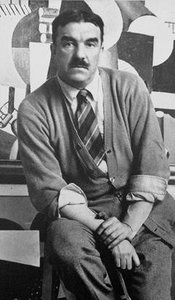
Fernand Léger
1881 - 1955 , France
En bref
- Artistes Influents:
- Cézanne
- Impressionnisme
- Date De Décès: 1955
- Date De Naissance: 4 février 1881
- Influences Artistiques: ['Pop Art']
- Lieu De Naissance: Argentan, France
- Mouvement Artistique: Cubisme, Tubisme
- Nationalité: Française
- Nom Complet: Fernand Léger
- Oeuvres Notables:
- La Grande Parade
- Machine Élément
- Femme assise
- Paysages animés
Articles similaires

Contemporary Abstract Art: A Professional Buyer's Guide to Large-Scale Modern Decor for Hospitality and Corporate Interiors
A professional procurement guide for hotel designers and architects. Discover how to integrate large-scale contemporary abstract art into hospitality projects through high-volume, custom-sized oil reproductions, multi-panel layouts, and reliable global logistics.


