Aperçu en situation
 Envoyer
 Partager
 Détails de l'œuvre

 Télécharger
 Articles similaires
 Radiographie
 Diaporama
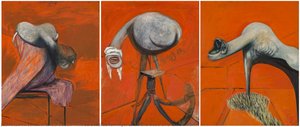
Triptych 1


 Lire la suite
Giclées et impressions d'art
Impressions giclées ou sur toile de qualité musée, avec une production rapide et des finitions au choix. ( Commander la reproduction peinte à la main Télécharger l'image haute résolution)




































Choisissez parmi nos formats prédéfinis qui respectent les proportions originales de l’œuvre.

Vous pouvez saisir vos propres dimensions pour vous adapter à un cadre ou à un espace spécifique. Si la taille sélectionnée ne correspond pas aux proportions de l'image originale, nous recadrerons l'œuvre ou étendrons l'image avec une bordure en miroir ou une couleur unie. Une maquette numérique vous sera envoyée pour approbation avant le début de la production.
Veuillez noter que l'aperçu à l'écran ne reflète pas le recadrage ou l'extension réelle. Seule la maquette montrera avec précision la composition finale.
Bien que des tailles personnalisées soient disponibles, nous vous recommandons de choisir une dimension dans la liste prédéfinie afin de préserver les proportions originales.
Livraison dans le monde entier () en 2 semaines au lieu des 4/5 semaines habituelles. (19 août)

Livraison express gratuite dans le monde entier

Toile de lin de qualité supérieure

Assurance transport complète

Garantie de remboursement des droits de douane

Garantie de fidélité des couleurs

Politique de retour de 60 jours (uniquement en cas de défaut)

Garantie de remboursement à 100%

Offre de tarifs dégressifs
 L'option verre n'est disponible que pour les dimensions inférieures à 110 cm.

Triptych 1
Giclées et impressions d'art
Format de la reproduction
-


Prix total
$ 64
Description de la pièce
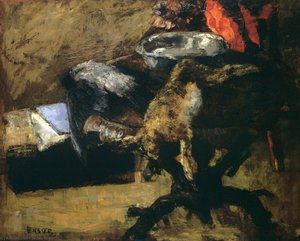
A Descent Into Darkness: The Haunting Resonance of Triptych 1
To encounter Francis Bacon’s Triptych 1 is to step into a realm where the boundary between reality and nightmare begins to dissolve. Completed in 1947, this monumental work serves as a profound psychological landscape, capturing the heavy, suffocating atmosphere of post-war Britain. At first glance, the viewer is met with an unsettling stillness, a deceptive calm that masks a deep well of existential dread. The painting does not merely depict a scene; it orchestrates a visceral experience of human vulnerability. Through his masterful command of form and shadow, Bacon invites us to witness a moment of profound isolation, making this piece an essential cornerstone for any collection focused on the raw power of 20th-century expressionism.
The composition is a masterclass in claustrophobic tension. The central panel presents a meticulously rendered yet deeply disturbing workspace—a desk cluttered with objects that seem to pulse with their own dark energy. A skull, a violin, and crumpled papers are not merely incidental details; they are potent symbols of mortality, the fragmentation of thought, and the agony of artistic struggle. By compressing the figure within this cramped environment, Bacon mirrors the internal entrapment of the human psyche grappling with trauma. The arrangement forces the eye to wander through a labyrinth of shadows, where every object carries the weight of a silent scream, creating a narrative of decay and psychological disintegration that is as captivating as it is unsettling.
Technique and the Language of Distortion
Bacon’s technical prowess lies in his ability to blend brutal realism with surrealist distortion. In Triptych 1, he employs a technique that feels both observed and imagined, layering paint with a textured intensity that gives the canvas a palpable, fleshy quality. He eschews traditional, comforting perspectives in favor of flattened planes and blurred boundaries, a choice that height even greater disorientation for the viewer. The lighting is dramatic and uneven, casting deep, impenetrable shadows that swallow parts of the composition, leaving only fragments of the subject visible to the light. This interplay of light and dark creates a sense of movement within the stillness, as if the figures are caught in a state of permanent, agonizing transition.
For the discerning collector or interior designer, this work offers an unparalleled emotional depth. The color palette—dominated by somber blacks, earthy browns, and muted, bruised reds—provides a sophisticated yet intense focal point for a space. It is a piece that demands contemplation, offering a rich tapestry of textures and tones that can anchor a room with its gravity and historical significance. Whether viewed as a study in the human condition or as a triumph of post-war modernism, Triptych 1 remains an enduring icon of art history, promising to provoke thought and inspire awe in all who behold its haunting beauty.
Œuvres similaires



Biographie de l'artiste
**jeunesse et carrière**
francis bacon, peintre figurative irlandais né en Grande-Bretagne, est né le 28 octobre 1909 à Dublin, en Irlande. Sa jeunesse a été marquée par une série de déménagements en raison de la recherche de sa famille d'un climat approprié pour la santé de sa mère. Cette enfance itinérante influencera plus tard l'approche de Bacon à l'art.**style artistique et thèmes**
Bacon est réputé pour ses images audacieuses, émotionnellement chargées et souvent grotesques. Ses figures abstraites sont généralement isolées dans des espaces géométriques, comme des cages, sur fond de fonds plats et sans intérêt. Ce style unique a été à la fois salué et critiqué par les critiques d'art.- portrait of isabel rawsthorne standing in a street in soho, œuvre emblématique présentant la capacité de Bacon à capturer l'essence de ses sujets dans un environnement apparemment abstrait.
- number vii from eight studies for a portrait, illustrant l'exploration de la forme humaine par l'artiste à travers une série d'études.
**influences et héritage**
Le travail de Bacon a été influencé par diverses sources, notamment les autoportraits de maria helena vieira da silva et l'expressionnisme abstrait de piet mondrian. Son héritage continue d'inspirer de nouvelles générations d'artistes, son style audacieux et sans compromis constituant une pierre angulaire de l'art moderne.**expositions et collections notables**
- the museum fine art society (United Kingdom), qui a présenté les œuvres de Bacon aux côtés d'autres artistes britanniques de renom. - nationalgalerie (Norway), présentant une collection exhaustive d'art européen, y compris des œuvres de Bacon. **Œuvres clés et collections:** - francis bacon: portrait of isabel rawsthorne standing in a street in soho - francis bacon: number vii from eight studies for a portrait **Musées et galeries d'art:** - the museum fine art society (United Kingdom) - nationalgalerie (Norway)**Conclusion**
La vie tumultueuse de Francis Bacon et son approche innovante de la peinture figurative ont laissé une marque indélébile sur le monde de l'art. Son héritage, caractérisé par des images audacieuses et émotionnellement chargées, continue d'influencer les artistes contemporains et de susciter la curiosité du public. **Recommandations de lecture:** - biographie de francis bacon - wikipedia: francis bacon (artiste)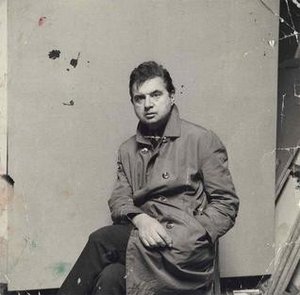
Francis Bacon
1909 - 1992 , Irlande
L'essentiel de l'artiste
- Artistes Influents:
- Pablo Picasso
- Egon Schiele
- Maria Helena Vieira da Silva
- Diego Velázquez
- Date De Décès: 1992
- Date De Naissance: 28 octobre 1909
- Influences Artistiques: ['Expressionnisme post-moderne']
- Lieu De Naissance: Dublin, Irlande
- Mouvement Artistique: Expressionnisme figuratif
- Nationalité: Irlandais-Britannique
- Nom Complet: Francis Bacon
- Oeuvres Notables:
- Trois études pour figures
- Portrait d'Isabel Rawsthorne
- Étude après Velázquez
- George Dyer dans un miroir
Articles connexes
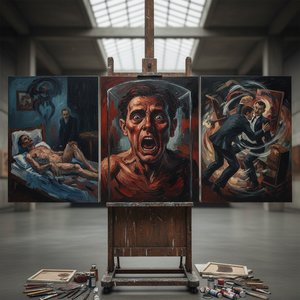
Francis Bacon : Les 25 Œuvres Maîtresses d'un Art Viscéral | AllPaintingsStore
Plongez dans l'univers viscéral de Francis Bacon à travers ses 25 œuvres les plus emblématiques. Découvrez l'histoire, la technique et l'émotion derrière chaque chef-d'œuvre expressionniste. Retrouvez des reproductions de qualité musée pour sublimer votre intérieur sur AllPaintingsStore.com

L'Angoisse Existentielle de Francis Bacon : Traumatisme, Forme et la Condition de l'Après-Guerre
Explorez l'œuvre poignante de Francis Bacon : traumatisme, expressionnisme et la condition humaine après-guerre. Analyse approfondie, influences artistiques et héritage durable. Découvrez son univers unique.

The Enduring Legacy of Oil on Canvas: Technique, History & Aesthetic Impact
Explore the rich history & techniques of oil painting – from Renaissance masters to Impressionism. Discover pigments, layering methods, and why this timeless medium endures. Expert insights for artists & art enthusiasts.

L'Huile sur Toile : Exploration Historique et Technique d'un Médium Artistique Intemporel
Explorez l'histoire fascinante de la peinture à l'huile, des techniques ancestrales aux maîtres flamands comme Van Eyck. Découvrez les secrets des pigments, liants et glacis pour comprendre cet art intemporel.

The Enduring Power of Painting: A Historical & Contemporary Exploration of Form and Emotion
Explore the rich history & enduring techniques of oil painting with AllPaintingsStore. Discover masterpieces, learn about art collecting, and find authentic handmade reproductions crafted by skilled artists.