


 Aperçu en situation
 Envoyer
 Partager
 Détails de l'œuvre

 Télécharger
 Articles similaires
 Radiographie
 Diaporama
Laughing Boy


 Lire la suite
Giclées et impressions d'art
Impressions giclées ou sur toile de qualité musée, avec une production rapide et des finitions au choix. ( Commander la reproduction peinte à la main Télécharger l'image haute résolution)




P118B $10

P118H $10

P118W $10

P438Z $10

P508JH $12

P508YH $12

P805H $10

P805Z $10

P919BZ $10

P919G $10

P919XJ $10

P959ZH $10

P968JZ $12

W106C $8

W218G $10

W218JH $8

W218Y $10

W307PJ $10

W316G $10

W316PJ $8

W316Y $10

W398PJ $8

W4111J $10

W500HY $15

W500JH $15

W692G $12

W849H $8

W940BG $15

W953PJ $8




Choisissez parmi nos formats prédéfinis qui respectent les proportions originales de l’œuvre.

Vous pouvez saisir vos propres dimensions pour vous adapter à un cadre ou à un espace spécifique. Si la taille sélectionnée ne correspond pas aux proportions de l'image originale, nous recadrerons l'œuvre ou étendrons l'image avec une bordure en miroir ou une couleur unie. Une maquette numérique vous sera envoyée pour approbation avant le début de la production.
Veuillez noter que l'aperçu à l'écran ne reflète pas le recadrage ou l'extension réelle. Seule la maquette montrera avec précision la composition finale.
Bien que des tailles personnalisées soient disponibles, nous vous recommandons de choisir une dimension dans la liste prédéfinie afin de préserver les proportions originales.
Livraison dans le monde entier () en 2 semaines au lieu des 4/5 semaines habituelles. (19 août)

Livraison express gratuite dans le monde entier

Toile de lin de qualité supérieure

Assurance transport complète

Garantie de remboursement des droits de douane

Garantie de fidélité des couleurs

Politique de retour de 60 jours (uniquement en cas de défaut)

Garantie de remboursement à 100%

Offre de tarifs dégressifs
 L'option verre n'est disponible que pour les dimensions inférieures à 110 cm.

Laughing Boy
Giclées et impressions d'art
Format de la reproduction
-


Prix total
$ 64
Description de la pièce
A Moment of Unburdened Joy: Frans Hals’ “Laughing Boy”
Frans Hals' "Laughing Boy," painted around 1625, isn’t merely a portrait; it’s a distillation of youthful exuberance captured with an unprecedented immediacy. This small, circular canvas—a ‘tondo,’ as these intimate portraits are known—immediately draws the viewer in with its subject’s open-mouthed grin and wide, innocent eyes. It's a scene brimming with life, a fleeting moment frozen in time that speaks volumes about the spirit of childhood and the artist’s remarkable ability to convey personality through subtle brushstrokes.
The painting exists within the context of Hals’ innovative approach to portraiture during the Dutch Golden Age. He deliberately moved away from the stiff formality prevalent at the time, favoring a looser, more spontaneous style that prioritized capturing the subject's essence rather than adhering to rigid conventions. Hals was fascinated by the ‘tronie,’ a genre of informal character studies—often depicting young boys or girls—that allowed him to explore expressive gestures and fleeting emotions. “Laughing Boy” exemplifies this approach perfectly; it’s not a meticulously posed likeness, but a vibrant portrayal of a boy lost in his own world, radiating an infectious joy.
The Dance of the Brush: Technique and Style
Hals' distinctive technique is immediately apparent upon closer inspection. His brushwork isn’t blended or smoothed; instead, it’s visible, dynamic, and full of energy. He employed a ‘wet-in-wet’ method—applying paint while the previous layer was still wet—which creates soft edges and luminous effects. This technique contributes significantly to the painting's sense of immediacy and spontaneity. Notice how the brushstrokes follow the contours of the boy’s face, capturing the play of light and shadow with remarkable sensitivity.
The color palette is restrained yet effective. The predominantly white shirt provides a bright backdrop for the boy’s youthful features, while subtle variations in tone suggest the texture of his skin and clothing. Hals masterfully uses highlights to draw attention to the boy's face, emphasizing his open mouth and sparkling eyes – the very source of the painting’s captivating charm. The lack of background detail further focuses our attention on the subject, intensifying the feeling of intimacy.
Symbolism and Interpretation
While seemingly simple, “Laughing Boy” is rich in symbolic potential. The boy's laughter isn’t just a display of happiness; it represents freedom, innocence, and a carefree spirit—qualities highly valued during the turbulent times of the Dutch Republic. Some art historians have suggested that the soap bubble floating above his head – a detail often overlooked – symbolizes fleeting beauty and the ephemeral nature of childhood joy. It's a visual reminder that these moments are precious and should be cherished.
The circular format itself is significant. Tondos were popular in Hals’ time, offering a sense of intimacy and immediacy. They also allowed him to experiment with composition and create a visually engaging portrait. The round shape mirrors the boy's face, further emphasizing his youthful appearance and creating a harmonious whole.
A Timeless Echo: Emotional Impact
"Laughing Boy" transcends its historical context and continues to resonate with viewers today because of its profound emotional impact. It’s a painting that evokes feelings of warmth, nostalgia, and pure joy. The boy's genuine smile is infectious, inviting us to share in his carefree spirit. It serves as a poignant reminder of the simple pleasures of life—a moment of unburdened happiness captured forever on canvas.
Whether viewed in person or reproduced, “Laughing Boy” remains a testament to Frans Hals’ genius and a timeless celebration of childhood innocence. It's more than just a portrait; it’s an invitation to rediscover the joy within ourselves.
Œuvres similaires
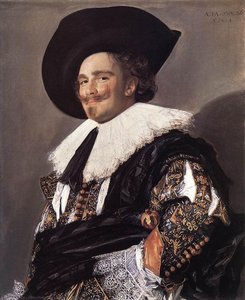


Biographie de l'artiste
Frans Hals: Life and Legacy
Frans Hals the Elder, born in Antwerp around 1582, stands as a cornerstone of Dutch Golden Age painting—a period defined by artistic brilliance and cultural dynamism. His family’s relocation to Haarlem shortly after his birth marked an escape from the turbulent religious climate of Belgium, shaping his formative years within a thriving artistic environment. Precise details concerning his early training remain elusive, yet it is widely accepted that Hals joined the Haarlem Guild of St. Luke—a bastion of prestige and tradition—where he honed foundational skills under the watchful eye of seasoned masters.Artistic Development and Style
Hals distinguished himself from his contemporaries through a revolutionary artistic approach. Rejecting the idealized portraits prevalent at the time, he championed spontaneity and immediacy, prioritizing capturing the essence of his subjects rather than adhering to rigid conventions. This bold decision manifested in remarkably loose brushwork—a technique that deliberately showcased visible strokes—creating an unparalleled sense of dynamism and conveying personality with breathtaking realism. Remarkably, this innovative style foreshadowed the burgeoning Impressionist movement, signaling a dramatic shift away from academic formalism.- Loose Brushwork: Hals’ signature style involved applying paint in free, energetic strokes.
- Capturing Personality: He excelled at conveying the character and emotions of those he painted.
- Genre Scenes: Beyond portraits, Hals also created lively genre scenes depicting everyday life—a departure from traditional portraiture that broadened the scope of artistic expression.
Major Works and Achievements
Throughout his prolific career, Hals produced an impressive repertoire of paintings encompassing individual portraits, monumental group portraits (where he fundamentally advanced the genre), and captivating genre canvases. Among his most celebrated masterpieces are:- The Laughing Cavalier (1624): Arguably his magnum opus, this portrait encapsulates a fleeting moment of joyous expression with remarkable precision—a testament to Hals’ ability to freeze time on canvas.
- Portrait of a Man with a Black Hat (c. 1635): Demonstrating exceptional textural rendering and psychological insight, this piece reveals Hals' mastery in conveying character through subtle nuances of gesture and gaze.
- Regents of the St. Elisabeth Hospital (1641): This ambitious group portrait exemplifies Hals’ compositional prowess—successfully integrating multiple figures into a harmonious whole while capturing the atmosphere of the hospital setting.
- Malle Babbe (c. 1633-1635): An unconventional portrayal of an elderly woman, Malle Babbe stands apart from Hals' usual subjects, showcasing his willingness to explore diverse perspectives and challenge artistic conventions.
Influences and Legacy
Hals’ artistic vision drew inspiration from earlier masters—particularly Nicolaes Pieterszoon Berchem and Cornelis Hendrickszoon Vroom—who embraced similar techniques of loose brushwork and dynamic composition. However, Hals' true innovation lay in his unwavering commitment to portraying human emotion with unprecedented honesty and immediacy. His legacy extends far beyond his own lifetime, profoundly impacting subsequent generations of artists who adopted his style as a cornerstone of their artistic practice. Notably, Édouard Manet and the Impressionists recognized Hals’ pioneering spirit—embracing his revolutionary approach to painting and establishing him as a pivotal figure in the history of modern art. Today, Hals' paintings reside in prestigious museums across Europe and America, ensuring that his contribution to Dutch Golden Age painting continues to inspire awe and admiration.Historical Significance
Hals lived during the zenith of the Dutch Golden Age—a period characterized by unparalleled economic prosperity, intellectual ferment, and artistic innovation. His work embodies the spirit of this era: a fervent belief in realism, an ardent celebration of individualism, and a profound engagement with the complexities of human experience. Frans Hals died peacefully in Haarlem in 1666, leaving behind an indelible mark on art history—a testament to his enduring genius and his unwavering dedication to capturing the beauty and vitality of the human condition. His influence resonates through centuries of artistic endeavor, cementing his place as one of the most revered painters of all time.
Frans Hals
1582 - 1666 , Belgique
L'essentiel de l'artiste
- Artistic Movement Or Style: Dutch Golden Age painting, Baroque
- Artists Who Influenced This Artist:
- Nicolaes Pieterszoon Berchem
- Cornelis Hendrickszoon Vroom
- Date Of Birth: 1582
- Full Name: Frans Hals the Elder
- Nationality: Dutch
- Notable Artworks:
- The Laughing Cavalier
- Portrait of a Man with a black hat
- Regents of the St. Elisabeth Hospital
- Place Of Birth: Antwerp, Belgium
Articles connexes

Frans Hals I: Innovation, Intimacy & the Dutch Golden Age Portrait
Explore the revolutionary portraiture of Frans Hals I, a master of the Dutch Golden Age. Discover his innovative techniques, captivating character studies & lasting impact on art history. Learn more at AllPaintingsStore.
Les 10 Chefs-d'œuvre du Baroque Néerlandais : Artistes et Décor Intemporels
Plongez au cœur du Baroque néerlandais avec les 10 œuvres incontournables de Rembrandt, Vermeer et autres maîtres hollandais. Découvrez l'histoire, la lumière et les couleurs qui ont façonné ce mouvement artistique. Reproductions d'art de qualité muséale sur AllPaintingsStore.com
L'Âge d'Or Néerlandais : 10 Chefs-d'œuvre Incontournables pour Décorer avec Art et Histoire
Plongez au cœur de l'Âge d'Or néerlandais ! Découvrez 10 chefs-d'œuvre intemporels de Rembrandt, Vermeer et autres maîtres hollandais. Explorez leur histoire, technique & trouvez l'inspiration déco sur

Golden Light & Dutch Skies: The Timeless Magic of Dutch Golden Age Landscapes
Discover the breathtaking beauty of Dutch Golden Age landscapes. Explore the mastery of light, chiaroscuro, and 17th-century realism through an expert art history lens, celebrating the enduring legacy of the Dutch Masters for discerning collectors and art lovers.

L'Âge d'Or Néerlandais : Lumière, Réalisme et l'Émergence d'une Nouvelle Esthétique Picturale
Explorez l'Âge d'Or néerlandais : un tour d'horizon expert du réalisme révolutionnaire de Rembrandt, de Keyser et des maîtres hollandais. Découvrez l'histoire, les techniques et l'héritage durable de cette période artistique unique.


