


 Aperçu en situation
 Envoyer
 Partager
 Détails de l'œuvre
 Guide
Guide

 Télécharger l'image
 Articles similaires
 Radiographie
 Diaporama
 Statistiques
James Clitherow (1731–1805)
 Oil On Canvas
- WallArt
- Neoclassicism
 1780
1780- Early Modern
 73.0 x 61.0 cm
 Boston Manor House
 Lire la suite
Giclées et impressions d'art
Impressions giclées ou sur toile de qualité musée, avec une production rapide et des finitions au choix. ( Commander la reproduction peinte à la main Passer au format numérique)




P118B €10

P118H €10

P118W €10

P438Z €10

P508JH €12

P508YH €12

P805H €10

P805Z €10

P919BZ €10

P919G €10

P919XJ €10

P959ZH €10

P968JZ €12

W106C €8

W218G €10

W218JH €8

W218Y €10

W307PJ €10

W316G €10

W316PJ €8

W316Y €10

W398PJ €8

W4111J €10

W500HY €15

W500JH €15

W692G €12

W849H €8

W940BG €15

W953PJ €8




Choisissez parmi nos formats prédéfinis qui respectent les proportions originales de l’œuvre.

Saisissez la largeur et la hauteur souhaitées pour qu'elles s'adaptent à votre cadre ou à votre mur. Une impression peut être recadrée, mais jamais agrandie au-delà de l'image originale ; ainsi, un format de forme différente entraînera la perte d'une partie de l'image. Nous vous envoyons une maquette numérique pour approbation avant toute impression. L'image présentée sur cette page ne montre pas le recadrage réel — seule la maquette le permet.
Livraison dans le monde entier () en 2 semaines au lieu des 4/5 semaines habituelles. (27 octobre)

Livraison express gratuite dans le monde entier

Toile de lin de qualité supérieure

Assurance transport complète

Garantie de remboursement des droits de douane

Garantie de fidélité des couleurs

Politique de retour de 100 jours (uniquement en cas de défaut)

Garantie de remboursement à 100%

Offre de tarifs dégressifs
 L'option verre n'est disponible que pour les dimensions inférieures à 110 cm.

James Clitherow (1731–1805)
Giclées et impressions d'art
Format de la reproduction
-


Prix total
€ 56
A Glimpse into Georgian Elegance
In the quiet, commanding presence of George Romney’s “James Clitherow” (1780), we find more than just a mere likeness; we encounter the very soul of eighteenth-century British high society. This exquisite portrait serves as a window into an era defined by refined grace and social distinction. As the viewer’s eye meets the subject, there is an immediate sense of being transported to a time of candlelight and ceremony. Clitherow, a respected barrister and landowner, is captured not merely as a man of status, but as a figure of profound dignity. The painting breathes with a certain psychological intimacy, where the subtle tilt of his head and a gaze directed slightly off-canvas suggest a mind engaged in deep, quiet contemplation.
The mastery of Romney lies in his ability to balance the formal requirements of a commissioned portrait with an almost tender humanity. While the painting serves to commemorate Clitherow’s accomplishments, it avoids the stiffness often found in contemporary works. Instead, there is a soft, luminous quality to the skin and fabric that invites the observer to linger, making it an ideal centerpiece for those seeking to infuse a room with a sense of historical weight and sophisticated calm.
The Artistry of Light and Line
Technically, “James Clitherow” is a triumph of the Rococo style, blended seamlessly with the emerging sensibilities of classical British portraiture. Romney employs a masterful one-point perspective, a deliberate compositional choice that pulls the viewer’s focus directly toward the subject's face and upper torso. The artist utilizes a subdued, sophisticated palette—dominated by deep blacks, rich browns, and creamy whites—to create an atmosphere of understated luxury. This tonal restraint allows the play of light to become the true protagonist of the work.
Upon closer inspection, the brilliance of Romney’s technique becomes even more apparent. The artist uses delicate yet confident brushstrokes to layer oil paints on canvas, achieving a surface finish that seems to glow from within. There is a beautiful tension between the linear precision used to define the crisp edges of the wig, collar, and buttons, and the organic, flowing curves found in the drapery. This interplay of geometric structure and soft, atmospheric shading creates a remarkable sense of three-dimensional depth, lending the portrait a realism that feels both timeless and tactile.
A Legacy for the Discerning Collector
For the art lover or interior designer, this piece offers much more than aesthetic beauty; it offers a narrative of permanence. To hang a reproduction of such a work is to introduce an element of historical prestige into a modern space. The painting’s emotional impact—a blend of seriousness tempered by a hint of a smile—provides a balanced energy that can anchor a room, whether in a formal study, a grand hallway, or a curated gallery wall.
Owning a piece that evokes the era of George Romney is an invitation to celebrate the virtues of intellect and composure. As we look upon Clitherow, we are reminded of the enduring power of portraiture to capture the essence of character. This artwork remains a profound testament to the skill of one of England's most fashionable painters, making it a timeless acquisition for any collection dedicated to the elegance of the classical tradition.
Questions et réponses
Pour quelle pièce «James Clitherow (1731–1805)» de George Romney est-il recommandé ?
L'espace recommandé pour «James Clitherow (1731–1805)» de George Romney est un Living Room. Cette suggestion peut bien entendu être adaptée à votre intérieur.
Quelle est l'harmonie des couleurs de «James Clitherow (1731–1805)» de George Romney ?
L'harmonie colorée de « James Clitherow (1731–1805) » est décrite comme étant Strong Color Unity.
Les couleurs de «James Clitherow (1731–1805)» de George Romney sont-elles vives ou feutrées ?
«James Clitherow (1731–1805)» de George Romney présente une saturation de Muted et une intensité Monochromatic.
Œuvres similaires


Biographie de l'artiste
George Romney : Une Vie au Service du Portrait
Premières Années et Débuts Artistiques
- Naissance: 26 mai 1734, à Beckside, Dalton-in-Furness, Lancashire (aujourd'hui Cumbria), Royaume-Uni.
- Romney était le troisième de onze enfants nés de John Romney, fabricant d’armoires, et Anne Simpson.
- Formation Artistique Précoce: Il a rapidement montré une inclination pour l'art, ce qui l'a conduit à un apprentissage auprès de Christopher Steele, un portraitiste ayant étudié sous Carlo Vanloo à Paris. Cette formation initiale lui a fourni des compétences essentielles et une exposition aux traditions artistiques européennes.
Développement Artistique et Percée
- Romney s’est rendu à Londres vers 1760, cherchant de plus grandes opportunités pour sa carrière naissante.
- Il s'est rapidement imposé comme un portraitiste habile, en concurrence avec des artistes éminents tels que Thomas Gainsborough et Joshua Reynolds.
- Style et Technique: Le style de Romney a évolué au fil du temps, initialement influencé par Steele et Vanloo, mais il a développé une approche distinctive caractérisée par des poses élégantes, un éclairage doux et un accent sur la capture de la personnalité de ses modèles.
La Muse : Emma Hamilton
- Une Relation Clé: La vie artistique de Romney a été profondément marquée par sa relation avec Emma Hamilton (née Amy Lyon). Elle est devenue son modèle préféré et sa muse, inspirant une série de portraits captivants.
- La beauté, l'intelligence et le talent théâtral d’Hamilton ont fasciné Romney. Il l'a représentée dans divers rôles – comme fileuse, Miranda dans *La Tempête* de Shakespeare, et dans de nombreuses autres scènes allégoriques.
- Exploration Artistique: Grâce à son travail avec Hamilton, Romney a exploré des thèmes de mythologie classique, de théâtralité et de grâce féminine.
Œuvres Notables et Réalisations
- Portrait de James Brudenell, Earl of Cardigan (1776): Un exemple parfait de l'aptitude de Romney à capturer le caractère et le statut de ses sujets.
- Emma Hamilton comme Fileuse: Démontre la capacité de Romney à représenter à la fois la beauté et une narration au sein d’une seule composition.
- Lady Emma Hamilton en tant que Miranda : Met en valeur la fascination de Romney pour les poses théâtrales et les allusions classiques.
- Ariel (Somerville College, Oxford) : Un portrait saisissant d'Emma Hamilton incarnant l'esprit de *La Tempête* de Shakespeare.
- Large Patronage: Romney a connu une carrière réussie en attirant des commandes de membres éminents de la société britannique, notamment des aristocrates, des politiciens et des figures littéraires.
Influences et Importance Historique
- Influences Artistiques : Carlo Vanloo et Christopher Steele ont fourni à Romney une formation précoce. Il a également puisé son inspiration dans les œuvres de Pierre Paul Rubens et d'autres maîtres baroques.
- Impact sur le Portrait Britannique: Le travail de Romney a contribué à façonner le développement du portrait britannique à la fin du XVIIIe siècle, contribuant à un style qui mettait l’accent sur l’élégance, la perspicacité psychologique et le talent artistique.
- Ses portraits offrent des aperçus précieux sur les vies et les goûts de l'élite britannique à son époque.
- Vie ultérieure et Héritage : Romney a connu des problèmes de santé mentale plus tard dans sa vie, ce qui a entraîné un déclin de sa productivité. Il est décédé en 1802, laissant derrière lui un corpus important d'œuvres qui continuent d’être admirées et étudiées aujourd’hui.

George Romney
1734 - 1802 , Royaume-Uni
L'essentiel de l'artiste
- Artistes Influents:
- Carlo Vanloo
- Christopher Steele
- Date De Décès: 1802
- Date De Naissance: 26 mai 1734
- Lieu De Naissance: Dalton-in-Furness, Royaume-Uni
- Mouvement Artistique: Portraiture, Romantisme
- Nationalité: Britannique
- Nom Complet: George Romney
- Oeuvres Notables:
- Portrait de James Brudenell
- Emma Hamilton fileuse
- Lady Emma Hamilton Miranda
- Ariel (Somerville College)
Articles connexes
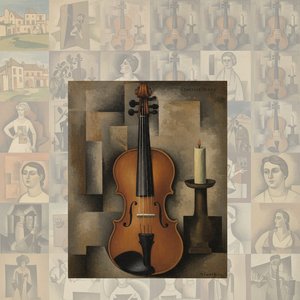
Georges Braque : Les 25 Œuvres Maîtresses du Cubisme et de la Modernité | AllPaintingsStore
Plongez dans l'univers de Georges Braque avec les 25 œuvres incontournables du cubisme. Découvrez l'histoire, les techniques et l'impact de ce maître de l'art moderne. Reproductions d'art exceptionnelles sur AllPaintingsStore.com.

George Romney: Portraiture, Patronage & the Shaping of Georgian Society
Explore the life & art of George Romney, leading portraitist of Georgian England. Discover his style, famous patrons like Emma Hamilton, and legacy in British society. Expert insights for collectors.

Georges Seurat : Les 25 Œuvres Maîtresses du Pointillisme | AllPaintingsStore
Plongez dans l'univers lumineux de Georges Seurat ! Découvrez les 25 œuvres majeures du pointillisme, de 'Un dimanche après-midi à l'Île de la Grande Jatte' aux 'Poseuses'. Reproductions d'art exceptionnelles et inspiration déco sur AllPaintingsStore.com.
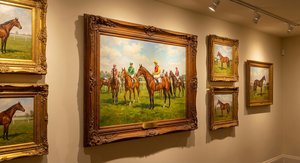
Munnings : Les 25 Œuvres Maîtresses du Cavalier Anglais | AllPaintingsStore
Plongez dans l'univers vibrant d'Alfred Munnings ! Découvrez les 25 œuvres maîtresses du peintre anglais, icônes de l'art équestre et de l'impressionnisme britannique. Tableaux de chevaux, paysages idylliques… Trouvez votre inspiration déco sur AllPaintingsStore.com.
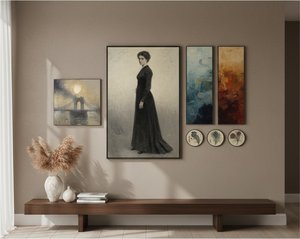
James Abbott McNeill Whistler : Les 25 Œuvres Maîtresses d'un Précurseur de l'Art Moderne
Plongez dans l'univers de James Abbott McNeill Whistler : découvrez ses 25 œuvres les plus emblématiques, des nocturnes aux portraits saisissants. Explorez son esthétisme unique et trouvez l'inspiration déco avec AllPaintingsStore.com.


