


 Aperçu en situation
 Envoyer
 Partager
 Détails de l'œuvre
 Guide
Guide

 Télécharger l'image
 Articles similaires
 Radiographie
 Diaporama
 Statistiques
Cavalier


 Lire la suite
L’œuvre d'art présentée sur cette page est protégée par le droit d'auteur, ce qui signifie que nous ne pouvons légalement créer ou vendre de reproduction identique. Cette protection est appliquée en vertu d'accords internationaux tels que la Convention de Berne et par les lois nationales, notamment celles énoncées par le Loi américaine sur le droit d'auteur - Titre 17.
En tant qu'alternative respectueuse et légale, nous proposons des œuvres d'art personnalisées, peintes à la main et inspirées de l'original. Nos artistes talentueux et professionnels étudient avec soin le style, l'ambiance et l'essence artistique de l'œuvre originale pour créer une pièce nouvelle et unique qui évoque la même émotion — tout en restant une création originale en soi.
Cette méthode est pleinement conforme aux réglementations sur le droit d'auteur car elle ne repose pas sur la copie ou la duplication de l'œuvre protégée. Il s'agit plutôt d'une réinterprétation créative — une nouvelle peinture qui s'inspire de l'original sans pour autant lui être identique.
Reproduction à l'huile faite à la main
Huile sur toile peinte à la main, avec cadre et dimensions personnalisés, réalisée sur commande par nos artistes. ( Passer au format impression Passer au format numérique)




P118B €10

P118H €10

P118W €10

P438Z €10

P508JH €12

P508YH €12

P805H €10

P805Z €10

P919BZ €10

P919G €10

P919XJ €10

P959ZH €10

P968JZ €12

W106C €8

W218G €10

W218JH €8

W218Y €10

W307PJ €10

W316G €10

W316PJ €8

W316Y €10

W398PJ €8

W4111J €10

W500HY €15

W500JH €15

W692G €12

W849H €8

W940BG €15

W953PJ €8




Choisissez parmi nos formats prédéfinis qui respectent les proportions originales de l’œuvre.

Saisissez la largeur et la hauteur souhaitées, pour s'adapter à votre cadre ou à votre mur. Cette œuvre est peinte à la main ; ainsi, pour un format de forme différente, l'artiste peut peindre un peu plus autour du tableau ou réduire légèrement les bords — c'est vous qui choisissez. Nous vous envoyons une maquette numérique pour approbation avant que la peinture ne commence. L'image présentée sur cette page ne reflète pas le résultat réel — seule la maquette le fait.
Après la commande, l’équipe AllPaintingsStore.com contactera le client par e-mail pour recueillir ses instructions et lui fournira une maquette d’aperçu
Livraison dans le monde entier () en 3 à 4 semaines au lieu des 5 semaines habituelles. (27 octobre). Aucun compromis sur la qualité.

Livraison express gratuite dans le monde entier

Toile de lin de qualité supérieure

Assurance transport complète

Garantie de remboursement des droits de douane

Garantie de fidélité des couleurs

Politique de retour de 100 jours (uniquement en cas de défaut)

Garantie de remboursement à 100%

Offre de tarifs dégressifs
 L'option verre n'est disponible que pour les dimensions inférieures à 110 cm.

Cavalier
Technique de reproduction
Format de la reproduction
-


Prix total
€ 227
A Fragmented Vision: The Cubist Revolution in Braque’s Cavalier
To gaze upon Georges Braque’s "Cavalier" is to witness the very moment the mirror of traditional art was shattered and reassembled into something far more profound. Created in 1910, this masterpiece stands as a cornerstone of the Cubist movement, an era that irrevocably altered the course of Western art history. Rather than offering a mere window into a recognizable scene, Braque presents us with a deliberate dismantling of perspective. The subject—a horse and rider—is not presented as a static entity captured in a single moment of light, but as a complex arrangement of interlocking planes and geometric truths. It is an invitation to look past the surface of the world to find the structural rhythm beneath.
In this seminal work, Braque moves beyond the fleeting impressions of his predecessors to explore the concept of simultaneity. The horse's powerful form is fractured into angular segments, mirroring the rider’s posture and creating a disconcerting yet mesmerizing illusion of depth. This technique allows the viewer to experience multiple viewpoints at once, challenging the brain to reconstruct the subject from its constituent parts. For the discerning collector or interior designer, this piece offers more than just visual interest; it provides a sophisticated intellectual anchor, embodying the tension between chaos and order that defines the modern era.
The Mastery of Analytical Cubism
The technical execution of "Cavalier" reveals Braque’s profound engagement with the tactile nature of painting. Employing what is known as Analytical Cubism, Braque prioritized meticulous detail and subtle tonal gradation over expressive or flamboyant brushstrokes. His background, rooted in a family of house painters and decorators, is evident in his disciplined hand. He painstakingly rendered the musculature of the horse through precise lines and a muted palette of earthy tones, ensuring that form and structure remained the primary protagonists of the composition.
There is a remarkable materiality to this work, achieved through a layering process that suggests a rich, textured surface. By utilizing subtle shading and carefully controlled light, Braque creates a sense of weight and presence despite the abstraction of the subject. This precision transforms the canvas from a flat plane into a sculptural space where light and shadow dance in a complex embrace. For those seeking to adorn a space with art that commands attention through subtlety rather than noise, "Cavalier" serves as an exquisite example of how technical rigor can elevate abstract thought into a tangible, emotive experience.
A Legacy of Intellectual Depth and Aesthetic Grace
Beyond its stylistic innovation, "Cavalier" carries a profound philosophical weight. It reflects the early 20th-century preoccupation with the subjectivity of perception—the idea that true understanding requires acknowledging the fragmented and multifaceted nature of reality. The rider and horse are not merely figures in a landscape; they are symbols of a new way of seeing, where the boundaries between object and space begin to dissolve. This sense of movement and deconstruction creates an emotional impact that is both unsettling and deeply captivating.
Integrating a high-quality reproduction of this work into a curated collection or a contemporary interior offers a unique opportunity to celebrate the avant-garde. The painting’s subdued color palette and sophisticated geometry allow it to harmonize with a variety of modern aesthetics, from minimalist galleries to richly textured, classical rooms. Owning a piece that captures Braque's revolutionary spirit is an homage to the enduring power of human creativity and the eternal quest to redefine the limits of vision.
Questions et réponses
À quelle période de la carrière de Georges Braque se situe « Cavalier » ?
Au cours de la carrière de Georges Braque, « Cavalier » s'inscrit dans la période Analytical Cubism. Cette phase permet de le comparer aux autres œuvres de l'artiste.
Qui est l'auteur de "Cavalier" ?
« Cavalier » est attribué à Georges Braque.
Comment "Cavalier" équilibre-t-il l'ombre et la lumière ?
Les valeurs enregistrées pour «Cavalier» de Georges Braque sont : une luminosité de brilliant, une luminance de Luminous.
Œuvres similaires


Biographie de l'artiste
**Jeunesse et formation**
Georges Braque, peintre français renommé, collagiste, dessinateur, graveur et sculpteur, est né le 13 mai 1882 à Argenteuil, dans les Val-d'Oise. Il a grandi à Le Havre et a initialement été formé pour devenir peigneur et décorateur comme son père et son grand-père. Cependant, les inclinations artistiques de Braque l’ont conduit à étudier la peinture à l’École des Beaux-Arts de Le Havre de 1897 à 1899.**Évolution artistique et fauvisme**
En 1902, après avoir terminé son apprentissage auprès d'un décorateur à Paris, Braque a fréquenté l’Académie Humbert jusqu’en 1904. Cette période a marqué son introduction au fauvisme, un style caractérisé par des couleurs vives et des réponses émotionnelles. Influencé par les œuvres de Henri Matisse et André Derain, Braque a adopté une approche fauviste, comme en témoigne son tableau La Patience (fauvisme, huile sur toile).**Contribution au cubisme**
La collaboration de Braque avec Pablo Picasso de 1908 à 1912 a conduit au développement du cubisme. Leurs œuvres cubistes analytiques, telles que Georges Braque: La Patience et Pablo Picasso: Le Clarinette(cubisme analytique, huile sur toile), sont aujourd’hui considérées comme des jalons de l'histoire de l'art.**Héritage et œuvres notables**
* Maisons à l’Estaque : Témoignage de l'utilisation innovante de la géométrie et de la perspective simultanée par Braque. * La Patience(fauvisme, huile sur toile) : démontre le style fauve de Braque. * Le Clarinette(cubisme analytique, huile sur toile) : œuvre cubiste collaborative avec Picasso.**Musées et collections**
* Musée d'Orsay : présente une vaste collection d'art impressionniste et post-impressionniste, incluant des œuvres de Braque. * Musée de l'Orangerie : expose une large gamme d'œuvres d'art, incluant celles de Braque et d'autres artistes notables.- Découvrez-en davantage sur la vie et l’œuvre de Georges Braque sur AllPaintingsStore.com
- Explorez la collection du Musée d'Orsay, présentant des œuvres de Braque et d'autres artistes, sur Musée d'Orsay - Wikipédia
- Apprenez-en davantage sur le fauvisme et son influence sur le développement du cubisme avec le mouvement artistique fauviste sur AllPaintingsStore.com
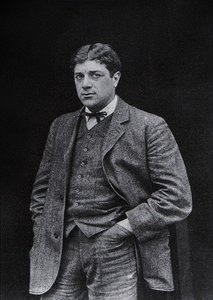
Georges Braque
1882 - 1963 , France
L'essentiel de l'artiste
- Artistes Influents:
- Henri Matisse
- André Derain
- Paul Cézanne
- Date De Décès: 1963
- Date De Naissance: 13 mai 1882
- Influence Sur Les Artistes: ['Pablo Picasso']
- Lieu De Naissance: Argenteuil, France
- Mouvement Artistique: Cubisme, Fauvisme
- Nationalité: Française
- Nom Complet: Georges Braque
- Oeuvres Notables:
- Maisons à L'Estaque
- La Patience
- Le Clarinette
- Nature morte avec cruets
Articles connexes

Cubist Expression: A Professional Guide to Integrating Geometric Abstraction into Modern Hospitality Design
Elevate hospitality interiors with Cubist art. Our expert guide explores integrating geometric abstraction into hotel design through high-quality, large-scale oil reproductions and custom multi-panel commissions tailored for professional designers and procurement managers.


