


 Aperçu en situation
 Partager
 Partager
 Détails
 Guide imprimable

 Télécharger
 Articles similaires
 Radiographie
 Voir le diaporama
 Statistiques
The Studio (III)
 Oil On Canvas
- WallArt
- Cubist Still Life
 1949
1949- Modern
 144.0 x 174.0 cm
 Afficher la suite
L’œuvre d'art présentée sur cette page est protégée par le droit d'auteur, ce qui signifie que nous ne pouvons légalement créer ou vendre de reproduction identique. Cette protection est appliquée en vertu d'accords internationaux tels que la Convention de Berne et par les lois nationales, notamment celles énoncées par le Loi américaine sur le droit d'auteur - Titre 17.
Cette méthode est pleinement conforme aux réglementations sur le droit d'auteur car elle ne repose pas sur la copie ou la duplication de l'œuvre protégée. Il s'agit plutôt d'une réinterprétation créative — une nouvelle peinture qui s'inspire de l'original sans pour autant lui être identique.
Giclées et impressions d'art
Impressions giclées ou sur toile de qualité musée, avec une production rapide et des finitions au choix. ( Acheter la peinture faite à la main Passer au format image numérique)




P118B €10

P118H €10

P118W €10

P438Z €10

P508JH €12

P508YH €12

P805H €10

P805Z €10

P919BZ €10

P919G €10

P919XJ €10

P959ZH €10

P968JZ €12

W106C €8

W218G €10

W218JH €8

W218Y €10

W307PJ €10

W316G €10

W316PJ €8

W316Y €10

W398PJ €8

W4111J €10

W500HY €15

W500JH €15

W692G €12

W849H €8

W940BG €15

W953PJ €8




Choisissez parmi nos formats prédéfinis qui respectent les proportions originales de l’œuvre.

Vous pouvez saisir vos propres dimensions pour vous adapter à un cadre ou à un espace spécifique. Si la taille sélectionnée ne correspond pas aux proportions de l'image originale, nous recadrerons l'œuvre ou étendrons l'image avec une bordure en miroir ou une couleur unie. Une maquette numérique vous sera envoyée pour approbation avant le début de la production.
Veuillez noter que l'aperçu à l'écran ne reflète pas le recadrage ou l'extension réelle. Seule la maquette montrera avec précision la composition finale.
Bien que des tailles personnalisées soient disponibles, nous vous recommandons de choisir une dimension dans la liste prédéfinie afin de préserver les proportions originales.
Livraison dans le monde entier () en 2 semaines au lieu des 4/5 semaines habituelles. (11 octobre)

Livraison express gratuite dans le monde entier

Toile de lin de haute qualité

Assurance transport complète

Garantie de remboursement des droits de douane

Garantie de fidélité des couleurs

Garantie de retour de 100 jours (uniquement en cas de défaut)

Garantie de remboursement à 100%

Tarifs dégressifs sur quantité
 L'option verre n'est disponible que pour les dimensions inférieures à 110 cm.

The Studio (III)
Giclées et impressions d'art
Format de la reproduction
-


Prix total final
€ 55
Georges Braque’s “The Studio (III)” – A Fragmented Reflection of Artistic Innovation
“The Studio (III),” painted in 1949 by Georges Braque, stands as a cornerstone of Cubist aesthetics and a poignant emblem of the artist's evolving exploration of form and perception during his mature period. More than just a depiction of a workspace—a room filled with tools and objects—the painting delves into the complexities of artistic creation itself, presenting a deliberately fractured vision that mirrors the process of intellectual and visual experimentation central to Braque’s groundbreaking style. This detailed analysis aims to illuminate not only the artwork's technical prowess but also its profound symbolic resonance within the broader context of 20th-century art history.A Cubist Exploration of Space and Materiality
Braque’s masterful application of Cubism is immediately apparent. Unlike Impressionistic renderings that prioritize fleeting impressions of light and color, “The Studio (III)” employs geometric planes—primarily rectangular and angular—to reconstruct the subject matter in multiple perspectives simultaneously. The chair, table, window, knives, and clock are not presented as unified entities but rather dissected into fragmented shapes that overlap and intersect, creating a sense of spatial ambiguity characteristic of Cubism’s revolutionary approach. This technique wasn't merely stylistic; it represented Braque’s conviction that visual representation could capture the essence of an object by conveying its underlying structure—a departure from traditional illusionistic painting. The muted palette – predominantly browns, ochres and creams – reinforces this emphasis on materiality and contributes to a contemplative atmosphere.The Significance of Still Life as Conceptual Canvas
Still life had been explored before Braque’s time, but he transformed it into something radically new. Rather than aiming for realistic representation, Braque utilized the stillness of the studio setting to contemplate the very act of artistic endeavor. The scattered knives symbolize the artist's tools—instruments of creation and destruction—while simultaneously hinting at the disruptive force inherent in innovative thought. The clock serves as a reminder of time passing, mirroring the relentless pursuit of artistic perfection and highlighting the cyclical nature of creative process. These objects aren’t merely present; they are actively engaged in defining the composition and conveying an emotional state of focused observation.Historical Context: Picasso's Influence and Artistic Dialogue
“The Studio (III)” emerged during a period of intense artistic collaboration between Braque and Pablo Picasso, marking a pivotal moment in the development of Cubism. Their partnership spurred each artist to push boundaries and challenge conventions, resulting in works that profoundly influenced subsequent generations of painters. While Picasso initially championed Analytic Cubism—characterized by flattened planes and monochromatic color—Braque embraced Synthetic Cubism, incorporating collage elements and brighter hues into his canvases. This stylistic divergence underscored the dynamism of artistic discourse within Paris’s avant-garde circles during the late 1940s, demonstrating how artists could engage in productive dialogue while maintaining distinct visual vocabularies.Emotional Resonance: Quiet Contemplation and Artistic Integrity
Despite its geometric complexity, “The Studio (III)” exudes a palpable sense of calm introspection. The subdued lighting and muted colors contribute to an atmosphere of quiet contemplation—reflecting the artist’s engagement with his craft and conveying a profound appreciation for visual form. More than just a depiction of a physical space, the painting embodies Braque's unwavering commitment to artistic integrity—a refusal to compromise on stylistic innovation in favor of conventional realism. It invites viewers to consider not only what is seen but also how it is perceived, prompting reflection on the transformative power of art and its ability to capture the essence of human experience.- Artist: Georges Braque
- Year: 1949
- Style: Cubism
- Medium: Oil on Canvas
- Dimensions: 51 1/4 × 29 1/8 in. (130.2 × 74 cm)
Questions et réponses
En quelle année "The Studio (III)" a-t-il été réalisé ?
«The Studio (III)» de Georges Braque a été créé en 1949.
Quel âge avait Georges Braque lors de la création de « The Studio (III) » en 1949 ?
Georges Braque avait 67 ans lors de la création de « The Studio (III) » en 1949. L'âge est calculé à partir de l'année de naissance de l'artiste, 1882.
Les couleurs de «The Studio (III)» de Georges Braque sont-elles vives ou feutrées ?
La couleur de « The Studio (III) » présente une saturation de Subtle Color et une intensité de Monochromatic.
Quel artiste et quel style se cachent derrière « The Studio (III) » ?
« The Studio (III) » a été créé par Georges Braque dans le style Cubist Still Life. L'artiste et le mouvement définissent la tradition de l'œuvre.
Qui est l'artiste derrière « The Studio (III) » ?
« The Studio (III) » est attribué à Georges Braque.
De quelle époque date « The Studio (III) » ?
«The Studio (III)» de Georges Braque date de la période Modern. Cette époque apporte le contexte historique de l'œuvre.
Qui vend des reproductions peintes à la main de «The Studio (III)» de Georges Braque ?
Vous pouvez commander une reproduction peinte à la main de «The Studio (III)» de Georges Braque directement sur cette page : une reproduction à l'huile peinte à la main sur toile de lin, réalisée sur commande.
Œuvres similaires


Biographie de l'artiste
**Jeunesse et formation**
Georges Braque, peintre français renommé, collagiste, dessinateur, graveur et sculpteur, est né le 13 mai 1882 à Argenteuil, dans les Val-d'Oise. Il a grandi à Le Havre et a initialement été formé pour devenir peigneur et décorateur comme son père et son grand-père. Cependant, les inclinations artistiques de Braque l’ont conduit à étudier la peinture à l’École des Beaux-Arts de Le Havre de 1897 à 1899.**Évolution artistique et fauvisme**
En 1902, après avoir terminé son apprentissage auprès d'un décorateur à Paris, Braque a fréquenté l’Académie Humbert jusqu’en 1904. Cette période a marqué son introduction au fauvisme, un style caractérisé par des couleurs vives et des réponses émotionnelles. Influencé par les œuvres de Henri Matisse et André Derain, Braque a adopté une approche fauviste, comme en témoigne son tableau La Patience (fauvisme, huile sur toile).**Contribution au cubisme**
La collaboration de Braque avec Pablo Picasso de 1908 à 1912 a conduit au développement du cubisme. Leurs œuvres cubistes analytiques, telles que Georges Braque: La Patience et Pablo Picasso: Le Clarinette(cubisme analytique, huile sur toile), sont aujourd’hui considérées comme des jalons de l'histoire de l'art.**Héritage et œuvres notables**
* Maisons à l’Estaque : Témoignage de l'utilisation innovante de la géométrie et de la perspective simultanée par Braque. * La Patience(fauvisme, huile sur toile) : démontre le style fauve de Braque. * Le Clarinette(cubisme analytique, huile sur toile) : œuvre cubiste collaborative avec Picasso.**Musées et collections**
* Musée d'Orsay : présente une vaste collection d'art impressionniste et post-impressionniste, incluant des œuvres de Braque. * Musée de l'Orangerie : expose une large gamme d'œuvres d'art, incluant celles de Braque et d'autres artistes notables.- Découvrez-en davantage sur la vie et l’œuvre de Georges Braque sur AllPaintingsStore.com
- Explorez la collection du Musée d'Orsay, présentant des œuvres de Braque et d'autres artistes, sur Musée d'Orsay - Wikipédia
- Apprenez-en davantage sur le fauvisme et son influence sur le développement du cubisme avec le mouvement artistique fauviste sur AllPaintingsStore.com
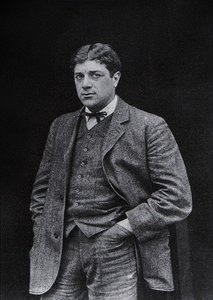
Georges Braque
1882 - 1963 , France
En bref
- Artistes Influents:
- Henri Matisse
- André Derain
- Paul Cézanne
- Date De Décès: 1963
- Date De Naissance: 13 mai 1882
- Influence Sur Les Artistes: ['Pablo Picasso']
- Lieu De Naissance: Argenteuil, France
- Mouvement Artistique: Cubisme, Fauvisme
- Nationalité: Française
- Nom Complet: Georges Braque
- Oeuvres Notables:
- Maisons à L'Estaque
- La Patience
- Le Clarinette
- Nature morte avec cruets
Articles similaires

Les 10 Chefs-d'œuvre Cubistes Révolutionnaires : Art, Décor & Histoire
Plongez au cœur du cubisme avec les 10 œuvres révolutionnaires de Picasso, Braque et Gris. Découvrez l'histoire, les techniques et l'impact de ce mouvement artistique majeur. Reproductions d'art de qualité musée sur AllPaintingsStore.com !
Georges Braque : Les 25 Œuvres Maîtresses du Cubisme et de la Modernité | AllPaintingsStore
Plongez dans l'univers de Georges Braque avec les 25 œuvres incontournables du cubisme. Découvrez l'histoire, les techniques et l'impact de ce maître de l'art moderne. Reproductions d'art exceptionnelles sur AllPaintingsStore.com.

Cubism Explained: How Picasso and Braque Shattered Reality to Redefine Modern Art
Master the complexities of Cubism with our expert guide. Explore how Picasso and Braque revolutionized modern art through fragmentation, multiple perspectives, and geometric innovation. Perfect for art students and collectors seeking deep historical insight.

Cubism Unveiled: How Picasso and Braque Redefined Reality Through Geometric Abstraction
Explore the revolutionary world of Cubism. Discover how masters Pablo Picasso and Georges Braque dismantled reality through geometric abstraction to redefine modern art history.

Cubism Unveiled: How Picasso and Braque Redefined Modern Art through Geometric Revolution
Explore the revolutionary world of Cubism. Discover how Pablo Picasso and Georges Braque dismantled perspective to redefine modern art through geometric innovation and analytical mastery. An essential guide for art students, collectors, and history enthusiasts.


