Aperçu en situation
 Envoyer
 Partager
 Détails de l'œuvre

 Télécharger
 Articles similaires
 Radiographie
 Diaporama
untitled (3690)


 Lire la suite
Reproduction à l'huile faite à la main
Huile sur toile peinte à la main, avec cadre et dimensions personnalisés, réalisée sur commande par nos artistes. ( Acheter l'impression Acheter l'image)




P118B $10

P118H $10

P118W $10

P438Z $10

P508JH $12

P508YH $12

P805H $10

P805Z $10

P919BZ $10

P919G $10

P919XJ $10

P959ZH $10

P968JZ $12

W106C $8

W218G $10

W218JH $8

W218Y $10

W307PJ $10

W316G $10

W316PJ $8

W316Y $10

W398PJ $8

W4111J $10

W500HY $15

W500JH $15

W692G $12

W849H $8

W940BG $15

W953PJ $8




Choisissez parmi nos formats prédéfinis qui respectent les proportions originales de l’œuvre.

Vous pouvez saisir vos propres dimensions pour l'adapter à un cadre ou à un espace spécifique. Si la taille sélectionnée ne correspond pas aux proportions de l'image d'origine, nous recadrerons l'œuvre ou prolongerons la peinture avec des éléments peints à la main supplémentaires. Une maquette numérique vous sera envoyée pour approbation avant le début de la production.
Veuillez noter que l'aperçu à l'écran ne reflète pas le recadrage ou l'extension réels. Seule la maquette montrera fidèlement la composition finale.
Bien que des tailles personnalisées soient disponibles, nous vous recommandons de sélectionner une dimension dans la liste prédéfinie afin de préserver les proportions d'origine.
Après la commande, l’équipe AllPaintingsStore.com contactera le client par e-mail pour recueillir ses instructions et lui fournira une maquette d’aperçu
Livraison dans le monde entier () en 3 à 4 semaines au lieu des 5 semaines habituelles. (12 août). Aucun compromis sur la qualité.

Livraison express gratuite dans le monde entier

Toile de lin de qualité supérieure

Assurance transport complète

Garantie de remboursement des droits de douane

Garantie de fidélité des couleurs

Politique de retour de 60 jours (uniquement en cas de défaut)

Garantie de remboursement à 100%

Offre de tarifs dégressifs
 L'option verre n'est disponible que pour les dimensions inférieures à 110 cm.

untitled (3690)
Technique de reproduction
Format de la reproduction
-


Prix total
$ 258
Description de l'œuvre
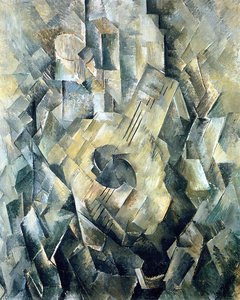
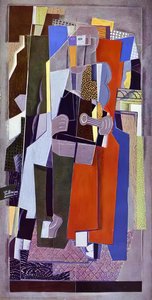
A Study in Disarray: Georges Braque’s ‘Untitled (3690)’
Georges Braque's “Untitled (3690),” a captivating work that seems to simultaneously invite and repel, offers a glimpse into the artist’s intensely productive period at the dawn of Cubism. Painted around 1910-1912, this piece isn’t merely a depiction of a room; it's an exploration of perception, fragmentation, and the very nature of representation. The image presents a seemingly chaotic scene: a weathered wooden door, its brown frame hinting at age and solidity, stands slightly ajar, revealing a shadowy interior. Scattered across the floor and surfaces are fragments of paper – sketches, notes, perhaps even preliminary studies – alongside a solitary book, anchoring the composition with an element of quiet contemplation amidst the surrounding disorder. The overall effect is one of controlled chaos, a deliberate disruption of traditional spatial relationships that speaks directly to the core tenets of Braque’s revolutionary approach to art. It's a visual embodiment of the intellectual and emotional turmoil characteristic of the era, reflecting the shifting realities of modern life as experienced through the lens of artistic innovation.The Roots of Fragmentation: Braque’s Early Influences
Georges Braque’s journey toward becoming a pivotal figure in 20th-century art began not within the rarefied atmosphere of Parisian studios but in his family's workshop, where he learned the craft of house painting and decoration. This practical grounding—a deep understanding of materials, structure, and the manipulation of space – proved invaluable as he later dismantled and reimagined traditional artistic conventions. Born in Argenteuil in 1882, Braque’s upbringing instilled a keen eye for form and an appreciation for the technical aspects of visual representation. Crucially, his early exposure to Cézanne's work, particularly through the 1907 retrospective at the Salon d'Automne, proved transformative. Cézanne’s exploration of multiple perspectives and geometric forms laid the groundwork for Braque’s later experiments with Cubism, prompting him to question the established rules of pictorial space and delve into a more fractured, multi-dimensional approach to depicting reality. This lineage—a blend of artisanal skill and academic study—is evident in “Untitled (3690),” where the seemingly random arrangement of objects is governed by an underlying geometric logic.Cubism’s Delicate Dance: Collaboration with Picasso
“Untitled (3690)” stands as a testament to the collaborative spirit that fueled the development of Cubism alongside Pablo Picasso. During this period, Braque and Picasso engaged in a dynamic exchange of ideas, each pushing the boundaries of artistic expression while simultaneously influencing the other. Initially, their work was almost indistinguishable, a phenomenon documented by art historian John Rewie who noted that “the effect of his encounter with Picasso was more to accelerate and intensify Braque’s exploration of Cézanne’s ideas, rather than to divert his thinking in any essential way.” This intense partnership resulted in a shared vocabulary of fragmented forms, overlapping planes, and multiple viewpoints – techniques vividly demonstrated in "Untitled (3690)." The painting's monochromatic palette—likely influenced by the desire to strip away superficial details and focus on underlying structure—further emphasizes this geometric exploration. The deliberate ambiguity of the interior space, glimpsed through the open door, mirrors the Cubist principle of presenting multiple perspectives simultaneously, challenging the viewer’s perception of depth and spatial relationships.Symbolism in the Everyday: The Language of Disarray
Beyond its formal innovations, “Untitled (3690)” is rich with symbolic potential. The open door suggests a transition, an invitation into an unknown space—perhaps representing the anxieties and uncertainties of modern life. The scattered papers, reminiscent of a scholar’s workspace or an artist's studio, hint at intellectual activity, creative process, and the accumulation of knowledge. The solitary book offers a counterpoint to the surrounding chaos, suggesting a yearning for order, reflection, and perhaps even escape. Braque wasn’t simply depicting a room; he was exploring the relationship between the tangible world and the realm of ideas, capturing the essence of a mind grappling with complex concepts. The deliberate lack of clear narrative or emotional content allows the viewer to project their own interpretations onto the scene, making “Untitled (3690)” a profoundly personal and evocative work.Bringing Braque’s Vision Home: A High-Quality Reproduction
AllPaintingsStore offers meticulously crafted hand-painted reproductions of Georges Braque's "Untitled (3690)," allowing you to experience the power and complexity of this seminal artwork in your own space. Our skilled artisans faithfully recreate Braque’s distinctive style, capturing the subtle nuances of color, texture, and composition with exceptional detail. Whether adorning a contemporary living room or a sophisticated study, this reproduction serves as a powerful reminder of Braque's revolutionary contribution to modern art—a testament to his ability to transform the ordinary into the extraordinary through the language of fragmentation and geometric abstraction. Explore our selection today and bring a piece of art history into your world.Œuvres similaires


Biographie de l'artiste
**Jeunesse et formation**
Georges Braque, peintre français renommé, collagiste, dessinateur, graveur et sculpteur, est né le 13 mai 1882 à Argenteuil, dans les Val-d'Oise. Il a grandi à Le Havre et a initialement été formé pour devenir peigneur et décorateur comme son père et son grand-père. Cependant, les inclinations artistiques de Braque l’ont conduit à étudier la peinture à l’École des Beaux-Arts de Le Havre de 1897 à 1899.**Évolution artistique et fauvisme**
En 1902, après avoir terminé son apprentissage auprès d'un décorateur à Paris, Braque a fréquenté l’Académie Humbert jusqu’en 1904. Cette période a marqué son introduction au fauvisme, un style caractérisé par des couleurs vives et des réponses émotionnelles. Influencé par les œuvres de Henri Matisse et André Derain, Braque a adopté une approche fauviste, comme en témoigne son tableau La Patience (fauvisme, huile sur toile).**Contribution au cubisme**
La collaboration de Braque avec Pablo Picasso de 1908 à 1912 a conduit au développement du cubisme. Leurs œuvres cubistes analytiques, telles que Georges Braque: La Patience et Pablo Picasso: Le Clarinette(cubisme analytique, huile sur toile), sont aujourd’hui considérées comme des jalons de l'histoire de l'art.**Héritage et œuvres notables**
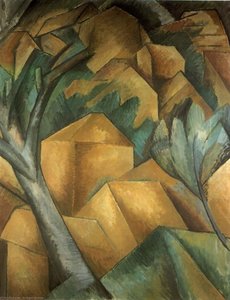
* Maisons à l’Estaque : Témoignage de l'utilisation innovante de la géométrie et de la perspective simultanée par Braque. * La Patience(fauvisme, huile sur toile) : démontre le style fauve de Braque. * Le Clarinette(cubisme analytique, huile sur toile) : œuvre cubiste collaborative avec Picasso.**Musées et collections**
* Musée d'Orsay : présente une vaste collection d'art impressionniste et post-impressionniste, incluant des œuvres de Braque. * Musée de l'Orangerie : expose une large gamme d'œuvres d'art, incluant celles de Braque et d'autres artistes notables.- Découvrez-en davantage sur la vie et l’œuvre de Georges Braque sur AllPaintingsStore.com
- Explorez la collection du Musée d'Orsay, présentant des œuvres de Braque et d'autres artistes, sur Musée d'Orsay - Wikipédia
- Apprenez-en davantage sur le fauvisme et son influence sur le développement du cubisme avec le mouvement artistique fauviste sur AllPaintingsStore.com
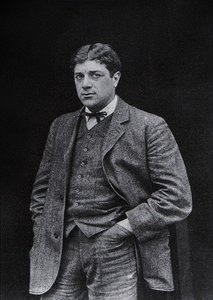
Georges Braque
1882 - 1963 , France
L'essentiel de l'artiste
- Artistes Influents:
- Henri Matisse
- André Derain
- Paul Cézanne
- Date De Décès: 1963
- Date De Naissance: 13 mai 1882
- Influence Sur Les Artistes: ['Pablo Picasso']
- Lieu De Naissance: Argenteuil, France
- Mouvement Artistique: Cubisme, Fauvisme
- Nationalité: Française
- Nom Complet: Georges Braque
- Oeuvres Notables:
- Maisons à L'Estaque
- La Patience
- Le Clarinette
- Nature morte avec cruets
Articles connexes

Déconstruction de la réalité : L'impact révolutionnaire du cubisme sur l'art du XXe siècle
Explorez l'impact révolutionnaire du cubisme sur l'art moderne. Découvrez Picasso, Braque et les maîtres de ce mouvement clé. Guide pour collectionneurs éclairés.

Les 10 Chefs-d'œuvre Cubistes Révolutionnaires : Art, Décor & Histoire
Plongez au cœur du cubisme avec les 10 œuvres révolutionnaires de Picasso, Braque et Gris. Découvrez l'histoire, les techniques et l'impact de ce mouvement artistique majeur. Reproductions d'art de qualité musée sur AllPaintingsStore.com !
Cubisme : Les 10 Chefs-d'œuvre Révolutionnaires à Redécouvrir |
Plongez au cœur du cubisme avec ! Découvrez les 10 chefs-d'œuvre de Picasso, Braque et autres artistes révolutionnaires. Reproductions d'art haute qualité pour une décoration intérieure unique. Explorez la collection sur

Georges Braque : De la Fauvisme à l'Essence du Cubisme – Une Révolution Formelle dans l'Art Moderne
Explorez l'évolution artistique de Georges Braque, du Fauvisme à la révolution cubiste. Analyse approfondie des techniques, influences et héritage durable de ce maître de l'art moderne. Un guide pour collectionneurs avertis.
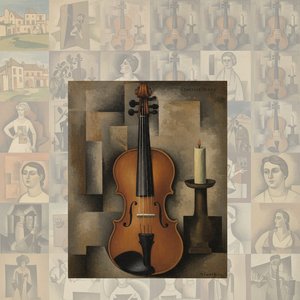
Georges Braque : Les 25 Œuvres Maîtresses du Cubisme et de la Modernité | AllPaintingsStore
Plongez dans l'univers de Georges Braque avec les 25 œuvres incontournables du cubisme. Découvrez l'histoire, les techniques et l'impact de ce maître de l'art moderne. Reproductions d'art exceptionnelles sur AllPaintingsStore.com.