


 Aperçu en situation
 Envoyer
 Partager
 Détails de l'œuvre

 Télécharger
 Articles similaires
 Radiographie
 Diaporama
Albert Gallatin
 Oil On Canvas
- WallArt
- Neoclassicism
 1803
1803 75.0 x 63.0 cm
 Metropolitan Museum of Art
 Lire la suite
Reproduction à l'huile faite à la main
Huile sur toile peinte à la main, avec cadre et dimensions personnalisés, réalisée sur commande par nos artistes. ( Passer au tirage Passer à l'image)




P118B $10

P118H $10

P118W $10

P438Z $10

P508JH $12

P508YH $12

P805H $10

P805Z $10

P919BZ $10

P919G $10

P919XJ $10

P959ZH $10

P968JZ $12

W106C $8

W218G $10

W218JH $8

W218Y $10

W307PJ $10

W316G $10

W316PJ $8

W316Y $10

W398PJ $8

W4111J $10

W500HY $15

W500JH $15

W692G $12

W849H $8

W940BG $15

W953PJ $8




Choisissez parmi nos formats prédéfinis qui respectent les proportions originales de l’œuvre.

Vous pouvez saisir vos propres dimensions pour l'adapter à un cadre ou à un espace spécifique. Si la taille sélectionnée ne correspond pas aux proportions de l'image d'origine, nous recadrerons l'œuvre ou prolongerons la peinture avec des éléments peints à la main supplémentaires. Une maquette numérique vous sera envoyée pour approbation avant le début de la production.
Veuillez noter que l'aperçu à l'écran ne reflète pas le recadrage ou l'extension réels. Seule la maquette montrera fidèlement la composition finale.
Bien que des tailles personnalisées soient disponibles, nous vous recommandons de sélectionner une dimension dans la liste prédéfinie afin de préserver les proportions d'origine.
Après la commande, l’équipe AllPaintingsStore.com contactera le client par e-mail pour recueillir ses instructions et lui fournira une maquette d’aperçu
Livraison dans le monde entier () en 3 à 4 semaines au lieu des 5 semaines habituelles. (10 août). Aucun compromis sur la qualité.

Livraison express gratuite dans le monde entier

Toile de lin de qualité supérieure

Assurance transport complète

Garantie de remboursement des droits de douane

Garantie de fidélité des couleurs

Politique de retour de 60 jours (uniquement en cas de défaut)

Garantie de remboursement à 100%

Offre de tarifs dégressifs
 L'option verre n'est disponible que pour les dimensions inférieures à 110 cm.

Albert Gallatin
Technique de reproduction
Format de la reproduction
-


Prix total
$ 258
Description de l'œuvre
A Portrait of Statesmanship: Gilbert Stuart Newton’s Albert Gallatin
Gilbert Stuart Newton's “Albert Gallatin,” painted in 1803, is more than just a likeness; it’s a carefully constructed portrait of a pivotal figure in early American history. Commissioned during the nascent years of the republic, this oil-on-canvas work captures not only the physical appearance of Albert Gallatin, the Secretary of the Treasury under Thomas Jefferson, but also embodies the qualities deemed essential for leadership and financial stability within a young nation grappling with its identity.
Newton’s style leans heavily into the conventions of the era's portraiture, drawing inspiration from the grand tradition established by Gilbert Stuart himself. The composition is formally balanced, placing Gallatin centrally within a richly textured background—a deliberate choice that elevates his status and suggests his importance to the republic. Note the meticulous rendering of his attire: the dark waistcoat, crisp white shirt, and dignified coat speak volumes about his position and the seriousness of his responsibilities. The subtle use of light and shadow sculpts his features, revealing a thoughtful countenance—a gaze that seems both resolute and contemplative.
The Man Behind the Money
Albert Gallatin was a crucial architect of America’s financial foundation. A Swiss immigrant who arrived in Philadelphia in 1780, he quickly rose through the ranks of American politics, serving as a Congressman, diplomat, and ultimately, Secretary of the Treasury. His tenure under Jefferson was marked by prudent fiscal management, navigating the complexities of the Louisiana Purchase and establishing a system designed to promote economic growth. Newton’s portrait seeks to immortalize this man of considerable intellect and unwavering dedication to public service.
Gallatin's background is particularly relevant to understanding the painting. He represented a bridge between Europe and America, bringing with him a sophisticated understanding of finance and trade—qualities highly valued in a nation striving for economic independence. The portrait subtly conveys this connection, reflecting a blend of European formality and American pragmatism.
Symbolism and Artistic Technique
Beyond the straightforward depiction of Gallatin’s features, Newton employs several artistic techniques to imbue the painting with deeper meaning. The red wall in the background, for instance, is not merely a decorative element; it symbolizes the burgeoning power and influence of the United States. The careful attention to detail—the texture of the fabric, the sheen of the waistcoat, the subtle wrinkles around Gallatin’s eyes—demonstrates Newton's mastery of oil painting and his commitment to capturing the nuances of human expression.
Newton’s use of color is restrained yet effective. The predominantly dark tones create a sense of gravitas and seriousness, while carefully placed highlights draw attention to key features – particularly Gallatin’s face—emphasizing his intelligence and authority. The overall effect is one of dignified composure, reflecting the man's role as a stabilizing force in a nation undergoing rapid transformation.
A Legacy Preserved
“Albert Gallatin” stands as a testament to Newton’s skill and a valuable historical document. It offers a glimpse into the character of a key figure in American history—a man who played a vital role in shaping the nation's financial future. Reproductions of this painting, like those offered by Ocean’s Bridge, allow us to appreciate not only Newton’s artistic talent but also the significance of Gallatin’s contributions to the United States. It is a piece that speaks volumes about ambition, responsibility, and the enduring legacy of early American leadership.
Œuvres similaires


Biographie de l'artiste
Gilbert Stuart Newton : Vie et Héritage
Jeunesse et Origines Familiales
- Naissance et Origines : Gilbert Stuart Newton est né le 2 septembre 1795 à Halifax, en Nouvelle-Écosse. Il était le benjamin d'une fratrie de douze enfants.
- Liens Familiaux : Son père, Henry Newton, était un fonctionnaire des douanes, tandis que sa mère, Ann, portait en elle une lignée artistique prestigieuse – elle était la fille de Gilbert Stuart, le célèbre portraitiste américain.
- Jeunesse et Retour aux États-Unis : La famille résidait initialement à Boston, mais est revenue s'installer à Charlestown, près de Boston, en 1803 après le décès de son père.
Formation Artistique et Influences
- Chemin Initial et Encadrement par Son Oncle : Bien qu’il ait été initialement destiné à une carrière commerciale, Newton fut placé en apprentissage auprès de son oncle, Gilbert Stuart, marquant ainsi le véritable début de son voyage artistique.
- Études en Europe : Il voyagea en Europe accompagné d'un frère aîné et étudia la peinture à Florence. Ses visites ultérieures à Paris en 1817 lui firent découvrir des artistes tels que Charles Robert Leslie, Washington Allston et David Wilkie.
- Royal Academy et Formation Formelle : Newton poursuivit son éducation à la Royal Academy de Londres après une période passée aux Pays-Bas.
Style Artistique et Thèmes Majeurs
- Sensibilités Romantiques : L'œuvre de Newton est généralement classée au sein du mouvement romantique, se distinguant par son intensité émotionnelle et ses récits dramatiques.
- Inspirations Littéraires et Poétiques : Il acquit une renommée particulière pour ses peintures inspirées de la littérature et de la poésie. Des sujets tirés d'œuvres telles que *Don Quichotte* ou les pièces de Shakespeare occupent une place prédominante dans son œuvre.
- Portraiture et Scènes de Genre : S'il réalisa des portraits, notamment ceux de figures notables comme Washington Irving, Newton excella également dans les scènes de genre, capturant avec brio des instants suspendus issus de récits littéraires.
Réalisations Clés et Reconnaissance
- Affiliation à la Royal Academy : Newton fut élu académicien honoraire de la National Academy of Design en 1827, associé de la Royal Academy en 1829, et enfin membre titulaire en 1832.
- Expositions et Mécénat : Il exposa régulièrement à la Royal Academy à partir de 1818, s'attirant ainsi la reconnaissance du public et le soutien de mécènes tels que le marquis de Lansdowne.
- Collections Publiques : Ses œuvres ont intégré de prestigieuses collections publiques, notamment la National Gallery et le South Kensington Museum (aujourd'hui le V&A).
Fin de Vie et Héritage
- Santé Mentale et Dernières Années : Peu après son élection à la Royal Academy, Newton commença à souffrir de troubles mentaux. Il fut admis dans un asile à Chelsea, où il continua à peindre jusqu'à son décès, le 5 août 1835.
- Lieu de Sépulture : Il repose en l'église St Mary de Wimbledon, à Londres.
- Importance Historique : Bien que parfois éclipsé par la renommée de son oncle Gilbert Stuart, Newton a su se forger une identité propre en tant qu'artiste habile et imaginatif de l'ère romantique. Ses peintures d'inspiration littéraire offrent un regard précieux sur les goûts culturels et les tendances artistiques de la Grande-Bretagne du XIXe siècle.

Gilbert Stuart Newton
1795 - 1835 , Nouvelle-Écosse
L'essentiel de l'artiste
- Movement: Romantisme
- Name: Gilbert Stuart Newton
- Nationality: Britannique
Articles connexes

Alonzo Chappel: Historical Narrative & Romantic Vision in 19th-Century American Painting
Explore the captivating world of Alonzo Chappel, a master of 19th-century American historical painting. Discover his iconic works, Romantic style & lasting legacy. Learn about collecting Chappel's art today!

The Enduring Legacy of Oil Paint: Technique, History & Emotional Resonance in Western Art
Explore the rich history & techniques of oil painting! Discover Renaissance masters, scientific principles behind color, and emotional resonance in art. Learn about glazing, layering, and atmospheric perspective – a guide for enthusiasts & collectors.

De la Photographie Instantanée au Portrait d'Atelier : La Renaissance Moderne de l'Effigie en Peinture à l'Huile
Redécouvrez l'art du portrait à l'huile ! Commandez une œuvre unique, réalisée par des artistes experts. Immortalisez votre ressemblance avec finesse et émotion. Conseils personnalisés & qualité garantie.
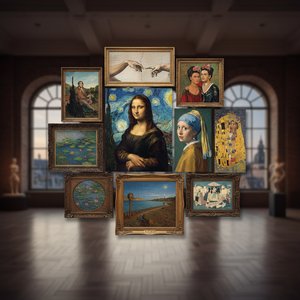
Top 10 Chefs-d'œuvre à l'Huile : L'Art qui a Révolutionné le Décor Intérieur
Plongez dans l'histoire de 10 chefs-d'œuvre à l'huile qui ont révolutionné l'art : Monet, Van Gogh, Rembrandt et plus. Découvrez les techniques, les émotions et trouvez l'inspiration déco sur ! Explorez la collection.

Les 10 Chefs-d'œuvre à l'Huile qui ont Révolutionné l'Art |
Plongez dans l'univers des 10 chefs-d'œuvre à l'huile qui ont marqué l'histoire de l'art ! Découvrez les secrets de Van Gogh, Monet, Rembrandt et autres artistes emblématiques. Trouvez l'inspiration déco & achetez des reproductions de qualité sur .





