


 Aperçu en situation
 Partager
 Partager
 Détails
 Guide
Guide

 Télécharger
 Articles similaires
 Radiographie
 Voir le diaporama
 Statistiques
Vision of the Flaming Chariot
 Acrylique sur toile
- Art mural
- Proto-Renaissance
 1299
1299- Renaissance
 270.0 x 230.0 cm
 Afficher la suite
Reproduction à l'huile faite à la main
Huile sur toile peinte à la main, avec cadre et dimensions personnalisés, réalisée sur commande par nos artistes. ( Passer au format impression Passer au format image numérique)




P118B $10

P118H $10

P118W $10

P438Z $10

P508JH $12

P508YH $12

P805H $10

P805Z $10

P919BZ $10

P919G $10

P919XJ $10

P959ZH $10

P968JZ $12

W106C $8

W218G $10

W218JH $8

W218Y $10

W307PJ $10

W316G $10

W316PJ $8

W316Y $10

W398PJ $8

W4111J $10

W500HY $15

W500JH $15

W692G $12

W849H $8

W940BG $15

W953PJ $8




Choisissez parmi nos formats prédéfinis qui respectent les proportions originales de l’œuvre.

Vous pouvez saisir vos propres dimensions pour l'adapter à un cadre ou à un espace spécifique. Si la taille sélectionnée ne correspond pas aux proportions de l'image d'origine, nous recadrerons l'œuvre ou prolongerons la peinture avec des éléments peints à la main supplémentaires. Une maquette numérique vous sera envoyée pour approbation avant le début de la production.
Veuillez noter que l'aperçu à l'écran ne reflète pas le recadrage ou l'extension réels. Seule la maquette montrera fidèlement la composition finale.
Bien que des tailles personnalisées soient disponibles, nous vous recommandons de sélectionner une dimension dans la liste prédéfinie afin de préserver les proportions d'origine.
Après la commande, l’équipe AllPaintingsStore.com contactera le client par e-mail pour recueillir ses instructions et lui fournira une maquette d’aperçu
Livraison dans le monde entier () en 3 à 4 semaines au lieu des 5 semaines habituelles. (21 septembre). Aucun compromis sur la qualité.

Livraison express gratuite dans le monde entier

Toile de lin de haute qualité

Assurance transport complète

Garantie de remboursement des droits de douane

Garantie de fidélité des couleurs

Garantie de retour de 100 jours (uniquement en cas de défaut)

Garantie de remboursement à 100%

Tarifs dégressifs sur quantité
 L'option verre n'est disponible que pour les dimensions inférieures à 110 cm.

Vision of the Flaming Chariot
Technique de reproduction
Format de la reproduction
-


Prix total final
$ 258
The Vision of the Flaming Chariot: A Dawn of Renaissance Emotion
Giotto di Bondone’s “Vision of the Flaming Chariot,” painted in 1299 as part of the breathtaking frescoes adorning the Cappella Scrovegni (Arena Chapel) in Padua, Italy, represents a monumental leap forward in Western art. More than just a religious depiction, it's a visceral encounter with faith, human emotion, and the nascent seeds of the Renaissance itself. Commissioned by Enrico Scrovegni as an act of penance for his family’s sins, this masterpiece offers a rare glimpse into the mind of an artist grappling with new ways to represent the world – a world imbued with feeling and depth.

The fresco, measuring 270 x 230 cm, is executed in the Proto-Renaissance style, utilizing the traditional technique of frescoes – pigments applied to wet plaster. This method creates a remarkable durability and luminosity, allowing Giotto’s vibrant colors and intricate details to endure for centuries. The scene centers around St. Francis of Assisi receiving a divine vision, brilliantly rendered through a dynamic composition that immediately draws the viewer into the narrative.
A Story Told Through Movement and Emotion
At the heart of the fresco is a compelling interaction. St. Francis, depicted in a rich brown robe, engages with one of three horses – a central figure, another positioned near the top, and a third at the bottom right corner. The precise nature of this exchange remains open to interpretation, but it’s widely believed that he receives a message from God through the animal, symbolizing divine guidance and connection. The other figures surrounding him—one on his left, two on his right—add layers of complexity to the scene, suggesting a gathering of witnesses to this extraordinary event.
Giotto’s genius lies not just in depicting the figures themselves but in conveying their emotional states. The faces are no longer stylized and detached; they possess an unprecedented sense of realism and feeling. The viewer feels St. Francis' awe, his reverence, and perhaps even a touch of vulnerability as he confronts the divine.
Symbolism and Context: A Chapel of Redemption
Beyond its immediate narrative, “Vision of the Flaming Chariot” is deeply rooted in its historical context. The Cappella Scrovegni itself was built during a period of profound spiritual reflection and artistic innovation. Enrico Scrovegni’s commission reflects a desire for redemption and underscores the chapel's role as a place of worship and contemplation. The building’s architecture, combined with Giotto’s frescoes, creates an atmosphere of solemnity and reverence.
The inclusion of the horses is particularly significant. Horses were often associated with divine power and messengers in medieval iconography. Their presence elevates the scene beyond a simple depiction of a religious vision; it transforms it into a powerful allegory of faith and spiritual revelation. The background building, possibly representing a church or other sacred structure, further reinforces this symbolic weight.
A Legacy of Innovation
“Vision of the Flaming Chariot” is widely considered one of Giotto’s most important works and a pivotal moment in art history. It marks a decisive break from the rigid conventions of Byzantine art, paving the way for the innovations that would characterize the High Renaissance. Giotto's emphasis on human emotion, realistic depiction, and dynamic composition profoundly influenced generations of artists to come. Today, this remarkable fresco continues to inspire awe and wonder, offering a tangible connection to one of the most brilliant minds of the medieval period.
Œuvres similaires


![Légende De Saint François - [02] - Saint François Offrant Sa Cape À Un Pauvre — Giotto Di Bondone, Gothic](/media/artworks/images-thumb/1f/84/1f842a0319a02eaaa27d431c94a53fd1.jpg)


Biographie de l'artiste
**Une vie d’innovation et de révolution artistique**
Giotto di Bondone, le peintre et architecte italien renommé, a laissé une marque indélébile sur le monde de l’art grâce à ses contributions novatrices aux périodes du proto-renaissance et gothique. Né en 1267 à Florence, en Italie, la vie de Giotto reste quelque peu enveloppée de mystère, mais son héritage artistique est incontestable.**Contributions et innovations artistiques**
L’œuvre la plus célèbre de Giotto, la Chapelle Scrovegni (ou Chapelle Arena) à Padoue, achevée vers 1305, témoigne de son esprit innovant. Cette fresque représentant la vie de la Vierge et la vie du Christ ne se contente pas de démontrer son génie artistique, mais illustre également une capacité narrative qui constituait une rupture significative avec l’approche stylisée byzantine.- Révolutionnant la peinture : L'accent mis par Giotto sur le naturalisme, l'attention aux émotions humaines et l’exploration des figures spatiales et volumétriques dans la peinture ont jeté les bases du développement de l’art occidental qui a suivi.
- Contributions architecturales : Sa commande en 1334 de la commune florentine pour concevoir le nouveau campanile (clocher) de la cathédrale de Florence affirme son double talent d'artiste et d'architecte.
**Œuvres notables et leur signification**
- L’Annonciation : la Vierge recevant le message (voir sur AllPaintingsStore.com) : un exemple premier du style proto-renaissance de Giotto, caractérisé par son utilisation du naturalisme et son souci du détail.
- La Nativité. Naissance de Jésus (voir sur AllPaintingsStore.com) : démontre la capacité de Giotto à transmettre des récits complexes à travers ses fresques, une caractéristique de la période proto-renaissance.
- La Madone d’Ognissanti (Madonne dans le majestue) (voir sur AllPaintingsStore.com) : cette altierpe, commandée à l'église d'Ognissanti à Florence, est un exemple significatif de la peinture sur panneaux de Giotto et de son utilisation de la tempera.
**Héritage et influence**
L’influence de Giotto sur l’art occidental est profonde, jetant les bases du mouvement artistique de la Renaissance. Son accent sur le naturalisme, les émotions humaines et la conscience spatiale dans la peinture a perduré, assurant sa place en tant que figure fondamentale de l'histoire de l'art européen. Explorez davantage des œuvres et l’héritage de Giotto di Bondone sur AllPaintingsStore.com.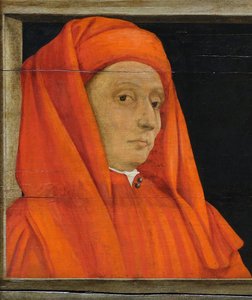
Giotto di Bondone
1267 - 1337 , Italie
En bref
- Artistes Influents: ['Cimabue']
- Date De Décès: 1337
- Date De Naissance: 1267
- Influence Sur Les Artistes:
- Masaccio
- Léonard de Vinci
- Lieu De Naissance: Florence, Italie
- Mouvement Artistique: Proto-Renaissance, Gothique
- Nationalité: Italienne
- Nom Complet: Giotto di Bondone
- Oeuvres Notables:
- Chapelle Scrovegni
- Madone d'Ognissanti
- Fresques de Saint-François
Articles similaires

Giotto di Bondone: Revolutionizing Late Medieval Painting through Narrative Innovation
Explore the revolutionary art of Giotto di Bondone! Discover his groundbreaking techniques, iconic frescoes like those in the Arena Chapel, and lasting impact on Renaissance painting. A deep dive for art enthusiasts.
La Fresque Familiale : Un Héritage Peint sur les Murs –
Créez une fresque familiale unique et intemporelle ! Découvrez comment immortaliser votre histoire sur vos murs avec . Expertise, qualité & personnalisation garanties.
Giotto di Bondone : Les 25 Chefs-d'œuvre Incontournables pour Embellir Votre Intérieur
Plongez dans l'univers de Giotto di Bondone : découvrez les 25 fresques et chefs-d'œuvre qui ont révolutionné l'art médiéval italien. Explorez son style unique, ses couleurs vibrantes et l'histoire fascinante derrière chaque œuvre. Retrouvez des reproductions d'exception sur AllPaintingsStore.com.

Proto-Renaissance : 10 Chefs-d'œuvre Révolutionnaires pour une Décoration d'Exception
Plongez au cœur de la Proto-Renaissance avec AllPaintingsStore.com ! Découvrez 10 chefs-d'œuvre intemporels de Giotto, Cimabue et autres maîtres italiens. Retables gothiques, fresques émouvantes… Trouvez l’inspiration déco & achetez des reproductions d'art exceptionnelles. Explorez la collection sur AllPaintingsStore
Francis Bacon : Les 25 Œuvres Maîtresses d'un Art Viscéral | AllPaintingsStore
Plongez dans l'univers viscéral de Francis Bacon à travers ses 25 œuvres les plus emblématiques. Découvrez l'histoire, la technique et l'émotion derrière chaque chef-d'œuvre expressionniste. Retrouvez des reproductions de qualité musée pour sublimer votre intérieur sur AllPaintingsStore.com


![Scrovegni - [05] - Le Rêve de Joachim](/media/artworks/images-thumb/8f/67/8f67bb5da87296bd452b3f0b237b528d.jpg)


