Aperçu en situation
 Partager
 Partager
 Détails
 Guide
Guide

 Télécharger
 Articles similaires
 Radiographie
 Voir le diaporama
 Statistiques
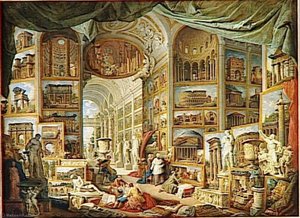
Gallery of Views of Ancient Rome
 Huile sur toile
- Décoration murale
- Baroque Veduta
 1758
1758 231.0 x 303.0 cm
 Musée du Louvre
 Afficher la suite
Reproduction à l'huile faite à la main
Huile sur toile peinte à la main, avec cadre et dimensions personnalisés, réalisée sur commande par nos artistes. ( Passer au format impression Passer au format image numérique)




P118B $10

P118H $10

P118W $10

P438Z $10

P508JH $12

P508YH $12

P805H $10

P805Z $10

P919BZ $10

P919G $10

P919XJ $10

P959ZH $10

P968JZ $12

W106C $8

W218G $10

W218JH $8

W218Y $10

W307PJ $10

W316G $10

W316PJ $8

W316Y $10

W398PJ $8

W4111J $10

W500HY $15

W500JH $15

W692G $12

W849H $8

W940BG $15

W953PJ $8




Choisissez parmi nos formats prédéfinis qui respectent les proportions originales de l’œuvre.

Vous pouvez saisir vos propres dimensions pour l'adapter à un cadre ou à un espace spécifique. Si la taille sélectionnée ne correspond pas aux proportions de l'image d'origine, nous recadrerons l'œuvre ou prolongerons la peinture avec des éléments peints à la main supplémentaires. Une maquette numérique vous sera envoyée pour approbation avant le début de la production.
Veuillez noter que l'aperçu à l'écran ne reflète pas le recadrage ou l'extension réels. Seule la maquette montrera fidèlement la composition finale.
Bien que des tailles personnalisées soient disponibles, nous vous recommandons de sélectionner une dimension dans la liste prédéfinie afin de préserver les proportions d'origine.
Après la commande, l’équipe AllPaintingsStore.com contactera le client par e-mail pour recueillir ses instructions et lui fournira une maquette d’aperçu
Livraison dans le monde entier () en 3 à 4 semaines au lieu des 5 semaines habituelles. (21 septembre). Aucun compromis sur la qualité.

Livraison express gratuite dans le monde entier

Toile de lin de haute qualité

Assurance transport complète

Garantie de remboursement des droits de douane

Garantie de fidélité des couleurs

Garantie de retour de 100 jours (uniquement en cas de défaut)

Garantie de remboursement à 100%

Tarifs dégressifs sur quantité
 L'option verre n'est disponible que pour les dimensions inférieures à 110 cm.

Gallery of Views of Ancient Rome
Technique de reproduction
Format de la reproduction
-


Prix total final
$ 258
The Painting's Composition
The painting depicts a grand room filled with statues of ancient Roman figures, creating an atmosphere reminiscent of a museum or gallery. The room is adorned with numerous paintings of various sizes on the walls, adding depth and visual interest to the scene. At least 13 people are present in the room, some standing and others seated, seemingly admiring the artwork on display. The statues themselves vary in size and positioning throughout the room, with some placed closer to the foreground and others further back. The paintings on the walls showcase a variety of subjects and styles, contributing to the overall sense of an art gallery or museum filled with ancient Roman statues and paintings.Artistic Significance
Pannini's work is notable for its meticulous attention to detail and historical accuracy. As a vedutisti, he was known for his vistas of Rome, often incorporating elements of capriccio themes. This painting exemplifies his ability to create a sense of grandeur and nostalgia for ancient Rome.Relevance in Modern Times
Today, Gallery of Views of Ancient Rome remains an important piece in the art world, offering insights into the artistic and cultural values of 18th-century Europe. It serves as a testament to Pannini's skill as a painter and his contribution to the development of veduta painting.Reproduction at AllPaintingsStore.com
For those interested in owning a piece of art history, AllPaintingsStore.com offers high-quality, handmade oil painting reproductions of Gallery of Views of Ancient Rome. These reproductions are crafted with precision and care, ensuring that the essence of Pannini's original work is preserved.Conclusion
Giovanni Paolo Pannini's Gallery of Views of Ancient Rome is a masterpiece that continues to captivate art enthusiasts and historians alike. Its blend of historical accuracy, artistic flair, and grandeur makes it a significant piece in the world of art. For those interested in exploring more works by Pannini or other artists, AllPaintingsStore.com provides an extensive collection of handmade oil painting reproductions.- Giovanni Paolo Panini - Wikipedia
- Gallery of Views of Ancient Rome - WGA.hu
Œuvres similaires




Biographie de l'artiste
Giovanni Paolo Panini (1691–1765): Master of Roman Vedute & Architectural Fantasies
Giovanni Paolo Panini, a name synonymous with the grandeur and romantic allure of 18th-century Rome, was more than just a painter; he was a visual architect of memory. Born in Piacenza in 1691, his artistic journey began under the tutelage of Giuseppe Natali and Andrea Galluzzi, but it was his exposure to the theatrical designs of Francesco Galli-Bibiena that truly ignited his imagination. This early immersion in stagecraft would profoundly influence his later work, imbuing it with a sense of dramatic composition and illusionistic space. In 1711, Panini relocated to Rome, a city already steeped in artistic history, where he honed his skills under the guidance of Benedetto Luti, mastering the art of drawing and laying the foundation for his future mastery of perspective.- Early Training & Influences: Panini’s formative years were marked by instruction from Giuseppe Natali and Andrea Galluzzi in Piacenza, shaping his initial artistic sensibilities. Crucially, he absorbed the theatrical flair of Francesco Galli-Bibiena, whose stage designs instilled in him a fascination with dramatic perspective and illusionistic space—influences that would permeate his subsequent oeuvre.
- Rome & The Academy: Moving to Rome in 1711, Panini enrolled at the Accademia di San Luca and subsequently joined the Académie de France, where he cultivated connections with fellow artists like Jean-Honoré Fragonard. These collaborations fostered intellectual exchange and contributed to the dissemination of innovative artistic ideas.
From Frescoes to Vedute: The Evolution of an Artistic Style
Panini’s initial success wasn't as a canvas painter but as a decorator of palaces. His frescoes adorned the walls of prominent Roman residences, including the Villa Patrizi (1719–1725), Palazzo de Carolis (1720) and Seminario Romano (1721–1722). These early commissions allowed him to develop his technical prowess and establish a reputation within Rome’s artistic circles. He meticulously studied drawing techniques, diligently practicing under Benedetto Luti, perfecting the craft of rendering form and capturing subtle tonal variations—skills that would prove invaluable in his later exploration of *veduta* painting.- The Venetian Influence: Like many artists of his time, Panini initially drew inspiration from Jan van Goyen’s masterful landscapes, adopting a similar approach to tonal rendering and capturing the atmospheric qualities of Dutch riverside scenes. This stylistic connection underscores the broader artistic currents circulating throughout Europe during the Baroque period.
- The Birth of Vedutismo: However, Panini swiftly transcended mere imitation, forging his own distinctive path as a *vedutista*. Rejecting the conventions of topographical art—which prioritized accurate documentation—he embraced a more imaginative vision. He didn’t merely record what he saw; he reconstructed it, blending existing structures with fragments of ancient ruins and fantastical architectural elements.
The Allure of Ruins & The Panini Projection
Panini’s fascination with ruins wasn't simply an aesthetic preference; it reflected a deeper intellectual preoccupation—a burgeoning interest in classical antiquity and a poignant awareness of its inevitable decay. He meticulously depicted iconic landmarks like the Pantheon, Colosseum, and Roman Forum, framing them within dramatic lighting and atmospheric effects that evoked a sense of melancholy grandeur. This approach distinguished him from his contemporaries and cemented his reputation as one of Rome’s foremost artists.- Innovative Perspective: Panini revolutionized artistic representation by pioneering what became known as the “Panini Projection.” Unlike traditional perspective systems that relied on mathematical calculations, Panini devised a method for achieving convincing illusionistic depth—a technique instrumental in rendering panoramic views with remarkable accuracy. This breakthrough dramatically expanded the possibilities of architectural painting and influenced subsequent generations of artists.
- A Legacy of Imagination: His canvases are imbued with an extraordinary sense of atmosphere and emotion, capturing not just visual details but also the psychological impact of Roman spaces. Panini’s work continues to inspire admiration for its artistic ingenuity and its ability to convey a profound appreciation for Rome's cultural heritage.
Influence & Recognition: Shaping Artistic Discourse
Panini exerted considerable influence on his peers, serving as a respected teacher at both the Accademia di San Luca and the Académie de France in Rome. He fostered intellectual exchange among artists from across Europe, disseminating innovative ideas about composition and perspective—contributing to the artistic dynamism of the era. His fame soared during the Grand Tour, attracting the attention of wealthy patrons eager to acquire his paintings—demonstrating the enduring prestige he commanded within the art world.- Notable Works: Among Panini’s most celebrated achievements are *The Temple of Diana*, a monumental fresco commissioned for Palazzo Barberini, and *Interior of Saint Peter's*, Rome—works that exemplify his mastery of perspective and his ability to convey the grandeur of Roman architecture. His depictions of ruins—particularly *The Ruins of Pompeii*—became emblematic of the vedutist style.
- A Lasting Impression: Panini’s legacy extends beyond individual artworks; he established a paradigm for panoramic painting that continues to resonate with artists today. His pioneering technique remains a cornerstone of architectural representation, ensuring his place as one of Rome's most influential artistic figures.

Giovanni Paolo Panini
1691 - 1765 , Italie
En bref
- Artistic Movement Or Style: Vedutismo
- Artists Or Movements Influenced By This Artist: ['Hubert Robert']
- Artists Who Influenced This Artist:
- Giuseppe Natali
- Andrea Galluzzi
- Francesco Galli-Bibiena
- Date Of Birth: 1691
- Date Of Death: 1765
- Full Name: Giovanni Paolo Panini
- Nationality: Italien
- Notable Artworks:
- Le Temple de Diane
- Intérieur du Panthéon
- Intérieur de Saint Pierre
- Place Of Birth: Piacenza, Italie
Articles similaires

The Enduring Power of Painting: A Historical & Contemporary Exploration of Form and Emotion
Explore the rich history & enduring techniques of oil painting with AllPaintingsStore. Discover masterpieces, learn about art collecting, and find authentic handmade reproductions crafted by skilled artists.

The Enduring Legacy of Oil on Canvas: Technique, History & Aesthetic Impact
Explore the rich history & techniques of oil painting – from Renaissance masters to Impressionism. Discover pigments, layering methods, and why this timeless medium endures. Expert insights for artists & art enthusiasts.

Giovanni Paolo Panini: Capturing Roman Grandeur – A Vedute Master's Legacy
Explore the captivating world of Giovanni Paolo Panini, master of Roman vedute painting. Discover his technique, iconic works, influence on art history & collecting advice from experts at AllPaintingsStore.

Les 25 Chefs-d'œuvre de la National Gallery : Art, Histoire & Décor d'Intérieur
Plongez au cœur des 25 chefs-d'œuvre de la National Gallery Londres : Van Gogh, Monet, Rembrandt… Découvrez l'histoire fascinante de ces tableaux célèbres et trouvez l'inspiration pour une décoration intérieure raffinée. Reproductions d'art de qualité muséale sur AllPaintingsStore.com.

L'Huile sur Toile : Exploration Historique et Technique d'un Médium Artistique Intemporel
Explorez l'histoire fascinante de la peinture à l'huile, des techniques ancestrales aux maîtres flamands comme Van Eyck. Découvrez les secrets des pigments, liants et glacis pour comprendre cet art intemporel.