


 Aperçu en situation
 Partager
 Partager
 Détails
 Guide imprimable

 Télécharger
 Articles similaires
 Radiographie
 Voir le diaporama
 Statistiques
Pasiphaé


 Afficher la suite
Giclées et impressions d'art
Impressions giclées ou sur toile de qualité musée, avec une production rapide et des finitions au choix. ( Acheter la peinture faite à la main Passer au format image numérique)




P118B $10

P118H $10

P118W $10

P438Z $10

P508JH $12

P508YH $12

P805H $10

P805Z $10

P919BZ $10

P919G $10

P919XJ $10

P959ZH $10

P968JZ $12

W106C $8

W218G $10

W218JH $8

W218Y $10

W307PJ $10

W316G $10

W316PJ $8

W316Y $10

W398PJ $8

W4111J $10

W500HY $15

W500JH $15

W692G $12

W849H $8

W940BG $15

W953PJ $8




Choisissez parmi nos formats prédéfinis qui respectent les proportions originales de l’œuvre.

Vous pouvez saisir vos propres dimensions pour vous adapter à un cadre ou à un espace spécifique. Si la taille sélectionnée ne correspond pas aux proportions de l'image originale, nous recadrerons l'œuvre ou étendrons l'image avec une bordure en miroir ou une couleur unie. Une maquette numérique vous sera envoyée pour approbation avant le début de la production.
Veuillez noter que l'aperçu à l'écran ne reflète pas le recadrage ou l'extension réelle. Seule la maquette montrera avec précision la composition finale.
Bien que des tailles personnalisées soient disponibles, nous vous recommandons de choisir une dimension dans la liste prédéfinie afin de préserver les proportions originales.
Livraison dans le monde entier () en 2 semaines au lieu des 4/5 semaines habituelles. (25 septembre)

Livraison express gratuite dans le monde entier

Toile de lin de haute qualité

Assurance transport complète

Garantie de remboursement des droits de douane

Garantie de fidélité des couleurs

Garantie de retour de 100 jours (uniquement en cas de défaut)

Garantie de remboursement à 100%

Tarifs dégressifs sur quantité
 L'option verre n'est disponible que pour les dimensions inférieures à 110 cm.

Pasiphaé
Giclées et impressions d'art
Format de la reproduction
-


Prix total final
$ 64
A Descent into Mythic Desire
To encounter Gustave Moreau’s Pasiphaé is to step beyond the veil of the tangible world and enter a realm where the boundaries between dream and reality dissolve. This monumental canvas, painted during the height of the Symbolist movement between 1890 and 1895, serves as much more than a mere retelling of Greek mythology; it is an immersive psychological landscape. The painting captures the profound tension of the Phoenician queen of Crete, whose legendary encounter with Zeus's bull birthed a legacy of transgression and monstrous beauty. Moreau does not rely on explicit, jarring storytelling, but instead invites the viewer into a state of quiet, unsettling contemplation, where every shadow and glimmer of light whispers of forbidden longing.
The composition is masterfully orchestrated to evoke an atmosphere of oppressive enchantment. A dense, dreamlike forest dominates the scene, with towering trees whose intertwining branches create a claustrophobic yet majestic canopy. This labyrinthine setting mirrors Pasiphae’s own tormented inner state, trapping her within a visual metaphor for her inescapable fate. As the eye wanders through the muted, atmospheric depths, one might catch glimpses of distant figures that add layers of complexity to this mythic stage, suggesting a world teeming with unseen, archetypal forces.
The Alchemy of Symbolist Technique
Moreau’s technical prowess is on full display through his meticulous use of tempera on canvas, a medium he favored for its ability to achieve an almost supernatural luminosity. He employs a palette rich in golds and deep reds, which glow against more somber, earthy tones, creating a dramatic chiaroscuro effect that breathes life into the mythological figures. His style is characterized by a unique blend of fine, intricate detail and a deliberate flattening of perspective, a hallmark of Symbolist aesthetics that prioritizes emotional resonance over photographic accuracy.
The artist’s brushwork creates a texture that feels both ancient and ethereal. By eschewing the fleeting light of the Impressionists in favor of a more permanent, jewel-like finish, Moreau achieves a sense of timelessness. This technique allows the painting to function as a window into the subconscious, where the physical world is secondary to the spiritual and emotional truths being conveyed. For the collector or designer, this piece offers a profound depth of texture and color that can serve as a commanding focal point in any curated space.
Philosophical Echoes and Emotional Resonance
Beyond its visual splendor, Pasiphaé is deeply rooted in the intellectual currents of the late 19th century. Moreau was profoundly moved by Nietzschean philosophy, particularly the concept of Eternal Recurrence—the idea that life and myth repeat in endless, archetypal cycles. In this work, the bull stands as a potent symbol of primal instinct and irrationality, while Pasiphae represents the vulnerability of the human soul when confronted with overwhelming, elemental forces. The painting captures that precise, breathless moment of transition between human agency and divine or animalistic destiny.
For those seeking to bring art into their homes that transcends mere decoration, this reproduction offers an opportunity to possess a piece of profound intellectual and emotional weight. It is an artwork that demands engagement, rewarding the viewer with new discoveries upon every glance. Whether placed in a quiet study or a grand gallery, Moreau’s vision of mythic desire provides a sophisticated, evocative atmosphere, inviting all who behold it to explore the beautiful, haunting mysteries of the human psyche.
Œuvres similaires


Biographie de l'artiste
**Jeunesse et Éducation**
Gustave Moreau, artiste français, est né le 6 avril 1826 à Paris. Il a reçu une formation académique traditionnelle en peinture à l’École des Beaux-Arts, démontrant un talent pour le dessin dès son plus jeune âge.**Le Mouvement Symboliste**
L'œuvre de Moreau, caractérisée par des sujets allégoriques et mythologiques, l'a positionné comme un peintre symboliste de premier plan, en particulier dans les années 1890. Son art (et le symbolisme en général) a connu une période de déclin mais a été réévalué depuis les années 1960, Moreau étant désormais considéré comme l’un des peintres symbolistes les plus importants.**Œuvres Notables et Expositions**
* Salomé dans la prison (peinture de 'Gustave Moreau') est un exemple notable de son œuvre, mettant en valeur sa maîtrise du symbolisme. * Autoportrait (peinture de 'Gustave Moreau') est une autre représentation puissante de l’artiste lui-même.**Musée Gustave Moreau**
Le Musée National Gustave-Moreau (Musée Gustave Moreau Paris, France) à Paris est dédié à l’œuvre de Moreau, abritant plus de 1 200 peintures, aquarelles et dessins. Le musée témoigne de son héritage artistique.**Héritage et Influence**
L'influence de Moreau sur le mouvement symboliste est indéniable. Il a enseigné à l’École des Beaux-Arts, influençant des artistes notables tels que Henri Matisse et Georges Rouault. Sa nature recluse n'a pas diminué son impact sur le monde de l’art.- Découvrez plus d'informations sur la vie et l'œuvre de Gustave Moreau sur AllPaintingsStore.com
- Explorez le Musée National Gustave-Moreau et sa collection impressionnante d'œuvres d’art sur Musée Gustave Moreau Paris, France
- Apprenez-en davantage sur le mouvement symboliste et son importance dans l'histoire de l'art sur le mouvement symboliste
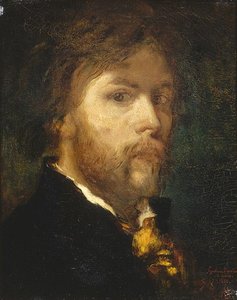
Gustave Moreau
1826 - 1898 , France
En bref
- Artistes Influents:
- Eugène Delacroix
- Michelangelo
- Leonard de Vinci
- Date De Décès: 1898
- Date De Naissance: 6 avril 1826
- Influence Sur Les Artistes:
- Henri Matisse
- Georges Rouault
- Lieu De Naissance: Paris, France
- Mouvement Artistique: Symbolisme
- Nationalité: Française
- Nom Complet: Gustave Moreau
- Oeuvres Notables:
- Salomé dans la prison
- Autoportrait
- Jupiter et Sémélé
- Orphée
- L'Apparition
Articles similaires

Gods and Heroes: A Definitive Guide to the Eternal Masterpieces of Greek Mythology
Explore the profound beauty of Greek mythology through art history. From Baroque masterpieces to Renaissance classics, discover how gods and heroes have inspired the world's greatest painters in this expert guide for collectors and history lovers.

Timeless Legends: A Curated Guide to the Eternal Allure of Mythological Masterpieces
Embark on a sophisticated journey through the eternal allure of mythological art. Discover how master painters breathe life into ancient legends, from Greek deities to Baroque masterpieces, and learn to curate these timeless narratives within your own exquisite art collection.

L'Huile sur Toile : Exploration Historique et Technique d'un Médium Artistique Intemporel
Explorez l'histoire fascinante de la peinture à l'huile, des techniques ancestrales aux maîtres flamands comme Van Eyck. Découvrez les secrets des pigments, liants et glacis pour comprendre cet art intemporel.

The Enduring Power of Painting: A Historical & Contemporary Exploration of Form and Emotion
Explore the rich history & enduring techniques of oil painting with AllPaintingsStore. Discover masterpieces, learn about art collecting, and find authentic handmade reproductions crafted by skilled artists.

The Enduring Legacy of Oil on Canvas: Technique, History & Aesthetic Impact
Explore the rich history & techniques of oil painting – from Renaissance masters to Impressionism. Discover pigments, layering methods, and why this timeless medium endures. Expert insights for artists & art enthusiasts.


