


 Aperçu en situation
 Partager
 Partager
 Détails
 Guide
Guide

 Télécharger
 Articles similaires
 Radiographie
 Voir le diaporama
 Statistiques
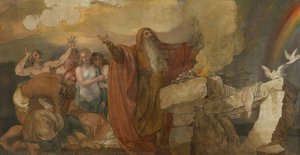
Baalam prophÉtise qu'un astre s'Élèvera du milieu d'Isra euml l, study for the decoration of the nave of Saint Germain des PrÉs, Paris
 46.0 x 55.0 cm
 Afficher la suite
Reproduction à l'huile faite à la main
Huile sur toile peinte à la main, avec cadre et dimensions personnalisés, réalisée sur commande par nos artistes. ( Passer au format impression Passer au format image numérique)




































Choisissez parmi nos formats prédéfinis qui respectent les proportions originales de l’œuvre.

Vous pouvez saisir vos propres dimensions pour l'adapter à un cadre ou à un espace spécifique. Si la taille sélectionnée ne correspond pas aux proportions de l'image d'origine, nous recadrerons l'œuvre ou prolongerons la peinture avec des éléments peints à la main supplémentaires. Une maquette numérique vous sera envoyée pour approbation avant le début de la production.
Veuillez noter que l'aperçu à l'écran ne reflète pas le recadrage ou l'extension réels. Seule la maquette montrera fidèlement la composition finale.
Bien que des tailles personnalisées soient disponibles, nous vous recommandons de sélectionner une dimension dans la liste prédéfinie afin de préserver les proportions d'origine.
Après la commande, l’équipe AllPaintingsStore.com contactera le client par e-mail pour recueillir ses instructions et lui fournira une maquette d’aperçu
Livraison dans le monde entier () en 3 à 4 semaines au lieu des 5 semaines habituelles. (21 septembre). Aucun compromis sur la qualité.

Livraison express gratuite dans le monde entier

Toile de lin de haute qualité

Assurance transport complète

Garantie de remboursement des droits de douane

Garantie de fidélité des couleurs

Garantie de retour de 100 jours (uniquement en cas de défaut)

Garantie de remboursement à 100%

Tarifs dégressifs sur quantité
 L'option verre n'est disponible que pour les dimensions inférieures à 110 cm.

Baalam prophÉtise qu'un astre s'Élèvera du milieu d'Isra euml l, study for the decoration of the nave of Saint Germain des PrÉs, Paris
Technique de reproduction
Format de la reproduction
-


Prix total final
$ 258
Œuvres similaires




Biographie de l'artiste
Hippolyte Jean Flandrin (1809–1864): A Master of Decorative Painting and Portraiture
Jean-Hippolyte Flandrin (1809–1864) stands as a prominent figure in French Neoclassical art, celebrated primarily for his monumental decorative paintings and evocative portraits. Born in Lyon, France, he emerged from a family steeped in artistic tradition—his brother Augusto was a professor at Lyon University, while Paul Flandrin excelled as a portrait painter. Despite parental aspirations for a conventional business career, Hippolyte’s innate passion for painting propelled him toward a distinguished artistic path. Early training focused on miniature painting, dictated by circumstance rather than personal inclination. However, this formative experience instilled in him a meticulous attention to detail and an understanding of nuanced tonal gradations—skills that would prove invaluable throughout his prolific career. Recognizing his talent, he enrolled at Lyon’s École Supérieure des Beaux-Arts under Jean Auguste Dominique Ingres, forging a lifelong friendship with the celebrated artist who profoundly shaped his artistic sensibilities. Initially facing challenges as a struggling young painter, Flandrin's perseverance was rewarded in 1832 when he secured the prestigious Prix de Rome scholarship—a pivotal moment that liberated him from financial constraints and afforded him access to the intellectual and artistic fervor of Rome. During his Roman studies (1832–1856), Flandrin produced several significant paintings, bolstering his reputation both in France and Italy. Among these were “St. Clair Healing the Blind,” commissioned for Nantes Cathedral—a monumental work reflecting Ingres’s influence and demonstrating Flandrin's mastery of large-scale decorative painting—and “Jesus and the Little Children,” presented to the town of Lisieux as a gesture of civic patronage. Furthermore, he undertook commissions for prominent patrons, capturing their likenesses with remarkable accuracy and conveying their personalities through subtle expressions and gestures. Notable portraits include “Portrait of Madame Flandrin” (1846) and “Jacob,” demonstrating his exceptional skill in portraying human emotion and form. His artistic output extended beyond portraiture; he created "Dante and Virgil Visiting the Envious Men" which is now housed in Lyon’s Musée des Beaux-Arts, showcasing his versatility as an artist. Flandrin's return to Paris marked the commencement of a sustained artistic career characterized by consistent commissions and unwavering dedication. He accepted a commission from Saint John the Baptist Church in Saint Germain des Prés, cementing his position as one of Paris’s leading artists. His work continued to garner acclaim, securing him recognition from the Académie des Beaux-Arts and establishing him as a respected figure within the Parisian artistic milieu. Flandrin's legacy resides not only in his impressive oeuvre but also in his contribution to the dissemination of Neoclassical ideals—particularly its emphasis on grandeur, clarity, and psychological realism—leaving an indelible mark on French art history. He died in Paris in 1864, leaving behind a body of work that continues to inspire admiration for its beauty and technical prowess. ## Instruction: Write a comprehensive HTML biography in French for this artist. Cover life, work, influences, development, major achievements, and historical significance. Use informativeheaders to structure 2-5 sections. Use only
, , - , , . Do not add other markup. Start with
.
.

Hippolyte Jean Flandrin
1809 - 1864 , France
En bref
- Artistic Movement Or Style: Néoclassicisme
- Artists Who Influenced This Artist: ['Jean Auguste Dominique Ingres']
- Date Of Birth: 1809
- Date Of Death: 1864
- Full Name: Hippolyte Jean Flandrin
- Nationality: Francais
- Notable Artworks:
- Saint Clair Healing the Blind
- Jesus et les enfants
- Portrait de Madame Flandrin
- Place Of Birth: Lyon, France

